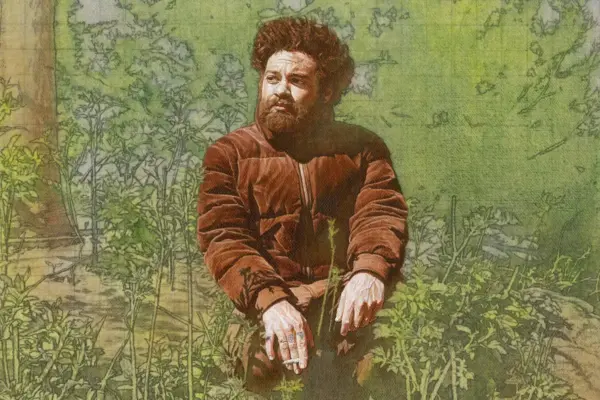
Trevor Horn occupies a unique and exalted position in modern music history. Often dubbed "The Man Who Invented the Eighties," the British producer, songwriter, and musician transitioned from fronting The Buggles—whose 1979 single "Video Killed the Radio Star" ushered in the MTV era—to orchestrating some of the most complex, lucrative, and sonically groundbreaking records in popular music.
Yet beneath the sleek synthesizer textures, Fairlight CMI sampling, and chart-topping pop polished under his ZTT Records imprint lay an unyielding, lifelong passion: progressive rock. Rather than abandoning the intricate arrangements, sweeping instrumental passages, and conceptual grandeur of 70s prog, Horn quietly smuggled these elements into mainstream pop and dance music, changing the sonic landscape of modern radio forever.
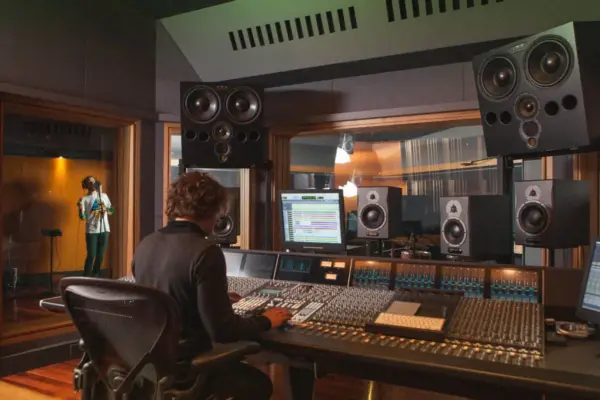
From taking over vocal duties for Yes on their 1980 album Drama to producing Mike Oldfield’s multi-platinum Tubular Bells II, reuniting Genesis’ classic line-up for a late-90s retrospective, and turning Frankie Goes to Hollywood’s 13-minute title track "Welcome to the Pleasuredome" into a global phenomenon, Horn’s studio career is a testament to technical bravado and artistic diplomacy. Reflecting on four decades behind the mixing console, Horn offers an intimate look at studio heartaches, famous band factions, lost tape tracks, and the fine art of staying neutral among rock’s biggest egos.
Detailed Chronology: From Buggles Pop to Prog Royalty
+-----------------------------------------------------------------------------------+
| CHRONOLOGY OF TREVOR HORN'S KEY PROG-POP MILESTONES                               |
+-----------------------------------------------------------------------------------+
| 1979: "Video Killed the Radio Star" (The Buggles) tops charts globally.            |
| 1980: Horn joins Yes as lead vocalist for 'Drama' and subsequent tour.            |
| 1983: Produces Yes's '90125' & "Owner of a Lonely Heart" (US Billboard #1).        |
| 1984: Produces Frankie Goes to Hollywood's progressive pop opus 'Pleasuredome'.   |
| 1992: Produces Mike Oldfield's 'Tubular Bells II' in Beverly Hills during LA Riots. |
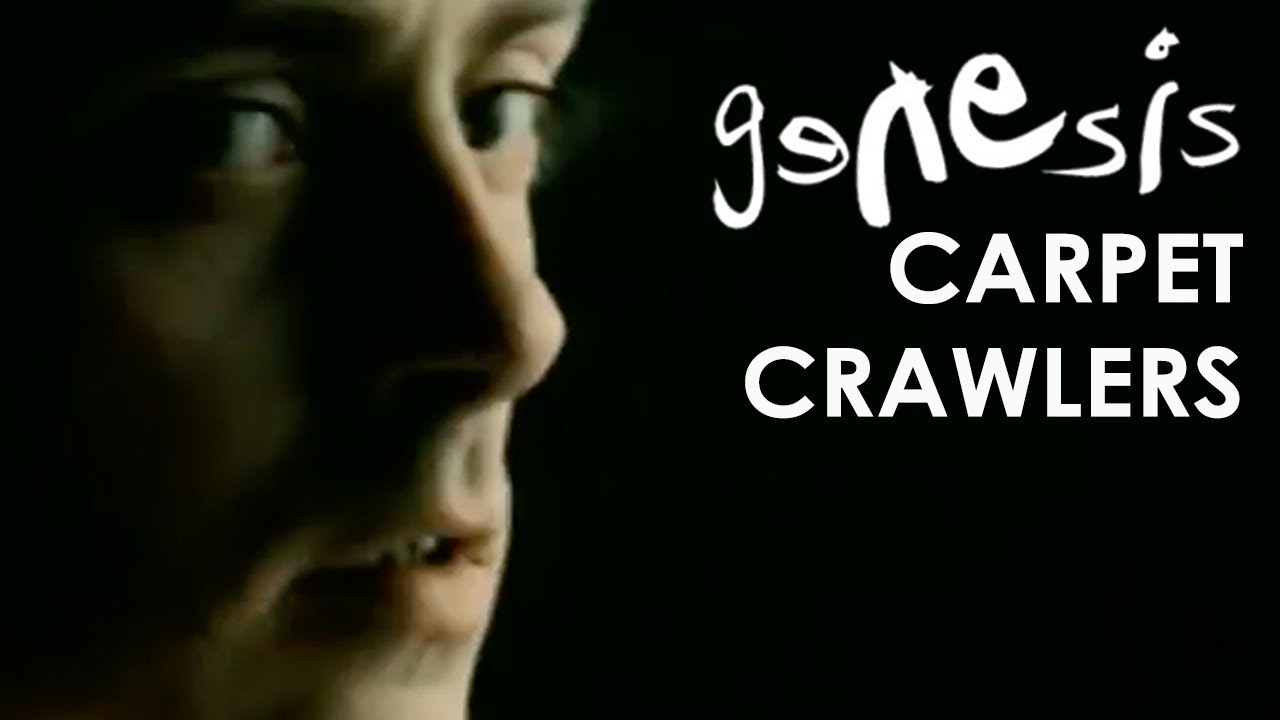
| 1999: Re-convenes Genesis classic line-up for "The Carpet Crawlers 1999".         |
| 2018: Mixes/Sings 'Fly From Here: Return Trip' for Yes; performs live at Palladium.|
+-----------------------------------------------------------------------------------+
1. The Early Years and the Yes Paradigm Shift (1979–1983)
Horn’s rise coincided with an era when music producers worked quietly behind the scenes, rarely gaining name recognition outside industry circles. Following the commercial breakthrough of The Buggles alongside keyboardist Geoff Downes, Horn made the unthinkable leap from pop singer to lead vocalist of progressive rock giants Yes following Jon Anderson’s departure in 1980.
Although his tenure as Yes’s lead singer was brief (Drama, 1980), it established a permanent bond between Horn and the progressive rock establishment. Transitioning fully into studio production, Horn returned to Yes three years later not as a frontman, but as the master producer behind 90125 (1983). The record reinvented the band for the digital age, producing the global hit "Owner of a Lonely Heart" and demonstrating that progressive virtuosity could be paired with polished, high-energy pop production.
2. The Pop-Prog Hybrid and ZTT Records (1984–1991)
In 1983, Horn co-founded ZTT Records alongside his late wife, manager Jill Sinclair, and music journalist Paul Morley. The label became an experimental playground. When tasked with producing Frankie Goes to Hollywood’s debut album, Horn applied the sprawling structural ethos of 1970s progressive epics to commercial dance music. The resulting title track, "Welcome to the Pleasuredome," stretched past the 13-minute mark, defying traditional radio formats while dominating international charts.
3. High-Stakes Production in Los Angeles (1992)
By the early 1990s, Horn was working out of major studio hubs in the United States. In 1992, he teamed up with multi-instrumentalist Mike Oldfield in Beverly Hills to produce Tubular Bells II, the sequel to Oldfield’s iconic 1973 debut. Working against the backdrop of the 1992 Los Angeles Riots, the production was defined by high tension, strict perfectionism, and an infamous master-tape wiping incident that became legend in recording studio lore.
4. Re-Engineering Genesis and Modern Yes Connections (1999–Present)
In 1999, Horn was recruited to oversee "The Carpet Crawlers 1999," a total studio re-recording of Genesis’s classic 1975 track from The Lamb Lies Down on Broadway. The session brought together Peter Gabriel, Phil Collins, Tony Banks, Mike Rutherford, and Steve Hackett—marking a rare collaboration of the band’s classic lineup.
In recent years, Horn has maintained his active role within the progressive community. He reworked vocals for Yes’s 2011 album into Fly From Here: Return Trip (released in 2018) and performed live on stage with Steve Howe’s iteration of the group at the London Palladium, solidifying his role as a central figure in progressive rock history.
Supporting Context & Metrics: The Mechanics of Smuggling Prog into the Charts
Horn’s core philosophy revolved around taking the dynamic range, cinematic scale, and storytelling structures of progressive rock and wrapping them in accessible, radio-friendly hooks.
+-----------------------------------------------------------------------------------+
| STRUCTURAL COMPARISON: TRADITIONAL POP VS. HORN'S PROG-POP EPIC                   |
+-----------------------------------------------------------------------------------+
| Metric                 | Standard 80s Pop Single    | Horn Prog-Pop Hybrid        |
+------------------------+----------------------------+-----------------------------+
| Average Track Length   | 3:30 – 4:00 minutes        | 6:00 – 13:40 minutes        |
| Tape Track Utilization | 24-Track Analog            | 48-Track Synced / Fairlight |
| Arrangement Style      | Verse-Chorus-Verse-Chorus  | Multi-Movement Suite        |
| Dynamic Range          | Heavily Compressed         | Wide Orchestral/Rock Shifts |
| Commercial Peak        | Chart-dependent Top 40     | Multi-Platinum LP Anchors   |
+------------------------+----------------------------+-----------------------------+
Smuggling Prog into Pop Culture
Horn’s love for extended progressive compositions was nurtured by driving through landscapes while listening to massive 1970s epics like Yes’s "Close to the Edge" (18:42) and "Gates of Delirium" (21:50).
When producing Frankie Goes to Hollywood’s Welcome to the Pleasuredome, Horn deliberately structured the title track as a multi-movement piece:
The Concept: Create an immersive, long-form instrumental piece carrying embedded pop songs that felt like a journey.
The Execution: Partnering with engineer Steve Lipson, Horn layered heavy orchestral hits, ambient field recordings, rhythmic bass lines, and shifting time signatures.
The Metric: Despite its 13-minute album run-time, the project sold over one million copies in the UK alone upon pre-order, proving that mainstream audiences would consume long-form, complex arrangements if the production quality was exceptional.
Official Statements & Studio Anecdotes
Throughout his career, Trevor Horn operated not just as an engineer, but as a counselor, diplomat, and sonic director. Below are his first-hand reflections on working with some of rock music’s most influential figures.
On Genesis and Recording Phil Collins in Switzerland
Recalling the 1999 sessions for Genesis’s revisited track "The Carpet Crawlers 1999," Horn highlighted the distinct personalities within the group and a lighthearted moment with drummer/vocalist Phil Collins:
"What fun! The four of them were in the studio—not Phil Collins initially. I had to go over to Switzerland to record him. Phil is the loveliest man. The first time I went over, he played the drums, and then he did his backing vocals. After his first take, I turned to him and said, ‘I don’t suppose you’ve ever thought of going solo?’"
Horn reflected on the distinct dynamic of the legendary band:
"It was an absolute pleasure; they had great manners. Peter [Gabriel] is the slightly crazy one, while Tony Banks is really the core of the group. Genesis’s A Trick of the Tail is one of my favorite all-time albums. I love ‘Los Endos’; I still crank that up while I’m washing the dishes at home. And ‘Ripples’ is my absolute favorite singalong track, right when it hits that big high note."
+-----------------------------------------------------------------------------------+
| TREVOR HORN'S FAVORITE GENESIS TRACKS (A TRICK OF THE TAIL, 1976)                 |
+-----------------------------------------------------------------------------------+
| 1. "Los Endos"    -> Preferred usage: High-volume listening during daily chores.  |
| 2. "Ripples..."   -> Preferred usage: Favorite vocal singalong at peak high notes. |
+-----------------------------------------------------------------------------------+
The Mike Oldfield "No Undo Button" Crisis
Working with multi-instrumentalist Mike Oldfield on Tubular Bells II in 1992 brought intense studio drama. Oldfield had rented a house in Beverly Hills, playing virtually every instrument himself.
Horn recounted a terrifying morning in the studio following an overnight decision by Oldfield regarding a section narrated by actor Alan Rickman (credited as the "Strolling Player"):
"It was the first time I’d ever heard of a ‘part two’ album. I liked Tubular Bells, although my personal favorite album of Mike’s is Incantations… Mike was cool, but he was playing everything himself, so he was totally in control.
There was a section—the bit where the ‘strolling player’ talks. It was recorded on 48-track tape, and we’d been working on it meticulously for two weeks. I thought we were nearly finished. When I walked into the control room one morning, everyone was staring at me. They told me that Mike, who had just gone to bed, had changed the section during the night.
He’d completely wiped it. It was changed forever—and back then, there was no undo button. I was in absolute shock. It’s the only time something like that has ever happened to me in 40 years of making records."
When Oldfield eventually woke up, Horn had to manage the situation carefully:
"Mike asked me what I thought of the new version, and I told him it was going to take me a little time to adjust because I’d kind of liked the other one! But I was always encouraging him to give his guitar work lots of love. He’s an extraordinary player—the way he comes up with melodies is unmatched, and he has specific names for every sound he creates."
+-----------------------------------------------------------------------------------+
| LESSONS FROM THE CONSOLE: THE LA 1992 SESSIONS                                    |
+-----------------------------------------------------------------------------------+
| Project: 'Tubular Bells II' (Mike Oldfield)                                       |
| Location: Beverly Hills, California (during the 1992 LA Riots)                    |
| Format: 48-Track Analog Tape (Pre-DAW / Non-Destructive Editing Era)              |
| Incident: 14 days of vocal & instrumental work wiped manually overnight           |
| Key Takeaway: Analog production required total commitment—destructive edits were  |
| permanent, demanding absolute diplomatic poise from the producer.                 |
+-----------------------------------------------------------------------------------+
On Navigating Yes Factions and Steve Howe
The history of Yes is notoriously complex, marked by decades of line-up changes, internal squabbles, and competing spin-off bands (such as Anderson Bruford Wakeman Howe in the late 80s, or ARW in the 2010s). Horn has managed to maintain personal and professional friendships with all camps.
"I’m very fond of Steve Howe; he has worked incredibly hard to keep the whole Yes thing going. He’s been carrying that torch for 10 or 15 years now, and I have immense admiration for him. I think the current live lineup is really good. Yes will never be exactly the same as it was—it’s different now, but it carries that same fundamental excitement."
When asked how he stays neutral amidst long-standing band politics, Horn explained:
"Rising above factions is what I always try to do. I was talking with Trevor Rabin just yesterday on the phone, and we’re planning to get together as soon as I get back to Los Angeles. I simply don’t have beef with anybody."
Future Outlook: The Enduring Legacy of the Studio Auteur
As modern record production moves increasingly toward digital audio workstations (DAWs), automated pitch correction, and algorithmic song structuring, Trevor Horn’s legacy stands as a reminder of an era defined by human virtuosity, analog risk-taking, and grand artistic ambition.
Key Takeaways for Modern Music Production:
Genre Blending as a Standard: Horn proved that high-art musical concepts (extended suites, complex time signatures, dynamic storytelling) can coexist with radio pop hooks. Modern genres—from progressive metal to experimental synth-pop—continue to rely on the production templates Horn built in the 1980s.
Diplomacy as a Studio Tool: As demonstrated by his work with Genesis, Yes, and Mike Oldfield, a master producer must act as an anchor, balancing technical execution with the volatile creative energy of uncompromising artists.
The Heritage of Progressive Rock: With Horn actively supporting projects like Fly From Here: Return Trip and guesting at major venues, progressive rock remains a living, evolving tradition rather than a nostalgic museum piece.
Trevor Horn’s career demonstrates that genuine musical innovation does not require choosing between technical mastery and popular appeal. By building a bridge between progressive rock and mainstream pop, Horn didn’t just capture the sound of his era—he engineered the sonic blueprint for generations to come.