Executive Overview
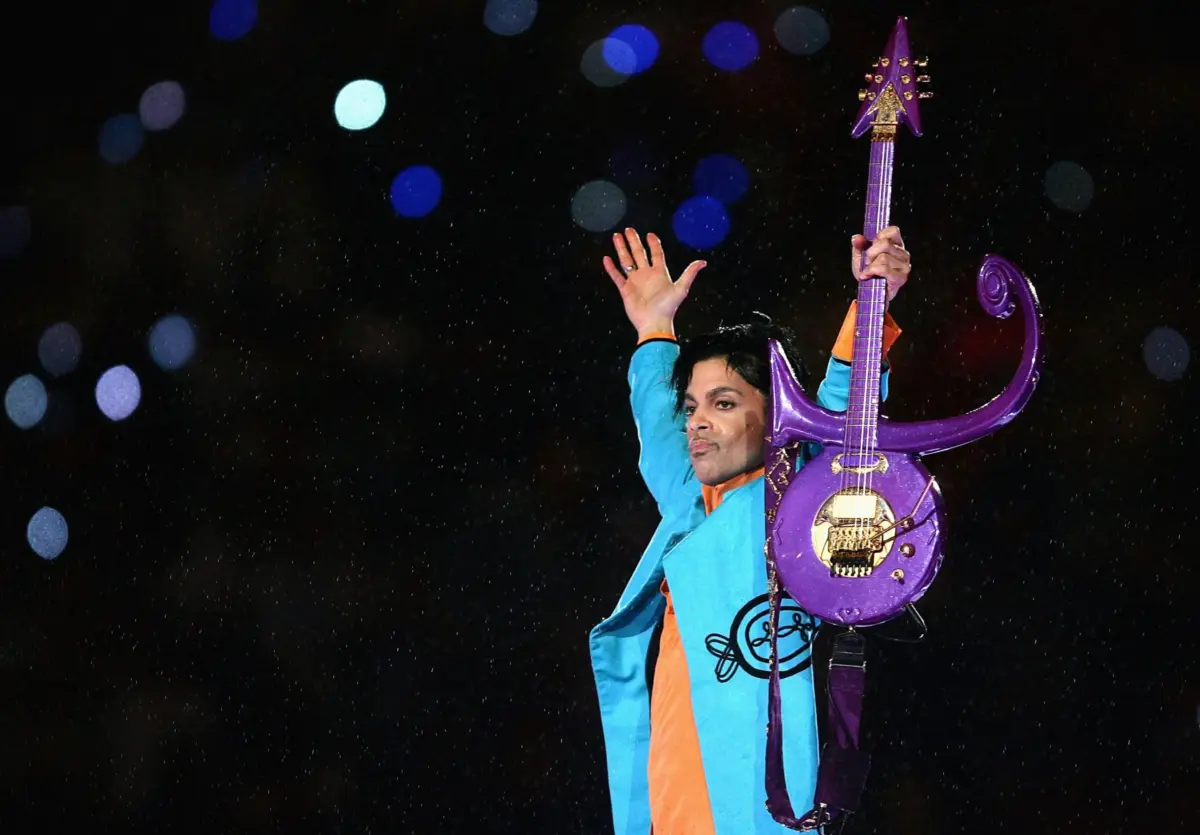
The legacy of a musical icon is a fragile, fiercely guarded landscape, and few artists command a more protective or detail-oriented fanbase than the late, legendary Prince. Nearly a decade after the unexpected passing of the multi-instrumentalist, singer, and composer, his estate finds itself at the center of an impassioned debate regarding archival integrity. At the heart of the controversy is Timeless, a newly released 10-track career-spanning collection designed to capture the breathtaking breadth of the Purple One’s creative evolution.
While the compilation has been largely celebrated for bridging decades of unreleased and rare material—stretching from a 1977 teenage recording session to a live performance captured just weeks before his death—one specific track has triggered a wave of discontent among purists. The song in question, a 2003 soul-infused jam titled “Calabama,” features newly recorded horn overdubs layered over an archival multitrack.
For a subset of fans, modifying an unreleased master tape breaks a sacred covenant with an artist renowned for his perfectionism and control. They argue that if Prince left a track in the vault without horns, it should remain untouched. Conversely, the estate, operating through NPG Records and his management team, defends the addition as a fulfillment of the artist’s clear, documented intent. In an era where digital manipulation and artificial intelligence loom heavily over archival releases, the “Calabama” controversy exposes the delicate tightrope music estates must walk: balancing historical preservation with the completion of unfinished artistic visions.
Detailed Chronology: The Anatomy of a Vault Release and Subsequent Backlash
To understand the friction surrounding Timeless, one must examine the timeline of both the song’s creation and the modern rollout of the collection itself.
The story of “Calabama” dates back to 2003, a period when Prince was actively experimenting with organic soul textures, live instrumentation, and improvisational studio sessions. During the recording of the track, Prince hit a creative crossroad within the song’s bridge. According to archival multitrack logs and studio notes, the vocal track captures Prince explicitly calling out twice for “horns”—a directive meant to cue a dynamic brass section. However, rather than tracking live horn players at that exact moment, a placeholder synthesizer was deployed to map out the desired harmonic space.
When Prince archived the session and sent the multi-track into the legendary vault at his Paisley Park estate in Minnesota, that synthesizer placeholder remained. The physical horns were never tracked during his lifetime.
Fast forward to 2026. As part of a sweeping, yearlong global commemoration marking the 10th anniversary of Prince’s tragic passing from an accidental fentanyl overdose on April 21, 2016, NPG Records and the estate curated Timeless. The project represents a landmark achievement in the artist’s archival releases: it is the first-ever compilation to span every major era of his career. The sequencing takes listeners on an extraordinary journey, beginning with "I Am You," a demo recorded in 1977 when Prince was just 19 years old, and culminating in a haunting live rendition of his 1999 B-side "How Come U Don’t Call Me Anymore?", captured in Oakland mere weeks before his death.
However, when Timeless hit streaming platforms and physical shelves, eagle-eared fans quickly isolated “Calabama.” Discussions erupted on fan forums, Reddit, and X (formerly Twitter), questioning why the horns on the bridge sounded noticeably crisp and modern compared to the vintage 2003 production.
The speculation reached a fever pitch when a user on X shared what they purported to be the original, unadorned “Calabama” mix sourced from earlier collector circles. The leak laid bare the exact moment where the synth patch had previously lived, igniting a digital firestorm. Fans argued that altering the master recording violated the sanctity of the vault, transforming a historical artifact into a modern revisionist project.

Supporting Context & Metrics: The Philosophy of the Vault and Fan Reactions
The backlash over “Calabama” is not merely about a few notes of brass; it touches on a fundamental philosophical divide in the archival music world. To Prince’s dedicated fanbase, the vault is viewed as a museum of unvarnished history. Prince was notoriously hands-on, controlling every micro-detail of his songwriting, production, mixing, and mastering. His refusal to add horns to “Calabama” during his lifetime—despite calling out for them on tape—was interpreted by some as a deliberate creative choice to leave the song in its skeletal, unfinished state.
On social media, the frustration was palpable. One prominent fan wrote on X:
"I think the ask from the fans is the fact that even if Prince called for horns he never added them… he threw that track in the vault the way it was, never added [them]. And that’s what the fans want. The original version the way he stored them."
Another user echoed this sentiment, calling the decision absurd:
"Ridiculous. There are plenty of Prince songs with synth horns even with him explicitly saying ‘horns.’ He never added them. They should just release what is on tape!!"
These reactions highlight a deep-seated anxiety among collectors: the fear that estates will "finish" music to make it more commercially viable or radio-friendly, sacrificing raw authenticity for polished perfection.
From a metrics and structural standpoint, Timeless is designed to appeal to both casual listeners and hardcore collectors. Spanning 10 carefully selected tracks, the album acts as an educational primer and an emotional tribute. Yet, the inclusion of a posthumously edited track on a career-spanning retrospective created a jarring dissonance for a community that prides itself on deep archival knowledge.
Official Statements: NPG Records Clarifies the Creative Process
Faced with mounting scrutiny and online debate, NPG Records and Prince’s management team took the rare step of addressing the controversy directly. On Thursday, September 3, the estate published an explanatory note on Instagram to clear the air regarding the production choices behind Timeless.
The statement provided a granular breakdown of the “Calabama” sessions:

“The archived multitrack featured a synthesizer filling that space, which horn players later dubbed. Consistent with Prince’s songwriting and production approach on numerous previous recordings, a group of horn players who played with Prince were assembled to overdub Prince’s synthesizer track with the intended horn line, and this version was released on Timeless.”
To reassure purists concerned about unauthorized tinkering or digital fabrication, the estate emphasized several crucial points:
- Original Parts Intact: All of Prince’s original vocal, instrumental, and compositional contributions remain completely untouched and authentic.
- Trusted Collaborators: The brass elements—consisting of trombone, saxophone, and trumpet—were performed not by anonymous session musicians or AI algorithms, but by Greg Boyer, Adrian Crutchfield, and Lynn Grissett. All three are credited in the album liner notes and share a deep, historical working relationship with Prince.
- Zero AI Usage: The estate explicitly noted that artificial intelligence was in no way utilized in the creation or enhancement of the track.
- An Isolated Incident: The note confirmed that with the sole exception of completing the intended instrumentation on “Calabama,” no other posthumous overdubs were performed on any other track across the entire Timeless collection.
The estate concluded its statement by directly addressing the duality of fan sentiment, acknowledging both the critics and the supporters:
“Some may object to the completing of the unfinished portion of ‘Calabama’ (even using Prince’s hand-picked musicians and aligned with his creative intent), while others have been very supportive of it and the music overall (which we thank you). We understand that not everyone will agree on every decision made regarding Prince music and business matters yet your passion, knowledge, and thoughtful questions are appreciated.”
Future Outlook: Navigating the Endless Depths of Paisley Park
The controversy surrounding Timeless serves as a critical case study for music estates managing massive, culturally priceless archives. Prince’s vault at Paisley Park is legendary—frequently rumored to hold thousands of unreleased master tapes, alternate takes, finished albums, and live concert recordings sufficient to sustain posthumous releases for decades to come.
As the estate navigates the complex second decade of Prince’s post-mortem legacy, the lessons learned from the “Calabama” debate will undoubtedly shape future archival strategies. Recognizing the need for greater transparency, the management team has promised to provide “even more details regarding the release of the music” moving forward.
The estate also offered a pragmatic philosophical defense for releasing incomplete works, noting that many recordings housed within the vault were left in various states of undress. However, they argued that unfinished status “should not prevent them from being released” to an eager global audience hungry for new expressions of Prince’s genius.
Moving forward, the challenge for NPG Records will lie in establishing a clear, standardized framework for archival curation. Whether future releases lean toward purist presentations of raw vault tapes or lean into the completion of unfulfilled studio prompts using Prince’s trusted inner circle, communication will be key.
For now, Timeless remains a monumental achievement in honoring a musical titan, even as it sparks vital conversations about where the line should be drawn between historical preservation and creative completion. As Prince’s irreplaceable catalog continues to unfold for generations to come, the passionate engagement of his fanbase remains the ultimate testament to an enduring, peerless artistic legacy.