Executive Overview
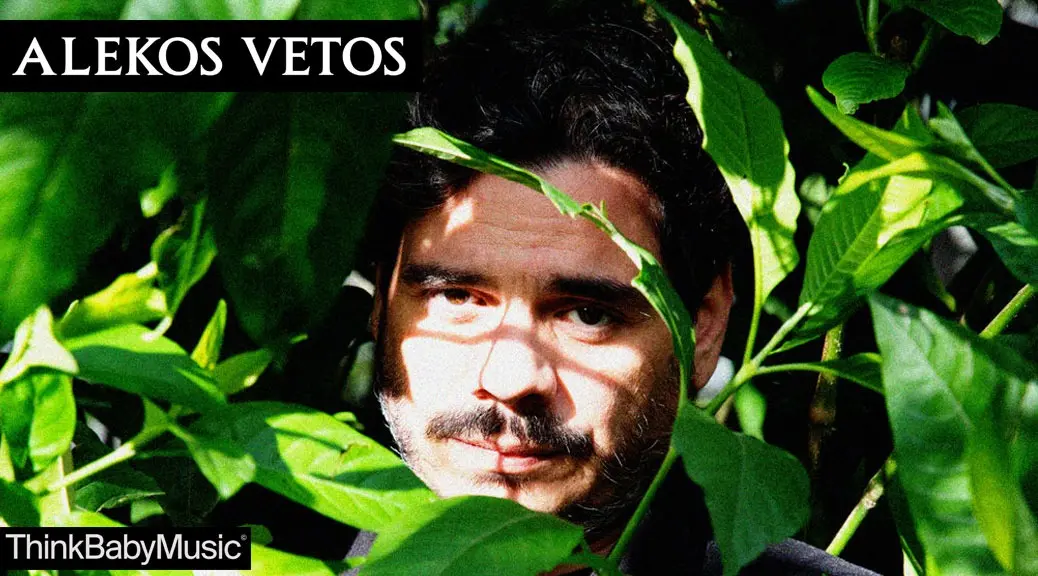
In contemporary jazz and modern world music, the conventional rhythm section—anchored by a trap kit and a steady, percussive heartbeat—is often considered indispensable. Yet, on his landmark third studio album, Mediterranean Echoes, virtuosic oud player and composer Alekos Vretos boldly strips away the drums and percussion altogether. Released via the Athens-based independent arts collective Thinkbabymusic, the seven-track record poses an ambitious question: how does a jazz quartet maintain its internal clock, swing, and momentum when left entirely to its own devices?
The answer lies in a collaborative, telepathic pulse shared among Vretos and his elite ensemble: pianist Dimitris Verdinoglou, bassist Kimon Karoutzos, and clarinetist Giannis Diskos. Dispensing with the qanun and the drum kit that defined his previous release, K. On Top, Vretos shifts his aesthetic toward a more spacious, chamber-jazz framework. The resulting album is a masterclass in cross-cultural dialogue, seamlessly fusing the modal traditions of the Eastern Mediterranean and the Arab world with sophisticated Western harmonic vocabulary.
From the opening notes of Ntinos Manos’s "Now What" to the breathtaking solo oud sign-off on "Signature," Mediterranean Echoes establishes Vretos not merely as a master instrumentalist, but as a visionary bandleader and producer who knows when to step back and let his collaborators shine. Available on both CD and vinyl—with the latter offering an organic midpoint intermission—this release stands as a defining moment in modern Mediterranean jazz.
Detailed Chronology: The Evolution of Alekos Vretos
To fully appreciate the artistic maturity displayed on Mediterranean Echoes, one must examine the rigorous, border-crossing trajectory of its creator. Born in Athens in 1976, Alekos Vretos displayed an early affinity for music, beginning his formal classical piano training at the tender age of three. This foundational immersion in European classical canons at the prestigious Athenaeum Conservatory instilled in him a deep structural understanding of harmony, counterpoint, and composition.
As his artistic horizons expanded, Vretos gravitated toward the boundless improvisational freedom of jazz. He furthered his studies at the Philippos Nakas Conservatory before crossing the Atlantic to attend the legendary Berklee College of Music in Boston. Immersed in the epicenter of modern jazz education, Vretos performed extensively as a pianist in various jazz ensembles and big bands, absorbing the intricacies of American syncopation and harmonic extension.
However, a defining pivot occurred when Vretos encountered the oud—the historic, fretless short-necked lute of the Middle East. Seeking authenticity and depth, he studied under the legendary master Simon Shaheen, a pivotal figure in bridging Arabic music traditions with Western classical and jazz idioms. This mentorship unlocked a new sonic vocabulary for Vretos, allowing him to channel his deep-seated Greek roots and American jazz training through the soulful, resonant timbre of the oud.
Vretos’s recording career reflects this ongoing synthesis of cultures:
- 2004: He assumed the role of leader for The Meliti Ensemble on the acclaimed album Yunan, signaling his commitment to trans-Mediterranean musical exploration.
- 2009: Vretos made his official solo album debut with Merging, a cross-cultural milestone that featured the late, great Lebanese nay virtuoso Bassam Saba.
- Intervening Years: Vretos continually refined his ensemble concepts, leading up to K. On Top, which utilized a more traditional configuration featuring a qanun player and a dedicated percussionist.
- Present Day: With Mediterranean Echoes, Vretos has arrived at a minimalist yet emotionally dense paradigm. Recorded and mixed by Giorgos Karyotis at Sierra Studios in Athens, and expertly mastered by Andrew Tulloch at The Blue Studio in London, the album represents a seamless marriage of meticulous studio craftsmanship and raw, spontaneous performance.
Supporting Context & Metrics: Deconstructing the Tracklist and Instrumentation
The architectural brilliance of Mediterranean Echoes lies in its structural diversity, generosity of authorship, and innovative instrumental configurations. While Vretos produced and arranged the entire project, he authored only four of the seven compositions, sharing the compositional canvas with his bandmates and traditional folkloric sources.
Side One: Opening Salvos and Orchestral Depth
The album opens with "Now What," penned by Ntinos Manos. The track introduces the listener to the unique ensemble dynamic, beginning with a distinctly Greek rhythmic pulse on the piano before the oud and clarinet weave their way into the texture, all underpinned by an enduring classical elegance.
Track two, "Rev," stands as the record’s longest single piece. Here, Vretos brings his oud firmly to the forefront, immediately evoking the atmospheric, modal brilliance of contemporary masters like Dhafer Youssef and Anouar Brahem. The timbre of Vretos’s instrument is rich, woody, and intensely expressive.
The journey continues with "Jovano Jovanke," a treasured traditional folk song sung across the southern Balkans. Clarinetist Giannis Diskos commands the spotlight, honoring the generational lineage of regional folk bands before handing the momentum over to the rhythm-conscious quartet.

Side one concludes with "H.," the album’s most ambitious arrangement. It is the sole track to incorporate an external ensemble: Quintarco, the acclaimed string quintet of the Athens State Orchestra. Featuring Dimitris Semsis and Marina Haralampides on violins, Enkela Kokolani on viola, Vania Papadimitriou on cello, and Takis Kapogiannis on contrabass, the quintet elevates the music to cinematic heights. The resulting emotional weight feels like an unfolding tragedy, with Vretos extracting an almost overwhelming depth of feeling from his oud.
Side Two: The Freedom Suite and Solo Epilogue
Flipping the vinyl unlocks the natural second movement of the record. Side two opens with Dimitris Verdinoglou’s three-part masterwork, "The Freedom Suite":
- "Lullaby": Dominated in its opening third by Verdinoglou’s lyrical piano work before the quartet gathers in harmonious unity.
- "The Quest": A brief, dramatic interlude catalyzed by Diskos’s expressive clarinet lines.
- "Dance of Freedom": The longest movement of the suite, featuring a scintillating dialogue and duel between piano and clarinet.
The album then moves into "Guerra"—derived from the Spanish and Italian words for "war." This track represents the tightest, most intensely unified performance of the quartet, functioning as a sonic manifestation of collective resilience and struggle.
Finally, the album closes with "Signature," an intimate, solo performance where Vretos stands entirely alone with his oud. Literally signing off on his own artistic statement, Vretos delivers a closing track that is as haunting as it is remarkable.
Official Statements and Production Insights
The creation of Mediterranean Echoes required a complete rethinking of musical roles within the studio environment. By removing the safety net of a percussionist, every musician on the session was forced to develop an acute, hyper-aware sense of micro-timing and rhythmic elasticity.
In production notes accompanying the release, industry insiders have praised the acoustic clarity achieved at Sierra Studios. Giorgos Karyotis captured the organic warmth of the acoustic instruments without resorting to heavy digital processing, allowing the natural resonance of the oud’s wooden soundboard to blend seamlessly with the percussive hammer-strikes of Verdinoglou’s piano and the breath-driven articulations of Diskos’s clarinet.
Furthermore, Vretos’s decision to hand the album’s structural centerpiece—"The Freedom Suite"—over to his pianist highlights a rare democratic leadership style. Rather than dominating every second of his own record, Vretos acts as a curator of space. As mastering engineer Andrew Tulloch noted during the finalization at The Blue Studio in London, the spatial dynamics across the master files allowed for an exceptionally wide soundstage, giving each instrument distinct breathing room even during the most complex polyphonic passages.
Future Outlook: The Legacy of Drumless Mediterranean Jazz
As the boundaries between jazz, classical chamber music, and traditional regional folk continue to blur, Mediterranean Echoes offers a blueprint for future sonic explorations. Alekos Vretos has proven that rhythmic intensity does not require the physical presence of a drum kit; rather, when skilled artists share a deep telepathic and cultural kinship, rhythm becomes an omnipresent atmosphere generated collectively from within.
Looking ahead, Vretos’s refusal to stand still artistically suggests that his future endeavors will continue to challenge geographical and stylistic borders. Whether performing live in intimate European jazz clubs or large-scale world music festivals, this drumless quartet configuration provides a flexible, highly responsive vehicle for improvisation.
Mediterranean Echoes is more than just a collection of songs; it is an ancient yet forward-looking prophecy translated into modern sound. For listeners willing to follow Vretos down this calm, deeply enriched path, the album offers a profound meditation on memory, migration, and musical freedom—truly an essential milestone in the evolution of modern improvised music.