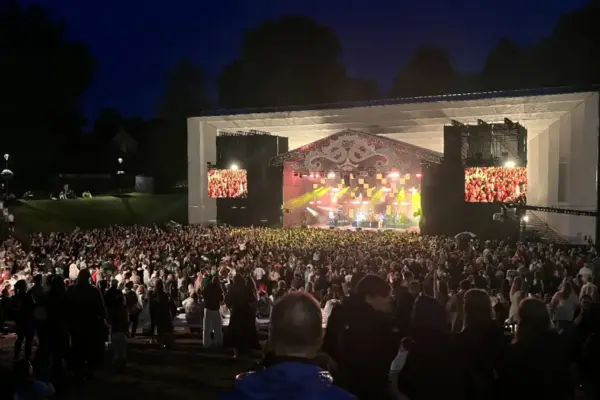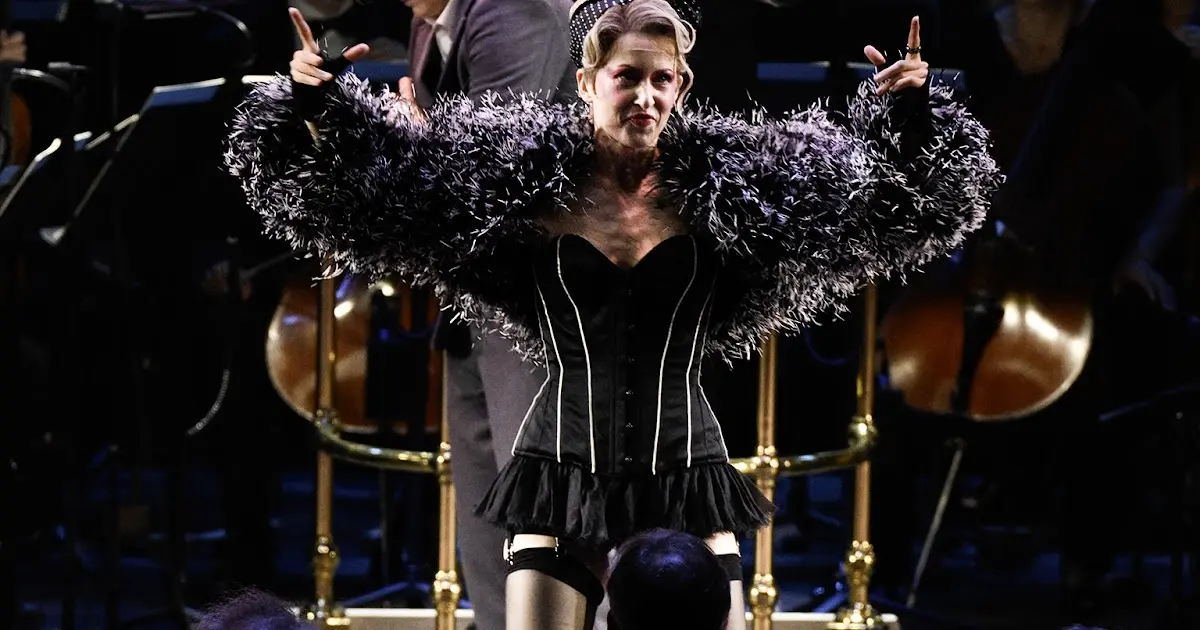
On August 19, 2026, the prestigious BBC Proms played host to a masterclass in operatic adaptation as Glyndebourne Opera descended upon the cavernous expanses of the Royal Albert Hall. Bringing Richard Strauss’s intricate and stylistically complex tragicomedy Ariadne auf Naxos to London’s most famous auditorium is no minor undertaking. The venue, notorious for its acoustic idiosyncrasies and unwieldy scale, has historically swallowed up nuanced operatic performances. Yet, under the musical direction of Robin Ticciati leading a chamber-sized London Philharmonic Orchestra (LPO), and utilizing a stripped-back adaptation of Laurent Pelly’s staging directed by Paul Higgins, the production achieved a rare alchemy.
Rather than succumbing to the spatial limitations of the venue, this scaled-down iteration thrived on its own constraints. The production relied heavily on uncompromising musical values, striking theatrical clarity, and an extraordinary attention to dramatic detail from a world-class cast. Featuring Rachel Willis-Sörensen as Ariadne, David Butt Philip as Bacchus, Alina Wunderlin as Zerbinetta, and Samantha Hankey as the Composer, the evening proved to be an intellectual and emotional triumph. This performance bypassed the overly complex, sometimes alienating high-concept modernisms seen elsewhere in Europe—such as Erサン Mondtag’s futuristic Salzburg staging—and instead delivered a compelling, highly focused, and deeply human exploration of art, compromise, and creation.
Detailed Chronology & Production Breakdown
The Prologue: Backstage Chaos and Creative Anguish
The production opened with minimal staging—merely a pair of doorways for the Prologue, complemented by elevated platforms introduced during the transition into the opera proper. Laurent Pelly’s contemporary costumes immediately grounded the frantic, madcap backstage atmosphere. From the first moments, the chaotic ecosystem of high-art patronage, artistic ego, and administrative interference was rendered with razor-sharp clarity.
.jpg)
Dominating the Prologue was Samantha Hankey as the Composer. Adorned in an uninspiring, workaday suit and sporting fierce makeup that highlighted the character’s manic urgency, Hankey delivered a masterclass in physicalized anxiety. Contorted body language and an intense, unwavering focus manifested the Composer’s absolute obsession with the purity of his art. Whenever the character contemplated the sublime beauties of music, Hankey’s phrasing soared, elevating the neurotic outbursts into moments of transcendent vocal beauty.
Counterbalancing the Composer’s intensity was Ru Charlesworth’s brilliantly mercurial Dancing Master. Charlesworth injected the role with magnetic personality, melding precise physical footwork with exceptional musicality. This vitality was matched by Alina Wunderlin’s Zerbinetta and her mischievous troupe of comedians—Mikhail Timoshenko (Harlequin), Caspar Singh (Scaramuccio), Liam James Karai (Truffaldino), and Liam Bonthrone (Brighella). William Relton rounded out the Prologue’s spoken and dramatic framework with a wonderfully acerbic Majordomo, sharply defining the tension between corporate patronage and artistic integrity.
The Opera Proper: Myth, Metatheater, and Vocal Splendor
Transitioning into the main opera, the stripped-back aesthetic remained. Although Hankey’s Composer lingered purposefully on stage without explicit contextual framing, the sheer dramatic commitment of the ensemble swept the audience past any potential staging ambiguities.
.jpg)
The triad of nymphs—Anna Denisova (Naiad), Ekaterina Chayka-Rubinstein (Dryad), and Eirin Rognerud (Echo)—provided a luxurious, fine-grained tonal foundation, functioning not merely as a backing group but as equal partners in texture and sophistication.
Rachel Willis-Sörensen’s Ariadne offered a sober, serious, yet profoundly compelling focal point. Rather than ignoring the surrounding chaos of the commedia dell’arte troupe, this Ariadne reacted to it, lending psychological depth to her isolation on the island of Naxos. The prolonged, agonizing build-up to the arrival of Bacchus was handled with immaculate pacing. In her performance of "Es gibt ein Reich," Willis-Sörensen deployed an ample, richly generous voice characterized by a gorgeous sense of line. She effortlessly filled the vast Royal Albert Hall while retaining the capacity to scale down her volume into moments of haunting, vulnerable intimacy.
As Bacchus, David Butt Philip offered what was arguably one of the finest-sung accounts of the role in recent memory. His vocal stamina appeared boundless, demonstrating a masterclass in heroic tenor singing. Rather than relying purely on sonic volume to conquer the hall, Butt Philip paid meticulous attention to text and nuance. His interactions with Willis-Sörensen transformed the first half of their climactic duet into a delicate tragi-comedy of misunderstandings, bringing unprecedented dramatic subtlety to a notoriously demanding scene. Observant audience members could even track the immense physical exertion required for his high-lying notes by watching the visible engagement of his diaphragm—a testament to the rigorous physical mechanics underpinning his seemingly effortless sound.
.jpg)
Meanwhile, Alina Wunderlin’s Zerbinetta initially raised concerns about whether her lyric-coloratura voice would project adequately within the acoustic challenges of the Royal Albert Hall. However, during her show-stopping second-act set pieces—most notably "Grossmächtige Prinzessin"—Wunderlin proved entirely equal to the space. She worked the room with bravura theatricality, turning the aria into a dazzling cabaret performance executed with pinpoint coloratura agility. Mikhail Timoshenko’s energetic Harlequin, supported by the cohesive physical and vocal work of the male quartet, cemented the commedia scenes as vibrant counterpoints to Ariadne’s melancholic gravity.
Supporting Context & Performance Metrics
Orchestral Balance and Acoustic Engineering
A recurring hazard of mounting fully staged or semi-staged opera within the Royal Albert Hall is the eternal struggle of orchestral balance. Full symphonic forces frequently overwhelm the vocalists, drowning out delicate high-register phrasing. However, conductor Robin Ticciati circumvented this pitfall by employing a chamber-sized formation of the London Philharmonic Orchestra (LPO).
By slimming down the orchestral footprint, the LPO achieved a chameleon-like agility, delivering the rapid emotional shifts embedded in Strauss’s score with vivid, translucent instrumental colors. The balance between pit and stage was managed with exemplary sympathy, allowing the singers’ textual articulation to cut through clearly without forcing their voices into abrasive territory.
.jpg)
Comparative Analysis: Reducing Scenic Clutter
This Glyndebourne Prom production stands as a powerful counter-argument to the prevailing European trend of overwrought, high-concept directorial interventions. Where recent productions—such as Ersan Mondtag’s futuristic, alienating Ariadne at the Salzburg Festival—risk losing the soul of Strauss and Hofmannsthal’s original libretto beneath layers of extraneous conceptual baggage, the Glyndebourne/Pelly/Higgins framework demonstrated that subtraction often equals amplification. By stripping away extraneous sets and focusing squarely on vocal psychology, textual integrity, and theatrical timing, the production allowed the inherent brilliance of the work to shine unobstructed.
Official Statements & Cast Directory
Production Personnel & Cast List
- Composer: Richard Strauss
- Librettist: Hugo von Hofmannsthal
- Conductor: Robin Ticciati
- Orchestra: London Philharmonic Orchestra (LPO)
- Director (BBC Proms adaptation): Paul Higgins (based on Laurent Pelly’s Glyndebourne production)
- Venue: Royal Albert Hall, London
- Date of Performance: August 19, 2026
Principal Cast:
- Ariadne / Primadonna: Rachel Willis-Sörensen
- Bacchus / Tenor: David Butt Philip
- Zerbinetta: Alina Wunderlin
- The Composer: Samantha Hankey
- Music Master: Michael Kraus
- Dancing Master: Ru Charlesworth
- Harlequin: Mikhail Timoshenko
- Scaramuccio: Caspar Singh
- Truffaldino: Liam James Karai
- Brighella: Liam Bonthrone
- Naiad: Anna Denisova
- Dryad: Ekaterina Chayka-Rubinstein
- Echo: Eirin Rognerud
- Majordomo: William Relton
Future Outlook
The triumphant reception of Glyndebourne Opera’s Ariadne auf Naxos at the 2026 BBC Proms establishes a compelling blueprint for mounting large-scale operatic repertoire within non-traditional performance spaces. As major classical institutions face mounting economic and logistical pressures to tour elaborate productions, the success of this stripped-back, actor-centric model offers a clear path forward.
By prioritizing crisp theatrical staging, rigorous vocal discipline, and sensitive chamber orchestration, opera companies can successfully conquer notoriously difficult acoustic environments like the Royal Albert Hall without sacrificing artistic integrity. Following the triumphs of their previous Proms adaptations—such as Bizet’s Carmen in 2024—Glyndebourne has cemented its reputation as a master of translating festival-tier artistry into accessible, high-impact national events. Future seasons of the BBC Proms would do well to emulate this rigorous, text-driven philosophy, proving that when opera is executed with this level of dramatic focus, less is almost invariably more.