Executive Overview
In a rare and deeply moving television appearance, Greater Manchester Mayor Andy Burnham captivated the nation on Celebrity Gogglebox during a special charity broadcast in aid of Stand Up to Cancer. While the reality television format is typically designed for lighthearted entertainment and humorous commentary, the evening took a profoundly somber turn when the programme shared the tragic story of Will, a vibrant 41-year-old father who tragically passed away just seven days after receiving a late-stage bowel cancer diagnosis.
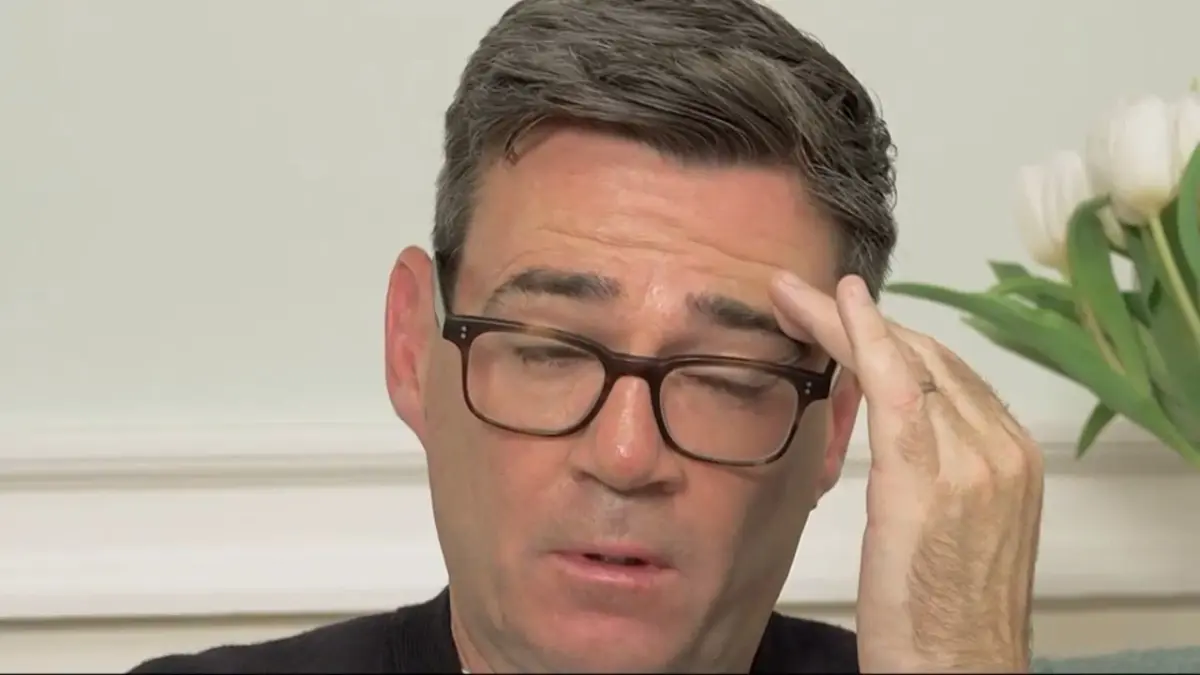
Mr. Burnham, known for his formidable political resilience and outspoken advocacy for public health, was visibly shaken, fighting back tears on national television as the full weight of the family’s tragedy unfolded. The segment served as an unexpected focal point for the broadcast, sparking a nationwide conversation regarding the critical importance of early diagnosis, the relentless progression of aggressive gastrointestinal malignancies, and the often-overlooked psychological and systemic burdens placed on young families navigating sudden, catastrophic medical crises.
This comprehensive report examines the emotional broadcast, the broader implications of early-onset bowel cancer in the United Kingdom, the diagnostic bottlenecks within the National Health Service (NHS), and the ongoing imperative to fund translational cancer research. Through expert commentary, epidemiological metrics, and a detailed chronicle of the broadcast, this article explores how a single television segment catalyzed a renewed public health discourse on cancer awareness.
Detailed Chronology: The Broadcast That Stunned the Nation
The special charity episode of Celebrity Gogglebox, broadcast on Friday, 23 October, brought together prominent public figures, actors, comedians, and politicians to view and react to the week’s television highlights. The primary objective of the broadcast was to galvanize public support and generate vital donations for Stand Up to Cancer, a joint campaign by Cancer Research UK and Channel 4.
The Turning Point in the Episode
As the broadcast progressed through its usual roster of comedic television reviews, the mood shifted dramatically with the introduction of a mini-documentary package detailing the personal stories of individuals and families affected by cancer. Among the profiles featured was that of Will, a 41-year-old father whose life was upended in a matter of days.
According to the segment, Will had initially experienced mild, non-specific symptoms—common complaints that are frequently misattributed to less severe gastrointestinal issues such as irritable bowel syndrome (IBS) or hemorrhoids. By the time diagnostic investigations were completed, physicians delivered the devastating news that Will was suffering from advanced bowel cancer.
In a cruel twist of fate that compounded the family’s trauma, Will’s partner was diagnosed with cancer concurrently. While his partner fortunately responded favorably to subsequent oncological interventions, Will’s disease had advanced far beyond the reach of modern curative therapies. Exactly one week after his initial diagnosis, Will passed away, leaving behind a grieving partner and young children.
On-Screen Reaction and Public Resonance
Cameras captured Andy Burnham watching the report from a living room setup alongside fellow participants. As the narrator detailed the timeline of Will’s sudden decline—emphasizing the horrifying compression of time between diagnosis and mortality—Mr. Burnham’s composure visibly fractured.
Struggling to maintain his composure, the Mayor of Greater Manchester fell silent, his eyes welling with tears as he absorbed the devastating reality of the narrative. The raw, unfiltered display of empathy resonated instantly with viewers across social media platforms, transforming a standard charity television appearance into a national moment of shared grief and reflection.
Unlike polished political speeches delivered behind podiums, this unscripted reaction humanized a high-profile political figure, reminding audiences of the universal vulnerability to life-threatening diseases regardless of social standing or professional station.
Supporting Context & Metrics: The Crisis of Early-Onset Bowel Cancer
To fully contextualize the emotional gravity of Andy Burnham’s reaction on Celebrity Gogglebox, it is essential to examine the epidemiological landscape of bowel cancer (colorectal cancer) in the United Kingdom, particularly concerning younger demographics.
Epidemiological Shifts: Bowel Cancer in Under-50s
While bowel cancer has historically been categorized as a disease primarily affecting older adults—with the vast majority of cases diagnosed in individuals aged 60 and over—recent decades have charted an alarming upward trajectory in early-onset diagnoses.
- Rising Incidence Rates: According to data from Cancer Research UK, bowel cancer rates among adults under the bracket of 50 have risen steadily over the past twenty years. While the absolute number of cases remains lower in younger cohorts compared to older populations, the aggressive nature of the disease in younger patients often results in late-stage presentations.
- Delayed Diagnoses: Younger patients diagnosed with bowel cancer frequently experience prolonged diagnostic intervals. Because medical professionals and patients alike often attribute symptoms such as rectal bleeding, abdominal pain, changes in bowel habits, and unexplained fatigue to benign conditions, malignancies are frequently identified at Stage III or Stage IV.
- Survival Disparities: Late-stage diagnoses significantly diminish five-year survival probabilities. While early-stage (Stage I) bowel cancer boasts a survival rate exceeding 90%, metastatic (Stage IV) disease drops that figure precipitously, underscoring the vital importance of prompt investigation of persistent red-flag symptoms.
The NHS Diagnostic Challenge
The UK’s National Health Service operates under immense logistical pressures, which have been exacerbated by post-pandemic backlogs and workforce shortages. Timely access to diagnostic modalities such as colonoscopies, flexible sigmoidoscopies, and urgent lower gastrointestinal pathways remains a formidable challenge.
Healthcare advocates and clinical researchers have long argued that streamlining referral pathways for younger patients presenting with persistent gastrointestinal symptoms is paramount. Campaigns such as those run by Stand Up to Cancer directly subsidize clinical trials and translational research initiatives designed to identify biomarkers that can detect aggressive cancers long before they manifest overt clinical symptoms.
Official Statements and Public Reactions
The broadcast prompted an immediate wave of public commentary, media analysis statements from cancer charities, and acknowledgments from political figures.
Cancer Research UK and Stand Up to Cancer
Representatives from Stand Up to Cancer issued statements praising the participating celebrities for bringing authentic emotional depth to the campaign. A spokesperson for the charity noted:
"Stories like Will’s remind us all of why this fundraising is not merely a philanthropic endeavor, but an urgent scientific race against time. When public figures like Andy Burnham allow themselves to show genuine vulnerability on national television, it breaks down the emotional walls surrounding terminal illness and encourages people to talk openly about their symptoms, fears, and losses."
Political and Public Discourse
While Mr. Burnham did not issue a formal policy statement immediately following the broadcast, his office acknowledged the overwhelming public response to his appearance. Constituents and health advocates utilized social media to thank the mayor for validating the profound grief experienced by families devastated by rapid cancer diagnoses.
Furthermore, medical professionals weighed in on the discussion, utilizing the viral moment to reiterate key public health messages regarding bowel health:
- Never Ignore Persistent Symptoms: Medical bodies stress that any change in bowel habits lasting longer than three weeks, unexplained weight loss, blood in the stool, or persistent abdominal discomfort warrants immediate medical evaluation.
- Advocating for Oneself: Health campaigners emphasize the importance of patients pushing for secondary care referrals if initial treatments for presumed benign conditions fail to resolve symptoms.
Future Outlook: Translating Emotion into Action
The poignant moment shared by Andy Burnham on Celebrity Gogglebox serves as a powerful reminder that behind every epidemiological statistic lies a human story of profound love, loss, and disruption. As the UK healthcare system continues to navigate structural challenges in cancer diagnostics and treatment delivery, the imperative to accelerate research funding has never been more urgent.
The Road Ahead for Cancer Research
Initiatives like Stand Up to Cancer play a critical role in bridging the gap between laboratory discoveries and clinical applications. Future advancements in oncology focus heavily on:
- Liquid Biopsies: Developing blood-based screening tests capable of detecting circulating tumor DNA (ctDNA) long before tumors become visible on imaging scans or endoscopies.
- Personalized Medicine: Utilizing genetic profiling of tumors to tailor immunotherapies and targeted pharmaceutical interventions, maximizing efficacy while minimizing systemic toxicity.
- Primary Care Education: Implementing continuous professional development modules for general practitioners to ensure that younger patients presenting with atypical gastrointestinal symptoms are fast-tracked for diagnostic investigations.
Conclusion
Andy Burnham’s tears on national television transcended the boundaries of standard television entertainment. They served as an unfiltered mirror reflecting the collective grief of a nation touched by a disease that continues to claim far too many lives prematurely. By bringing visibility to the tragic story of Will and his family, the broadcast underscored a timeless truth: while political debates and policy frameworks dominate the news cycle, the ultimate measure of a society’s health infrastructure lies in its ability to protect its families, diagnose disease swiftly, and fund the scientific breakthroughs of tomorrow.