Executive Overview
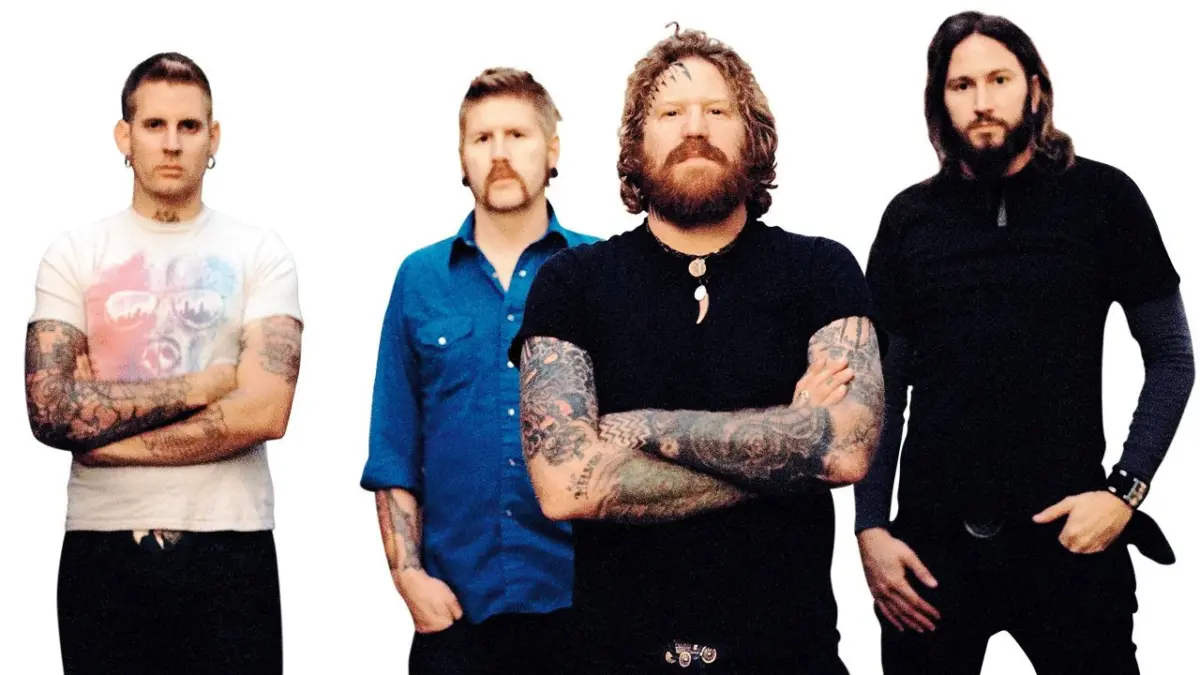
A high-stakes legal war has erupted within the camp of Grammy-winning progressive heavy metal outfit Mastodon following a civil lawsuit filed by the estate of their late co-founding guitarist, Brent Hinds. The lawsuit, initially uncovered by the Atlanta Journal-Constitution, alleges that the surviving members of the Atlanta-based group committed multiple legal infractions following Hinds’ bitter departure from the band and subsequent untimely death.
The complaint centers on three primary causes of action: the unauthorized commercial exploitation of Hinds’ image and likeness to promote Mastodon’s new studio album Marrow Deep; the unlawful public disclosure of confidential, highly sensitive personal information regarding Hinds’ struggles with alcohol abuse; and a failure to execute a fair, legally binding equity buyout of Hinds’ 25-year financial stake in the band’s corporate and business entities.
According to court documents, the band offered Hinds a flat buyout sum of $80,000 prior to his death—a figure his estate characterizes as an extreme undervaluation of a founding member’s share in a quarter-century legacy of intellectual property, publishing rights, physical merchandise, and lucrative touring catalog. Hinds never accepted the terms, and his estate subsequently frozen any payout pending a comprehensive forensic audit of the group’s accounting records.
In a formal response posted to their public channels, Mastodon’s surviving members—Troy Sanders, Brann Dailor, and Bill Kelliher—categorically rejected the claims, labeling the lawsuit "meritless" and expressing deep sorrow that a private corporate dispute had spilled into the public eye. As both parties prepare for a potential legal showdown in Georgia state court, the conflict raises critical questions surrounding post-mortem publicity rights, partner buyouts in long-running musical groups, and the delicate line between artistic transparency and breach of privacy.
Detailed Chronology of Events
+-----------------------------------------------------------------------------------+
|                                 TIMELINE OF EVENTS                                |
+-----------------------------------------------------------------------------------+
| 2000          | Mastodon forms in Atlanta, Georgia, with Brent Hinds on lead guitar. |
| Early 2024    | Mastodon and Hinds part ways after 25 years of continuous partnership.|
| August 2025   | Brent Hinds tragically dies in a motorcycle crash at age 51.      |
| Mid-2026      | Mastodon announces album 'Marrow Deep' & releases promo documentary. |
| Sept. 2026    | Estate of Brent Hinds files civil lawsuit in Georgia court.       |
| Sept. 2026    | Mastodon issues public statement denying allegations as "meritless". |
+-----------------------------------------------------------------------------------+
The Separation and Tragic Loss (2000–2025)
Formed in Atlanta in 2000, Mastodon established itself over two decades as one of the most critically acclaimed and commercially successful heavy metal acts of the modern era. Alongside bassist/vocalist Troy Sanders, drummer/vocalist Brann Dailor, and rhythm guitarist Bill Kelliher, Brent Hinds served as the band’s lead guitarist, co-vocalist, and a primary songwriting architect. His fingerpicked, wild-card guitar solos and distinctive vocal delivery were instrumental in defining groundbreaking records such as Leviathan (2004), Blood Mountain (2006), and Crack the Skye (2009).
However, internal tensions accumulated over decades of relentless touring and recording. In early 2024, after nearly 25 years together, Mastodon announced that they were officially parting ways with Hinds. While initial announcements framed the split around creative differences, underlying financial and operational separations remained unresolved behind closed doors.
Tragedy struck eighteen months later. In August 2025, Hinds was killed in a motorcycle accident in Georgia at the age of 51. The devastating news triggered a global outpouring of grief from fans, peers, and music critics, who celebrated Hinds as a guitar virtuoso whose eccentric genius reshaped modern heavy music.
The Marrow Deep Promotional Campaign and Legal Flashpoint (2026)
As Mastodon prepared for the rollout of their ninth studio album, Marrow Deep, the band produced a behind-the-scenes promotional documentary film to discuss the group’s recent upheaval and creative transition. Within the documentary, the remaining members openly detailed Hinds’ severe struggles with alcohol abuse, framing his chronic addiction and erratic behavior as the primary catalysts for his forced departure from the band.
Simultaneously, the physical artwork for Marrow Deep was unveiled, featuring a subtle, integrated visual representation of Hinds’ face embedded into the album’s cover design.
In September 2026, the Atlanta Journal-Constitution confirmed that Hinds’ estate had formally instituted civil proceedings against the band in a Georgia court, seeking substantial damages, injunctive relief, and an immediate court-ordered accounting of all band revenue streams.
Supporting Context & Core Legal Allegations
The civil complaint brought forward by Hinds’ estate outlines a multi-layered claim of financial underpayment, unauthorized commercial exploitation, and tortious invasion of privacy.
                         CORE LEGAL ALLEGATIONS
                                   |
         +-------------------------+-------------------------+
         |                         |                         |
         v                         v                         v
  FINANCIAL DISPUTE       UNAUTHORIZED LIKENESS       PRIVACY VIOLATION
  - Rejected $80k buyout  - Hinds' face on album art  - Disclosure of private
  - Demands forensic      - Used for marketing        addiction struggles in
    accounting of IP        without consent           promotional video
1. Financial Discrepancies and the $80,000 Buyout Dispute
At the heart of the estate’s economic action is the financial dissolution of Hinds’ equity share in Mastodon’s corporate entity, joint ventures, and licensing agreements.
According to the lawsuit:
- Prior to Hinds’ death in August 2025, the band submitted a buyout offer of $80,000 to purchase his equity share in Mastodon’s ongoing business entities and associated brand interests.
- Hinds rejected the terms of the proposed separation, refusing to sign away his rights to future residual income, publishing revenues, and brand equity without comprehensive verification.
- Following Hinds’ passing, his estate formally withheld acceptance of any proposed settlement, demanding a full forensic accounting of the band’s historical and projected revenues across recording sales, streaming royalties, publishing catalogs, live performances, and merchandise.
The estate argues that a flat $80,000 payout represents a fraction of Hinds’ true legal valuation after a 25-year tenure in a internationally recognized act with millions of album sales and extensive royalty catalogs.
2. Unauthorized Use of Likeness and Commercial Exploitation
The estate further contends that Mastodon unlawfully appropriated Hinds’ image and persona to market and monetize Marrow Deep.
Under state statutory and common-law right-of-publicity protections, an individual’s name, image, and likeness cannot be utilized for commercial promotion without express written consent or compensation. The estate’s filing highlights the inclusion of Hinds’ subtle facial visage in the Marrow Deep cover art, asserting that the band deliberately used his iconic image to generate consumer interest, media coverage, and commercial sales for an album on which he did not perform.
3. Breach of Privacy and Confidential Information
The third major pillar of the lawsuit focuses on the promotional video released ahead of Marrow Deep, in which Mastodon discussed Hinds’ personal battles with alcoholism.
The lawsuit asserts that:
- Details regarding Hinds’ addiction, personal health, and behavioral struggles were conveyed to his bandmates under a reasonable expectation of private confidence during their 25-year partnership.
- These details were "learned in confidence" and constituted sensitive aspects of his personal life that Hinds explicitly chose to keep private during his lifetime.
- Monetizing or publishing these personal disclosures within promotional material for a new commercial release constitutes an actionable invasion of privacy and a breach of fiduciary trust.
Official Statements & Band Response
Following the public exposure of the lawsuit by the Atlanta Journal-Constitution, Mastodon released a formal statement across their verified social media platforms to address the situation.
"Sadly, a private business dispute with the estate of our dear departed friend Brent Hinds was made public.
We strongly deny allegations of ill intent on our part and intend to vigorously defend what we believe is a meritless lawsuit.
We don’t intend to speak publicly on this going forward, as we feel this wouldn’t honour Brent’s memory or the legacy of his musical gifts."
— Official Statement from Mastodon
+---------------------------------------------------------------------------------------+
|                                SUMMARY OF POSITIONS                                  |
+---------------------------------------------------------------------------------------+
| PARTY               | KEY POSITION / CLAIMS                                           |
+---------------------+-----------------------------------------------------------------+
| Estate of           | • Seeking full forensic accounting of band assets.              |
| Brent Hinds         | • Rejecting $80,000 buyout as inadequate.                       |
|                     | • Alleging unauthorized use of likeness on 'Marrow Deep'.       |
|                     | • Claiming breach of privacy over public addiction disclosures. |
+---------------------+-----------------------------------------------------------------+
| Mastodon            | • Denies all claims of ill intent and legal wrongdoing.         |
| (Surviving Members) | • Labels the lawsuit completely "meritless".                    |
|                     | • Pledges to defend their position vigorously in court.        |
|                     | • Enforcing public media silence out of respect for Hinds.     |
+---------------------------------------------------------------------------------------+
Industry analysts note that Mastodon’s response aims to balance legal defense with brand reputation management. By framing the suit as a "private business dispute" that was unfairly brought to the public arena, the surviving members are seeking to protect the launch of Marrow Deep while minimizing public debate over their late bandmate’s legacy.
Future Outlook & Industry Implications
The legal battle between Mastodon and the estate of Brent Hinds underscores the complex legal and financial entanglements that emerge when long-standing musical partnerships fracture, particularly following the death of a key partner.
Legal Precedents and Industry Norms
Disputes over band equity, post-departure buyouts, and post-mortem likeness rights are increasingly common in the modern music industry. Similar legal battles have emerged in historic rock and metal groups, where rights of publicity, legacy merchandise royalties, and master recording ownership often spark extended litigation between surviving members and estates (such as disputes involving Sublime, Slipknot, and Van Halen).
                      POTENTIAL LITIGATION PATHWAYS
                                   |
         +-------------------------+-------------------------+
         |                                                   |
         v                                                   v
  SETTLEMENT AGREEMENT                                OUTRIGHT JURY TRIAL
  - Out-of-court financial buyout                     - Public disclosure of records
  - Restructuring of catalog royalties                - Binding legal precedent on
  - Licensing fee for album artwork                     right-of-publicity claims
Next Steps in Proceedings
- Discovery Phase & Audit: The court is expected to rule on the estate’s motion for an expedited forensic audit of Mastodon’s financial records, corporate entities, and royalty distributions spanning the past decade.
- Right-of-Publicity Arguments: Mastodon’s legal counsel will likely argue that the inclusion of Hinds’ likeness on Marrow Deep falls under artistic commentary or fair use, particularly given his historical role in shaping the band’s identity.
- Settlement vs. Trial: Given the potential for protracted discovery, expensive forensic accounting, and high-profile depositions, legal experts suggest both sides may eventually pursue a structured out-of-court financial settlement. Such an outcome would likely re-evaluate the initial $80,000 buyout offer, establish clear royalty splits for historical releases, and resolve the ongoing commercial usage rights of Hinds’ likeness.
As Mastodon proceeds with the release and promotional cycle for Marrow Deep, this lawsuit casts a shadow over the band’s next chapter, turning what was intended as a tribute to their evolving sound into a contentious courtroom battle over the financial and personal legacy of one of modern heavy metal’s most celebrated guitarists.