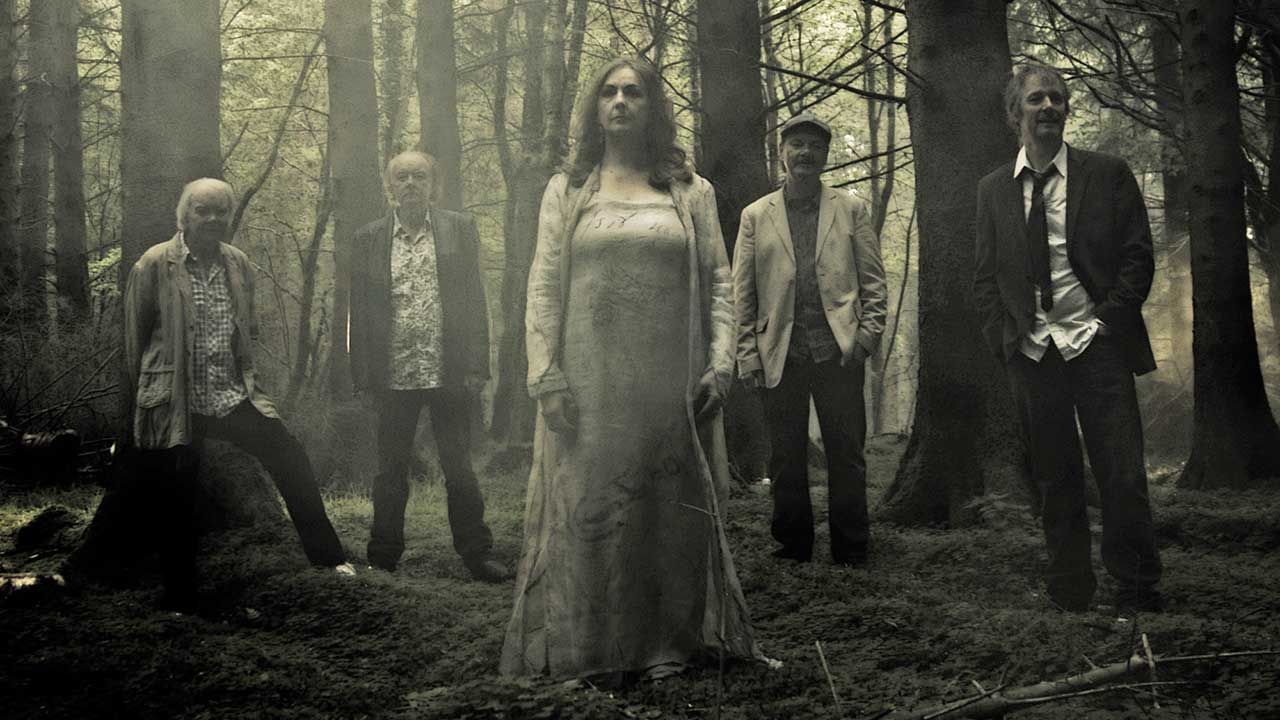
When music historians categorise progressive rock, they frequently invoke the virtuosity of keyboard rigs, intricate time signatures, and conceptual sci-fi narratives championed by bands such as Yes, King Crimson, and Genesis. Yet, a parallel movement flourished on the northwestern coastline of Ireland, where the boundary between traditional folk lore and leftfield musical innovation was quietly erased. Formed in Gweedore, County Donegal, Clannad—derived from Clann as Dobhar ("family from Dore")—pioneered a genre-blurring sound that fused Gaelic acoustic heritage with art-rock, jazz-fusion, and atmospheric electronics.
While casual listeners recognise Clannad for their ethereal television soundtracks and global hit singles, their catalog reveals a group whose structural risk-taking and harmonic adventurousness rivalled the most ambitious rock acts of the late 20th century. Clannad’s career unfolded across three distinct artistic phases: an acoustic prog-folk origin, a synth-driven neo-prog evolution during the 1980s, and a virtuosic, crossover-led mature era in the 1990s and beyond.
By re-examining the band’s discography, studio techniques, and high-profile collaborations—alongside testimonials from progressive rock icons like Marillion’s Steve Rothery and Nightwish’s Troy Donockley—this analysis evaluates the depth of Clannad’s progressive credentials and their lasting impact on international music history.
Detailed Chronology: The Three Phases of Clannad’s Architectural Sound
+-----------------------------------------------------------------------------------+
|                           THE THREE PHASES OF CLANNAD                             |
+-----------------------------------------------------------------------------------+
|  PHASE 1: 1970–1981 | Acoustic Prog-Folk & Traditional Gaelic Archiving           |
|                       Key Albums: Clannad (1973), Dúlamán (1976), Fuaim (1981)    |
+-----------------------------------------------------------------------------------+
|  PHASE 2: 1982–1989 | Atmospheric Breakthrough & Neo-Prog/Synth-Pop Fusion        |
|                       Key Albums: Magical Ring (1983), Legend (1984), Sirius (1987)|
+-----------------------------------------------------------------------------------+
|  PHASE 3: 1990–Present| Global Virtuosity, World Fusion & Modern Legacy             |
|                       Key Albums: Anam (1990), Lore (1996), Nádúr (2013)         |
+-----------------------------------------------------------------------------------+
Phase 1: Donegal Roots and Acoustic Prog-Folk Foundations (1970–1981)
The origins of Clannad were rooted in cultural preservation and formal musical discipline. Siblings Moya (Máire), Ciarán, and Pol Brennan, alongside their twin uncles Noel and Pádraig Duggan, began performing at their father Leo Brennan’s pub in Leo’s Tavern, Donegal. Rather than settling for straightforward renditions of pub ballads, the group embarked on field recordings across rural Donegal, capturing forgotten Gaelic songs on magnetic tape.
                  +-----------------------------------+
                  |      Gweedore, Co. Donegal        |
                  |  Early Field Recordings & Legacy  |
                  +-----------------+-----------------+
                                    |
                                    v
                  +-----------------------------------+
                  | Classical & Jazz Fusion Training  |
                  | Piano, Vocals, Jazz-Rock Rhythms  |
                  +-----------------+-----------------+
                                    |
                                    v
                  +-----------------------------------+
                  |       Self-Titled Debut (1973)    |
                  |  Label Pushback vs Gaelic Identity|
                  +-----------------------------------+
Crucially, the band members brought classical training to these field recordings. Having studied piano, vocal arrangement, and music theory, they approached traditional Irish modal structures with an architectural mindset. At the same time, they absorbed contemporary sounds broadcast over Radio Caroline and Radio Luxembourg, immersing themselves in jazz-fusion guitarists like John McLaughlin and the folk-rock arrangements of Pentangle and Jethro Tull.
When the group entered the studio for their self-titled debut in 1973—recorded over just two and a half days following a victory at the Letterkenny Folk Festival—they encountered early resistance from record executives. Label bosses questioned the commercial viability of an album sung primarily in Irish Gaelic, attempting to force English translations onto the group.
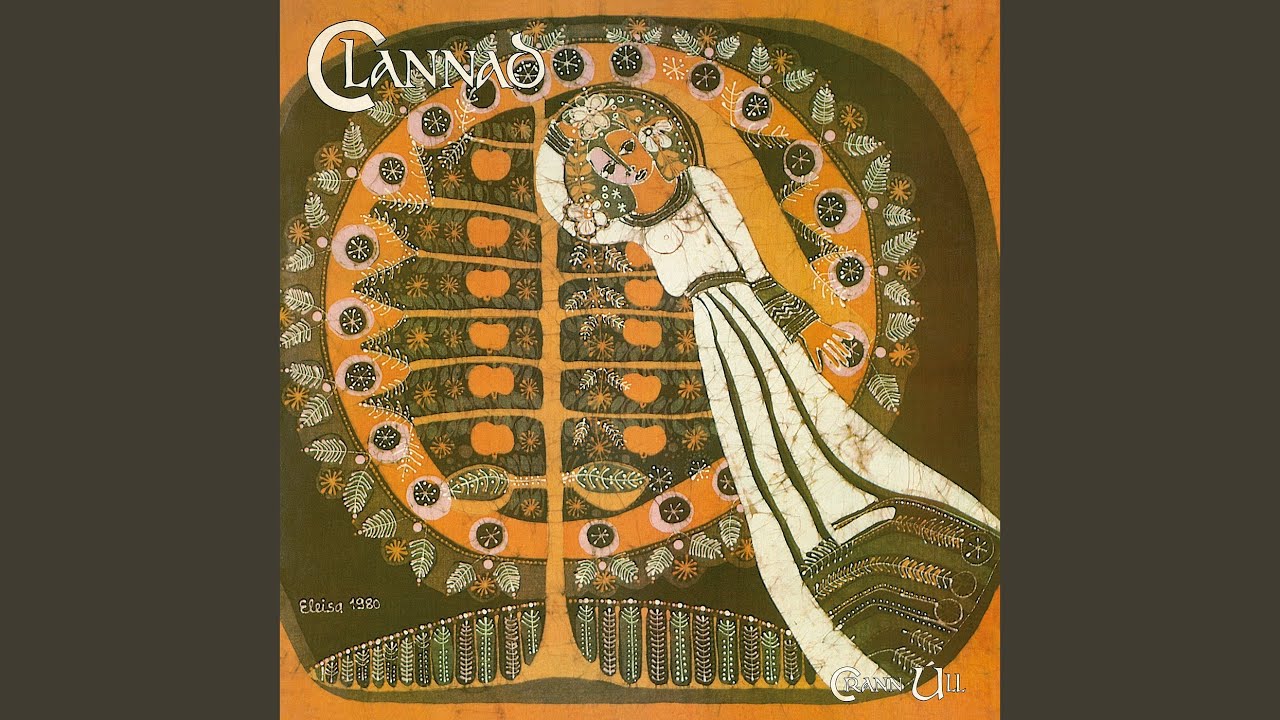
Unmoved, the young band held their ground. Ciarán Brennan, then just 19 years old, famously insisted that the language was non-negotiable, setting an artistic precedent that defined their early run of albums, including Dúlamán (1976), Crann Úll (1980), and Fuaim (1981)—the latter featuring their younger sister Enya on keyboards and backing vocals before she launched her solo career.
Phase 2: Atmospheric Breakthroughs and Neo-Prog Experimentation (1982–1989)
Clannad’s transition from folk-club staple to global phenomenon occurred in 1982 with the release of "Theme From Harry’s Game". Written for an ITV television drama centered on the Troubles in Northern Ireland, the track featured dense, multi-tracked vocal harmonies, ambient synthesizer pads, and completely wordless Gaelic lyrics ("Dhocht óró mo bháidín…"). The single reached No. 5 on the UK Singles Chart and No. 1 in Ireland, becoming the only major UK hit sung entirely in Irish Gaelic.
+-----------------------------------------------------------------------------------+
|                        1980s NEUTRALIZING THE GENRE BOUNDARIES                    |
+-----------------------------------------------------------------------------------+
|                                                                                   |
|  "Theme From Harry's Game" (1982)                                                 |
|  • Dense multi-tracked vocal stacks                                               |
|  • Ethereal synthesizer soundscapes                                               |
|  • First top-tier hit sung entirely in Irish Gaelic                               |
|                                                                                   |
|  Robin of Sherwood Soundtrack / Legend (1984)                                     |
|  • BAFTA-winning score blending acoustic instrumentation with Prophet-5 synths    |
|  • Heavy rock riffs on tracks like "Scarlet Inside"                               |
|                                                                                   |
|  Sirius (1987)                                                                    |
|  • High-budget L.A. production (Greg Ladanyi)                                     |
|  • Syncopated time signatures, stadium rock guitars, guest vocals by Steve Perry   |
|                                                                                   |
+-----------------------------------------------------------------------------------+
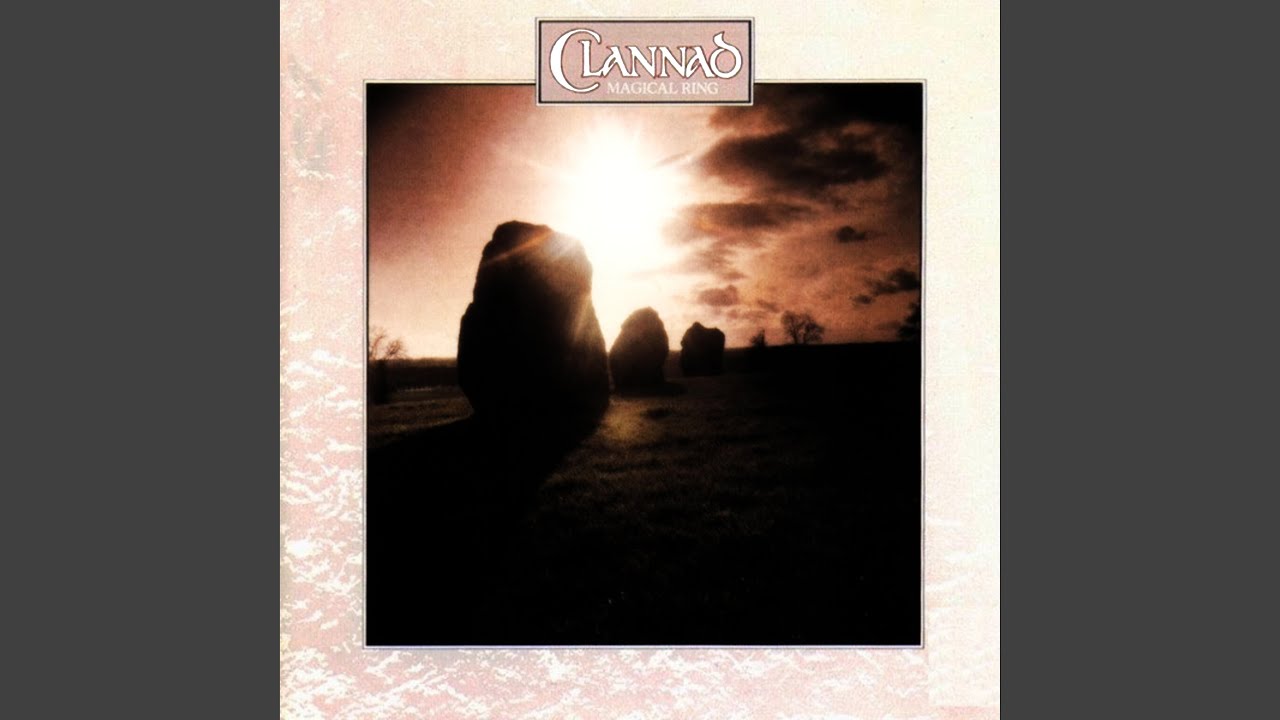
This commercial breakthrough opened up new production budgets and creative options. On 1983’s Magical Ring and 1984’s Legend (the BAFTA-winning soundtrack to the television series Robin of Sherwood), Clannad abandoned pure acoustic folk in favor of a hybrid approach. Traditional Irish harps and tin whistles were paired with Roland Roland Jupiter-8 and Sequential Circuits Prophet-5 synthesizers, creating expansive ambient soundscapes.
Tracks such as "Scarlet Inside" showcased a heavier, riff-focused edge that caught the attention of mainstream rock artists, including Def Leppard’s Joe Elliott. Meanwhile, 1985’s Macalla yielded the iconic duet "In A Lifetime" with U2’s Bono, combining soul-influenced vocals with Celtic art-rock arrangements.
The mid-80s phase reached its artistic and commercial extreme with 1987’s Sirius. Recorded in Los Angeles with producer Greg Ladanyi, Sirius shifted the band into polished neo-prog and West Coast pop-rock territory. Featuring guest appearances by Journey frontman Steve Perry, Bruce Hornsby, and J.D. Souther, the album divided their core European fanbase due to its slick, synth-heavy production. However, songs like "In Search Of A Heart" and the title track featured complex syncopated time signatures and polyrhythmic structures that highlighted Ciarán and Pol Brennan’s progressive songwriting instincts.
Phase 3: Virtuosic Collaborations and Modern Craftsmanship (1990–Present)
By 1990, internal exhaustion and a desire for creative reinvention prompted primary co-writer Pol Brennan to step away from the band. Accepting an invitation from Peter Gabriel, Pol relocated to Real World Studios in Wiltshire, UK, where he spent several years engineering, producing, and absorbing global musical traditions. During this hiatus, he formed Trisan, an avant-garde trio featuring Japanese percussionist Joji Hirota and Chinese flautist Guo Yue, stripping his music back to acoustic improvisation and rhythm.
                  +-----------------------------------+
                  |   Pol Brennan at Real World       |
                  | Collaboration with Peter Gabriel  |
                  +-----------------+-----------------+
                                    |
                                    v
                  +-----------------------------------+
                  |      Trisan (World Fusion Trio)   |
                  |  Joji Hirota & Guo Yue           |
                  +-----------------+-----------------+
                                    |
                                    v
                  +-----------------------------------+
                  |  Re-joining Clannad for Nádúr    |
                  |  Full-circle Prog-Folk Reunion    |
                  +-----------------------------------+
Meanwhile, Ciarán Brennan assumed full leadership of Clannad, guiding the group into its third distinct era. Embracing major-label resources, Ciarán transformed studio sessions into collaborative hubs for world-class session musicians.
Albums such as 1993’s Banba and 1996’s Grammy-nominated Lore featured contributions from saxophone legend Mel Collins (King Crimson, Camel), guitarist Anton Drennan (Genesis, Mike + The Mechanics), and virtuosic jazz-rock drummer Vinnie Colaiuta (Frank Zappa, Sting, Jeff Beck).
These releases showcased a refined production style, seamlessly blending jazz-fusion rhythms, symphonic orchestration, and Celtic acoustic arrangements. Following a prolonged studio hiatus during the late 1990s and 2000s, Pol Brennan rejoined the lineup in 2013 for Nádúr, marking a full-circle return to the band’s signature progressive folk sound before their official farewell tours.
Supporting Context & Metrics: Discographical Analysis and Technological Innovations
Key Album Metrics and Progressive Trajectories
To understand Clannad’s evolution from traditional folk collectors to art-rock pioneers, it is useful to evaluate key albums by their dominant musical characteristics and progressive rock traits:
Clannad’s sound relied on several key structural techniques that aligned them with progressive rock:
Vocal Stacking and Modal Harmonies: Rather than adopting standard Western pop harmonies (thirds and fifths), Moya Brennan’s lead vocals were surrounded by parallel fourths and fifths drawn from traditional Gaelic singing styles. When multi-tracked in high-end studio environments, these harmonies created an instrument-like wall of sound.
Instrumentation Hybrids: The band frequently bridged historical gaps by pairing the Irish harp (cláirseach) and tin whistle with modern synthesizers and fretless bass guitars.
Metric Shift and Counter-Riffs: Under Ciarán and Pol’s direction, traditional jigs and reels in 6/8 or 9/8 time were reworked with syncopated basslines and counter-riffs influenced by Mahavishnu Orchestra and Weather Report.
Official Statements: Perspectives from inside the Clan and Industry Luminaries
The question of Clannad’s progressive identity has been echoed by both the band members themselves and prominent figures across the progressive rock and metal landscape.
Nightwish’s Troy Donockley on First Discovering the Band
"I was 18 years old, confused, in a bikers’ pub listening to a jukebox, and ‘Theme From Harry’s Game’ stopped me dead in my tracks. I lost all contact with my surroundings. That atmosphere—and Moya Brennan’s voice—was like nothing I’d ever heard.
Clannad were primarily a prog folk act. Structurally, they were very much like Pentangle; the progressive tendencies shine out on albums like ‘Dulaman’ and ‘Fuaim’. Check out ‘Strange Day In The Countryside’ [‘Lá Coimhthíoch fán dTuath’] from ‘Crann Ull’—it’s very pastoral hippie-acoustic prog, with its cross-fade from harp to guitars and wordless voices."
                             +-----------------------+
                             |    TROY DONOCKLEY     |
                             |  Nightwish / Multi-   |
                             |    Instrumentalist    |
                             +-----------+-----------+
                                         |
                                         v
                     "Magical Ring is an unreserved classic...
                     a masterpiece of spacey prog-folk which
                     is just beautiful."
Marillion’s Steve Rothery on Clannad’s Influence
"I thought Clannad were a unique blend of Celtic folk with prog elements. They had a very evocative and ethereal sound. Moya Brennan’s vocal and the band’s harmonies are quite unique. The blend of the symphonic and acoustic elements of the music, and the odd time signatures of some of the pieces, give them a progressive feel. The mood and atmosphere of their music was one of the influences on [The Wishing Tree’s] ‘Carnival Of Souls’ album."
The Brennan Brothers on Prog Influences and Genre Labels
Ciarán Brennan on Their Early Classical and Jazz Exposure
"We had in our minds that we’d make folk albums. Some of the songs didn’t have any pattern or arrangement, so you could wrap anything around them to keep them alive. We were listening to Jethro Tull and jazz rock, and I would have been very influenced by Pentangle… I would agree [‘Sirius’] is a prog rock album. I was very glad we took that direction when we could."
Pol Brennan on Riffs, Rhythm, and Syncopation
"Our background is between the traditional stuff and classical stuff. When we were very young we were all classically trained on piano, and we had voice training. But we were growing up with the music of the day… Ciaran and I listened to a lot of John McLaughlin, but we were soaking in everything.
Prog is just huge, isn’t it? When I go to write, the first part is a riff for me, and the prog bands I listen to are all riffs and counter-riffs with amazing syncopation. Unconsciously it was always a part of the sound, and it was as important as the ethereal stuff."
Future Outlook: The Enduring Echoes of a Gaelic Legacy
As Clannad concluded their touring career with nationwide farewell shows, the band’s contribution to progressive music stands fully reconciled. The sad passings of co-founding uncles Pádraig Duggan in 2016 and Noel Duggan in 2022 marked the end of an era for the extended family line. Yet, their recordings remain vital blueprints for modern artists seeking to bridge traditional folk styles with experimental studio techniques.
+-----------------------------------------------------------------------------------+
|                             THE LEGACY OF CLANNAD                                 |
+-----------------------------------------------------------------------------------+
|                                                                                   |
|  1. ARCHIVAL PRESERVATION: Rescued rural Gaelic vocal traditions from oblivion.   |
|                                                                                   |
|  2. GENRE FUSION: Proved that traditional folk instruments could mix seamlessly   |
|     with high-end synthesizers and jazz-fusion rhythm sections.                  |
|                                                                                   |
|  3. ART-ROCK CROSSOVER: Influenced generations of musicians across progressive    |
|     rock, ambient, darkwave, and symphonic metal.                                 |
|                                                                                   |
+-----------------------------------------------------------------------------------+
The band’s influence extends far beyond traditional Irish music. Elements of their multi-layered vocal production and ambient synth textures can be heard across contemporary genre-bending projects—from the symphonic metal landscapes of Nightwish to modern cinematic film scores.
By prioritizing artistic authenticity, retaining their native language, and refusing to adhere to strict pop song formulas, Clannad proved that progressive music is defined by an adventurous spirit rather than specific instruments or tempos. Whether characterized as Celtic folk, ambient art-rock, or prog-folk, their music stands as a testament to the power of sonic experimentation.