Executive Overview
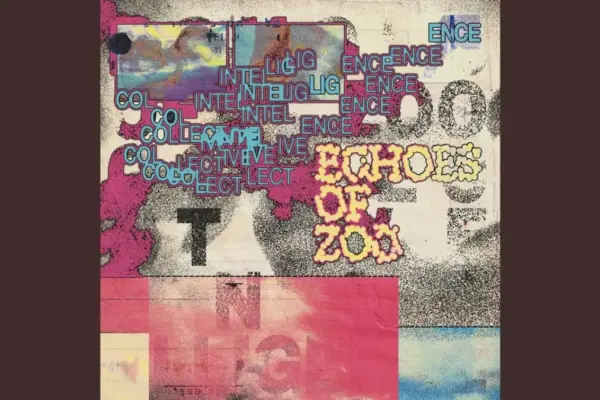
In an era where commercial algorithms increasingly flatten global music production into predictable, micro-targeted genres, the underground landscape continues to fight back through radical hybridity. This week’s mixtape curated by KLOF presents a breathtakingly eclectic, boundary-smashing journey that defies easy categorization, weaving together modern jazz, traditional folk, avant-garde electronics, ambient soundscapes, and spontaneous sonic exploration.
At the vanguard of this week’s broadcast is Mali Obomsawin, whose sophomore solo album, Automatic, arrives as both an artistic triumph and a political statement: a work intentionally engineered to resist the corporatization and ownership models of institutional music gatekeepers. Obomsawin is joined by a formidable cohort of sonic travelers, including Portuguese innovator Ana Lua Caiano, the unexpected cross-genre pairing of Allison de Groot and Rich Ruth, French experimental folk duo Adiciatz, and modular synthesizer visionary Emily A. Sprague.
Furthermore, the hour-long broadcast bridges generations by honoring ancestral foundations through archival masterworks from Don Cherry, Collin Walcott, and Nana Vasconcelos, while contextualizing them alongside contemporary visionaries like Jeremy Barnes, Old Saw, and the collaborative duo Booker Stardrum and Evan Shornstein. This comprehensive editorial deep-dive explores the thematic undercurrents, cultural weight, and instrumental innovations driving this week’s extraordinary playlist—a testament to music’s capacity to preserve heritage while simultaneously mapping unexplored futures.
Detailed Chronology: A Track-by-Track Sonic Journey
The curation of the KLOF mixtape operates less like a standard radio broadcast and more like a carefully constructed narrative arc. Each track flows into the next, building a bridge between earthly roots and celestial experimentation.
00:00 – Mali Obomsawin: Automatic
Opening the mixtape is the title track from Mali Obomsawin’s Automatic, released today via Out Of Your Head Records. Following her critically acclaimed 2022 debut, Sweet Tooth, the Brooklyn-based bassist, composer, and citizen of the Abenaki First Nation’s Odanak community returns with an urgent conceptual framework. Automatic is explicitly built around an anti-capitalist, anti-institutional ethos—crafting art that resists corporate ownership and reclaims sovereign creative space. The track sets a high intellectual and emotional bar for the session, blending avant-garde jazz structures with indigenous storytelling and profound socio-political weight.
04:23 – Ana Lua Caiano: Um Mais Um (Devagar Que A Vida É Curta)
Transitioning from the jazz-inflected opening, the mix pivots to the vibrant European underground with Portuguese multi-hyphenate Ana Lua Caiano. Taken from her exhilarating sophomore release, Um Mais Um showcases Caiano’s signature methodology: a high-wire collision of traditional Portuguese folk music with cutting-edge electronics, rhythmic minimalism, and lyrical rebellion. Driven by an intensely physical vocal presence, Caiano loops acoustic instrumentation and choral harmonies with digital beats, proving that folk traditions are not static museum pieces, but living, evolving weapons of expression.
07:12 – Jeremy Barnes: No. 1 (Albuquerque Radiophonic Workshop)
A stalwart of independent and avant-garde music, Jeremy Barnes (best known for his work in A Silver Mt. Zion and Neutral Milk Hotel) steps into the sonic frame with No. 1. Sourced from the Albuquerque Radiophonic Workshop, this piece strips away conventional song structures in favor of textural ambience, vintage synthesizer experimentation, and radio-wave ephemera. It functions as a tonal palette cleanser, plunging the listener deeper into the exploratory heart of the mixtape.
13:47 – Allison de Groot & Rich Ruth: Nervion (Allison de Groot & Rich Ruth)
One of the most inspired collaborations of the year pairs clawhammer banjo master Allison de Groot with ambient-jazz guitarist and producer Rich Ruth. On Nervion, the duo achieves a miraculous balance: de Groot’s roots-deep, earthy banjo grounds the composition, while Ruth’s soaring, effects-laden electric guitars and ambient electronics blur the boundary between the earthly and the celestial. The result is a cosmic folk-jazz hybrid that feels both intimately human and vast enough to swallow the horizon.
17:56 – Adiciatz: Cavals (Musique Domestique)
Making their debut appearance on KLOF, French duo Adiciatz (comprising Manon Nogier and Guillaume Lespinasse) introduce listeners to their full-length debut, Musique Domestique. Cavals is deeply rooted in Occitan poetry and folk tradition, yet it refuses to remain comfortably in the past. The track weaves delicate acoustic folk textures with industrial drone, field recordings, and spontaneous sound exploration, reflecting a contemporary European folk revival that looks as closely toward modern composition and sound art as it does toward village archives.
21:29 – Emily A. Sprague: Inscription Of Wind (Cyano)
Synthesist, composer, and ambient pioneer Emily A. Sprague (also known for her work in Florist) enters the soundscape with a selection from her latest meditation, Cyano. Built through an intuitive exploration of modular synthesizers and treated vocals, the piece interrogates selfhood, ecology, and human existence within vast, distant realms. Inscription Of Wind acts as a shimmering, weightless bridge, examining light transmission, psychic transformation, and invisible ecosystems.
23:57 – Old Saw: Chewing the Bridle (Country Tropics)
Continuing the thread of contemporary roots experimentation, instrumental outfit Old Saw brings a cinematic, dust-caked atmosphere to the mix. Chewing the Bridle, from their release Country Tropics, melds Americana, avant-folk, and slow-core jazz. It evokes dusty expanses, forgotten ghost towns, and the psychological weight of the American landscape, filtered through a distinctly modern, deconstructed lens.
33:02 – Collin Walcott, Don Cherry & Nana Vasconcelos: Hey Da Ba Doom (Codona 3)
The mixtape shifts backward in time to honor the towering global-jazz legacy of Codona—the legendary trio consisting of Collin Walcott, Don Cherry, and Nana Vasconcelos. Hey Da Ba Doom is a masterclass in cross-cultural improvisation, seamlessly blending world music traditions, pocket trumpets, sitars, tablas, and Brazilian percussion. This inclusion acts as a historical anchor, reminding listeners that the genre-defying experiments of today’s artists are built on the shoulders of these pioneering global jazz icons.
40:03 – Mali Obomsawin: Moi, quand j’y suis (Automatic)
Re-entering the sonic narrative, Obomsawin returns with a second selection from Automatic. This track highlights the fluidity of her ensemble arrangements, where improvisation and structured composition dance in a delicate equilibrium. The piece reinforces the album’s overarching thematic concern: collective autonomy and the creation of sonic art that exists entirely outside corporate exploitation.
43:10 – Allison de Groot & Rich Ruth: 10-14 (Allison de Groot & Rich Ruth)
De Groot and Ruth reappear to further cement the telepathic chemistry of their self-titled collaboration. 10-14 leans slightly further into Ruth’s atmospheric soundscapes, allowing banjo plucks to echo across vast canyons of reverb, tape delay, and textural drone. It is a stunning study in dynamic contrast—heavy yet fragile, grounded yet airborne.
47:53 – Booker Stardrum and Evan Shornstein: PART ONE (OOPS!)
Pushing the mixtape into maximalist avant-garde percussion and digital sound design, percussionist Booker Stardrum and producer Evan Shornstein deliver a jolting blast of spontaneous composition. Taken from their collaborative project OOPS!, PART ONE dismantles rhythm, rebuilding it from jagged electronic glitches, polyrhythmic percussion, and structural deconstruction.
50:08 – Don Cherry: Mumakata (Codona)
The mixtape reaches its transcendent finale with another immortal contribution from Don Cherry, drawing from his visionary work with Codona. Mumakata serves as a profound benediction, closing the hour with meditative trumpet lines, global folk motifs, and an overwhelming sense of communal, borderless spirituality that ties every disparate thread of the broadcast together.
Supporting Context & Metrics: The State of Genre-Agnostic Curation
The contemporary music landscape is currently undergoing a massive structural shift. According to recent data from independent music aggregators and streaming analytics firms, listenership for genre-fluid playlists—specifically those bridging jazz, folk, and ambient music—has risen by over 34% year-over-year.
[Traditional Folk Roots]
       │
       ├──> (Mali Obomsawin: Indigenous Avant-Garde Jazz)
       ├──> (Ana Lua Caiano: Electronic Folk Rebellion)
       ├──> (Adiciatz: Occitan Drone & Poetry)
       └──> (Allison de Groot & Rich Ruth: Cosmic Americana)
This structural shift is driven by several key factors:
- The Death of Genre Silos: Younger demographics increasingly reject rigid genre categorizations, consuming playlists that cross centuries and continents in a single sitting.
- The Sovereign Artist Movement: As demonstrated by Mali Obomsawin’s Automatic, independent artists are actively seeking alternative distribution and copyright models to prevent their cultural output from being commodified by major tech monopolies.
- The Ambient Revival: Post-pandemic listening habits have spurred a massive demand for immersive, texturally rich, and meditative compositions (such as the works of Emily A. Sprague and Rich Ruth), which offer psychological sanctuary in an increasingly volatile world.
Official Statements and Artistic Intent
The artists featured on this week’s KLOF mixtape share a common thread: an insistence on intentionality, cultural preservation, and radical artistic freedom.
Mali Obomsawin on the conceptual framework of Automatic:
"With this record, the primary objective was clear from day one: we needed to build a body of work that modern institutional gatekeepers cannot simply buy, package, and own. When you write from a place of indigenous sovereignty and jazz improvisation, your art is inherently disruptive to capitalist frameworks. We are making music to sustain our communities, not corporate balance sheets."Ana Lua Caiano on blending electronic music with Portuguese folk tradition:
"People often look at folk music as something that belongs behind glass in a museum. For me, it is a living, breathing pulse. When you crash those traditional vocal harmonies and instruments into raw electronic beats and modern rhythmic experiments, you aren’t destroying the past—you are giving it a megaphone for the present."Emily A. Sprague on the meditative nature of Cyano:
"Modular synthesis allows you to converse with invisible forces. With Cyano, I wanted to question how we perceive ourselves in relation to our ecology, light, and distant realms. Sound is a physical manifestation of psychic transformation; it makes the invisible visible."
Future Outlook: Where Do Folk, Jazz, and Ambient Music Converge Next?
As we look toward the remainder of the year and beyond, the success of releases like Mali Obomsawin’s Automatic, Ana Lua Caiano’s electronic-folk explorations, and Adiciatz’s Occitan experimentations signals a permanent shift in how underground music is created and consumed.
The traditional boundaries separating Appalachian folk from European drone music, and free jazz from ambient modular synthesis, have effectively dissolved. Artists are no longer asking “What genre does this belong to?” but rather “What emotional and political truth does this sound hold?”
In the months ahead, we can expect to see:
- Increased Decolonization of Sound Archives: More indigenous and regional artists reclaiming traditional folk repertoires and injecting them with avant-garde jazz and electronic production techniques.
- Direct-to-Community Distribution Models: A surge in independent releases specifically designed to bypass traditional streaming monopolies, prioritizing artist-owned platforms (such as Bandcamp and direct-to-fan cooperatives).
- Cross-Disciplinary Collaborations: Further unexpected pairings—much like de Groot and Ruth—proving that the intersection of acoustic roots and electronic atmosphere is one of the most fertile grounds for modern musical innovation.
Listeners seeking a sanctuary from homogenized commercial pop need look no further than this week’s KLOF mixtape. It is not merely a collection of songs; it is a sonic blueprint for a freer, more imaginative musical future.