Executive Overview
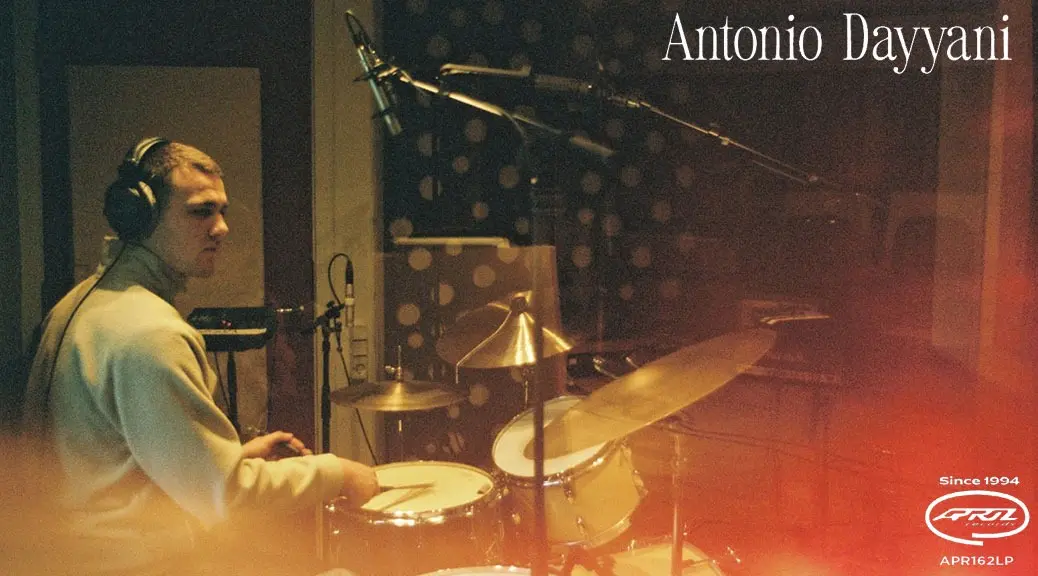
In the contemporary landscape of European improvised and contemporary jazz, few artists manage to bridge the gap between rigorous technical arrangement and deeply vulnerable, organic storytelling quite like Danish drummer and composer Antonio Dayyani. With the release of his third full-length studio album, Organisme, Dayyani and his tightly knit sextet have delivered a profound meditation on the invisible threads that bind individuals, communities, and the natural world together.
Moving far beyond the structural conventions of traditional jazz frameworks, Organisme serves as a living, breathing sonic ecosystem. Building upon years of relentless touring and profound musical camaraderie, Dayyani—alongside bassist Harald Hagelskjær, pianist Andrea Maagaard, guitarist Cahlo Heyman Krill, pedal steel guitarist Magnus Munk Tækker, and trumpeter/flugelhornist Jon Askjær—has crafted a masterclass in texture, space, and emotional resonance. The album represents a decisive leap forward from Dayyani’s sophomore effort, Trop Op, trading conventional pyrotechnics and flashy instrumental solos for a patient, immersive exploration of stillness, warmth, and collective breathing.
This comprehensive review and critical analysis explores the thematic anatomy of Organisme, tracing the album’s intricate chronology track by track, examining the collaborative ethos of the Danish jazz scene, and evaluating how Dayyani’s unique compositional philosophy positions him at the forefront of a new generation of Nordic musical auteurs.
Detailed Chronology: A Track-by-Track Exploration of Organisme
To understand Organisme is to trace a deliberate narrative arc—one that begins with raw, unpolished intimacy and expands outward into lush, cinematic orchestrations before closing with a jarring, yet invigorating, live retrospective. Dayyani views the album not merely as a collection of songs, but as a biological entity where each movement functions as an essential organ within a larger body.
1. The Genesis: "En lykkelig organisme" (A Happy Organism)
The album opens with the deceptively simple, disarming track "En lykkelig organisme" (A Happy Organism). Setting the tone for the entire project, the song begins with loose, unquantized drumming that is entirely unaccompanied, save for Dayyani’s own unpolished, vulnerable vocal stylings. This raw introduction immediately strips away the clinical perfection often associated with modern studio recordings, inviting the listener into a space of radical honesty. As the track progresses, the rest of the sextet trickles in with breathtaking patience. The instrumentation swells not with aggressive volume, but with structural density, building toward a deeply satisfying yet remarkably spacious conclusion that establishes the album’s core aesthetic: space is just as important as sound.
2. Transition and Reflection: "Roots removed, replaced" & "(feelings)"
The journey continues with "Roots removed, replaced," a piece that maintains the sweetness and light of the opener while introducing subtle undertones of melancholia and displacement. The interplay between Cahlo Heyman Krill’s understated guitar voicings and Andrea Maagaard’s lyrical piano work creates a shifting emotional landscape that feels both nostalgic and forward-looking.
This leads directly into "(feelings)," a poignant, miniature vignette that highlights Maagaard’s melodic sensitivity. Built around a sparse piano motif, the track is later complemented by a rhythm section that provides inventive propulsion without ever overpowering the delicate emotional core of the performance. It is a masterclass in restraint, proving that Dayyani’s ensemble knows precisely when to step back and let a melody breathe.
3. Orchestral Expansions: "Alt og intet" & "Organisme?"
As Organisme progresses past its midpoint, the sonic palette widens dramatically. "Alt og intet" (Everything and Nothing) is enveloped in a lush, symphonic arrangement augmented by guest string players Samira Dayyani on cello and Tue Lautrup on violin. The addition of strings deepens the organic metaphor of the album, wrapping the core jazz sextet in a warm, acoustic blanket. The track features Kristoffer Essen, whose yearning yet precise vocals cut through the dense orchestration with haunting clarity. Amidst this rich backdrop, Jon Askjær delivers a restrained, profoundly touching flugelhorn solo that feels like a quiet confession whispered across a crowded room.
The title track, "Organisme?", follows as a deeply moving ballad. Here, bassist Harald Hagelskjær takes center stage with a sympathetic, low-end melodic solo that anchors the tune’s emotional weight, demonstrating the telepathic communication that defines this iteration of the sextet.
4. Folk Influences and the Live Finale
As the album nears its conclusion, "o k a y" introduces distinct flavors of progressive folk, driven primarily by Heyman Krill’s intricate acoustic guitar licks. It is a moment of stylistic divergence that enriches the album’s overarching narrative, proving that Dayyani’s compositional vision refuses to be boxed into rigid genre classifications.
However, the album’s final gesture introduces an intriguing curveball: "Are you confused, Monsieur Gustave? (Live 2025)." Recorded live, this uptempo closer breaks the meditative spell cast by the preceding tracks. Driven by a prodding, insistent bass line and fuzzy, distorted guitars, it provides a jolting reminder of the ensemble’s raw, untamed energy on stage. While it momentarily shatters the tranquil atmosphere cultivated over the course of the studio tracks, it showcases the multifaceted nature of Dayyani’s musical personality—capable of both serene ambient meditation and gritty, live-band catharsis.
Supporting Context & Metrics: The Evolution of Antonio Dayyani
To fully appreciate the artistic triumph of Organisme, one must examine its place within Antonio Dayyani’s broader discography and the modern Danish creative music ecosystem.

From Trop Op to Organisme: A Paradigm Shift
Dayyani’s previous studio release, Trop Op, while critically acknowledged for its ambitious conceptual frameworks and complex harmonic ideas, occasionally suffered from a certain distance. Critics and listeners alike noted that despite its intellectual stimulation, Trop Op could at times feel somewhat staid and anonymous—a collection of clever ideas searching for a beating heart.
With Organisme, Dayyani appears to have solved this equation entirely. By prioritizing textures, acoustic warmth, and emotional stillness over pyrotechnic technique and dizzying harmonic complexity, the ensemble has unlocked a distinct group voice. The transition metrics are clear:
- Harmonic Complexity vs. Melodic Accessibility: Organisme shifts the ratio, favoring direct, humane communication over cerebral gymnastics.
- Instrumentation & Arrangement: The expansion of the core sextet (drums, bass, piano, guitar, pedal steel, and trumpet/flugelhorn) to include supplementary string instrumentation (cello and violin) and guest vocalists elevates the project from a standard jazz-combo recording to a chamber-folk-jazz hybrid.
- Cohesion: Years of relentless touring have forged a collective telepathy. The ensemble operates with an intuitive openness and generosity that simply cannot be replicated by ad-hoc session players.
The Personnel: Anatomy of a Sextet
The success of Organisme rests squarely on the shoulders of Dayyani’s collaborators, each bringing a distinct voice to the collective organism:
- Harald Hagelskjær (Bass): Provides the foundational pulse, oscillating between deep, grounding low-end melodies and agile counterpoint.
- Andrea Maagaard (Piano): Delivers harmonic color and delicate melodic phrasing that serves as the emotional anchor for much of the album.
- Cahlo Heyman Krill (Guitar): Bridges the worlds of jazz harmony and progressive folk picking, adding textural grit and acoustic warmth.
- Magnus Munk Tækker (Pedal Steel Guitar): A secret weapon in the ensemble, the pedal steel introduces shimmering, atmospheric horizons that give the record its distinctly spacious, cinematic quality.
- Jon Askjær (Trumpet & Flugelhorn): Offers lyrical, restrained brass lines that evoke a sense of quiet nostalgia and introspective beauty.
Official Statements & Artistic Philosophy
At the core of Organisme is a deeply considered philosophical framework regarding art, community, and human connection. In promotional materials and interviews surrounding the release, Dayyani has articulated his vision for the project with striking clarity:
"The album takes its title from the idea of an organism, exploring the interconnected relationships that shape people, communities, and the wider world."
Expanding upon this metaphor, Dayyani views his music not as a static artifact, but as a living entity:
"I view this music as a living entity, with each composition contributing to a larger whole while retaining its own distinct character."
This perspective rejects the historical jazz paradigm of the soloist as an isolated hero triumphing over a rhythm section. Instead, Dayyani’s compositional ethos is fundamentally communal. Every instrument, voice, and guest contributor functions as an organ within a larger biological body. If one element falters or falls silent, the entire system feels the shift. It is an artistic reflection of social ecology—an exploration of how individual autonomy and collective harmony can coexist without compromising the integrity of either.
Music critics and early reviewers have similarly embraced this ethos, noting that listening to Organisme acts as a psychological balm in an increasingly fractured cultural landscape. As reviewer Kevin Ward aptly notes, the album serves as "a nurturing experience; a shelter from the storm," inviting listeners to become, quite literally, en lykkelig organisme (a happy organism) simply by surrendering to its restorative frequencies.
Future Outlook: The Horizon for Antonio Dayyani and Contemporary Nordic Jazz
As Organisme makes its way into the global jazz consciousness, the release marks a pivotal milestone for Antonio Dayyani. Having established a definitive, recognizable voice on his third outing, the young Danish drummer and composer has stepped out of the shadow of his influences and carved out a unique niche at the intersection of contemporary jazz, chamber music, and progressive folk.
What Lies Ahead?
- International Touring and Festival Circuits: Armed with an album that translates the intimacy of studio craftsmanship into the dynamic spontaneity of a live performance (as hinted by the album’s concluding live track), Dayyani and his sextet are well-positioned to expand their touring footprint beyond Scandinavia and into major European and international jazz festivals.
- Continued Collaborative Explorations: The seamless integration of guest vocalists (Kristoffer Essen) and string players (Samira Dayyani, Tue Lautrup) on Organisme suggests that Dayyani’s future projects may continue to dissolve the boundaries between genre-specific ensembles, inviting classical, folk, and ambient artists into the jazz fold.
- The Maturation of a Collective Voice: While Trop Op showed an artist experimenting with possibilities, Trop Op’s successor proves that Dayyani has mastered the art of editing—knowing what not to play is often the mark of a true auteur. As the sextet continues to tour and age together as a unit, their telepathic interplay will only deepen, promising even more compelling artistic statements in the years to come.
In an era defined by sensory overload, algorithmic hyper-efficiency, and digital isolation, Organisme offers a courageous antidote. It asks us to slow down, to listen closely to one another, and to remember that we are all part of a larger, interconnected ecosystem. For Antonio Dayyani and his bandmates, this album is not merely a career peak—it is a blueprint for how music can heal, sustain, and unify.