Executive Overview
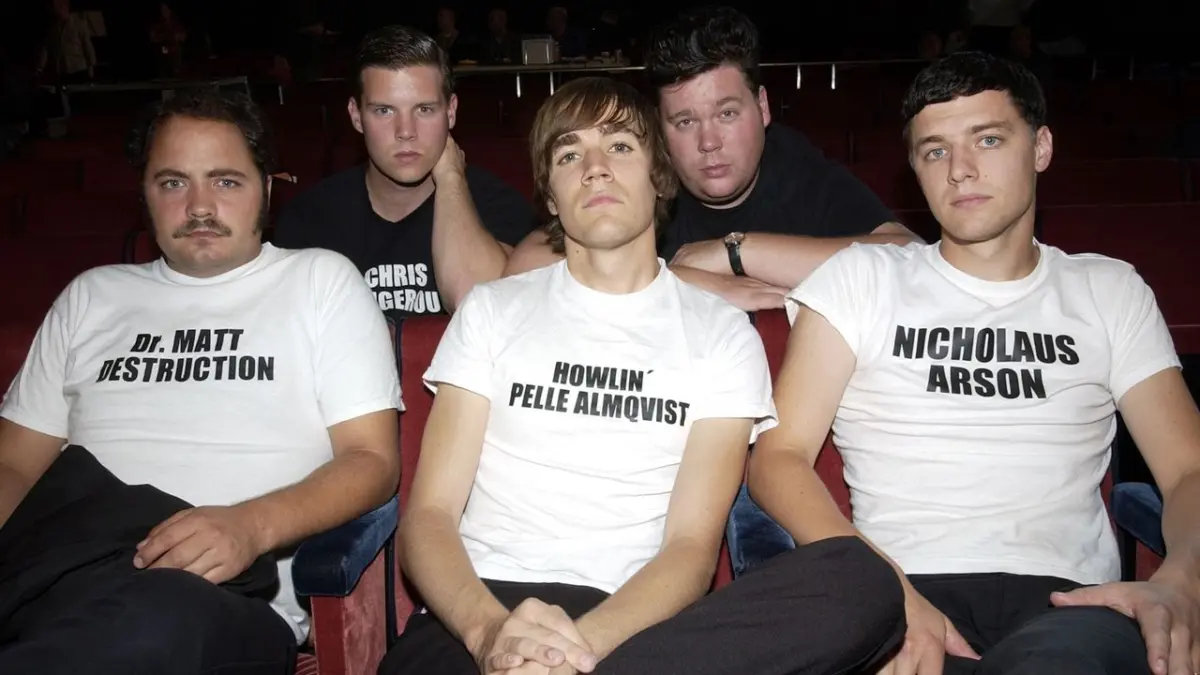
At the dawn of the 21st century, the global music landscape was experiencing a seismic shift. As post-grunge fatigue settled and slick, over-produced pop saturated mainstream radio, a raw, minimalist counter-revolution was quietly gestating in disparate corners of the globe. At the absolute forefront of this movement stood The Hives, a quintet hailing from the small industrial town of Fagersta, Sweden. Their defining catalyst was a hyper-energetic, minimalist garage-punk track titled “Hate to Say I Told You So.”
Initially met with skepticism by their own recording studio producer and brushed off as a simple exercise in mechanical rock, the single evolved into one of the defining cultural touchstones of the 2000s garage rock revival. Built around a deceptively relentless guitar motif and fronted by the theatrical swagger of vocalist Howlin’ Pelle Almqvist, the track catalyzed a swift trajectory from regional underground obscurity to an international multi-million-dollar major-label bidding war.
This comprehensive analysis examines the structural origins, production conflicts, strategic industry moves, and long-term commercial metrics that transformed a "monotonous" four-chord song into a permanent fixture of global rock music history.
       [Fagersta Incubation]
                 │ (1990s: Electric Frankenstein influence)
                 ▼
     [Studio Friction: 2000]
                 │ (Producer vs. Band on "ZZ Top" sound & swoosh FX)
                 ▼
   [Alan McGee / Poptones Discovery]
                 │ (2001: Compilation 'Your New Favourite Band')
                 ▼
  [UK Breakout & TOTP Performance]
                 │ (2002: Chart explosion & global media frenzy)
                 ▼
   [$10M Major Label Bidding War]
                 │ (Jimmy Iovine / Universal Music deal)
                 ▼
  [Modern Legacy & Streaming Era]
                 │ (303M+ Spotify streams & permanent setlist staple)
Detailed Chronology
TIMELINE OF A BREAKTHROUGH
┌──────┬──────────────────────────────────────────────────────────────────┐
│ Year │ Event / Milestone                                                │
├──────┼──────────────────────────────────────────────────────────────────┘
│ 1997 │ The Hives release debut album 'Barely Legal' via Burning Heart.   │
│ 2000 │ Recording of 'Veni Vidi Vicious'; "Hate to Say..." released.     │
│ 2001 │ Alan McGee discovers video on German TV; forms Poptones release. │
│ 2002 │ Single re-released; Top of the Pops appearance; UK Top 10 chart.│
│ 2003 │ $10M deal signed with Interscope/Universal under Jimmy Iovine.   │
└──────┴──────────────────────────────────────────────────────────────────┘
Phase 1: Incubation in Fagersta (Late 1990s)
Formed in the mid-1990s in Fagersta—a former steelworking town roughly 150 kilometers northwest of Stockholm—The Hives developed their musical identity far removed from traditional industry hubs. Seeking an antidote to both pop-punk tropes and heavy metal clichés, the band took inspiration from New Jersey garage-punk act Electric Frankenstein.
Guitarist Nicholaus Arson noted that Electric Frankenstein’s willingness to hold onto a single riff far past conventional expectations provided the blueprint for The Hives’ rhythm section. By deliberately extending simple musical passages, the band learned to manipulate crowd dynamics, creating heightened tension before shifting to new song sections.
Phase 2: Studio Conflict and Production (Early 2000)
When the band entered the studio to record their second full-length album, Veni Vidi Vicious, for the Swedish indie label Burning Heart Records, friction arose regarding the song’s Sonic direction. Producer Pelle Gunnerfeldt expressed early disdain for "Hate to Say I Told You So," writing it off as tedious and derivative.
Gunnerfeldt initially argued that the early arrangements sounded uncomfortably close to "a Swedish ZZ Top." In an effort to modernise or mask what he perceived as stale rock conventions, Gunnerfeldt introduced dynamic flanging and swooshing studio effects across the track. Frontman Howlin’ Pelle Almqvist resisted this approach. Recognizing that over-processing diluted the track’s core punch, Almqvist intervened, forcing a remix that stripped away the ambient effects to leave a bone-dry, high-intensity rhythm guitar break before the song’s final explosion.
Phase 3: The German TV Connection and Alan McGee (2000–2001)
Veni Vidi Vicious arrived in April 2000, with "Hate to Say I Told You So" distributed as a standalone single in November. Initially, commercial impact remained constrained to Scandinavia and underground punk networks. However, the track’s black-and-white performance music video began receiving late-night rotation on German music television.
Concurrently, Scottish music executive Alan McGee—famed for discovering Oasis and running Creation Records—had launched his new imprint, Poptones. Catching the music video by chance while watching German television, McGee recognized the band’s immediate aesthetic and sonic appeal. He quickly licensed the group’s material, packaging tracks from their first two albums and an EP into a strategic UK compilation entitled Your New Favourite Band.
+-------------------------------------------------------------------+
|               THE POPTONES STRATEGY (2001–2002)                   |
|                                                                   |
|   [Barely Legal] (1997)  ──┐                                      |
|   [a.k.a. I-D-I-O-T] (1998) ├──►  [Your New Favourite Band]       |
|   [Veni Vidi Vicious] (2000)─┘      (UK Compilation Album)        |
|                                                │                  |
|                                                ▼                  |
|                                    #7 Peak on UK Album Chart      |
+-------------------------------------------------------------------+
Phase 4: UK Explosion and Mainstream Breakthrough (2002)
Re-released in the UK in February 2002, "Hate to Say I Told You So" became an instant catalyst for the band’s ascent. Fueled by a landmark television performance on the BBC’s Top of the Pops, where the band performed in their signature monochrome tailored suits, the single catapulted into mainstream consciousness.
The track propelled Your New Favourite Band to Number 7 on the UK Albums Chart, establishing The Hives as key figures alongside North American peers The Strokes (Is This It) and The White Stripes (White Blood Cells).

Phase 5: The Major Label War (2002–2003)
As the track crossed the Atlantic and secured heavy rotation on North American alternative rock radio, American major labels initiated an aggressive bidding war. Jimmy Iovine, then head of Interscope Records/Universal Music Group, won the band’s signature with a contract reportedly valued at $10 million. The deal was notable not just for its financial size, but for granting the Swedish group absolute creative autonomy.
Supporting Context & Metrics
Musicological Analysis: The "Reptile Brain" Formula
The success of "Hate to Say I Told You So" lies in its strict sonic discipline and tension-and-release mechanics:
- Tempo & Time Signature: Driven by a steady 4/4 meter at approximately 128 BPM, maximizing danceability within a garage punk frame.
- The Riff Structure: Built around a simple, looping four-chord progression that uses subtle palm-muting to build rhythmic momentum.
- The Bass Drop: A key feature occurs during the verse sections, where the guitars cut out entirely, leaving the bass line and kick drum isolated underneath Almqvist’s vocal delivery. This stark arrangement creates a dynamic drop that amplifies the impact when the distorted guitars re-enter.
- Vocal Delivery: Almqvist utilizes a commanding, slightly distorted vocal style that blends classic garage rock bravado with punk rock immediacy.
          TYPICAL DYNAMIC STRUCTURE: "HATE TO SAY I TOLD YOU SO"
  High ┌─────────────────┐             ┌─────────────────┐       ┌───────────────┐
       │     Intro       │             │     Chorus      │       │ Outro Burst   │
Volume │  (Full Riff)    │             │ (Full Explosive)│       │ (Unfiltered)  │
       └────────┬────────┘             └────────┬────────┘       └────────┬──────┘
        Volume  │                       Volume  │                         │
        Drop    ▼                       Drop    ▼                         ▼
   Low          └───────────────────────────────┘                         ■
                 Verses: Bass & Kick Drums Only                           End
Commercial Performance & Cultural Impact Metrics
- Spotify Streams: Over 303 million streams, securing its position as the band’s most played track on digital platforms.
- Peak Chart Positions (2002):
- UK Singles Chart: #23
- US Billboard Alternative Airplay: #6
- US Billboard Mainstream Rock: #35
- UK Albums Chart (Your New Favourite Band compilation): #7
- Sync Licensing: Featured in major video games (e.g., Forza Horizon 2), feature film soundtracks, and international advertising campaigns, ensuring long-term revenue generation and continued cultural visibility.
Official Statements & Primary Commentary
Reflecting on the track’s evolution, members of the band and key industry figures have provided distinct insights into its production and cultural impact:
Nicholaus Arson (Guitarist):
"We could never figure out what [Electric Frankenstein] did – every part either twice or four times as long as you’re supposed to do. It was kind of a joke, like, to see how long you could play the riff before you felt like you needed to go to another part. You have a riff, you play it for 10 seconds, and then people expect you to switch to a different riff. But if you keep going for a minute, people go bananas for that."Howlin’ Pelle Almqvist (Lead Vocalist) on Studio Friction:
"He [Pelle Gunnerfeldt] didn’t like the song. He thought it was boring trite rock, so he made all these sonic changes like adding the swooshing effects, which were all the way through the song at one point. I got him to remix some songs with me and we changed the arrangement. Having less of the swooshy, fast guitar made the end more intense."Howlin’ Pelle Almqvist on Songwriting Simplicity:
"It’s pretty easy to get, it’s total spinal rock. There’s nothing intellectual about it. It hits your reptile brain. Plus, it’s fairly monotonous, and I think people need that on the radio."Howlin’ Pelle Almqvist on Over-the-Night Success:
"We were an underground punk-rock band; a hit in our world was 500 people having our record and 400 of them we didn’t know… Becoming famous overnight was like old-school Frank Sinatra, ‘New York, New York’ – it was awesome! You go on television and everyone sees you."Jimmy Iovine (Former Chairman, Interscope Geffen A&M) on Signing the Band:
"They created a buzz on their own. I respect that. I will pay for that. I will let them drive."
Future Outlook & Legacy
Decades after its initial release, "Hate to Say I Told You So" remains a definitive template for minimalist rock arrangements. In an era dominated by algorithmic music production and short-form video trends, the song’s organic success highlights the enduring power of raw dynamic contrast and memorable guitar riffs.
               THE ANTHEM'S ENDURING FOOTPRINT
  ┌─────────────────────────────────────────────────────────┐
  │  1. LIVE PERFORMANCE ANCHOR                             │
  │     Maintains a central position in festival setlists.   │
  ├─────────────────────────────────────────────────────────┤
  │  2. CROSS-GENERATIONAL SYNDICATION                      │
  │     Continuous licensing across sports, film, and games.│
  ├─────────────────────────────────────────────────────────┤
  │  3. BLUEPRINT FOR GARAGE ROCK REBOOTS                   │
  │     Serves as an industry benchmark for raw audio mix   │
  │     and minimalist dynamic structure.                   │
  └─────────────────────────────────────────────────────────┘
As The Hives continue to tour globally, "Hate to Say I Told You So" serves as both a high point of their live performances and a core artifact of the 2000s rock revival. What began as an experimental riff in a remote Swedish rehearsal space ultimately proved that uncompromising simplicity and primal energy can break through global pop landscapes.