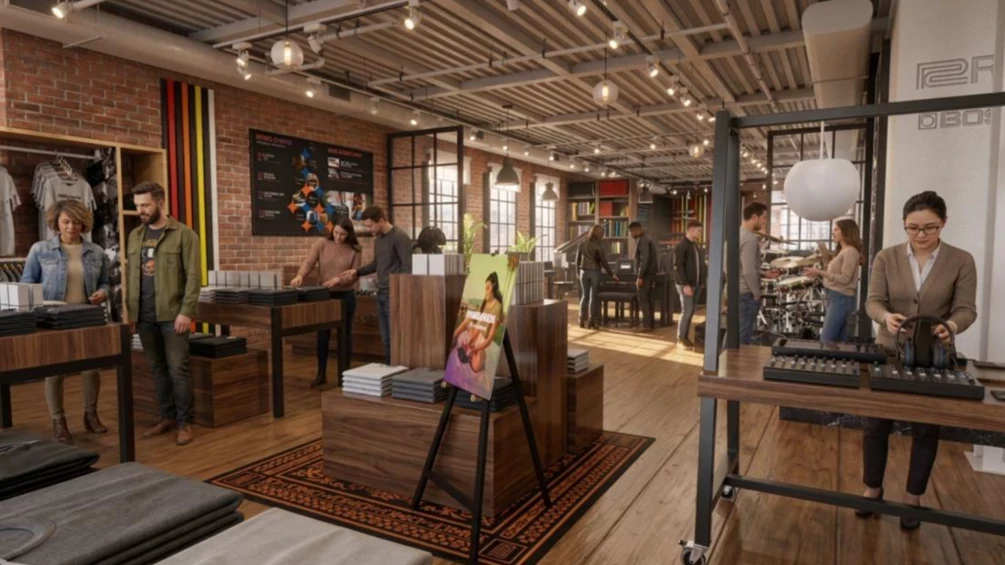
Japanese electronic musical instrument giant Roland is expanding its direct-to-consumer footprint by launching its very first standalone retail flagship in the United States. Situated in the vibrant, culture-rich landscape of Manhattan’s Meatpacking District at 414 West 14th Street, the upcoming retail space represents a massive milestone for the corporation. Spanning an expansive 9,000 square feet within a converted industrial warehouse setting, this flagship store is designed to be much more than a traditional music retail shop. It is positioned as an experiential ecosystem, a community hub, and a technological showcase aimed squarely at musicians, producers, sound designers, and audio creators of all backgrounds.
The strategic timing of this opening underscores Roland’s ongoing evolution in the global music technology landscape. By establishing a physical anchor in New York City—a historic epicenter for musical innovation, genre-crossing culture, and artistic reinvention—Roland is cementing its presence alongside its existing flagship locations in London and Tokyo. Staffed entirely by seasoned product experts and technical specialists, the space will house the latest hardware and software offerings from Roland, as well as products from subsidiary brands BOSS and DW (Drum Workshop).
From a sprawling main showroom featuring digital pianos, electronic drum kits, synthesizers, and DJ gear, to specialized, highly curated spaces like a dedicated grand piano showroom and an interactive sanctuary honoring the legendary Roland TR-808 Rhythm Composer, the store aims to blur the lines between retail, education, and artistic exploration. Furthermore, the environment itself serves as an active demonstration of cutting-edge audio tech, utilizing an immersive, AI-powered music system known as Roland Soundscapes. This ambient system dynamically responds to human movement, MIDI data inputs, time-of-day variables, and even real-time outdoor weather patterns.
In an era where brick-and-mortar retail faces immense pressure from e-commerce, Roland’s heavy investment in physical experiential spaces signals a definitive industry shift. Brands are realizing that consumers—particularly in creative fields—crave tactile, hands-on engagement with gear, peer-to-peer collaboration, and expert-led mentorship. By offering personalized one-on-one consultation appointments, educational workshops, and free after-sales training, the New York flagship is poised to become an indispensable institutional pillar for the North American music community.
Detailed Chronology: The Evolution of Roland’s Retail and Technological Roadmap
To fully understand the weight of Roland’s new New York flagship, it is essential to trace the historical and recent chronology of the company’s strategic maneuvers, product developments, and retail expansions.
Early 2026: Digital Innovations and Virtual Heritage
Roland’s trajectory leading up to the New York storefront launch has been characterized by a dual focus: honoring its storied hardware heritage while aggressively pushing into modern, AI-assisted software ecosystems.
- The CR-78 Software Rhythm Composer Launch: At the very beginning of 2026, Roland dropped a meticulously modeled virtual iteration of the iconic CR-78 Rhythm Composer. Known historically for driving the rhythms behind timeless tracks like Phil Collins’ "In the Air Tonight" and Blondie’s "Heart of Glass," the digital resurrection of this analog drum machine brought vintage sequencing workflows into modern digital audio workstations (DAWs).
- The Melody Flip AI Plug-in: Shortly thereafter, the company announced the "Melody Flip," an innovative AI-assisted melody-generation plug-in. Designed specifically to help producers break through creative blocks and spark fresh ideas, this software release highlighted Roland’s growing commitment to integrating machine learning into daily music production workflows.
Late 2026: The New York Flagship Rollout
- Early October 2026 Announcement Phase: Roland formally unveiled the comprehensive plans for its U.S. flagship store in Manhattan, detailing the massive 9,000-square-foot footprint at 414 West 14th Street.
- October 10, 2026: An exclusive, invite-only grand opening ceremony is scheduled to officially inaugurate the space, drawing industry insiders, prominent artists, and media figures.
- Early November 2026: The doors officially open to the general public, allowing everyday creators, hobbyists, and professional musicians to book one-on-one appointments, test high-end gear, and participate in localized workshops.
Supporting Context & Metrics: Inside the 9,000-Square-Foot Audio Ecosystem
The sheer scale of the Meatpacking District warehouse sets a new standard for musical instrument retail in North America. Spanning 9,000 square feet, the architectural layout has been meticulously divided into distinct zones, each tailored to a specific discipline within music creation.
Spatial Breakdown and Architectural Design
- The Main Showroom: Serving as the central artery of the store, this area showcases the breadth of Roland’s modern catalog. Visitors can test-drive electronic drum kits, stage pianos, cutting-edge synthesizers, modern dance and DJ equipment, and integration systems for Roland Cloud—the company’s cloud-based software and sound library platform.
- The Grand Piano Showcase: Marking a first for Roland’s retail endeavors, this dedicated, acoustically treated enclave houses the company’s premier digital and hybrid grand pianos. It offers discerning pianists an environment to evaluate touch sensitivity, key action, and spatial audio reproduction without the ambient noise of a traditional retail floor.
- The TR-808 Shrine and Workshop Zone: Few instruments have shaped modern hip-hop, electronic, and pop music quite like the Roland TR-808. Recognizing this cultural debt, the flagship dedicates a specialized area entirely to the 808. Beyond displaying historical context, this space is slated to host recurring sessions, masterclasses, and interactive workshops exploring the legendary machine’s enduring legacy and programming techniques.
- The BOSS, SP, and DW Integration Hub: Alongside Roland-branded goods, the space features an extensive inventory from subsidiary powerhouses BOSS and DW. Guitarists and bassists can sample BOSS effects pedals and amplifiers through various monitoring setups, while beatmakers and electronic producers can get hands-on with the legendary SP sampler series and Roland TR drum machine lines.
Ambient Intelligence: Roland Soundscapes
Perhaps the most futuristic element of the store’s physical architecture is its integration of Roland Soundscapes. Rather than playing static background music, the venue utilizes an immersive, AI-powered generative music system. This system is hardwired to react dynamically to its environment:
- Human Movement: Tracking spatial foot traffic to subtly alter harmonic shifts or rhythmic densities.
- MIDI Data Inputs: Interacting with live playing occurring in the showroom spaces.
- Time of Day: Transitioning seamlessly from bright, energetic ambient textures in the morning to deeper, more relaxed sonic palettes as evening falls.
- Outdoor Weather Conditions: Adjusting parameters such as reverb tails, filter cutoffs, and pitch structures in real-time response to local Manhattan barometric pressure, temperature, and precipitation.
Official Statements: Perspectives from Corporate Leadership
The opening of the New York flagship is viewed by executive leadership as a monumental cultural bridge connecting a historic Japanese audio manufacturer with the beating heart of American creative culture.
Masahiro Minowa, CEO of Roland Corporation, emphasized the profound cultural alignment between the city and the brand:
"New York has long been a place where new sounds, ideas, and creative movements take shape, making it a natural home for Roland’s US flagship store."
Minowa’s sentiment captures the philosophy driving the retail expansion. Rather than treating the space as a simple point-of-sale terminal, Roland envisions the store as a cultural incubator where the next generation of musical genres might quietly germinate.
Echoing this perspective, Manuele Barbini, CEO of Roland Americas, highlighted the community-centric mission of the new venue:
"We’re excited to give musicians, producers, and creators in New York a space where they can explore the latest Roland, BOSS, and DW innovations, connect with our team, and be part of a new creative hub for the city."
Barbini’s remarks point to the core value proposition of physical flagships in the digital age: human connection. By placing knowledgeable product specialists on the floor and offering free after-sales training and structured workshops, Roland is actively bridging the gap between hardware ownership and creative mastery.
Future Outlook: The Intersection of Hardware, AI, and Community Retail
As Roland settles into its new home on West 14th Street, the broader implications for the music technology industry are profound. The traditional music retail model—historically defined by crowded, cluttered shelves and transactional sales staff—is being decisively upended by experiential flagships like this one.
The Rise of Experiential Retail in Music Tech
By combining high-end physical hardware demonstration spaces with cloud software integrations (Roland Cloud) and generative AI audio environments (Roland Soundscapes), Roland is presenting a holistic vision of modern music production. Creators no longer buy instruments in a vacuum; they purchase entry points into interconnected ecosystems. Whether a producer is exploring the hardware-software synergy of the newly minted CR-78 virtual rhythm composer, experimenting with AI-assisted melody generation via the Melody Flip plug-in, or tweaking hardware parameters on a physical TR-808 in the Meatpacking District, the boundaries between the physical and digital studio continue to dissolve.
Cultivating the Next Generation of Creators
Furthermore, Roland’s emphasis on education—exemplified through online booking for one-on-one gear appointments, structured 30-minute workshops, and complimentary after-sales training—ensures that the brand builds long-term brand loyalty. By lowering the barrier to entry and demystifying complex synthesizers, samplers, and multi-effects units, Roland is investing directly in the education of future producers and performers.
Global Strategy and Beyond
With flagship stores now firmly established in three of the world’s most influential cultural capitals—London, Tokyo, and now New York City—Roland has established a blueprint for global brand positioning. As the Meatpacking District location opens its doors to the public following its star-studded October launch, it serves as a powerful statement of intent: despite the digital saturation of modern music creation, the tactile, communal experience of making music together in a physical space remains utterly irreplaceable.