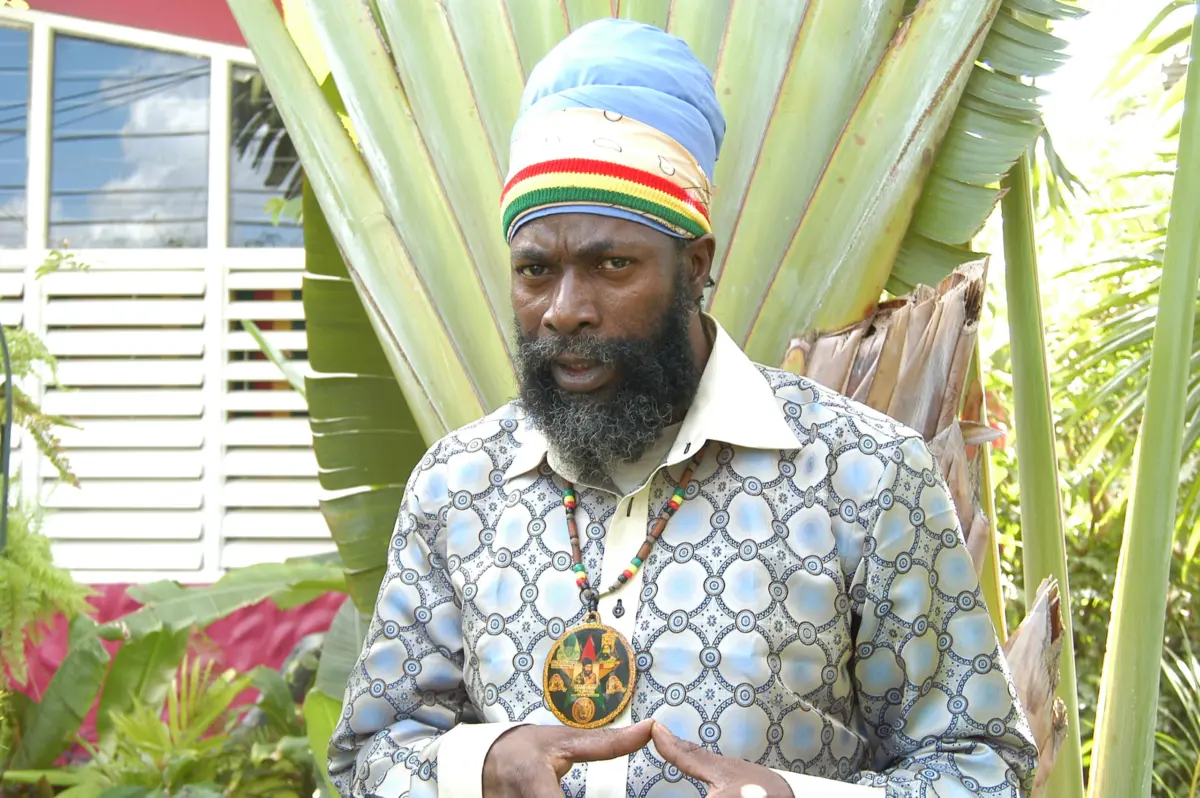
Decades into a trailblazing career that fundamentally reshaped the sonic and cultural architecture of global reggae and dancehall, Capleton—affectionately and fiercely known across the world as "The Fireman"—remains an immutable force of nature. His stamina is legendary, his spiritual discipline is ironclad, and his voice carries the unmistakable weight of a man who has spent a lifetime fighting for the upliftment of the oppressed.
Now, following a protracted 13-year absence from undertaking a full headline tour across the United Kingdom, Capleton is officially preparing to reclaim British stages this September. While festival appearances—such as his recent, massive performances at London’s City Splash—have offered tantalizing glimpses of his fiery presence, this upcoming run marks a long-overdue reunion with one of his most devoted fanbases.
In this exclusive interview, conducted by Lily Mercer for Viper Magazine, the dancehall icon opens up about the spiritual genesis of his electrifying live performances, the mystical moments that have defined his history on British soil, the enduring power of his Rastafarian faith, and why he views himself as a crucial bridge carrying the torch for the next generation of musical revolutionaries.
Detailed Chronology: From the Stratford Rex to a 13-Year Exile
To fully comprehend the magnitude of Capleton’s upcoming September tour, one must understand the complicated history of his relationship with the United Kingdom live circuit. For over a decade, British reggae and dancehall lovers have been starved of intimate headline sets from the artist, forced to make do with scattered overseas appearances or rare festival drops.
Reflecting on the golden eras of the 1990s and 2000s, the conversation inevitably turns to his last major UK performance before the long-standing touring blockade took effect: an unforgettable, high-octane night at the historic Stratford Rex alongside fellow legends Buju Banton and Tarrus Riley. That era of UK dancehall history was characterized by a raw, unadulterated energy—a cultural exchange where Jamaican sound system culture collided head-on with the gritty realities of inner-city Britain.
Yet, when asked about his most surreal and iconic memory on UK stages, Capleton bypasses the legendary indoor arenas in favor of something much more elemental. He recalls an outdoor park show featuring fellow icon Cocoa Tea:
"There was an outdoor show—Cocoa Tea was at that show. When I was on stage, the sky was really dark. Then out of the blue, the sun just burst out of the sky. It was so mystic, people couldn’t believe it. It didn’t come out for long, it’s like the clouds just opened, the sun came out, and the whole place was brightened up for a couple of seconds, then it shut back up. People were talking about that for months. Even to this day, people still remind me about it. For real, it was a crazy show, very nice show. A lot of people, an outdoor show like a park."
Moments like these underscore the almost supernatural aura that follows Capleton wherever he goes. When the clouds part for "The Fireman," it serves as a poetic metaphor for his entire career: cutting through systemic darkness with sudden, blinding bursts of truth and illumination.
Supporting Context & Metrics: The Undying Bond Between Capleton and the UK
The bond between Jamaican roots-and-culture artists and the British public runs deeper than mere entertainment; it is rooted in shared histories of migration, diaspora, and resistance against systemic oppression. When asked why the UK remains one of his strongest and most passionate fanbases, Capleton points directly to this sociopolitical alignment.
"I guess the culture, too. England people like positive music, you know, for over the years. They love Dancehall and everything, but the roots and culture—England thing that. People have been through struggles, the oppression systematically, and the music is the voice of the people. It speaks for the less fortunate, it speaks for the people that are oppressed systematically."
In an era dominated by hyper-commercialized, disposable streaming hits, Capleton’s brand of conscious dancehall acts as a spiritual anchor. His music provides what he describes as "soul, direction, and a sense of hope."
Festival Stages vs. Intimate Venues
The transition from massive, high-capacity summer festivals—where crowds routinely peak between 50,000 and 75,000 people—back to tightly packed, multi-date headline tours requires a distinct mental and physical shift. Capleton acknowledges this transition with characteristic enthusiasm:
Festivals (e.g., City Splash): High-capacity spectacles, massive sound systems, and a generalized cross-genre audience. They serve as grand declarations of presence and cultural celebration.
Headline Tours: Intimate, high-intensity, up-close-and-personal encounters where the exchange of energy between the artist and the die-hard fan base becomes almost palpable.
"It’s a different kind of energy, a different kind of vibe—more intimate," Capleton notes, expressing his eagerness to look his British fans directly in the eye once more.
Official Statements & Philosophical Insights: Real Energy Cannot Be Faked
Throughout his decades-long journey, Capleton has maintained a reputation for delivering live sets that defy physical limitations. While many artists of his generation have slowed down, "The Fireman" bounds across stages with the same explosive vigor that characterized his breakout anthems in the early 1990s.
The secret, he explains, lies in authenticity and spiritual discipline. Real energy—the kind rooted in Rastafarian faith, righteous indignation against injustice, and a genuine love for the people—cannot be manufactured in a laboratory or simulated by algorithms.
"Whenever there is despair, the music brings hope. Whenever there is sadness, music brings happiness. Wherever there is sorrow, the music will always bring joy. I guess it’s the music, the culture, the message, and everything."
Capleton views his role not merely as an entertainer, but as a cultural custodian. As dancehall music continues to mutate, splintering into various sub-genres across the globe, he sees his ongoing presence as a vital bridge. He carries the torch for the foundational architects of the genre while remaining acutely aware of his duty to inspire and clear a path for the next generation of youth looking to use music as a vehicle for liberation.
Future Outlook: Manifesting the Return
As the September tour dates rapidly approach, the anticipation within the global reggae and dancehall community is reaching a fever pitch. The 13-year wait is finally coming to an end, and for Capleton, this moment is about much more than just crossing borders or selling tickets—it is about divine timing and spiritual alignment.
"It’s a great joy, a good feeling, a great drive reconnecting with the fans, you know? Yeah, man, it’s a blessing. The time is now, so we just have to manifest and do what we’ve got to do to keep the people happy. It’s all about the fans, all about the culture and the music."
For the legions of UK fans who spent over a decade waiting for "The Fireman" to return to their local venues, September will bring a long-awaited renewal. And as history has proven time and time again when Capleton hits the stage—whether the skies are clear or sudden clouds part to reveal the sun—the fire is guaranteed to burn brighter than ever.
This article features excerpts from an exclusive interview conducted by Lily Mercer. To read the full, unabridged conversation and explore deep dives into the architects of global music culture, visit the official Viper Magazine Substack.

![CAPLETON INTERVIEW: “MUSIC ALONE SHALL LIVE" - FAITH AND 40 YEARS OF FIRE [VP.2026 / 012] - Viper Mag](https://www.vipermag.com/wp-content/uploads/2026/08/Capleton-Picture-02-e1787851466100.jpg)
![CAPLETON INTERVIEW: “MUSIC ALONE SHALL LIVE" - FAITH AND 40 YEARS OF FIRE [VP.2026 / 012] - Viper Mag](https://www.vipermag.com/wp-content/uploads/2026/08/Capleton-Picture-05.jpg)
![CAPLETON INTERVIEW: “MUSIC ALONE SHALL LIVE" - FAITH AND 40 YEARS OF FIRE [VP.2026 / 012] - Viper Mag](https://www.vipermag.com/wp-content/uploads/2026/08/Capleton-2023-1.jpg)
![CAPLETON INTERVIEW: “MUSIC ALONE SHALL LIVE" - FAITH AND 40 YEARS OF FIRE [VP.2026 / 012] - Viper Mag](https://www.vipermag.com/wp-content/uploads/2026/08/Capleton-006-scaled.jpg)