Executive Overview
For decades, popular culture has maintained a comfortable, heavily curated snow-globe view of traditional Irish music. To the casual listener or the cultural tourist, the genre is often expected to arrive packaged in predictable formats: the fireside session, the plaintive ballad of emigration, the frantic jig played with breathless precision, and a romanticized, uncritical reverence for the past. But living cultures do not exist to serve as museum pieces, and language—particularly a living, breathing language like Gaelic—refuses to be pinned down like a butterfly in a display case.
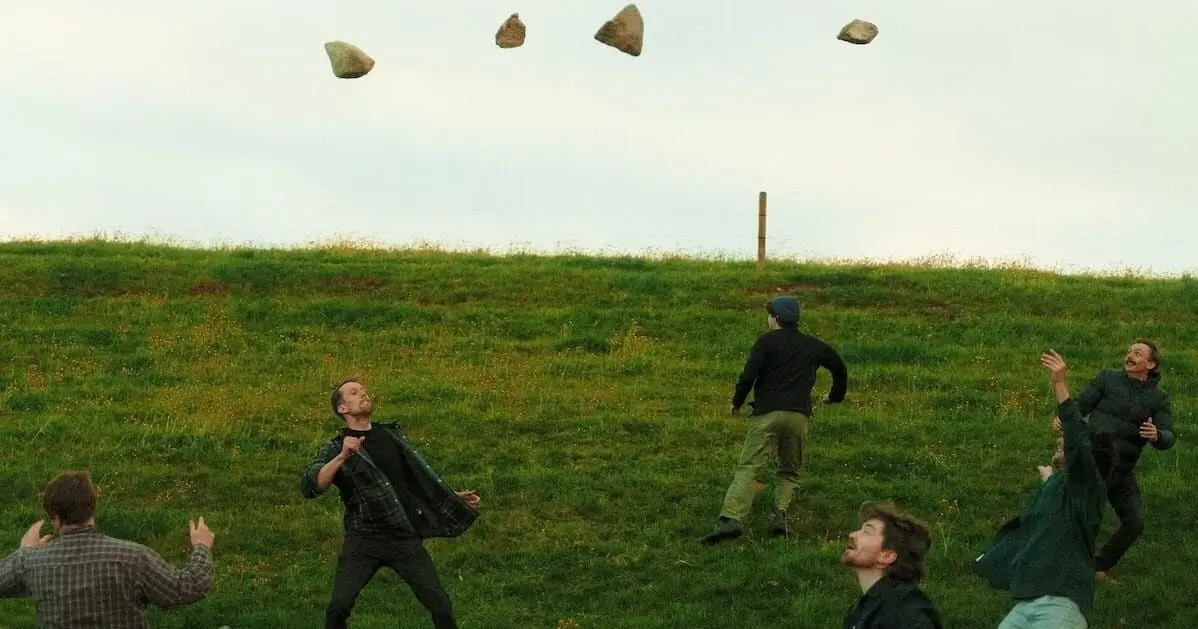
Enter Trá Pháidín, an amorphous, highly experimental collective of musicians who treat cultural heritage not as a holy relic to be worshipped from afar, but as raw, malleable material. Their latest artistic statement, the sprawling and intellectually rigorous album Cloch ’s Claí (slated for release on September 25, 2026, via World of Echo), challenges the very foundations of how Irish identity, history, and language are performed, commodified, and politicized.
Operating from a space that gleefully bridges the gaps between avant-garde jazz, krautrock, contemporary classical composition, and regional Irish folk forms, Trá Pháidín create music that initially feels like a paradox. How can a sound so deeply rooted in the specific idioms of national and regional Irish culture also feel so profoundly alien to the standard canon? The answer lies in the band’s refusal to accept arbitrary boundaries. For Trá Pháidín, Gaelic is a living language, which inherently means its songs can—and must—be new songs.
Across Cloch ’s Claí, the collective deploys a potent mix of dark humor, sharp political critique, and immense sonic intensity. Using the conceptual framework of a dry stone wall—an ancient, laborious agricultural fixture that divides, defines, and shapes the Irish landscape—the album probes the fault lines of history, tokenism, linguistic policy, and the absurdity inherent in the performance of Irishness. Moving far beyond simple sonic pastiche, Trá Pháidín has crafted a masterclass in psychogeographical and socio-political audio exploration, cementing their status as one of the most vital and uncompromising acts working in modern experimental music.
Detailed Chronology: The Evolution of Trá Pháidín’s Conceptual Praxis
To understand the weight and trajectory of Cloch ’s Claí, one must examine the conceptual progression that has defined Trá Pháidín’s output. The group has consistently utilized hyper-specific conceptual frameworks to anchor their sprawling sonic explorations, turning albums into distinct journeys across geography, literature, and sociopolitical critique.
The Psychogeography of An 424 (2024)
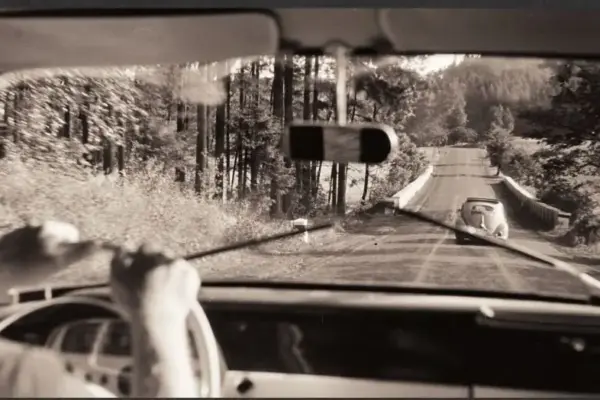
The foundation for their current methodology was solidified with their previous full-length album, An 424, released in 2024. That record served as a daring psychogeographical exploration of a single, highly specific rural bus route traversing the rugged terrain of Connemara. By mapping the sonic textures, rhythms, and isolated atmospheric shifts of that specific journey, Trá Pháidín demonstrated that avant-garde composition could be mapped directly onto the physical and social topography of contemporary Ireland. The album was not merely descriptive; it was an active interrogation of transit, isolation, and rural persistence, establishing the band’s penchant for using localized cartography as a vehicle for universal experimentation.
The Construction of Cloch ’s Claí (2026)
With Cloch ’s Claí (translating loosely to "Stone and Fence/Ditch"), the conceptual framework shifts from linear transit to stationary structural boundary-making: the dry stone wall. In Irish agrarian history, the stone wall is ubiquitous. It marks ownership, keeps livestock contained, carves up fields that defy mechanized efficiency, and stands as a monument to back-breaking physical labor.
Trá Pháidín use this architectural metaphor to examine how cultural identity is built, maintained, and weaponized. The album acts as a sonic wall, examining what is kept inside, what is left outside, and the political pressures that sustain these cultural enclosures. This structural evolution traces a direct line from the moving perspective of An 424 to the entrenched, historical introspection of Cloch ’s Claí.
The Track-by-Track Chronology of an Album Arc
The sequencing of Cloch ’s Claí takes the listener on a deliberate arc, moving from pastoral subversion through political choler before settling into an uneasy, contemplative peace:
- "Tí Mhichael Phaddy": The album opener establishes the mood immediately. It is a mellow, hypnotic hybrid of free jazz and experimental folk, featuring soft, breathy horns and clear tin whistles trading melodic duties over an unyielding, rhythmic percussive pulse. Yet, true to form, a concluding spoken-word snippet shatters the pastoral calm, signaling early on that satire is lurking beneath the surface.
- "An Béal Bocht": Pushed forward by a driving, barrelling percussion section and guttural vocals pitched precariously between a strained whisper and a menacing growl, this track finds the band at their most traditionally grounded. However, it pulls that tradition to the very precipice of collapse, injecting the dark, farcical energy of Brian O’Nolan’s satirical universe directly into the mix.
- "Garbhóg" into "Fidín": "Garbhóg" explodes as a raucous kraut-jazz jam, defined by spiraling melodic lines and unconventional rhythmic hooks. It bleeds seamlessly into "Fidín," a tune that sounds deceptively traditional on the surface, designed specifically to toy with and dismantle the romanticized expectations of musical tourists seeking an easy, commodified version of Irish folk.
- "Dance Paddy Dance": Pushing the critique of repetition and cultural stagnation further, this track presents a dance tune so tightly wound and claustrophobic that it feels trapped in amber. It refuses to progress or resolve, acting as an instrumental dance of death for rigid cultural formulations.
- "Seachtain na Gaeilge" & "Anglicize Everything": Situated at the conceptual heart of the album, this vital pair of tracks tackles the linguistic tightrope of modern Ireland. "Seachtain na Gaeilge" (Irish Language Week) builds slowly upon echoing, pummeling percussion and dual-language spoken-word vocals that walk a fine line between biting satire and evocative beauty. Directly following it, "Anglicize Everything" unfurls over a shifting, deepening bass pulse. Traditional instruments enter erratically and discordantly, creating a gothic, decayed grandeur. A cacophony of overlapping voices—English and Gaelic, ethereal and earthy, sung and spoken—mirrors the chaotic cacophony of modern debates surrounding national identity.
- "Fothrach an Cheirtleáin" & "To Hell or to Connacht": These tracks lean into post-rock dynamics and fluid genre-blending. The former is dark and creeping, while the latter successfully integrates elements of folk, rock, and jazz into a cohesive, rolling tide.
- "Mionnán": The album concludes with a low-lit, pastoral, improvisatory instrumental. Decorated with field recordings of genuine birdsong, it functions as a sonic vignette—a moment of quiet recovery after the album has traversed political rage, satire, and structural deconstruction, leaving the listener in a space that is strangely hopeful.
Supporting Context & Metrics: The Literary Roots of the Absurd
To fully grasp the cultural positioning of Cloch ’s Claí, one must look outside the realm of musicology and into the rich tradition of Irish satire, specifically the literary legacy of Myles na gCopaleen (the brilliant pen name of Brian O’Nolan, widely known to English-language readers as Flann O’Brien).
The Shadow of An Béal Bocht
In 1941, O’Nolan published An Béal Bocht (The Poor Mouth), written in Gaelic under his Myles na gCopaleen persona. The novel was a merciless, sidesplitting parody of the romanticized Gaeltacht autobiographies that had become popular in the early 20th century—books written by well-meaning outsiders or nostalgic nationalists that portrayed rural Irish speakers as noble, suffering, endlessly impoverished primitives.
O’Nolan invented the fictional village of Corkadoragha, a rain-soaked, mud-caked hovel where "the poverty of the countryside was too poor, and the Gaelicism of the countryside was too Gaelic." In Corkadoragha, perpetual misery and relentless precipitation are worn as badges of honor, and the inhabitants speak an exaggerated, performative hyper-Gaelic that mocks both official state tokenism and the voyeuristic expectations of urban intellectuals.
Quantifying the Gap Between Myth and Reality
Trá Pháidín’s music operates entirely within the critical space identified by O’Nolan: the yawning chasm between how Irish culture is marketed and performed versus the lived reality of its participants.
| Dimension | The Mythical / Tourist View | The Lived / Trá Pháidín Reality |
|---|---|---|
| Language (Gaelic) | A static, sacred museum piece to be trotted out during tokenistic state celebrations. | A living, contentious, adaptable medium capable of radical contemporary expression. |
| Rural Life | A romanticized, pastoral idyll untouched by modern alienation or systemic failure. | A complex site of historical trauma, economic hardship, and dark, absurd comedy. |
| Musical Tradition | A pristine, unchanging heritage meant to comfort the listener with predictable nostalgia. | A volatile, porous canvas open to avant-jazz, krautrock noise, and radical deconstruction. |
By recognizing that these identity gaps still exist—and in many cases, are actively widening due to modern political tokenism—Trá Pháidín position themselves not as destroyers of tradition, but as its most honest chroniclers. They deploy a keen ear for the absurd to stitch the frayed edges of national identity back together, using dissonance and humor as tools of ultimate respect.
Official Statements & Critical Perspectives
While Trá Pháidín maintain an intentionally elusive, amorphous profile as a collective, the critical discourse surrounding their work—and the conceptual weight of Cloch ’s Claí—has positioned them at the vanguard of contemporary European underground music.
Although formal press releases from the band remain sparse, preferring to let their intricate liner notes, conceptual maps, and dense sonic architecture speak for themselves, musicologists and cultural commentators have begun decoding their methodology.
In pre-release reviews circulating within European experimental circles, critics have highlighted the band’s rare ability to marry high-concept academic theory with visceral, danceable energy. As one early critique noted:
"Trá Pháidín understand that the history of Gaelic language and culture is composed of equal parts bathos, pathos, and absurdity. They do not pander to the listener’s desire for easy assimilation; instead, they construct sonic dry stone walls that force us to question what we lock inside our cultural definitions and what we cast out into the cold."
Furthermore, the choice of World of Echo as the home for Cloch ’s Claí speaks volumes about the band’s artistic alignment. Known as a sanctuary for uncompromising, genre-agnostic sound art, avant-rock, and boundary-pushing global explorations, the label provides the perfect platform for an album that refuses to be categorized.
Regarding the linguistic politics embedded in tracks like Seachtain na Gaeilge and Anglicize Everything, cultural analysts have pointed out the timeliness of Trá Pháidín’s output. At a time when institutional bilingualism in Ireland is frequently reduced to corporate checkboxes, bureaucratic tokenism, and political posturing, Trá Pháidín’s use of dual-language, satirical, and jarringly dissonant vocal arrangements acts as a vital counter-narrative. It rescues the language from the sanitized boardrooms of state agencies and returns it to the muddy, complicated, and vibrant reality of the streets and fields.
Future Outlook
As the release date for Cloch ’s Claí approaches on September 25, 2026, anticipation among connoisseurs of avant-garde folk, krautrock, and modern composition has reached a fever pitch. Available across digital download, compact disc, and luxury vinyl LP formats via World of Echo (with pre-orders active on their Bandcamp page), the album is poised to be one of the most intellectually stimulating and musically daring releases of the decade.
What Lies Ahead for Trá Pháidín?
- Live Interpretation and Spatial Performance: Given the heavy architectural and psychogeographical themes of both An 424 and Cloch ’s Claí, the collective is widely anticipated to translate these recorded sonic monuments into immersive live environments. Whether through site-specific performances near physical dry stone walls or gallery-based sound installations, Trá Pháidín’s transition from studio construct to physical stage performance remains a tantalizing prospect.
- Expanding the Cartography of Irish Identity: Having mapped a Connemara bus route and dissected the structural walls of agrarian history, the amorphous collective has proven that their conceptual engine is limitless. Future projects are expected to continue expanding outward, applying their unique blend of free jazz, traditional instrumentation, and literary satire to other overlooked corners of Irish infrastructure, folklore, and socio-political evolution.
- Influencing a New Generation of Experimental Folk Artists: By successfully demonstrating that traditional music does not need to be watered down or fossilized to remain relevant, Trá Pháidín are opening doors for a new wave of younger Irish artists. They are proving that absolute technical mastery of traditional forms can coexist happily with a burning desire to tear those forms down and rebuild them in the image of the modern, complex world.
Ultimately, Cloch ’s Claí is more than just an album; it is a cultural artifact of immense weight. It challenges us to look past the tourist postcards, the sanitizing language laws, and the comfortable nostalgia of the past. In doing so, Trá Pháidín reminds us that true cultural preservation is not about keeping things frozen in the past—it is about having the courage, the humor, and the musical brilliance to let them breathe, break, and live anew.
Album Details At a Glance
- Artist: Trá Pháidín
- Cloch ’s Claí
- Release Date: September 25, 2026
- Label: World of Echo
- Formats: Digital Download (DL), Compact Disc (CD), Long-Playing Vinyl (LP)
- Official Link: Bandcamp Pre-Order