Executive Overview
In an era defined by the precarious survival of the live entertainment sector—where grassroots music venues have faced unprecedented financial and structural headwinds—a new and formidable player has entered the arena. Apple has officially unveiled Apple Music Hall, a cutting-edge, 600-capacity live performance venue situated within the historic, architectural masterpiece that is London’s Battersea Power Station.
Positioned at the intersection of heritage industrial design and hyper-modern broadcast technology, Apple Music Hall is not merely another venue added to the capital’s sprawling nightlife map. Instead, it represents a radical rethinking of how live music is experienced, captured, and broadcast to global audiences. By fusing the raw, close-quarters intimacy of a grassroots club with the multi-million-dollar production infrastructure typically reserved for massive stadium tours, Apple aims to bridge a long-standing gap in the modern music ecosystem.
The venue is kitted out with an astonishing array of next-generation hardware. At its core is a 48-speaker Spatial Audio surround sound system, complemented by dual dedicated recording and mixing suites, multi-camera hardwiring capable of supporting 16 or more feeds simultaneously, and a specialized broadcast control room engineered to seamlessly blend traditional production equipment with mobile workflows like iPhone video capture.
Alongside the launch of the hall itself, Apple has relocated its entire London-based Apple Music Radio team to the Battersea complex, cementing the site as a vibrant global hub for content creation. In a climate where the music industry desperately needs structural investment, Apple Music Hall stands as a bold statement of intent—a testament to what happens when deep corporate resources meet an enduring love for artistic innovation.
Detailed Chronology: The Evolution of Apple Music Hall
To fully understand the significance of Apple Music Hall, one must trace both the historical lineage of Battersea Power Station and Apple’s long-standing, strategic evolution within the music and broadcasting sectors.
The Industrial Past and Urban Renewal
For decades, Battersea Power Station stood as a titan of London’s industrial skyline. Designed by the architect Sir Giles Gilbert Scott and constructed in two phases during the mid-20th century, the coal-fired power station was an engineering marvel that once supplied a massive portion of London’s electricity. However, as the city modernized and moved away from coal, the station was decommissioned in the early 1980s.
For nearly forty years, the cavernous, art-deco-infused brick structure sat derelict—a beloved yet ghostly monument to Britain’s industrial heritage. It became a blank canvas for urban explorers, filmmakers, and dreamers, before undergoing one of the most ambitious and expensive urban regeneration projects in European history. Transformed into a mixed-use neighborhood comprising residential apartments, retail giants (including Apple’s massive UK corporate campus), restaurants, and leisure spaces, Battersea Power Station re-emerged as a cultural focal point for South West London. The opening of Apple Music Hall represents the crowning jewel of this massive cultural rehabilitation project.
Apple’s Live Music Legacy
Apple’s relationship with live music is almost as old as the digital music revolution itself. Following the launch of the iPod in 2001 and the iTunes Music Store in 2003, Apple recognized that hardware and software alone could not entirely capture the cultural heartbeat of music culture.
Enter the legendary iTunes Festival (later rebranded as the Apple Music Festival), which ran for a decade, primarily at the Roundhouse in Camden. For ten consecutive years, the festival transformed London into the epicenter of the global music world, bringing household names—from Adele and Coldplay to Lady Gaga and Elton John—into intimate live settings while streaming their performances to millions of devices worldwide via software.

When the festival era concluded, Apple continued to invest heavily in exclusive live sessions, spatial audio mixing facilities, and documentary-style concert films. Apple Music Hall is the physical, permanent evolution of these initiatives. It is the logical next step for a tech giant that has spent over two decades trying to bring fans closer to the artists they love.
Architectural Mastery: Merging Heritage with Modernity
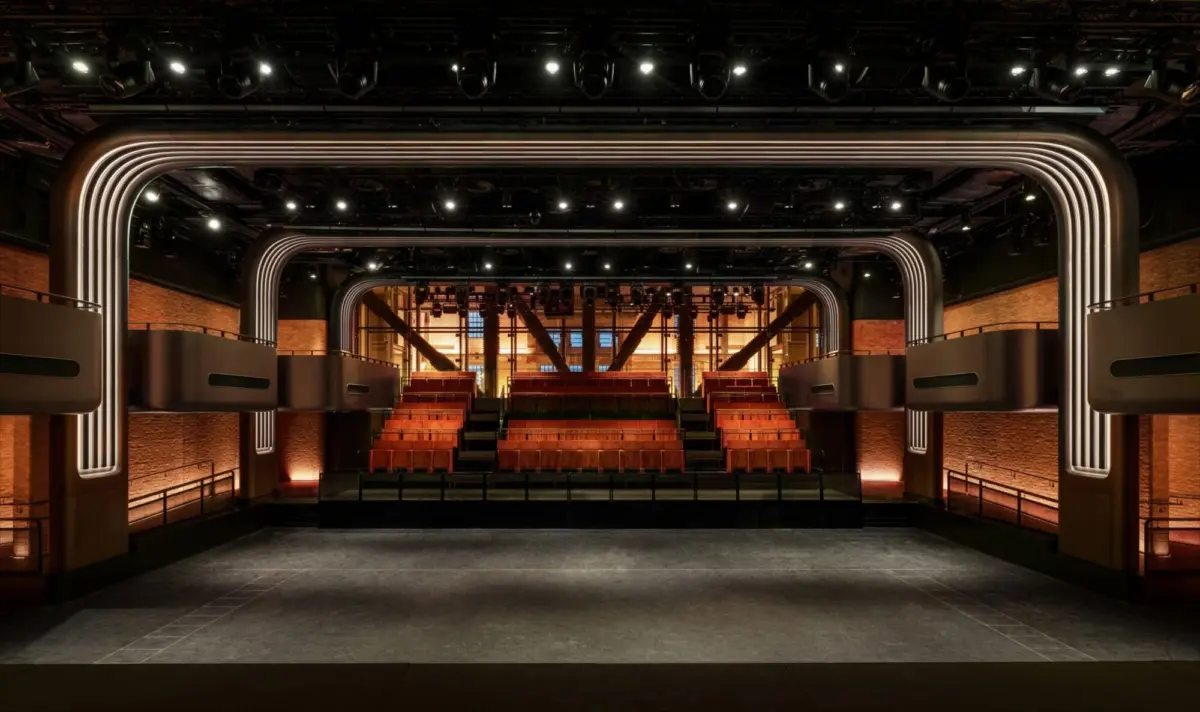
Walking into Apple Music Hall is an exercise in sensory contrast. The venue’s design team made a conscious decision to respect the historical DNA of Battersea Power Station rather than sanitizing it behind modern drywall.
Preserving Industrial DNA
Upon entering the building, visitors are immediately greeted by the raw textures of the former power station. Exposed brickwork, weathered steel beams, and structural ironwork have been left completely untouched, providing a visceral, tactile connection to the building’s industrial past. To complement this rugged aesthetic, architects integrated custom bronze balconies that nod to the vintage machinery once housed within the facility, blending 1930s industrialism with sleek, contemporary detailing.
Spatial Flow and the Thames View
Before patrons even step foot into the primary 600-capacity performance space, they pass through a soaring foyer dominated by a massive glass wall. This architectural feature serves a dual purpose: it offers visitors a sweeping, panoramic view of the venue’s central concourse while framing a stunning, uninterrupted vista of the River Thames.
This transparency is intentional. Apple wanted the venue to feel porous and connected to the wider Battersea development, ensuring that a night out at Apple Music Hall begins long before the house lights go down.
Supporting Context & Metrics: The State of the Industry
The launch of Apple Music Hall arrives at a critical, highly volatile juncture for the live music sector.
Navigating Venue Closures
According to data compiled by the Music Venue Trust (MVT), recent years have dealt devastating blows to the foundational ecosystem of live music. The UK live sector witnessed an unprecedented wave of grassroots venue closures, driven by a lethal combination of soaring post-pandemic operating costs, skyrocketing energy bills, commercial rent hikes, and cost-of-living pressures on consumers.
While mega-arenas and stadium tours helmed by pop royalty continue to shatter box office records, the grassroots and mid-sized venues where artists traditionally hone their craft have been "dropping like flies." Electronic music artists, indie bands, and up-and-coming singer-songwriters have found themselves with fewer and fewer places to play, record, and build an audience.
The Intimacy vs. Production Dilemma
In this landscape, artists face a compounding problem. Playing an intimate 500-to-600 capacity club offers an unmatched connection with fans, but it typically forces compromises on production value, lighting, sound design, and broadcast capabilities. Conversely, scaling up to an arena guarantees top-tier production infrastructure, but instantly alienates the audience, stripping away the raw, visceral energy of a close-quarters performance.

Apple Music Hall has been meticulously engineered to solve this precise dilemma. Featuring a spacious 38-foot-wide stage that can be configured either for traditional front-facing sets or immersive "in-the-round" experiences, the venue lets artists maintain absolute intimacy with their crowd without sacrificing the technical capabilities of a major tour.
Technical Specifications: Under the Hood of Apple Music Hall
What truly separates Apple Music Hall from traditional music venues is its heavy investment in cutting-edge audio and broadcast technology. Apple has effectively built a world-class television studio and mixing facility disguised as a grassroots club.
+-----------------------------------------------------------------+
|                    APPLE MUSIC HALL INFRASTRUCTURE             |
+-----------------------------------------------------------------+
          |                                       |
          v                                       v
+-----------------------+               +-----------------------+
|      ACOUSTICS        |               |      BROADCAST        |
| - 48-Speaker Spatial  |               | - 16+ Hardwired       |
|   Audio Surround      |               |   Camera Feeds        |
| - Dual Recording &    |               | - Specialized Control |
|   Mixing Studios      |               |   Room                |
| - Multitrack Capable  |               | - iPhone Multi-Cam    |
|   Live Capture        |               |   Integration         |
+-----------------------+               +-----------------------+
Spatial Audio Dominance
Apple has heavily championed Spatial Audio with Dolby Atmos across its hardware and software ecosystems over the past few years. Apple Music Hall brings this technology into the live environment on a massive scale.
The venue is outfitted with a custom-engineered 48-speaker spatial surround sound system strategically positioned throughout the room. This setup allows performers to mix live audio dynamically in three-dimensional space, transforming a standard live gig into an immersive sonic journey. Whether an artist wants subtle ambient textures swirling above the crowd or thunderous, pinpoint instrument separation, the room’s acoustic treatment delivers pristine clarity at any volume.
Professional Recording and Mixing Suites
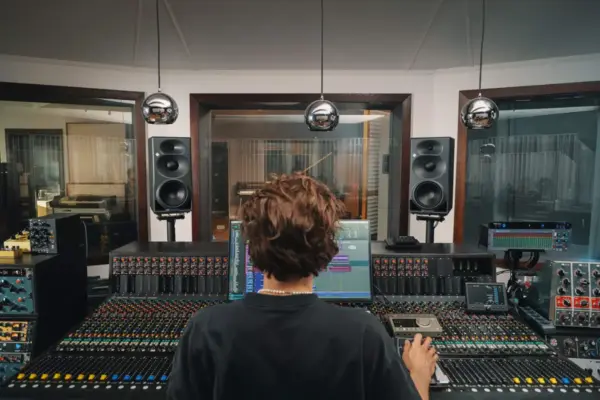
Behind the scenes, artists are provided with professional-grade tools that transcend standard live venue offerings. Apple Music Hall features two dedicated recording and mixing studios tucked away from the main floor.
These suites allow artists and their production teams to capture multitrack recordings of their live performances in real time. Musicians can step off the stage and immediately step into a pristine control room to review, mix, and master their live sets for immediate release on Apple Music as exclusive live EPs or spatial audio albums.
Broadcast-Ready Infrastructure
In the digital age, a live concert is no longer confined to the four walls of the venue. Recognizing this, Apple has hardwired the hall for 16 or more broadcast-quality cameras, enabling frictionless capture of live performances.
A specialized broadcast control room oversees these feeds, designed to support both traditional cinematic broadcast cameras and modern, agile setups—including the simultaneous parallel usage of iPhone video capture. This integration democratizes high-end multi-cam production, allowing even emerging artists to capture visually stunning, professionally edited content for their social channels and streaming profiles.
Official Statements and Industry Reception
The industry response to the unveiling of Apple Music Hall has been overwhelmingly positive, hailed by executives and artists alike as a major win for London’s cultural cachet.

Oliver Schusser on Apple’s Enduring Commitment
In the official press release accompanying the launch, Oliver Schusser, Apple’s Vice President of Apple Music and International Content, emphasized the company’s deep-rooted history with the medium:
"Apple’s deep love for music dates all the way back to the very beginning, from the launch of the iPod to the long-running iTunes Music Festival to the debut of Apple Music. Today, with the opening of Apple Music Hall, we are once again taking an unprecedented step further in our commitment to artists and fans by supporting live music in ways only Apple can do."
Schusser’s remarks underscore a broader corporate philosophy: Apple views music not merely as content to drive hardware sales, but as a cultural cornerstone worthy of heavy, physical infrastructure investment.
The London Radio Hub Integration
Adding to the venue’s operational weight, Apple has officially relocated its London-based Apple Music Radio team directly to Battersea Power Station. By embedding its tastemakers, DJs, and broadcast producers within the same complex as the new performance hall, Apple has created a self-sustaining ecosystem. Radio broadcasts, live artist interviews, intimate performances, and recorded spatial audio sessions can now flow effortlessly from the venue floor straight into the global Apple Music broadcast stream.
Future Outlook: What Apple Music Hall Means for the Live Music Ecosystem
As Apple Music Hall prepares to open its doors to its first wave of artists and fans, industry watchers are eager to see how the space will be utilized in practice.
A New Playground for Superstars and Newcomers Alike
While major global superstars will undoubtedly covet the venue for secret album-launch shows, stripped-back promotional sets, and live-streamed global events, the true legacy of Apple Music Hall may lie in how it treats emerging talent. By providing grassroots and mid-tier artists with access to world-class production, spatial audio, and broadcast tools typically locked behind massive label budgets, Apple has leveled the playing field.
An independent artist with a burgeoning fanbase can now play a 600-capacity room in Battersea and leave with a professionally mixed spatial audio recording and a 16-camera live film—assets that can jumpstart a global career overnight.
Setting a New Benchmark for Hybrid Entertainment
Apple Music Hall is more than a room with good speakers; it is a blueprint for the future of entertainment real estate. As physical venues continue to adapt to a digital-first world, the successful integration of top-tier streaming infrastructure, immersive acoustic design, and historical preservation demonstrated at Battersea Power Station will serve as the golden standard.
In a turbulent time for the global music community, Apple has built a sanctuary where history and future collide—proving that when technology and art truly collaborate, the possibilities are limitless.