While global music headlines are routinely dominated by speculation surrounding festival headliners—debating who drew the largest crowd at Lollapalooza, analyzing surprise sets at Reading, or forecasting future Glastonbury Pyramid Stage headliners—the true lifeblood of the live music ecosystem exists several rows down the lineup poster. Tucked away in the smaller fonts of these bills are the emerging artists who represent the future of the industry. These acts are tasked with filling tents on Thursday nights, converting skeptical crowds, navigating grueling travel schedules, and refining their performance dynamics in real time.
This investigative report examines the realities of the festival circuit through the eyes of the NME 100 of 2026—a curated class of the year’s most promising emerging artists. Drawing on first-hand testimonies from Latin indie-soul artist 54 Ultra, UK rapper Ceebo, Scottish electronic duo KuleeAngee, Irish folk-punk outfit Madra Salach, British-Indonesian indie-folk singer Nadia Kadek, and dance-punk duo The Itch, this analysis details the chronological progression of the season, the underlying economics of minor-font bookings, the physical and psychological realities of the touring circuit, and the long-term career trajectories of tomorrow’s marquee acts.
Detailed Chronology of the Festival Circuit
The festival season is a grueling, multi-month gauntlet that tests an emerging artist’s stamina, adaptability, and stagecraft. For the class of 2026, the journey spanned local showcases, European excursions, and major international debuts.
[March - June] -----------------> [July] -----------------------> [August]
Ceebo's Parisian Debuts          Latitude Festival               Green Man & Haldernpop
54 Ultra at Coachella/Lolla      (KuleeAngee, Nadia Kadek)       (The Itch, Madra Salach)
Phase 1: The Spring Launches and International Debuts (March – June)
The season initiated early for South London rapper Ceebo, who crossed the English Channel in March for a debut performance in Paris, subsequently returning in June to perform at the historic Fête de la Musique. This marked a significant milestone: his first international performances, where he confronted and overcame potential linguistic barriers in front of highly engaged Parisian audiences.
Concurrently, Latin indie-soul artist 54 Ultra secured major career milestones by performing at two of the Western hemisphere’s most prominent festivals: Coachella in Indio, California, and Lollapalooza in Chicago, Illinois. Having previously only performed at New York’s The Greatest Day Ever as a teenager and London’s All Points East the prior year, these bookings represented a rapid scale-up in venue capacity and production demands.
Phase 2: The Mid-Summer Peak and Thursday Night Goldmines (July)
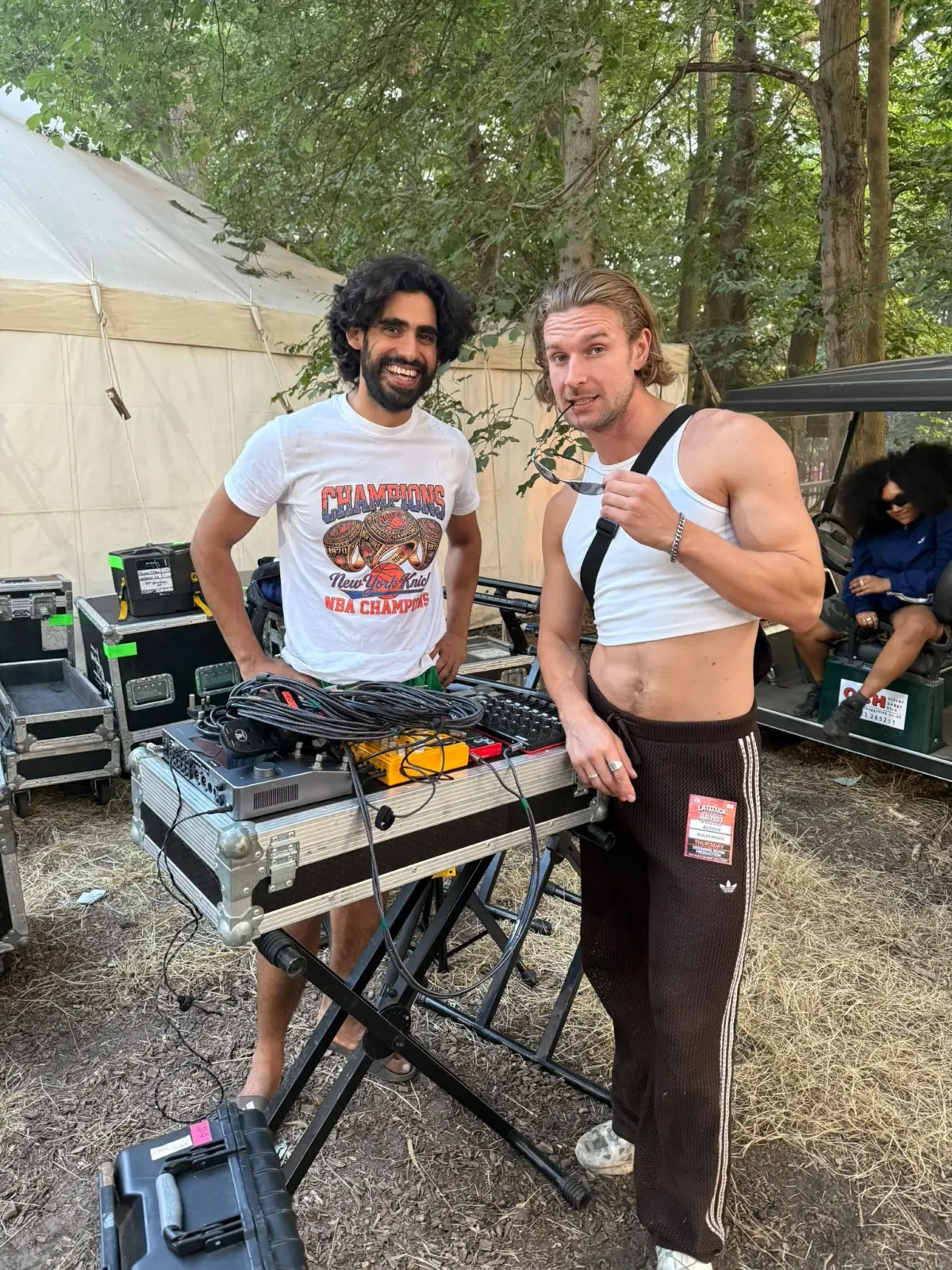
July shifted the focus to the UK countryside, specifically Henham Park for Latitude Festival. This event served as a critical platform for Scottish electronic duo KuleeAngee (comprising Duncan Grant and Kesh Kanabar) and indie-folk artist Nadia Kadek.
Both acts were strategically scheduled for Thursday evening slots—a period when the festival’s main stages remain closed, directing thousands of newly arrived, exploratory attendees toward smaller tents like the Sunrise Arena. For Kadek, opening the Sunrise Arena was a lifetime ambition realized, compounded by a surprise guest appearance later that evening with indie veterans Mystery Jets.
Phase 3: The Late-Summer Gauntlet (August)
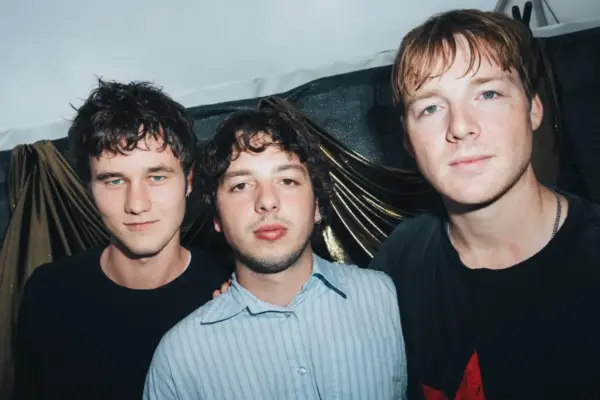
By August, the physical toll of the road intersected with artistic triumph. Dance-punk duo The Itch (Georgia Hardy and Simon Tyrie) performed a highly anticipated set at Green Man Festival in Wales. For Hardy, a decade-long attendee of the festival as a patron, the performance marked a profound transition from consumer to creator.
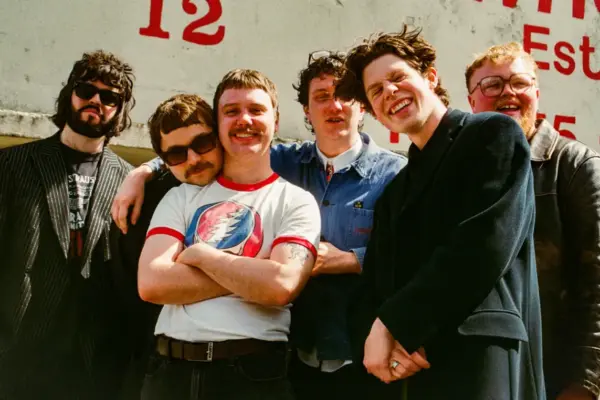
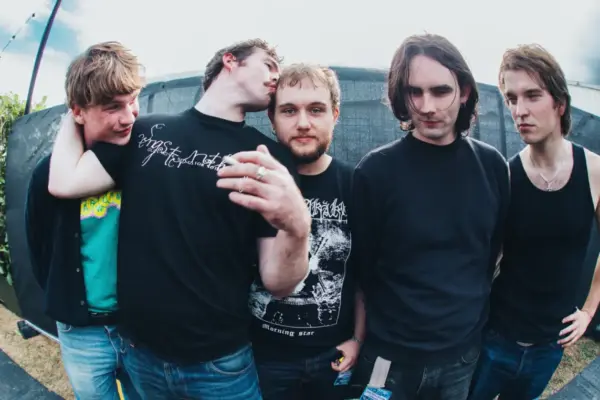
Simultaneously, Irish folk-punk band Madra Salach embarked on a mainland European run, culminating in a highly praised set at Haldernpop in Germany. Their tour was punctuated by unexpected cross-genre collaborations, notably joining experimental rock outfit Black Country, New Road on stage for a rendition of Wings’ classic "Band on the Run."
Supporting Context & Metrics: The Economics of the "Small Font"
To understand the value of these performances, one must look beyond flat performance fees. For emerging acts, the economics of festival appearances rely on a long-tail return on investment (ROI) driven by audience acquisition, algorithmic streaming lifts, and industry networking.
The Strategic Value of the Thursday Slot
For an upcoming band, a Thursday night slot at a major festival like Latitude is often more valuable than a mid-afternoon slot on a Saturday. Thursday attendees have newly arrived, possess high energy levels, and are not yet fatigued by days of camping. With the main stages dark, foot traffic is funneled directly into secondary and tertiary tents.
Discovery Metrics: Artists performing in these slots report significant spikes in Shazam queries and localized Spotify stream increases in the days immediately following the festival.
The "Wander-In" Effect: Unlike headline sets, which draw highly partisan fanbases, Thursday tents are populated by casual discoverers. This environment allows acts to win over completely uninitiated listeners.
The Operational Realities of Minor-Font Touring
While headliners travel with dedicated production crews, custom lighting rigs, and extensive soundchecks, emerging artists operate under extreme logistical constraints:
The "No-Soundcheck" Reality: Lower-billed acts are rarely afforded a soundcheck. Instead, they perform a "line check"—a rapid, ten-minute diagnostic of instruments and vocals immediately prior to their set.
Manic Logistics: Artists frequently travel long distances in split-splitter vans, arriving on-site with only hours to spare before taking the stage. Georgia Hardy of The Itch notes that this lack of preparation time can be paradoxically "freeing," eliminating performance anxiety through sheer logistical momentum.
The Backstage Economy: The artist village serves as a critical networking hub. Free from the commercial pressures of solo touring, artists frequently form collaborative relationships, share resources, and arrange future joint tours.
Official Statements: Voices from the Frontlines
The following testimonies, gathered directly from the artists during the 2026 festival season, provide a raw, unvarnished look at the triumphs and tribulations of the touring circuit.
On the Art of Winning Over Crowds
54 Ultra:"It’s never pressure; it’s a game. I’m used to turning new people into fans because nobody knew who I was for so long in New York and New Jersey. I know that feeling and how to get people to pay attention. Having a healthy crowd at both Coachella and Lollapalooza and doing something people were talking about was all I wanted."
Jack Martin (Madra Salach):"It’s always cool to break the ice with a joke. Sometimes at continental European shows where English isn’t the first language, the jokes absolutely die. But sometimes they’re overly polite and give me a round of applause, and that’s also a laugh. They’re not even really jokes; they’re just short, rambling thoughts."
On Demystifying the Backstage Experience
Paul Banks (Madra Salach):"I think I was struck by how calm the vibes are in the artist’s village; everyone’s kind of having downtime. Before I did this, I probably would have thought that everyone was on some rager and getting hammered all the time. But it’s all very chill and people like eating fruit and that sort of thing."
On the Psychological Impact of Live Validation
Ceebo:"When I first performed in Paris, someone rushed over to me when I got offstage. He’d been speaking French throughout my set, then started speaking to me in English and told me he’d travelled specifically to see me. I was like, ‘That is mad.’ I still feel like I’ve got a long way to go as a performer, so knowing people are already invested enough to travel to see me means a lot."
Nadia Kadek:"At Kendal Calling, there was this couple who knew all the words to my songs. That just never happens to me! Kendal is so far from home, and there were people all the way out there who knew my music. It made me think, ‘If two people can enjoy it, then it’s so worth it.’"
Future Outlook: The Next Generation of Headliners
As the 2026 festival season draws to a close, the focus shifts to how these artists will leverage their summer momentum into long-term career growth. The aspirations of this rising class reflect a changing music industry—one that values cultural exchange and unique live experiences over traditional metrics of commercial success.
+------------------------------------------------------------------------+
|                      FUTURE TARGETS FOR THE CLASS OF '26               |
+------------------------------------------------------------------------+
|  Artist         | Target Stage / Milestone                             |
+-----------------+------------------------------------------------------+
|  54 Ultra       | Lollapalooza Brazil & Argentina (South America)       |
|  Ceebo          | Headline Wireless Festival (Full-circle career goal) |
|  KuleeAngee     | Headline a revived "T in the Park" (Scotland)        |
|  Nadia Kadek    | Open the Pyramid Stage (Glastonbury)                 |
|  The Itch       | Pyramid Stage / Glastonbury Debut                    |
+-----------------+------------------------------------------------------+
The paths forward for these six acts represent distinct, compelling visions of future success:
International Integration: For 54 Ultra, the next step is deep cultural immersion. Rather than focusing solely on US or European markets, her sights are set on South America, specifically Lollapalooza’s editions in Brazil and Argentina, aiming to connect directly with her heritage and expand her global footprint.
Full-Circle Milestones: For Ceebo, the ultimate goal is deeply personal. Having previously worked as a staff member at London’s Wireless Festival, his ambition is to return as a main stage headliner, completing a full-circle professional journey.
Regional Revivals: In Scotland, KuleeAngee champions a local renaissance. Rather than merely dreaming of existing stages, they advocate for the return of iconic Scottish festivals like T in the Park, envisioning a future where local electronic and indie acts are elevated to national headliner status.
The Counter-Intuitive Approach to Scale: Notably, Nadia Kadek rejects the traditional pressure of headlining altogether. Her ultimate ambition is to open Glastonbury’s legendary Pyramid Stage or secure a late-afternoon Sunday slot at Latitude. Her focus remains on preserving the intimate, communal magic of the festival experience—proving that even on the world’s largest stages, the most powerful moments often occur before the sun goes down.