Executive Overview
The trajectory of jazz history is frequently written through the lens of its American epicenters—the dimly lit clubs of Harlem, the bustling recording studios of Manhattan, and the avant-garde sanctuaries of the West Coast. Yet, a vital, complementary narrative exists across the Atlantic, forged by American virtuosos who sought artistic refuge, steady employment, and creative reinvention in Europe. Among these expatriates, tenor and soprano saxophonist Steve Grossman occupies a singular, towering position.
Grossman’s legacy is inextricably linked to the post-Coltrane lineage. Having stepped into the daunting role previously held by Wayne Shorter and Dave Liebman in Miles Davis’s electric ensemble during the early 1970s, and having anchored Elvin Jones’s ferocious post-bop groups, Grossman possessed an unassailable jazz pedigree. However, by the late 1970s, as the American commercial landscape shifted away from acoustic jazz and the phone calls from club bookers grew sparse, Grossman made a life-altering decision. Following the dissolution of his pioneering fusion vehicle, Stone Alliance, Grossman permanently relocated to Europe. He spent nearly three decades based primarily in Italy, transforming European stages and independent labels into his personal workshop.
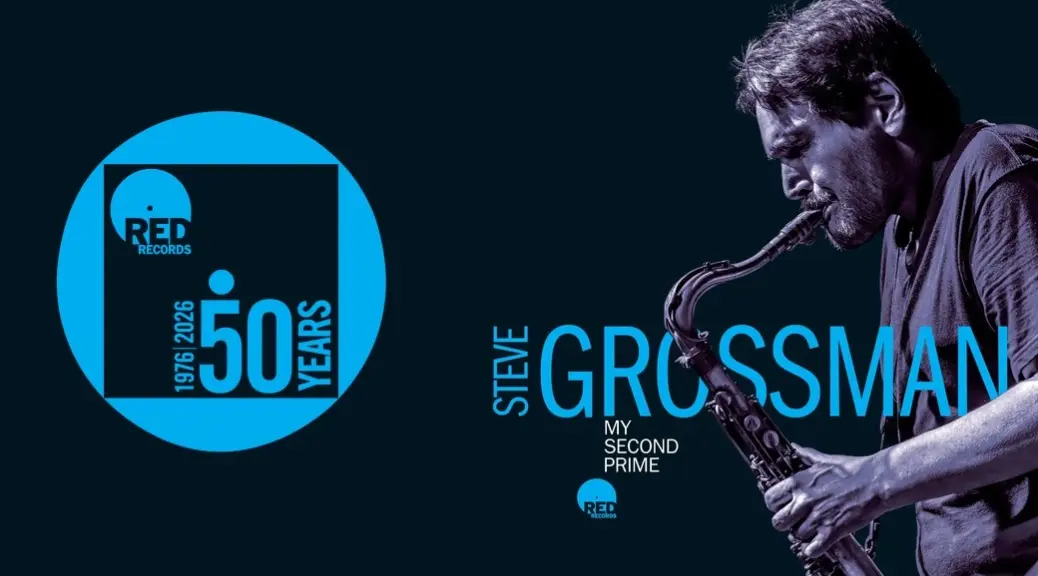
The recent fiftieth-anniversary celebrations of Milan’s legendary Red Records have brought this era back into sharp relief, notably through the remastered reissue of Grossman’s live masterpiece, My Second Prime. Recorded at the La Spezia Jazz Festival in December 1990, this archival release captures Grossman at a vital crossroads. Leading an all-star international quartet—featuring Montreal-based pianist Fred Henke alongside the formidable French rhythm section of bassist Gilbert “Bibi” Rovère and drummer Charles Bellonzi—Grossman delivers a masterclass in transnational improvisation.
This retrospective examines the historical weight of My Second Prime, deconstructs the socio-musical mechanics of the American jazz diaspora in Europe during the final decades of the 20th century, and provides a track-by-track critical analysis of a performance that immediately preceded Grossman’s monumental 1990s career resurgence.
Detailed Chronology: From the Roman Sessions to the European Migration
The Genesis of an Expatriate: Rome, 1975
Steve Grossman’s relationship with Europe began long before he made the continent his permanent home. A crucial artifact of this early phase is Jazz A Confronto 23, recorded in Rome in 1975 for the visionary Italian label Horo. The Horo catalog was built upon a brilliant, daring premise: capture visiting American jazz luminaries as they passed through the Italian capital and pair them spontaneously with locally based musicians.
On this particular session, Grossman was found playing soprano saxophone, tenor, and—intriguingly—piano, alongside Brazilian guitarist Irio De Paula. Tracks like “Maracanã” and “So Brasa” introduced an early Latin-American inflection into Grossman’s vocabulary, a rhythmic and melodic warmth that would quietly permeate his subsequent work. At the time, Grossman was merely passing through, a young firebrand testing the waters of international waters. Within two years, however, the tectonic plates of his career shifted permanently.
The European Settlement and the Red Records Era
When Stone Alliance disbanded in 1977, Grossman chose not to return to the uncertain economic climate of New York. Instead, he relocated to Amsterdam and, in his own words, "basically kept moving south." Italy eventually claimed him for close to thirty years.
Grossman was far from alone. A generation of American jazz artists—finding that European audiences, state-subsidized festivals, and independent labels offered a level of respect and financial stability absent at home—voted with their feet. Independent Italian imprints became the lifeblood of this movement. Foremost among them was Red Records, founded in Milan, which dedicated itself to documenting the peak years of both visiting American masters and the expatriate community.
Between 1984 and 1990, Grossman recorded four seminal albums for Red Records:
- Way Out East (Volumes 1 & 2): A daring, pianoless trio configuration featuring bassist Juini Booth and drummer Joe Chambers, highlighting Grossman’s harmonic fearlessness.
- Love Is The Thing: A sumptuous ballad and standard-heavy outing recorded in tandem with the legendary Cedar Walton Trio during their European tour.
- *My Second Prime (Live at La Spezia): The historic 1990 festival quartet recording that encapsulates his transnational reach.
Supporting Context & Metrics: The Mechanics of the Transnational Quartet
To fully appreciate the artistry captured on My Second Prime, one must examine the geopolitical and cultural makeup of the ensemble Grossman assembled for the La Spezia Jazz Festival in December 1990.
| Ensemble Member | Instrument | Geographic Origin / Primary Affiliation | Historical Context & Significance |
|---|---|---|---|
| Steve Grossman | Tenor Saxophone | New York, USA (Expatriate in Italy) | Former Miles Davis and Elvin Jones sideman; post-bop innovator. |
| Fred Henke | Piano | Montreal, Canada | Longtime collaborator from Grossman’s late-1980s Canadian tours. |
| Gilbert “Bibi” Rovère | Double Bass | France | Veteran of Martial Solal’s legendary 1960s trio. |
| Charles Bellonzi | Drums | France | Longstanding rhythmic partner to Rovère; master of European swing. |
This lineup was a micro-cosmos of the European jazz ecosystem. A New York-born tenor titan, a Canadian pianist forged in Montreal’s vibrant clubs, and a French rhythm section with a quarter-century of shared musical history converged on an Italian stage. This porous, borderless collaboration defined the European jazz circuit of the late 20th century.
Track-by-Track Critical Analysis of My Second Prime
1. "Extemporaneous"
The album opens at breakneck speed with "Extemporaneous," a fiery post-bop vehicle originally captured during Lee Morgan’s The Sixth Sense sessions. While not composed by Morgan himself, the piece was penned by Frank Mitchell, Morgan’s brilliant tenor player whose life was tragically cut short at age 27. Mitchell had played with Morgan at Slugs’ in the East Village—the very legendary club where a teenage Grossman used to jam on Saturday afternoons.
On this live rendition, the French rhythm section swings with relentless authority from the downbeat. Grossman attacks the ferocious tempo, occasionally stretching his technical limits to match the supersonic velocity associated with Morgan’s original vision. While pianist Fred Henke does not quite achieve the transcendental interplay of Cedar Walton (Grossman’s frequent partner from the Love Is The Thing era), the sheer kinetic energy of the performance establishes an uncompromising standard for the set.

2. "Gypsy"
Shifting gears, "Gypsy" places the spotlight squarely on Grossman’s tenor voice, characterized here by a bright, piercing tone. While the rhythm section takes a more subdued, functional role, the track serves as a showcase for Grossman’s unvarnished phrasing and his ability to construct long, linear improvisational arcs without relying on excessive pyrotechnics.
3. "New York Bossa"
Grossman’s original composition, "New York Bossa," delivers precisely what its title promises, bridging the gap between urban American post-bop sophistication and gentle Brazilian syncopation. Here, Grossman proves that his compositional voice is as formidable as his improvisational prowess. The underlying Brazilian streak—traceable all the way back to his 1975 Horo session with Irio De Paula—blossoms naturally within the European festival setting.
4. "The Christmas Song"
The inclusion of Mel Tormé and Bob Wells’s timeless holiday standard initially feels like an incongruous anomaly within a straight-ahead jazz set. However, a glance at the calendar reveals that the quartet took the La Spezia stage a mere eight days before Christmas. Seasonal considerations aside, Grossman elevates the tune into a masterclass of ballad interpretation. His deep affinity for a pretty melody guides the performance, proving that emotional sincerity can transcend seasonal novelty.
5. "Disconnection"
Authored by pianist Fred Henke, "Disconnection" features exceptional acoustic bass work from Gilbert Rovère and a driving, infectious swing groove. While the compositional framework leans slightly toward accessible, cabaret-style accessibility rather than harmonic exploration, Rovère’s virtuosic bass contributions elevate the track far beyond its modest compositional boundaries.
6. "C.T.A."
Jimmy Heath’s blistering bop anthem "C.T.A." serves as the indisputable masterwork of the entire album. Every musical element locks into perfect alignment: Fred Henke provides insistent, compelling comping that stokes the fires of swing; Gilbert Rovère dictates a relentless, breathless pace; and Charles Bellonzi injects sparkling, dynamic excitement from the drum kit. Grossman rides this roaring sonic engine with majestic authority. It is a stunning, high-octane closer that leaves the listener wondering why the entire recording session could not have maintained this impossibly high threshold of excellence.
Official Statements and Archival Significance
Reflecting on the historical importance of the Red Records catalog during its golden jubilee, jazz historians and contemporary critics have emphasized the vital role European independent labels played in preserving acoustic jazz during its leanest American decades.
"Steve Grossman did not merely visit Europe; he absorbed its architectural, cultural, and human landscapes, allowing his New York grit to merge seamlessly with the refined sensibilities of the continent’s finest players. Releases like My Second Prime are essential documents of a globalized jazz community long before the digital age made borders obsolete."
— Archival Notes, Red Records 50th Anniversary Retrospective
The title My Second Prime proved to be prophetic. The months following the La Spezia performance validated Grossman’s artistic ascension:
- February 1991: Grossman signed a lucrative, long-term exclusive recording contract with Dreyfus Jazz.
- April 1991: His quartet album Do It—featuring jazz royalty Barry Harris, Reggie Johnson, and Art Taylor—was completed in record time.
- July 1991: Grossman returned to the grand stage alongside Miles Davis for a historic Paris concert billed simply as Miles and Friends, occurring just eleven weeks before the legendary trumpeter’s passing.
- Autumn 1991: He mounted a celebrated live residency at New York’s Sweet Basil alongside McCoy Tyner, immortalized on the live release In New York.
Esteemed tenor saxophonist Dave Liebman—Grossman’s frontline partner in Elvin Jones’s legendary early-1970s ensembles—has frequently remarked that Grossman was quite simply the finest tenor saxophonist of their generation. Listening to the remastered brilliance of My Second Prime, that assessment transitions from hyperbole to historical fact.
Future Outlook
As the jazz world continues to reckon with the preservation and reevaluation of late-20th-century acoustic masters, the rediscovery of Steve Grossman’s European catalog offers a blueprint for future scholarship. The fifty-year milestone of Red Records—alongside similar archival initiatives by independent European imprints—ensures that the transatlantic migration of American modernists will remain a central pillar of jazz pedagogy and listening culture.
Future projects will likely focus on unearthing further broadcast recordings from Grossman’s Italian club residencies and unreleased studio dates from his Dreyfus years. Yet, for both dedicated aficionados and newcomers to his discography, My Second Prime will stand permanently as a monument to an artist who found his truest voice far from home, turning exile into an enduring empire of sound.