Imelda May stands as one of Ireland’s most formidable vocalists, a performer who seamlessly bridges the traditional acoustics of her Dublin upbringing with the electric intensity of mid-century American roots music. Before performing alongside guitar icon Jeff Beck, collaborating with Jools Holland, or earning praise from Bob Dylan, May was an underage teenager sneaking into the dimly lit backroom jam sessions of Dublin’s Bruxelles club. There, amidst local musicians stretching 12-bar blues progressions into early morning improvisations, May discovered the emotional architecture that would define her career.
This analysis examines May’s musical development, exploring the unexpected structural parallels between traditional Irish sean-nós singing and mid-century African American blues, R&B, and rock ‘n’ roll. Through an examination of nine seminal recordings—spanning Chess, Atlantic, Specialty, and Fire Records—May traces the lineage of her vocal technique and songwriting style. The curated selection highlights how legendary figures such as Howlin’ Wolf, Sister Rosetta Tharpe, Ruth Brown, and John Lee Hooker served as her vocal teachers and creative guides.
Detailed Chronology
The Dublin Underground: Bruxelles and the Anatomy of the Jam Session
May’s entry into the world of blues began out of necessity and curiosity. Growing up in the Liberties area of Dublin, her earliest exposure to music came from her family’s love of traditional ballads. However, her brother and sister introduced her to the late-night sessions at Bruxelles, a central Dublin venue known for its rock and blues culture.
At 16, May routinely bypassed age restrictions to observe local musicians dissecting 12-bar structures. These sessions provided a practical education in dynamic range, band interaction, and vocal endurance.
[Late 1980s / Early 1990s]
Imelda May sneaks into Dublin's Bruxelles club at age 16.
       │
       ▼
Discovers 12-bar blues & links its emotional weight to traditional Irish balladry.
       │
       ▼
Begins record collecting via Dublin HMV, trusting labels like Chess, Ace, and Atlantic.
       │
       ▼
Curates a defining canon of 9 essential roots recordings that shape her signature style.
       │
       ▼
Performs with Jools Holland, Jeff Beck, and releases acclaimed solo work including 'Johnny Got A Boom Boom'.
"That’s where I discovered you can play 12-bar blues all night because it’s about the emotion and the feeling you put in," May recalls. "You’ve got to put your heart and soul into it—it’s about the playing and the solos and the chemistry of the group in front of you. I learned how to sing there, how to give it loads then pull it back a bit."
This environment taught May that blues was not merely a set of chord progressions, but an expressive language based on tension, release, and phrasing.
The Nine Essential Recordings: A Track-by-Track Breakdown
1. Howlin’ Wolf – "Smokestack Lightning" (1956)
Label: Chess Records
Recorded at Universal Recording in Chicago and produced by Willie Dixon, "Smokestack Lightning" built upon a single hypnotic guitar riff played by Hubert Sumlin. For the teenage May, purchasing this single based purely on the Chess label logo proved to be a turning point.
"I was 16, chanced my arm when I saw he was on Chess and gave him a go—and it’s one of the greatest songs ever written and recorded," May explains. "The groove is amazing. I love Hubert Sumlin’s guitar playing."
Years later, while on tour in New York, May had a chance encounter with Sumlin at the Iridium jazz club. Though a planned stage collaboration was cut short due to Sumlin’s failing health, the backstage meeting reinforced her deep connection to the original Chicago blues generation.
Musicologically, the track relies on Howlin’ Wolf’s extraordinary vocal range, shifting instantly from a guttural low end to a falsetto howl—a technique May adapted into her own performances.
2. John Lee Hooker – "Boom Boom" (1962)
Label: Vee-Jay Records
Recorded in Detroit with members of Motown’s Funk Brothers serving as the backing band, "Boom Boom" stands as one of John Lee Hooker’s most commercially successful releases. The track features a stop-time arrangement that leaves room for Hooker’s vocal cadences.
May views the track as a masterclass in stage presence and charisma: "It’s one of the hottest sounds ever. It’s just rude, but not in a nasty way—it’s just the way he yells it… It’s almost like a conversation; it’s a bloke coming on to you with a twinkle in his eyes."
The song’s drive directly inspired May’s 2009 breakout single, "Johnny Got A Boom Boom", which captured the swing and drive of Hooker’s original arrangement.
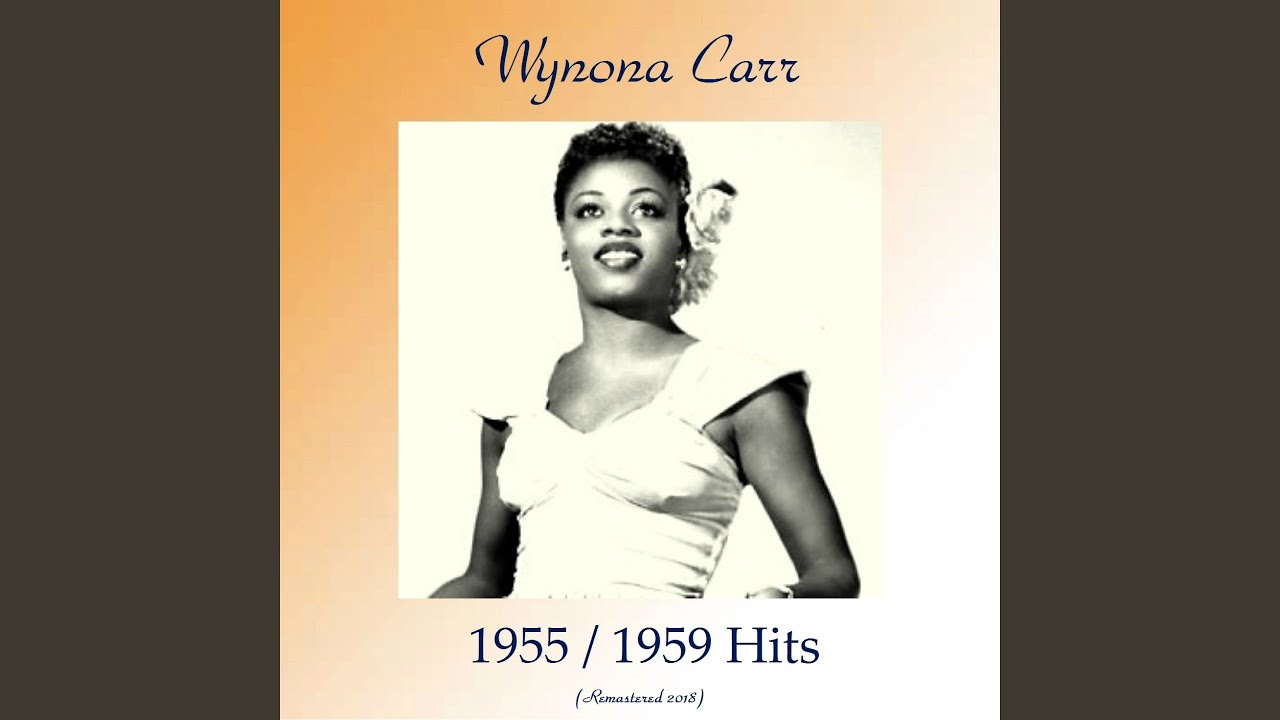
3. Wynona Carr – "How Many Times?" (1959)
Label: Specialty Records
Cleveland-born Wynona Carr began her career in gospel under the guidance of J.W. Alexander before transitioning to secular R&B for Specialty Records. Unlike many of her contemporaries, Carr wrote her own material, blending narrative storytelling with sophisticated arrangements.
"She did a lot of great songs… which is a great ballad," May notes. "I used to sing a lot of Wynona Carr songs with Mike Sanchez, and what I realized was that not only was she a great singer, but she was such a great writer too. She wrote all her own stuff, and she didn’t get the credit she deserved when she was alive."
Carr’s dual role as an artist and songwriter served as a key blueprint for May, demonstrating how female artists could maintain creative control within the industry.
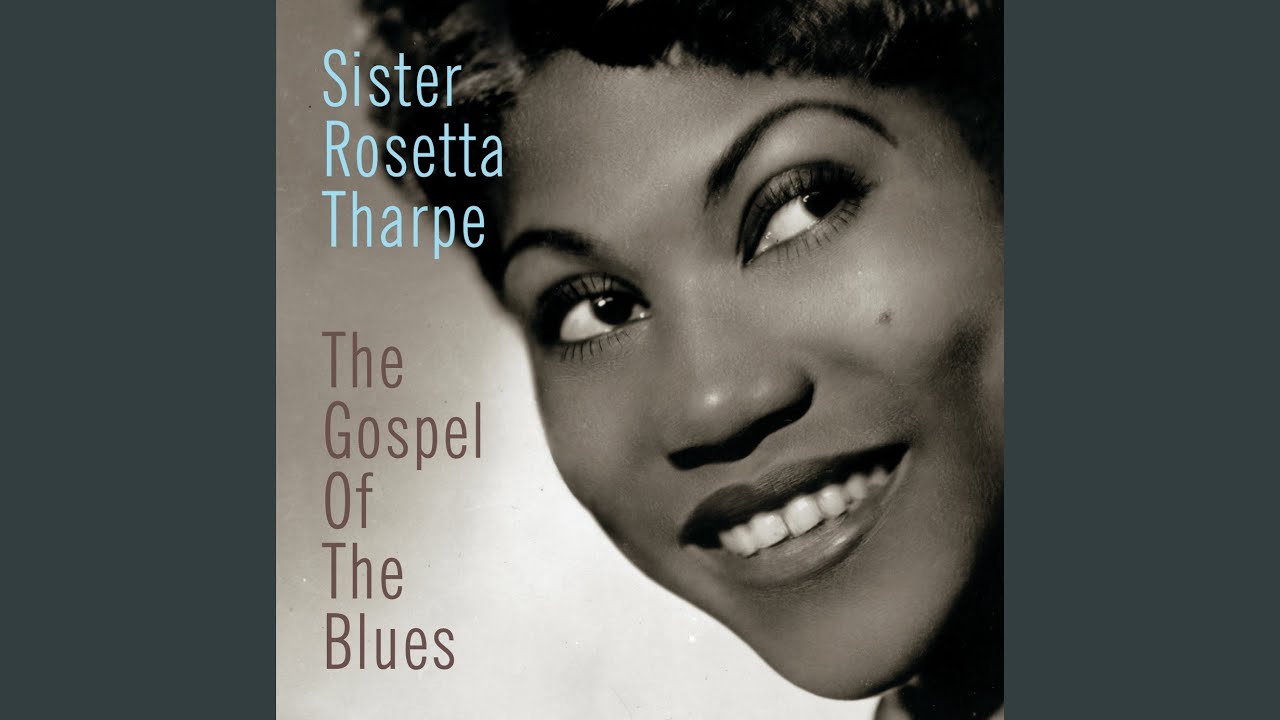
4. Sister Rosetta Tharpe & Marie Knight with The Sam Price Trio – "Up Above My Head (I Hear Music In The Air)" (1949)
Label: Decca Records
Sister Rosetta Tharpe’s contribution to modern rock music remains immense. Utilizing heavy distortion on her Gibson Les Paul Custom, Tharpe bridged traditional African American gospel with electric blues. "Up Above My Head," performed alongside vocalist Marie Knight, features intricate call-and-response vocals and driving guitar work.
"I thought she sounded like Chuck Berry, that she must be influenced by him," May says. "But he came after her and it turned out he was influenced by her. It wasn’t often you heard a woman rocking out like that; she blurred the lines between gospel, blues, rock ’n’ roll and R&B."
May later performed the track on television broadcasts alongside pianist Jools Holland and guitar legend Jeff Beck, bringing Tharpe’s historical legacy back to primetime audiences.
5. Willie Dixon – "Nervous" (1959)
Label: Clock Records
As the house songwriter, bassist, and arranger for Chess Records, Willie Dixon shaped the sound of post-war Chicago blues. While Dixon is best remembered for authoring classics like "Hoochie Coochie Man" and "Spoonful," his solo performance on "Nervous" reveals his humor and bass playing.
"He really wrote the blues and I had trouble picking just one by him," May reflects. "I picked this one because not many people know it and it is just fantastic… It’s him just joking around and it captures his humor on the record. He comes across as a great guy who doesn’t take himself too seriously."
6. Ruth Brown – "(Mama) He Treats Your Daughter Mean" (1953)
Label: Atlantic Records
Ruth Brown’s success was so integral to the rise of Atlantic Records during the early 1950s that the company earned the nickname "The House That Ruth Built." Incorporating vocal squeaks, rhythmic jumps, and expressive power, Brown dominated the R&B charts throughout the decade.
"She was a fantastic singer, her voice is just stunning, she could get any song across," May says. "The groove, the mood; and she has an attitude that I just love… But then she will also have her vulnerable moments. She could also swing the blues as well."
7. Elmore James And His Broomdusters – "Rollin’ And Tumblin’" (1960)
Label: Fire Records
Elmore James’s slide guitar style—characterized by an overdriven amplifier sound and a persistent, tumbling rhythm—remains one of the most recognizable guitar tones in blues history. His arrangement of Hambone Willie Newbern’s 1929 track "Rollin’ and Tumblin’" stands as a landmark performance.
"I lost a fella because of Elmore James when I was a teenager," May recalls with a laugh. "We gave each other mixtapes. He gave me all the popular stuff and I gave him an Elmore James one, and I never heard from him again… The song was made famous by Muddy Waters, but this is the arrangement I like best."
8. Lavern Baker – "Voodoo Voodoo" (1961)
Label: Atlantic Records
Lavern Baker brought a theatrical intensity to her Atlantic Records sessions, combining big-band brass arrangements with blues vocals. "Voodoo Voodoo," featuring a saxophone driver and commanding vocal delivery, exemplifies the upbeat R&B of the early 1960s.
"You hear the intro of the sax and then she just goes straight into it," May explains. "She’s got a really great voice. She could growl and beat you up with her voice. You really wouldn’t mess with her on this one and her delivery taught me a lot."
9. Eddie Cochran – "Eddie’s Blues" (1959)
Label: Liberty Records
Though primarily remembered as a rockabilly star through hits like "Summertime Blues," Eddie Cochran was also an accomplished blues guitarist. Recorded during a session in Los Angeles shortly before his death in 1960 at age 21, "Eddie’s Blues" demonstrates his fluid lead guitar playing and instrumental dexterity.
"I love it because the solos are on fire and it sounds like he has 20 fingers," May observes. "I still can’t believe he was only 20 when he recorded this. It saunters along nicely then these two solos just kill it!"
Supporting Context & Metrics
The Cross-Cultural Synthesis: Irish Balladry and Delta Blues
A core element of Imelda May’s musical worldview is the structural and emotional overlap between traditional Irish folk music and mid-century American blues. Though separated by geography, both traditions share deep structural and thematic roots:
Feature
Traditional Irish Music (Sean-nós / Ballads)
Post-War American Blues & R&B
Vocal Delivery
Unaccompanied, raw vocal projection; heavy emotional weight.
Call-and-response; dynamic belting mixed with delicate falsetto.
May’s technique of collecting vinyl based on record labels highlights the historical importance of independent record companies during the 1940s and 1950s. These labels provided the recording infrastructure for working-class Black and white artists who were largely ignored by major corporate entities.
       1950s INDEPENDENT RECORD LABEL ECOSYSTEM

 ┌──────────────────┐  ┌──────────────────┐  ┌──────────────────┐
 │  CHESS RECORDS   │  │ ATLANTIC RECORDS │  │SPECIALTY RECORDS │
 │    (Chicago)     │  │   (New York)     │  │  (Los Angeles)   │
 ├──────────────────┤  ├──────────────────┤  ├──────────────────┤
 │ • Howlin' Wolf   │  │ • Ruth Brown     │  │ • Wynona Carr    │
 │ • Muddy Waters   │  │ • Lavern Baker   │  │ • Little Richard │
 │ • Willie Dixon   │  │ • Ray Charles    │  │ • Guitar Slim    │
 └──────────────────┘  └──────────────────┘  └──────────────────┘
Chess Records (Chicago): Defined the sound of electric amplified Delta blues using heavy bass, distorted slide guitars, and raw vocal performances.
Atlantic Records (New York): Known as "The House That Ruth Built," Atlantic paired R&B vocalists with sophisticated urban arrangements, sophisticated horns, and clean production values.
Specialty Records (Los Angeles): Focused on high-energy gospel crossovers and uptempo R&B, offering female songwriters like Wynona Carr a platform to arrange and record their own work.
Official Statements & Direct Commentary
Throughout her career, May has frequently reflected on the stylistic lessons drawn from her idols:
On the vocal mechanics learned at Bruxelles: "I learned how to sing there, how to give it loads then pull it back a bit. I loved that aspect of singing… Seeing my family sing a cappella, singing their heartbreaking songs, they’d put their whole selves into the performance and raise the roof… It was the same with the blues."
On female empowerment in early R&B: "Because Wynona Carr had a great voice, was a great arranger and songwriter, a great businesswoman, a very clever woman, she was a huge influence on me as a person, too… Sister Rosetta Tharpe blurred the lines between gospel, blues, rock ‘n’ roll and R&B, and her guitar playing is absolutely brilliant."
On the raw impact of standard blues classics: "Sometimes you find with the songs you know so well you look for more obscure ones to play. But then you’ll put the obvious one on one day and it will just blow you away. [John Lee Hooker’s ‘Boom Boom’] is one of the hottest sounds ever."
Future Outlook
Imelda May’s exploration of her blues roots continues to inform her artistic evolution. Moving beyond strict rockabilly and early R&B revivals, May has incorporated elements of modern soul, spoken-word poetry, and contemporary acoustic roots into her recent work, including her EP Imbas.
Her trajectory illustrates the lasting legacy of post-war American roots music. By preserving the vocal techniques, storytelling traditions, and dynamic band interactions modeled by artists like Howlin’ Wolf, Ruth Brown, and Sister Rosetta Tharpe, May ensures that the blues remains a living, evolving form of artistic expression rather than a static historical artifact.
As contemporary listeners rediscover early mid-century independent catalogs, May’s curated selection serves as an entry point into the structural foundations of modern rock, soul, and roots music—a tradition that continues to find fresh expression far beyond its original American home.