Executive Overview
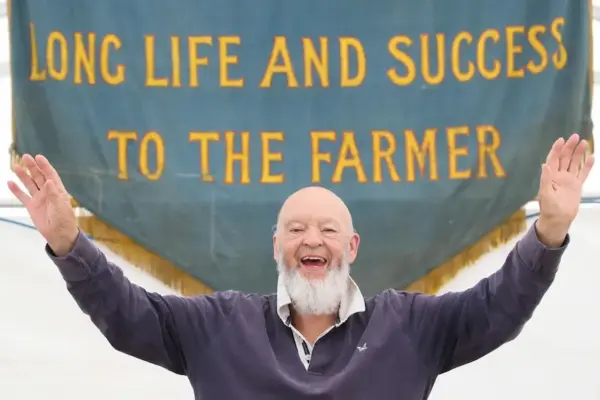
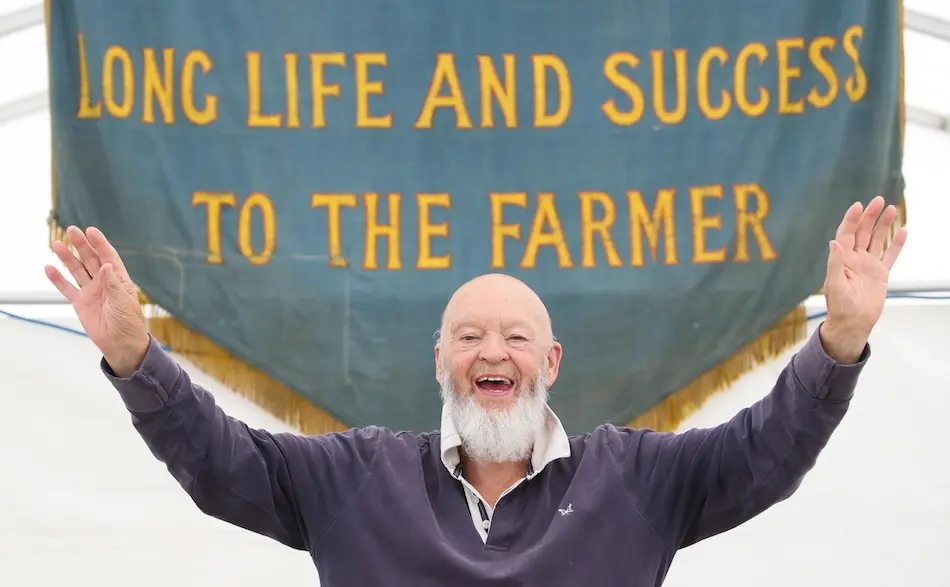
To generations of music lovers, dreamers, and counter-culture veterans, Sir Michael Eavis is not merely a dairy farmer from Somerset; he is the visionary architect of a modern cultural institution. Marking his landmark 90th birthday in October 2025, Eavis sat down at his home in Pilton to reflect on a remarkable existence that transcends the conventional boundaries of agriculture and entertainment. From founding the Glastonbury Festival on a whim in 1970—inspired by a £1 ticket to see Led Zeppelin at Bath Festival—to building a global brand that merges world-class music, political activism, and grassroots philanthropy, Eavis has spent over half a century reshaping the British cultural landscape.
As the festival navigates its designated 2026 fallow year, this milestone birthday offers a poignant moment for reflection. Eavis’s journey from a contentious local dairy farmer at constant loggerheads with county magistrates to a knighted cultural icon is one of resilience, unwavering Methodist principles, and an enduring appetite for excitement. Today, Worthy Farm is synonymous not just with legendary headliners like Neil Young, but with sustainable farming, nationwide cheddar distribution, and vital local housing developments. This comprehensive retrospective explores the life, legacy, and ongoing influence of a man who truly did it his way.
Detailed Chronology: From Somerset Pastures to Global Icon
The Early Years and Agricultural Roots
Long before Worthy Farm echoed to the sound of roaring crowds and heavy basslines, it was defined by the quiet rhythm of rural Somerset. Born into a farming family, Michael Eavis inherited a deep connection to the land. His early life was shaped by the post-war realities of rural Britain, long hours, and the steady, demanding labor of dairy farming.
However, beneath the traditional exterior of a West Country farmer beat the heart of an adventurer with an eye for the unconventional. Eavis’s Methodist upbringing instilled in him a strong moral compass, a commitment to social justice, and a belief in community—values that would later form the ideological bedrock of the Glastonbury Festival.
1970: The Spark of a Revolution
The watershed moment in Eavis’s life occurred in 1969 when he attended the Bath Festival of Blues and Progressive Music, featuring Led Zeppelin. Captivated by the energy, the communal spirit, and the sheer scale of the event, Eavis recognized potential in his own backyard. In September 1970, charging just £1 a ticket—which included free milk from the farm—he hosted the Pilton Pop, Folk & Blues Festival.
Attended by roughly 1,500 people and headlined by T. Rex (who stepped in after Tyrannosaurus Rex canceled), the event was modest by modern standards, but it planted the seed for what would become the world’s most famous greenfield festival. Eavis has often noted that the early years were defined by fierce opposition. He was constantly at war with local councils, skeptical villagers, local magistrates, and the police. Yet, looking back, he acknowledges that this friction forged the festival’s indomitable spirit.
Evolution Through the Decades
Throughout the 1970s, 1980s, and 1990s, the event—officially named the Glastonbury Festival for Contemporary Performing Arts—evolved from a hippy gathering into a sophisticated cultural behemoth. Eavis weathered financial perils, regulatory battles, and adverse weather conditions, including the infamous mud baths of various years.
Despite threats from authorities—such as a chairman of the magistrates warning him, "If you do this again, you’ve had it"—Eavis persevered. He institutionalized the festival’s commitment to charitable causes, channeling millions of pounds to organizations like Greenpeace, Oxfam, and WaterAid, while simultaneously cementing Worthy Farm’s reputation as a world-class dairy producer.
The Milestone of 90 and Beyond
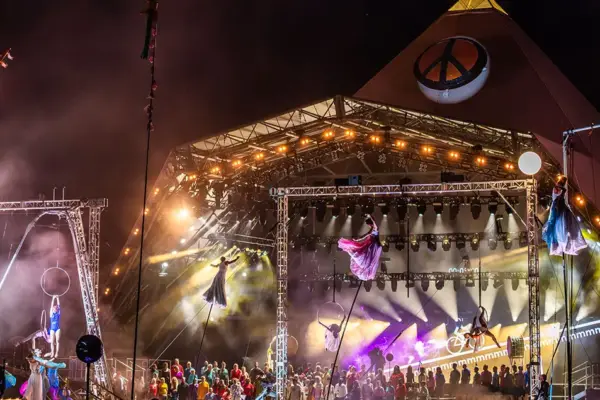
Reaching his 90th birthday in October 2025, Eavis remains remarkably vital. Confiding in recent interviews that he feels the culmination of more than 50 years of relentless work, he continues to engage with the creative minds behind the festival’s most striking installations, such as Joe Rush and the mechanical beasts of Arcadia. As he prepares to celebrate with family and local residents in Pilton—complete with a secret three-song set with his band—Eavis stands as a living monument to British resilience and creative independence.
Supporting Context & Metrics: The Scale of Worthy Farm and Glastonbury
To fully appreciate the magnitude of Sir Michael Eavis’s life’s work, one must examine the metrics that define both the festival and the agricultural enterprise underpinning it.
Festival Scale and Economic Impact
- Ticket Demand: In the modern era, Glastonbury Festival regularly sells out its massive allocation of tickets (exceeding 200,000) in a matter of minutes. Eavis notes that if they put a million tickets on sale, they would likely still sell out.
- Charitable Contributions: Over the decades, the festival has donated tens of millions of pounds to environmental, humanitarian, and local causes, functioning effectively as a massive philanthropic engine powered by music.
- Fallow Years: Designed to protect the farmland and give the local community and environment a chance to recover, scheduled fallow years (such as 2026) are a testament to Eavis’s foundational commitment to agriculture over pure commercial exploitation.
The Agricultural Enterprise: Worthy Farm Cheddar
While global audiences view Worthy Farm primarily as a holy site of live music, for the rest of the year, it remains a fully functioning, highly efficient dairy farm.
- Milk Production: The farm’s herd produces thousands of liters of milk daily. Rather than keeping the operation entirely internal, the milk is supplied to Wyke Farms to produce official Worthy Farm Cheddar.
- National Retail Footprint: What began as a local agricultural product can now be found on the shelves of supermarkets across Britain, from the West Country to Glasgow. Eavis himself experienced this surreal commercial reality when he walked into a Co-op store in Glasgow during a train trip and spotted Worthy Farm Cheddar prominently displayed across the shelves.
Social Housing Initiative in Pilton
Perhaps one of Eavis’s proudest achievements away from the Pyramid Stage is his commitment to solving rural housing shortages. Recognizing that local families were being priced out of their home village, Eavis spearheaded the construction of 52 social houses in Pilton.
- Opened with the help of football icon and broadcaster Gary Lineker, these homes have transformed the local landscape.
- Designed to blend harmoniously with the Somerset countryside, the houses ensure that the children and grandchildren of Pilton’s working-class families can afford to live where they were raised.
- Eavis frequently remarks that driving past the solar-lit houses on a sunny morning provides some of his proudest moments, believing his late mother would have been immensely proud of the project.
Official Statements & Reflections
In celebration of his 90th birthday, Sir Michael Eavis shared candid reflections on his journey, his philosophy, and his enduring passions during an exclusive interview at his Pilton home.
Reflecting on the Long Journey:
"I feel very well actually. It all feels like the culmination of more than 50 years of work… It’s all been a long story of excitement. That’s probably what’s keeping me going!"
On the Evolution of the Festival and His Favorite Moments:
When asked about his favorite festival since 1970, Eavis characteristically points to the present:
"I always think that the most recent one is the best one. I really do. My top act [at the recent festival] was Neil Young on the Saturday night. He was so good. He really loves performing here and he played such a great set."
On Battling the Establishment:
Recalling the early days of friction with local authorities, Eavis views the conflict not with bitterness, but as an essential catalyst:
"In those days, I was always at war with the council and the village and the local magistrates and the police. And it came good. Which is extraordinary, really. But the fight was really what made it work, there’s no doubt about that. It was certainly worth it!"
On Political Engagement and Core Beliefs:
Acknowledge the festival’s unwavering political stance, Eavis attributes much of its moral framework to his personal background:
"There will always be a political angle there. And I think people expect that… [My Methodism] is key to that. I’m sure it is."
On Community Housing and Legacy:
Discussing the social housing project opened by Gary Lineker:
"Gary Lineker came to open the houses, and he really saw the value of them. He did a lovely interview about them and it went everywhere. I think my mother would be proud of me for the houses too. They look lovely on a sunny day. I drive that way out of the village, you know, and I see the sun shining out on them and think, ‘How did all this happen?’"
Future Outlook: Sustaining the Spirit of Pilton
As Sir Michael Eavis enters his tenth decade, questions regarding the long-term future of Glastonbury Festival naturally arise. However, the transition of leadership to his daughter, Emily Eavis, ensures that the festival’s core ethos, independence, and commitment to charity will remain uncompromised.
The 2026 Fallow Year and Strategic Planning
The upcoming fallow year in 2026 is not a sign of slowing down, but rather a strategic pause built into the festival’s DNA. It allows the soil of Worthy Farm to regenerate, local infrastructure to be updated, and the festival’s organizers to dream up new artistic directions. As Eavis demonstrated by meeting with creative collaborators like Joe Rush and Arcadia representatives just weeks before his birthday, the machinery of innovation never truly stops.
Preserving Independence in a Corporate World
In an era where major music festivals are increasingly swallowed up by multinational entertainment conglomerates, Glastonbury remains fiercely independent—a family-run farm operation that happens to host the biggest cultural event on earth. This independence is safeguarded by Eavis’s lifelong commitment to his community, his land, and his principles.
A Lasting Blueprint for Rural Communities
Sir Michael Eavis’s legacy extends far beyond mud, music, and midnight headliners. He has proven that commercial success and social responsibility are not mutually exclusive. By utilizing festival proceeds to fund local social housing, support global humanitarian efforts, and sustain traditional British agriculture, Eavis has left behind a blueprint for how private enterprise can profoundly enrich public life.
As he celebrates his 90th birthday in Pilton—ready to take the stage with his band and likely belt out a rendition of My Way—Sir Michael Eavis can look out across a valley that he transformed forever. He built an empire out of grass, mud, and music, and in doing so, he showed the world how a dairy farmer from Somerset could change culture on his own terms.