Executive Overview
In the contemporary cultural landscape, Black British music stands as a global titan. From the international dominance of Central Cee and Little Simz to the unstoppable cross-continental footprint of Afrobeats, drill, and grime, the United Kingdom’s urban and alternative scenes command the attention of the worldwide music industry. Yet, behind this modern golden era lies a complex, under-documented lineage of struggle, innovation, and community-driven resilience.
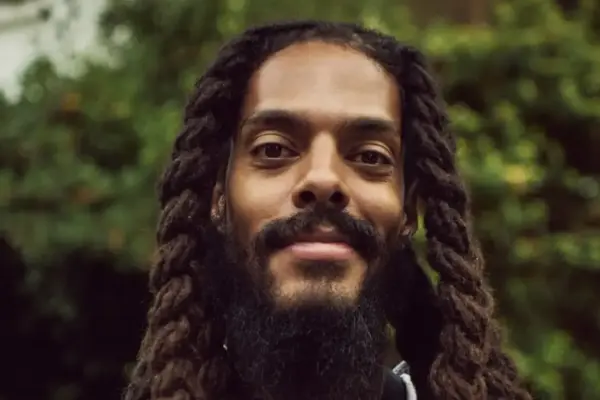
Enter Jesse Bernard—an acclaimed writer, filmmaker, and DJ whose work has consistently illuminated the rich tapestry of Black British art. In his latest literary offering, Escaping Babylon: An Intimate History of Black British Music, Bernard steps away from standard encyclopedic formats to deliver a deeply personal, mixtape-structured chronicle spanning over three decades of sound and culture.
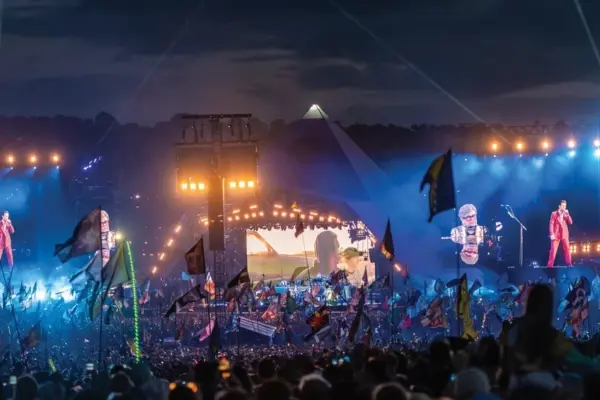
Ahead of his appearance at the We Out Here festival, sitting down in conversation with Rob Kazandjian, Bernard unpacked the motivations behind the book. Far from serving merely as a nostalgic retrospective, Escaping Babylon acts as a cultural correction. It reclaims forgotten narratives, evaluates the precarious economics of viral fame, and shines a much-needed spotlight on the architects, underground MCs, and unsung vocalists whose foundational risks built the infrastructure for today’s superstars.
Detailed Chronology: Tracing the Arc from 1989 to the Modern Era
The Late-80s and Early-90s Blueprint
To understand the ecosystem of modern British soul, R&B, and dance, Bernard argues that one must look back to the pivotal cultural window of 1989 and 1990. During this period, a distinct British Black musical identity began to crystalize, drawing heavily upon a unique synthesis of Caribbean reggae, lovers rock, early acid house, and gospel traditions.
Bernard points to foundational records like Inner City and Kevin Saunderson’s "Good Life" as pivotal crossover moments—tracks that blurred the boundaries between electronic dance music and emotive R&B. This distinct sonic hybrid could not have been birthed anywhere else; it was inherently tied to the multicultural urban spaces of the UK. Through an unbroken evolutionary thread, this era directly informs contemporary innovators like Jorja Smith ("Little Things"), Nia Archives, and Catching Cairo, proving that the roots of modern UK alternative sounds run far deeper than mainstream histories often acknowledge.
The Grime and Mixtape Era (Mid-2000s)
Shifting the lens forward to the mid-2000s—a starting point for much of Bernard’s own youth—the landscape of Black British music was decentralized, physical, and fiercely DIY. Long before algorithmic streaming platforms dictated cultural trends, the scene operated on a network of market stalls, physical mixtapes, grassroots internet forums, and early YouTube clips.
During this era, seminal bodies of work like Kano’s Home Sweet Home and his Beats + Bars mixtape served as holy texts for a generation. Music was consumed with prolonged intensity; a single CD or tape would remain in heavy rotation for months, sometimes years.
However, this era was also marked by structural fragility. Pioneers faced immense economic pressures just to survive, often forced to choose between funding essential studio time, cutting dubplates, and navigating the harsh realities of daily working-class life. Artists like Scorcher—celebrated by Bernard as a peerless MC of the 2007–2010 window—demonstrated extraordinary technical prowess through defining freestyles like 96 Bars of Revenge, yet frequently missed out on the sustained commercial longevity they deserved due to the hostile industrial environment of the time.
The Golden Window of UK Funky (2007–2011)
Between 2007 and 2011, the UK club scene experienced a brief yet transformative golden window: the rise of UK funky. For Bernard’s generation, this subgenre acted as an essential cultural bridge. It allowed grime MCs—such as P Money, Frisco, Skepta, and Durrty Goodz—to transition smoothly into commercial club spaces like Liquid Envy, Eros, and Batchwoods.
More importantly, UK funky fundamentally shifted how male revellers interacted with nightlife. While grime offered an intense, high-energy environment, UK funky created a space where people could freely dance, let loose, and celebrate. Tracks like Scorcher’s "Lipsin Ting" and Scratch DVA alongside Durrty Goodz’s "Dunya Dance" proved that hip-hop and grime lyrical dexterity could effortlessly mesh with rhythmic, four-to-the-floor house cadences.
Supporting Context & Metrics: The Economics of Erasure and Virality
Reclaiming the Narrative: Lynden David Hall and the Second-Album Curse
One of the most vital interventions in Escaping Babylon is its reappraisal of British R&B pioneer Lynden David Hall. Too often, the genre of R&B is colonized by American narratives, effectively erasing the rich, gospel-rooted soul tradition that blossomed within the UK.
Hall, a BRIT School alumnus, possessed a transcendent voice that combined deep gospel textures with soul and reggae influences. He paved the way for artists like Craig David, who emerged just a few years later to take UK R&B to international heights. Yet, Hall—alongside contemporaries interviewed by Bernard, such as Terri Walker—fell victim to the systemic failures of major record labels. Executives at the time frequently suffered from a lack of imagination, struggling to market British R&B artists past their debut releases, resulting in the infamous "second-album struggle."
The Double-Edged Sword of Virality
In an age where social media platforms like TikTok and Instagram dictate musical resuscitation, older tracks frequently experience sudden resurgences. However, Bernard cautions against viewing virality as a pure net-positive for historical justice.
While algorithmic discovery can introduce younger generations to vintage records, it frequently operates as a "poisoned chalice." Many legacy artists do not own the master rights to their early works, meaning that viral trends—while beneficial for an artist’s public relations footprint—often fail to translate into tangible financial compensation. True artistic longevity and justice, Bernard suggests, require intentional curation, active sampling recognition, and rigorous historical documentation.
Official Statements & Insights: In Jesse Bernard’s Own Words
“Not everyone has to believe as passionately about this as I do. But I know if I don’t tell the story, someone else will. And I can only tell the story through my own experience, and by drawing on those stories from the people around me.”
— Jesse Bernard, Author, Filmmaker, and DJ
Speaking on the distinct boundaries between commercial house music and soul-infused vocal traditions, Bernard elaborates on the emotional architecture of classic club anthems:
"You hear it. When you hear a sample of ‘Closer than Close’ or ‘Show Me Love’ and the vocals are not sung by Rosie Gaines or Robin S, you can hear the soul has been removed from it… The vocal feels like Robin S is shelling down the church. Imagine her singing those lyrics in church; that’s gospel right there. I think a lot of house music is missing that element these days."
Reflecting on his mission to immortalize forgotten innovators—such as the late UK funky artist Charmz (whose hit "Buy Out Da Bar" unexpectedly blared at an Arsenal victory party at Scala) or underground hip-hop pioneer True—Bernard emphasizes the importance of legacy preservation:
"The only way I could give someone like that, or Doreen from Soul II Soul, their props was to write about them. I hope that by writing about them, when someone picks up the book and reads it, they go and check out ‘Buy Out Da Bar’ and they’re like: ‘this is cold.’ And maybe they then spot a sample… That’s how you keep that legacy alive."
Future Outlook: Preserving the Cultural Ecosystem
As Escaping Babylon continues to circulate through literary and musical spaces—sparking discussions at festivals like We Out Here—its broader implications for the future of British music criticism are profound.
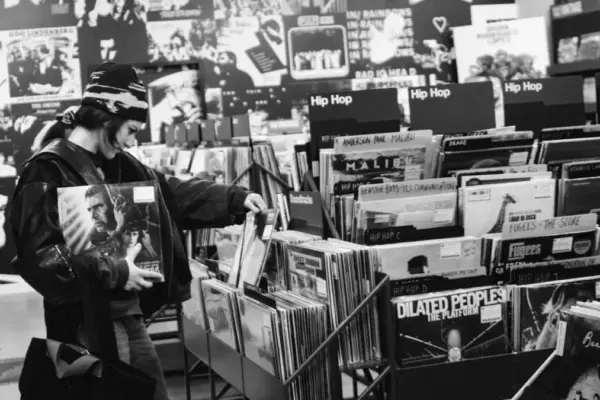
The book serves as a vital reminder that cultural capital does not belong exclusively to the chart-toppers. The modern multi-billion-pound British music industry rests upon the cracked pavements, pirate radio stations, independent record shops, and community spaces of the late 20th and early 21st centuries.
Looking ahead, the challenge for cultural historians, curators, and platforms alike is to ensure that the foundational architects of Black British music are neither forgotten nor economically exploited by automated memory algorithms. By embedding personal memoir within rigorous cultural history, Jesse Bernard has provided a masterclass in how communities can document their own histories on their own terms—ensuring that the unsung heroes of yesterday remain the immortalized legends of tomorrow.