Executive Overview
Walking into a gym, strapping on a pair of running shoes, or reporting to an early-morning rowing class is traditionally framed as a purely physical endeavor. Society views exercise through an anatomical and physiological lens: we train to lower resting heart rates, hypertrophy muscle fibers, increase bone density, and optimize metabolic markers. Yet, somewhere between the dynamic warm-up and the final cool-down, an entirely different transformation occurs. Conversations spark, initial nods of recognition evolve into steadfast friendships, and the stranger who spots a heavy bench press or paces a peloton transitions into a companion with whom one shares coffee, milestones, and life advice.
Modern sociological research and lifestyle observation reveal that rigorous training reshapes far more than muscle mass and cardiovascular endurance. It quietly, yet powerfully, reconstructs the social architecture of daily life. In an era increasingly defined by an epidemic of loneliness and social fragmentation, physical training communities have accidentally emerged as one of our most robust, organic forms of civic and personal connection.
This deep-dive investigation explores the mechanics of how shared exertion creates profound human bonds, how workout routines act as a built-in social scaffold, how identity shifts attract new demographic circles, and how physical discipline serves as an unexpected curriculum for interpersonal growth.
Detailed Chronology: The Evolution of Fitness from Solitary Pursuit to Social Anchor
To understand how fitness culture became a primary social driver, one must look at how the physical culture landscape has transformed over the past century.
Phase I: The Solitary Era (Mid-to-Late 20th Century)
For decades, physical conditioning was largely a solitary pursuit or a rigidly segregated institutional activity. Gyms of the mid-20th century were often intimidating, utilitarian dungeons populated by hyper-focused bodybuilders working out in silence, or school-yard tracks where running was viewed as a punishment or a solitary test of endurance. Social interaction was discouraged or secondary; the gym was a place to work, not to talk.
Phase II: The Aerobics and Commercial Fitness Boom (1980s–1990s)
The fitness boom of the 1980s, supercharged by aerobics classes, commercial health club chains, and the rise of televised fitness, began to inject a communal pulse into exercise. Group fitness classes introduced synchronized movement to music, fostering a collective energy. However, these interactions were typically transient—participants sweated together for forty-five minutes and promptly dispersed without forming lasting community networks.
Phase III: The Micro-Community Revolution (2000s–Present)
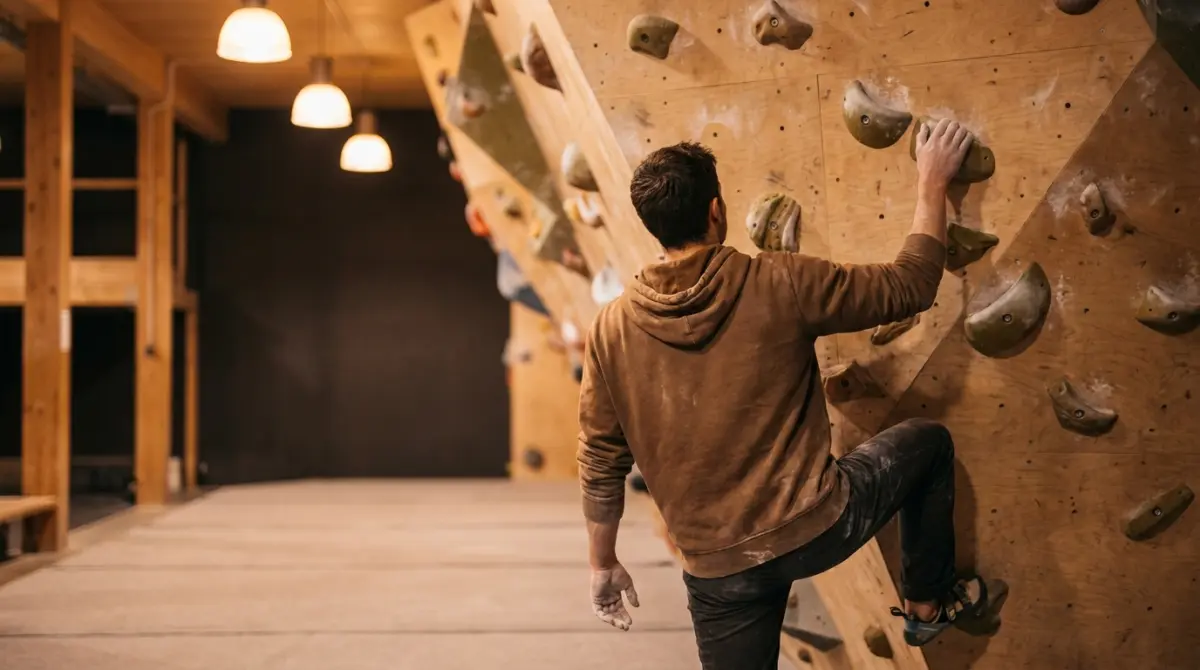
The turn of the 21st century revolutionized physical culture through the proliferation of specialized disciplines: CrossFit boxes, boutique cycling studios, bouldering and rock-climbing gyms, ultra-running clubs, and martial arts dojos. These environments abandoned the isolating row-of-machines layout of traditional gyms in favor of open, communal floors.
In these modern spaces, suffering through a metcon (metabolic conditioning) workout or projecting a difficult bouldering problem together became a crucible for rapid-fire human bonding. The physical architecture of the gym shifted from isolation to collaboration, transforming the modern training facility into a vital third place—somewhere between home and the traditional workplace—where meaningful social ties are forged.
Supporting Context & Metrics: The Science of Shared Exertion
The bonds formed in training environments are not merely the result of proximity; they are biologically and psychologically mediated. Understanding the underlying mechanisms requires looking at the intersection of exercise physiology and social psychology.
The Biology of Synchronized Suffering
There is a distinct psychological phenomenon that occurs when two or more individuals push through high-intensity physical exertion simultaneously. Anthropologists and psychologists refer to this as "synchronized physical activity" or "collective effervescence."
When humans exercise together, the brain releases a cascade of neurochemicals:
- Endorphins: Beyond reducing the perception of pain, group exertion triggers a significantly higher release of endorphins compared to solo workouts, a phenomenon known as the "social endorphin effect."
- Oxytocin: Often dubbed the "bonding hormone," oxytocin levels rise during shared physical challenges, facilitating trust, empathy, and social cohesion.
- Dopamine: Achieving a physical milestone alongside a peer creates a shared dopamine loop, cementing the memory and the positive association with that person.
The Mechanics of "Repeated Unplanned Interaction"
Sociologists emphasize that deep friendships rarely form out of thin air; they require what is known as "repeated unplanned interaction"—the kind of recurring, low-friction contact that naturally builds familiarity and trust.
| Social Structure | Coordination Effort Required | Friction Level | Sustainability for Busy Adults |
|---|---|---|---|
| Traditional Social Dinner | High (Scheduling, reservations) | High | Low (Often canceled due to life events) |
| Weekend Brunch | Medium (Calendar negotiation) | Medium | Medium-Low |
| Recurring Training Group | Low (Built into schedule) | Low | High (Routine-driven) |
As illustrated above, committing to a consistent training routine—such as a 6:00 AM running club or a Tuesday evening climbing session—automatically populates a person’s calendar with these high-trust, low-friction interactions. For adults juggling demanding careers and family obligations, this accidental social structure is invaluable. The workout serves as the non-negotiable anchor; the socialization is an organic byproduct.
Official Perspectives and Expert Insights
To gain a deeper understanding of how physical training alters social behavior, we turn to sociological researchers, sports psychologists, and community architects who study human connection.
The Psychological Perspective
Dr. Elena Vance, a behavioral psychologist specializing in group dynamics, notes that high-intensity training strips away social armor.
"When you are flat on your back after a brutal interval session, gasping for air, or struggling to pull yourself up a climbing wall, your ego takes a backseat," explains Dr. Vance. "The vulnerability of physical exertion bypasses weeks of polite small talk. You’ve seen each other at your most raw and unfiltered. That shared vulnerability creates an accelerated shortcut to intimacy that is very difficult to replicate in a boardroom or at a cocktail party."
The Community Architect’s View
Marcus Thorne, founder of several urban run clubs and community fitness initiatives, has watched thousands of members transform their social lives through movement.
"People often show up looking for a six-pack or a faster marathon time, but they stay because they found their tribe," Thorne remarks. "Over the years, I’ve watched workout groups evolve into wedding parties, business partnerships, and lifelong support systems. The miles or the heavy lifts are just the glue. What keeps them coming back is the mutual witness of each other’s lives."
Furthermore, nutrition and lifestyle choices within these communities reinforce the bond. For instance, athletes and fitness enthusiasts frequently align their nutritional habits—such as incorporating functional foods like high-protein yogurt or specialized meal-prep routines—into their daily rituals. These micro-habits often form a shared cultural language among training partners, bridging the gap between physical discipline and social identity.
Future Outlook: The Gym as the New Community Center
As traditional civic institutions—such as neighborhood associations, religious organizations, and local clubs—continue to experience declining participation rates across the developed world, physical training spaces are uniquely positioned to fill the void.
The Shift Toward Experiential Wellness
The future of fitness is not merely about lifting heavier weights or logging faster splits; it is about holistic lifestyle integration. Urban planners and real estate developers are increasingly designing residential complexes centered around communal fitness hubs rather than traditional clubhouses. Co-living spaces, boutique wellness hotels, and corporate campuses are recognizing that employee and resident retention skyrockets when shared physical spaces are prioritized.
Cultivating Resilience in an Isolated World
Looking ahead, the role of the gym, running group, and martial arts dojo will likely expand beyond physical health to become a crucial pillar of public mental health infrastructure. As remote work and digital isolation continue to challenge human connection, physical training offers an irreplaceable analog antidote: real bodies, moving together, in real time, striving toward shared goals.
Conclusion
The physical transformations that initially drive people to train—leaner physiques, enhanced endurance, functional strength—will always hold intrinsic value. However, the social reconstruction that happens along the way is frequently far more transformative. By altering our schedules, breaking down our social defenses, reshaping our identities, and providing built-in accountability, physical training does something extraordinary. It reminds us that we are not meant to navigate life’s heavy loads alone—whether those loads are measured in barbell plates, marathon miles, or the daily challenges of the human experience.