Executive Overview
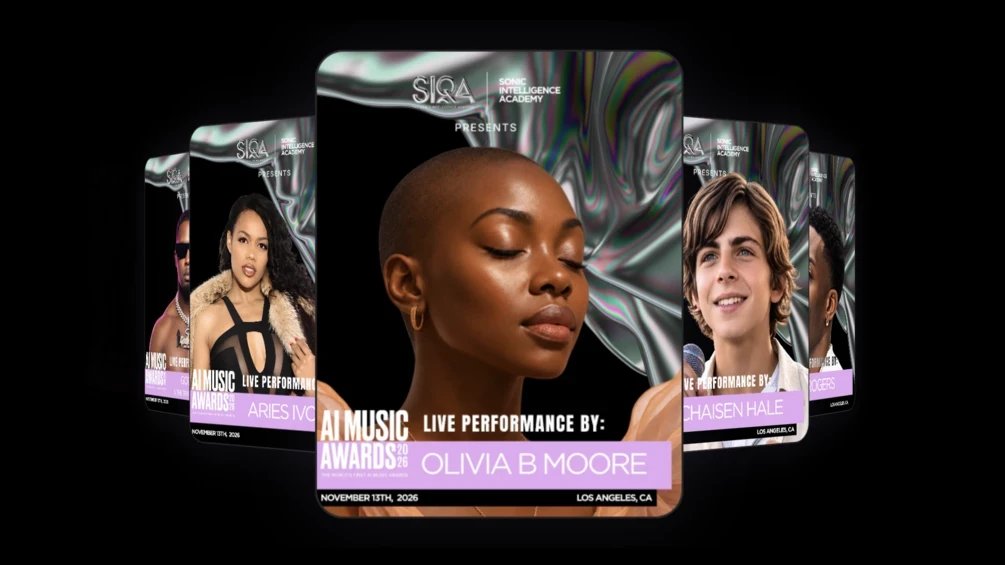
The landscape of modern music is on the precipice of a seismic shift, one that blurs the boundaries between human ingenuity and algorithmic creation. On November 13, the historic Mayan theater in Los Angeles will host an event that would have read like science fiction just a few short years ago: the inaugural AI Music Awards. This groundbreaking ceremony will not merely hand out trophies to computer-generated compositions; it will feature a lineup of virtual "artists" performing "live" on stage.
At the vanguard of this movement is Xania Monet, the algorithmic sensation responsible for "How Was I Supposed To Know," the first AI-generated track to breach the Billboard radio airplay charts. Created by songwriter Telisha “Nikki” Jones, Monet’s trajectory from digital concept to a reported $3 million signing with Hallwood Media—following a fierce label bidding war—underscores the commercial viability that venture capitalists and forward-thinking executives now see in synthetic talent. Monet will be joined at The Mayan by a cohort of other non-human stars, including Sheena Taylor, Olivia B Moore, Godfellow, Aries Ivory, Chaisen Hale, and EJ Rogers.
Developed by the Sonic Intelligence Academy (SIQA)—a self-described "global hub for ethical, innovative, and groundbreaking AI music" backed by the venture capital firm 1517 Fund—the awards ceremony represents a coordinated effort to legitimize and institutionalize machine-made art. Yet, this milestone arrives amidst a fiercely polarized industry. While pioneers race to build infrastructure for synthetic creators—ranging from dedicated charts and registries to specialized distribution apps—traditional gatekeepers are drawing a hard line in the sand.
Major streaming platforms and distributors are grappling with an unprecedented deluge of synthetic media. Recent data reveals that AI-generated tracks account for a staggering 50% of daily uploads on platforms like Deezer, prompting aggressive pushback, including outright bans on fully generative tracks by electronic music titan Beatport. Simultaneously, electronic dance music heavyweights Armin van Buuren and Laidback Luke have stepped into advisory roles with "responsible" AI music firms like Moises, signaling that the industry’s human elite are eager to steer, rather than simply block, the technological tide.
As the inaugural AI Music Awards prepare to dim the lights and raise the curtain, the global music community finds itself at a historical crossroads. This report explores the mechanics of the upcoming Los Angeles showcase, the economic forces driving the monetization of virtual artists, the statistical reality of AI infiltration across streaming services, and the broader ideological battle shaping the future of sound.
Detailed Chronology: From Algorithmic Experiments to the Mainstage
To understand the magnitude of the upcoming AI Music Awards, one must trace the rapid, almost dizzying acceleration of generative audio technology over the past several years. What began as academic exercises in Markov chains and neural network-driven MIDI generation has exploded into consumer-facing applications capable of producing studio-quality vocal performances, intricate instrumentals, and complete tracks in a matter of seconds.
The timeline leading to the Mayan theater showcase is defined by several pivotal milestones:
- The Democratization of Generation Tools (2022–2023): Platforms like Suno and Udio emerged from stealth, lowering the barrier to entry for music creation. Suddenly, individuals with zero formal musical training could prompt an AI model to generate fully realized songs complete with lyrics, genre-specific instrumentation, and emotive vocal deliveries.
- The Billboard Breakthrough (Late 2023–Early 2024): The commercial viability of AI music transitioned from theory to reality when tracks like Xania Monet’s "How Was I Supposed To Know" crossed over from digital vacuum chambers into mainstream commercial ecosystems. Monet’s entry onto the Billboard radio airplay charts shattered the psychological barrier separating computer-generated novelties from chart-eligible art.
- The Capital Influx and Infrastructure Building (Mid-2024): Recognizing a burgeoning multi-billion-dollar market, venture capital firms began pouring millions into synthetic music startups. SIQA launched the world’s first dedicated AI music charts, alongside a Verified Registry and companion application designed to document the precise degree of artificial intelligence utilized in musical compositions.
- The Regulatory and Curatorial Backlash (Summer–Fall 2024): As synthetic uploads flooded digital service providers (DSPs)—surging past 44% and eventually hitting 50% of daily uploads on Deezer by July—the industry’s human establishment initiated defensive protocols. Beatport enacted a historic ban on fully generative tracks in August, while platforms and artists alike scrambled to define the parameters of ethical AI use.
- The Institutionalization of AI Stars (November 2024): Culminating this dizzying trajectory, the November 13 AI Music Awards at The Mayan in Los Angeles will establish a formal awards ecosystem, complete with live, hybrid performances that attempt to solve the ultimate riddle of virtual artists: how to make a computer program captivating on a physical stage.
Supporting Context & Metrics: The Flood of Synthetic Sound
The emergence of AI artists is not occurring in a vacuum; it is being propelled by a massive quantitative shift in how music is produced and consumed globally. The sheer volume of AI-assisted and fully generative tracks entering the digital ecosystem has overwhelmed traditional curation models, forcing platforms to rapidly adapt or risk drowning in synthetic noise.
According to data released by SIQA regarding its newly established registry and app during the first quarter of the year, a total of 1,551 tracks were submitted for verification. The metrics paint a stark picture of the tools driving this movement:
- Over 90% of the submitted tracks were created utilizing the generative audio platform Suno.
- Nearly 76% of those verified tracks were distributed to DSPs through DistroKid, highlighting how independent and DIY distribution pipelines are serving as the primary arteries for machine-made audio.
This micro-level data mirrors a macro-level transformation observed across major streaming services. In April, French streaming platform Deezer dropped a bombshell industry statistic, revealing that AI-generated music accounted for 44% of all new daily uploads. By July—a mere three months later—that figure had escalated to 50%. Half of every new track hitting Deezer’s servers was no longer the product of human sweat, studio time, and traditional instrumentation, but rather the output of algorithms processing vast training datasets.
This exponential growth has triggered defensive measures across the industry. In August, electronic music institution Beatport instituted a strict ban on fully AI-generated tracks, seeking to protect human producers and maintain a baseline of traditional artistry within its catalog. Yet, even as traditionalists build walls, other industry veterans are opening the gates. Armin van Buuren and Laidback Luke joined the advisory board of "responsible" AI music company Moises earlier this month, signaling a pragmatic recognition that while fully automated slop must be filtered out, human-AI collaboration is an inevitability that requires expert stewardship.
Official Statements and Industry Perspectives: Navigating the Ethical Frontier
The dichotomy between embracing and resisting artificial intelligence in music has created a complex web of official stances, ideological divides, and strategic realignments among creators, investors, and platform executives.
The Visionaries: SIQA and the 1517 Fund
For the minds behind the Sonic Intelligence Academy and its financial backers at the 1517 Fund, the narrative surrounding AI music is not one of theft or replacement, but of liberation and unprecedented creative expression. SIQA positions itself as a "global hub for ethical, innovative, and groundbreaking AI music," aiming to bring order and transparency to a chaotic digital frontier through its registry and charting systems.
Speaking on the upcoming awards ceremony, organizers have emphasized that the event will not rely on cheap parlor tricks. Instead, the night will feature carefully curated "hybrid human and AI showcases staged across the night." Crucially, the human creators behind each virtual persona will be "directing the stage," utilizing the AI artists as extensions of their own producer-songwriter visions. Far from replacing the human element, SIQA argues, these performances will feature "a live band, immersive visuals, and more," blending flesh-and-blood musicianship with synthetic headliners.
The Commercial Titans: Hallwood Media and the Multi-Million Dollar Bet
The commercial viability of this paradigm shift is best exemplified by Hallwood Media’s high-profile acquisition of Xania Monet. Securing the virtual act for a reported $3 million following a competitive label bidding war demonstrates that major industry players are willing to invest heavily in non-human intellectual property. For these executives, an AI artist represents a scalable, 24/7 commercial asset free from the traditional human vulnerabilities of burnout, touring fatigue, and interpersonal band friction, while still capable of generating lucrative streaming revenues, sync licensing deals, and brand partnerships.
The Protectors: Beatport, Deezer, and the Resistance
Conversely, the defensive posture adopted by platforms like Beatport and the cautionary data published by Deezer highlight deep-seated anxieties regarding copyright infringement, artistic dilution, and the economic survival of human musicians. When streaming platforms are forced to process millions of algorithmic tracks that siphon royalty pools away from human creators, the imperative for regulation becomes acute. The implementation of bans on fully generative tracks and the rise of advisory boards dedicated to "responsible AI"—such as the one recently joined by Armin van Buuren and Laidback Luke—reflect an urgent industry-wide demand for guardrails, transparency, and ethical licensing frameworks.
The Award Categories: Codifying the Synthetic Canon
To solidify its status as a legitimate institution, the AI Music Awards has established a comprehensive, genre-spanning framework designed to honor excellence in algorithmic creation. The recognition structure mirrors traditional award ceremonies while adapting to the unique collaborative realities of human-machine art.
The primary overarching categories for the inaugural event include:
- Best AI Song
- Best AI Artist
- Best AI Album
- Best AI Producer of the Year
- Best AI Group
- Best AI Music Video
- Best AI Collab
- Best AI-Assisted Song
Recognizing the vast stylistic breadth of modern music, the awards committee has also instituted genre-specific accolades. These categories ensure that everything from chart-pop to underground subgenres are represented within the synthetic canon:
- R&B
- Country
- Gospel
- Pop
- Rock / Alternative
- Hip-Hop
- Jazz
By establishing these competitive fields, SIQA and its partners are attempting to normalize the evaluation of algorithmic art using the same critical vocabulary traditionally reserved for human endeavors, pushing the industry closer to a reality where synthetic and organic charts sit side-by-side.
Future Outlook: Where Goes the Music Industry From Here?
As the date of the inaugural AI Music Awards approaches, the broader implications for the global entertainment industry loom large. The event at The Mayan on November 13 will serve as a definitive stress test for the cultural appetite toward virtual performers. Will audiences connect emotionally with a synthetic star like Xania Monet or Sheena Taylor when brought to life on a physical stage with a live band and immersive visuals? Or will the spectacle be viewed as a hollow novelty, accelerating the backlash from purists and traditionalists?
In the immediate future, the music industry is bound to experience intensified friction. As platforms like Deezer and Spotify grapple with upload volumes where half of all new daily content is AI-generated, filtering mechanisms, cryptographic watermarking, and strict registry requirements will become standard operating procedure. Independent distributors and major labels alike will be forced to take definitive stances on what constitutes an authentic release, navigating a minefield of copyright lawsuits, likeness rights disputes, and union demands.
Simultaneously, the commercial success of ventures like Hallwood Media’s $3 million investment in Monet suggests that venture capital and forward-thinking managers will continue to fund and cultivate virtual rosters. Producers will increasingly adopt AI tools not as replacements for creativity, but as advanced collaborative partners—a sentiment echoed by dance music icons aligning with ethical AI firms.
Ultimately, the AI Music Awards represent more than just a trophy-handing ceremony; they are a manifestation of an irreversible technological transition. Whether this new era fosters a harmonious synthesis of human emotion and algorithmic capability, or deepens the rift between organic art and synthetic production, the curtain rising at The Mayan this November will mark the official opening act of a brave new world in sound.