In a cinematic convergence that defies conventional documentary boundaries, studio powerhouse A24 has released the official trailer for one of the most anticipated and startling non-fiction projects of the decade. Titled You Can See Everything, the feature-length documentary captures the final 34 days of freedom enjoyed by disgraced Theranos founder Elizabeth Holmes before she surrendered to federal authorities to begin an 11-year prison sentence.
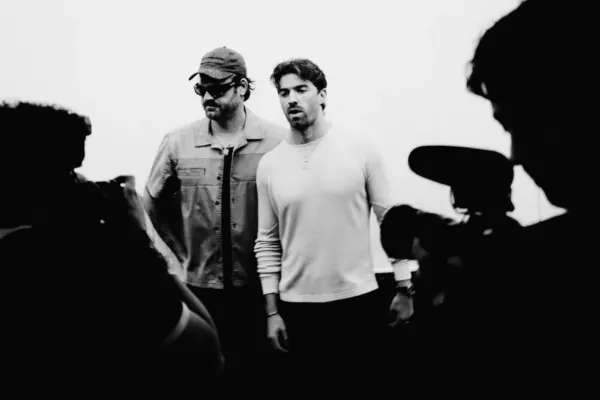
Kept entirely under wraps for three years, the film is a collaborative masterwork helmed by acclaimed director Lance Oppenheim and absurdist comedic auteur Nathan Fielder. Far from a standard biographical retrospective or a sympathetic rehabilitation piece, the documentary drops a skeptical, unblinking film crew directly into the inner sanctum of Holmes and her husband, William Evans. The resulting footage promises a psychological labyrinth—a blend of chilling proximity, deadpan interrogation, and raw vulnerability that captures a notorious Silicon Valley felon navigating her final countdown to infamy.
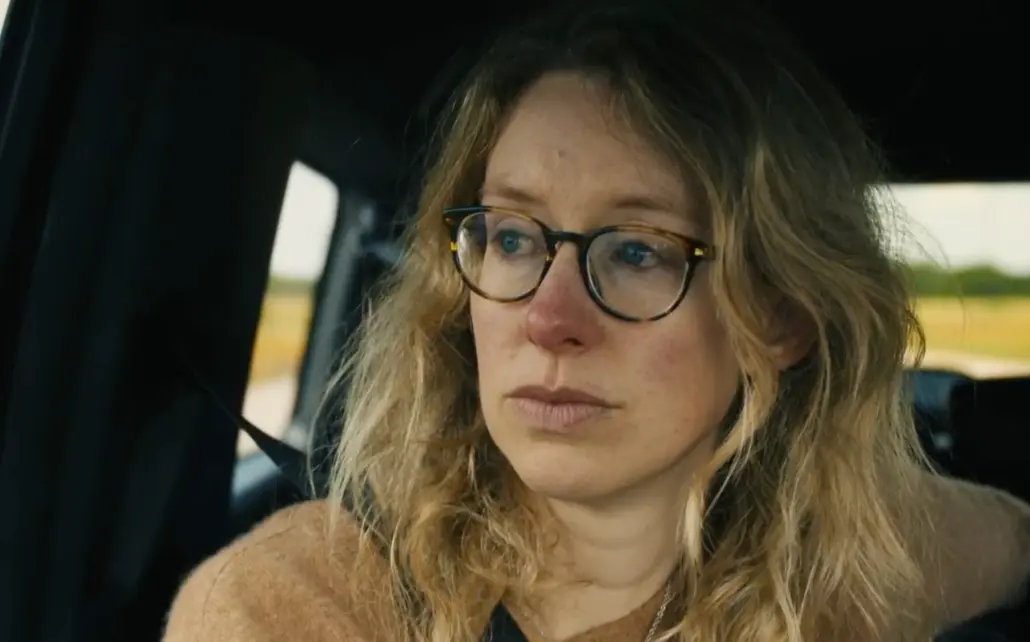
The project’s newly minted trailer provides a glimpse into this bizarre dynamic, showcasing Holmes in rare, unguarded moments—including a tearful close-up that underscores the surreal reality of her final weeks as a free woman. With a theatrical release date slated for October 16, You Can See Everything is already generating intense industry buzz, poised to redefine how contemporary audiences consume the aftermath of corporate fraud and high-stakes hubris.
Detailed Chronology: From Silicon Valley Peak to Federal Penitentiary
To understand the weight of You Can See Everything, one must contextualize the staggering arc that led Elizabeth Holmes from the cover of Forbes to a federal prison cell in Bryan, Texas.
The Rise and Fall of Theranos
Founded in 2003 when Holmes dropped out of Stanford University at the age of 19, Theranos promised to revolutionize health care. The company touted proprietary blood-testing technology—housed in a mysterious device called the "Edison"—that claimed to run comprehensive diagnostic tests using only a few drops of blood obtained via a simple finger-prick.
For over a decade, Holmes cultivated an aura of Steve Jobs-esque genius, complete with a signature black turtleneck, a cultivated deep-baritone voice, and backing from an elite board of directors that included former high-ranking government officials like Henry Kissinger and James Mattis. At its peak, Theranos was valued at $9 billion, making Holmes the world’s youngest self-made female billionaire on paper.
The house of cards collapsed in 2015 following a landmark investigative series by Wall Street Journal reporter John Carreyrou. It was revealed that the Edison machines did not work, that the company was secretly running traditional lab tests on commercial machines manufactured by third parties, and that investors and patients had been systematically deceived.
Trial, Conviction, and Sentencing
Following years of federal investigations and civil suits, Holmes stood trial in San Jose, California. In January 2022, a federal jury convicted her on four counts of wire fraud and conspiracy for deceiving investors about the efficacy and capabilities of Theranos technology.
In November 2022, U.S. District Judge Edward Davila sentenced Holmes to 135 months (more than 11 years) in federal prison, alongside mandatory restitution payments. After mounting several unsuccessful legal appeals and delaying her surrender date, Holmes officially reported to the Federal Prison Camp in Bryan, Texas, in May 2023. Her current scheduled release date is March 19, 2032.
The Secret Three-Year Production
It was during the tense, liminal window between her sentencing and her ultimate imprisonment that Holmes made the confounding decision to invite a documentary crew into her life. According to the official logline, the film chronicles “Thirty-four days before she’s sent to prison, notorious Silicon Valley founder Elizabeth Holmes invites a skeptical film crew to document her every move. What begins as an intimate portrait of an enigmatic felon becomes a mind-bending three-year journey into the abyss.”
The Fielder-Oppenheim Dynamic: Interrogation Meets Intimacy
What elevates You Can See Everything from a standard true-crime documentary into something altogether unprecedented is the creative involvement of Nathan Fielder. Known for his deeply psychological, boundary-pushing reality-comedy works such as The Rehearsal and Nathan For You, Fielder brings a distinct brand of deadpan, uncomfortable inquiry to the project.
Alongside director Lance Oppenheim—celebrated for his empathetic yet eccentric explorations of fringe American subcultures in films like Some Kind of Heaven—Fielder does not merely observe Holmes; he dissects her.
The Teaser Breakdown: Uncomfortable Truths and Smirks
The newly released trailer showcases Fielder’s signature interview style, wherein polite, unassuming queries mask a devastating psychological prodding. In one exchange, Fielder confronts Holmes directly about the presence of his crew:
Fielder: "Does any part of you worry about me being here 24/7?" Holmes: "I don’t think so." Fielder: "Well, what if I see something that makes you look bad?"
Holmes responds with a knowing, silent smirk—a micro-expression that captures the delicate, performative tightrope walk of a convicted fraudster attempting to curate her final public narrative. Later, Holmes remarks to the camera, "I think this is the moment in time to capture this story before I’m gone," signaling an awareness of legacy management even at the eleventh hour.
Cross-Examining William Evans
Fielder’s skepticism extends to Holmes’s husband, William Evans, the heir to a hospitality fortune. Throughout the teaser, Fielder probes Evans regarding his motivations and his blind trust in his wife:
Fielder: "Weren’t you worried she was, sort of, scamming you?" Evans: "A hundred percent, but what did she have to gain from me?" Fielder: "Well … isn’t your family rich?" Evans: "Yeah. I think there are a lot of different levels of wealth."
When Fielder presses further, asking if Evans has ever suspected Holmes of lying to him, Evans replies unequivocally: "No. Never."
This dynamic highlights the central tension of You Can See Everything: is Holmes maintaining a charismatic, manipulative grip on those closest to her, or has she retreated into a carefully constructed domestic reality insulated from the harsh judgments of the outside world? When Fielder tells Holmes that he has a "weird feeling there’s some things I’m not seeing," and Holmes coolly responds, "It’s because I don’t have anything to hide," Fielder’s unconvinced facial expressions anchor the audience’s own lingering distrust.
Supporting Context & Metrics: The Scale of the Fall
To fully grasp the cultural footprint of Elizabeth Holmes’s story, the financial and legal metrics surrounding the Theranos scandal remain staggering:
$9 Billion: The peak private valuation of Theranos at its height in 2014.
$700 Million+: The total amount of capital raised by Holmes from high-profile venture capitalists, media moguls (such as Rupert Murdoch), and prominent family offices.
11 Years (135 Months): The length of the federal prison sentence handed down to Holmes by Judge Edward Davila.
34 Days: The precise window of time prior to her incarceration that served as the primary canvas for Oppenheim and Fielder’s documentary capture.
March 19, 2032: The current projected release date for Holmes from the Federal Prison Camp in Bryan, Texas, according to the Federal Bureau of Prisons.
October 16: The official theatrical release date set by A24 for You Can See Everything.
Official Statements and Industry Reception
A24 has cultivated a reputation for distributing daring, avant-garde cinema, and You Can See Everything fits squarely within the studio’s penchant for boundary-pushing narratives that subvert traditional genres. While formal reviews are embargoed ahead of the film’s October premiere, early industry buzz suggests that the documentary will spark fierce debate regarding consent, exploitation, and the ethics of documentary filmmaking.
By granting access to creators known for subverting reality television tropes, Holmes appears to have gambled that a humanizing, deeply intimate portrait would help salvage her reputation. However, the involvement of Fielder—whose entire career is built upon unmasking artificiality and social awkwardness—suggests that the final product may serve as an unflinching deconstruction rather than a redemption arc.
The trailer’s closing moments encapsulate this emotional high-wire act. In a stark, tightly framed close-up, a tear rolls down Holmes’s cheek as she delivers the final line of the preview:
"It took me a really long time to be okay with letting someone see me cry."
Whether this moment represents genuine remorse or a final, masterclass performance by one of the 21st century’s most notorious corporate actors is a question left for viewers to decode.
Future Outlook: A Cinematic Event Awaiting Verdict
As the October 16 theatrical release approaches, You Can See Everything is positioned to be one of the most talked-about cultural events of the autumn season. It arrives at a time when public fascination with corporate fraudsters, tech-bro hubris, and the inner lives of white-collar criminals remains at an all-time high, fueled by previous dramatizations such as Hulu’s The Dropout and HBO’s documentary The Inventor: Out for Blood in Silicon Valley.
Yet, unlike past adaptations, this project possesses a chilling immediacy. It is not a dramatization starring actors, nor is it a retrospective assembled years after the dust has settled. It is a real-time psychological document of a woman staring directly into the abyss of her own making, guided by two of contemporary cinema’s most subversive minds.
When the lights go down in theaters this October, audiences will be invited to sit in the uncomfortable quiet alongside Elizabeth Holmes, deciding for themselves whether what they see is truth, performance, or a tragic monument to self-deception.