
Executive Overview
In the sprawling landscape of experimental and psychedelic music, few figures loom as large, enigmatically, and persistently as Mayo Thompson. As the primary creative force behind The Red Krayola, Thompson helped lay the foundational masonry of avant-rock, free-form psychedelia, and post-punk intellectualism. Now, in a development that has sent ripples of excitement through the underground music community, independent powerhouse label Drag City has announced the upcoming release of Quiet Days in Cliché.
Slated for release on December 4th, this upcoming full-length represents a monumental milestone in contemporary music history: Mayo Thompson’s first-ever solo guitar album and, astonishingly, his first proper solo album in fifty-six years. Recorded intimately on a smartphone—a modern technological juxtaposition for a musician who helped define the analog counterculture of the late 1960s—the album is described by Thompson himself as a collection of mere "strumming and notes to self." Drag City frames these compositions as "acoustic improvisations that draw threads through space, looking for what more could happen."
This release is more than a mere curio; it is a historic bridge connecting the explosive dawn of American psychedelic rock to the current era of sonic exploration. Decades after pioneering sounds that record labels originally rejected for being too radical, Thompson remains an unrepentant innovator. To contextualize Quiet Days in Cliché is to trace the trajectory of modern avant-garde music itself—a journey that winds through Houston, Berkeley, London, and the fertile breeding grounds of post-punk.
Detailed Chronology: From Houston Psych to Global Avant-Garde
The Birth of The Red Krayola (1966–1968)
The story of Mayo Thompson is inextricably linked to the formation of The Red Krayola (originally spelled The Red Crayola). Formed in Houston, Texas, in 1966 alongside Rick Barthelme and Steve Cunningham, the band quickly established themselves as outliers even within the expansive and boundary-pushing psychedelic movement of the mid-1960s.
Rather than adopting the melodic pop-psychedelia of the era, The Red Krayola embraced a chaotic, minimalist, and deconstructist approach to rock and roll. Their 1967 debut album, The Parable of Arable Land (released via International Artists), remains a landmark of free-form freak-out culture. Notably, the record featured unhinged instrumental cameos from Roky Erickson and members of the legendary 13th Floor Elevators.
The audacity of the band’s sound escalated with their sophomore release, 1968’s God Bless the Red Krayola and All Who Sail With It. Stripped down, lo-fi, and defiantly stark, the album traded sprawling sonic feedback for sparse, skeletal arrangements that anticipated the post-punk movement by a decade.
So radical was Thompson’s vision during this era that it frequently collided with commercial reality. Recorded in 1967, the band’s album Coconut Hotel was deemed so commercially unviable and avant-garde that International Artists flatly refused to release it. Fans and historians had to wait nearly three decades—until Drag City finally issued it in 1995—to hear its challenging compositions. A similar fate befell their collaborative recordings with American primitive guitar pioneer John Fahey. Following a performance together at the Berkeley Folk Festival, Thompson and Fahey recorded material that remained unreleased at the time, eventually seeing the light of day via Drag City in 1998 under the title Live 1967.
The London Renaissance and Post-Punk Stewardship (1970s–1980s)
Following the initial dissolution of The Red Krayola in the late 1960s, Thompson pivoted toward his first solo venture. In 1970, he released Corky’s Debt to His Father. Though barely distributed upon its initial release and largely ignored by contemporary audiences, the album has since attained legendary, canonical status among aficionados of idiosyncratic pop and outsider folk.
By the late 1970s, Thompson relocated to England, where he resurrected The Red Krayola moniker and embedded himself within the burgeoning British post-punk scene. Operating out of London, he recorded the deeply influential album Soldier-Talk, co-produced with Geoff Travis, the visionary founder of Rough Trade Records.
Thompson’s influence during this period extended far beyond his own recordings. As an astute producer and cultural catalyst, he shaped the sonic identities of some of the most important post-punk acts of the era. He lent his production expertise to records by Stiff Little Fingers, The Fall, and The Raincoats, cementing his reputation as an intellectual architect of independent music.
The 56-Year Interregnum and the Return to Solo Work
For more than five decades, Thompson’s output largely involved collaborative iterations of The Red Krayola, cross-disciplinary art projects, and sporadic production credits. The prospect of a true Mayo Thompson solo album faded into the realm of speculative myth.
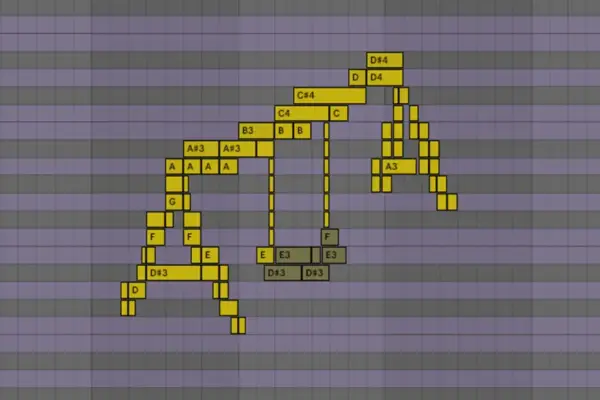
That silence has finally been broken. Fifty-six years after the release of Corky’s Debt to His Father, Thompson returns with Quiet Days in Cliché. The rollout of the album has begun with the release of its lead track, "K-Pook," accompanied by an official music visualizer that offers a glimpse into the stark, intimate world of Thompson’s modern acoustic philosophy.
Supporting Context & Metrics: The Weight of an Iconoclast
To understand the magnitude of Quiet Days in Cliché, one must examine the metrics of Thompson’s career longevity and his standing within contemporary musicology:
- The Temporal Gap: A 56-year hiatus between solo albums is virtually unprecedented in popular music history, eclipsing the comeback windows of even the most venerable legacy artists. It spans the entirety of modern rock’s evolution—from the analog tape machines of the 1960s to the digital smartphone age in which Quiet Days in Cliché was recorded.
- Archival Persistence: Drag City’s stewardship of Thompson’s catalog has brought to light multi-decade-old recordings like Coconut Hotel (recorded 1967, released 1995) and Live 1967 (released 1998), proving that the appetite for Thompson’s uncompromising aesthetic has only grown with time.
- Genre-Defying Blueprint: Thompson’s work predated and directly influenced several major musical shifts, including:
- Free-Form Psych & Noise Rock: Through The Parable of Arable Land.
- Post-Punk & No Wave: Through sparse arrangements and associations with Rough Trade.
- Outsider Folk: Through Corky’s Debt to His Father.
Official Statements & Industry Perspective
The announcement by Drag City highlights the delicate and persuasive process required to bring these intimate recordings into the public sphere. Recognizing Thompson’s historic stature as a foundational figure of psychedelic music since 1966, the label navigated the artist’s characteristic reluctance to share casual material.
In an official statement accompanying the announcement, Drag City reflected on the nature of the recordings and the effort to make them public:
"We’ve worked hard to persuade Mayo to share these ideas with the public as a figurehead of psychedelic music going back to 1966. We trust you will hear why."
Describing the recording process, the label noted that Thompson captured the tracks simply on his smartphone, resulting in "acoustic improvisations that draw threads through space, looking for what more could happen." This lo-fi, unpretentious methodology mirrors the ethos that Thompson championed decades ago with The Red Krayola—proving that true avant-garde creation relies not on high-gloss studio budgets, but on raw, inquisitive artistic impulse.
Future Outlook: The Legacy Continues
As the music world turns its attention toward December 4th, the release of Quiet Days in Cliché promises to be one of the most intellectually compelling listening events of the year. For longtime devotees of The Red Krayola, Corky’s Debt to His Father, and Thompson’s extensive production work, the album offers an unfiltered window into the mind of a living legend.
For younger generations of musicians exploring the outer limits of ambient, folk, and experimental guitar music, Thompson’s return serves as a masterclass in longevity and artistic integrity. By stripping his approach down to smartphone-recorded guitar improvisations, Mayo Thompson demonstrates that after more than half a century of reshaping the sonic landscape, his desire to "draw threads through space" remains entirely undiminished.
Fans can pre-order and pre-save Quiet Days in Cliché directly via Drag City’s official link.