Executive Overview
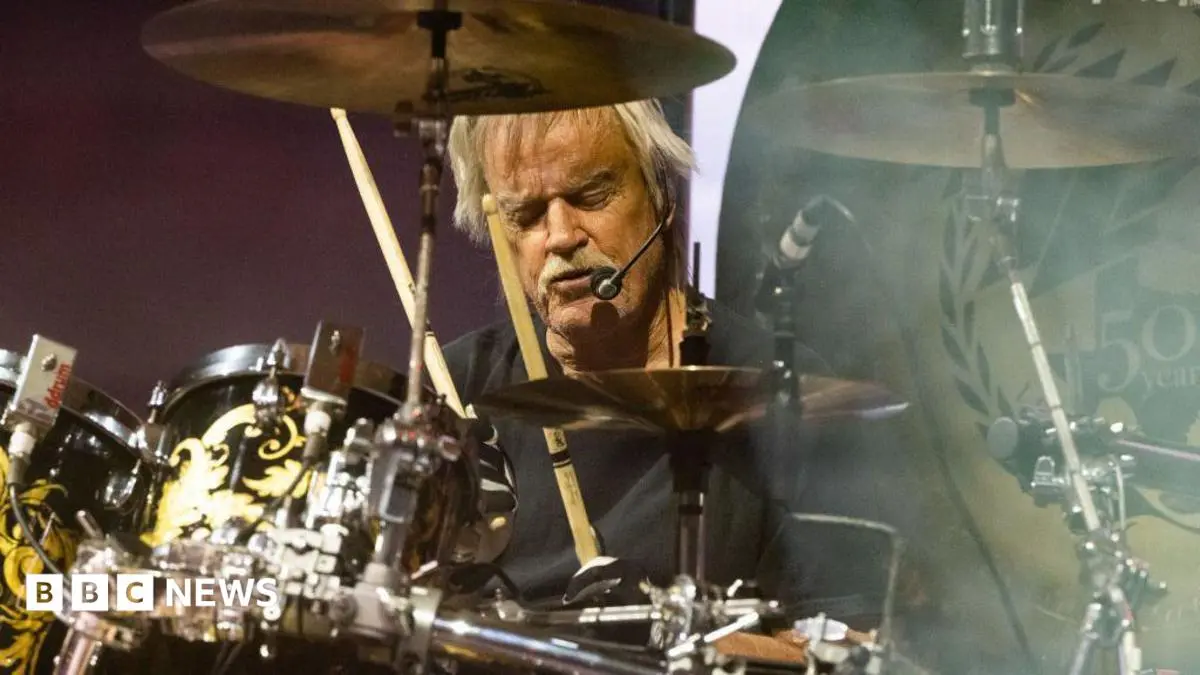
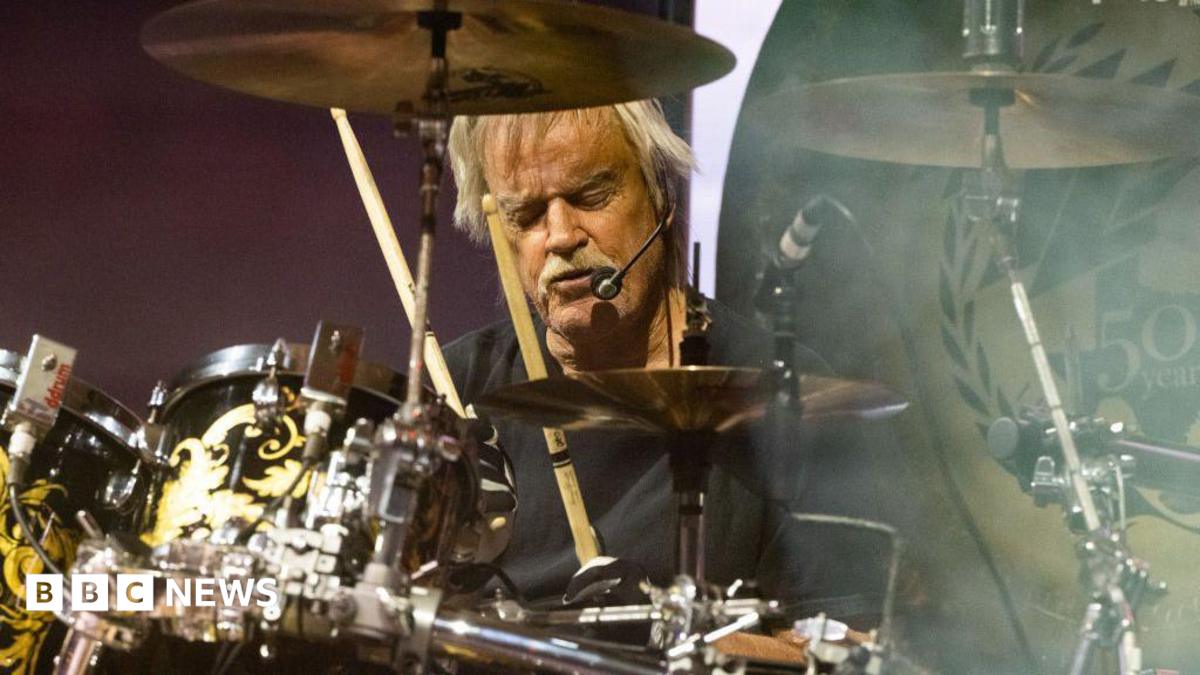
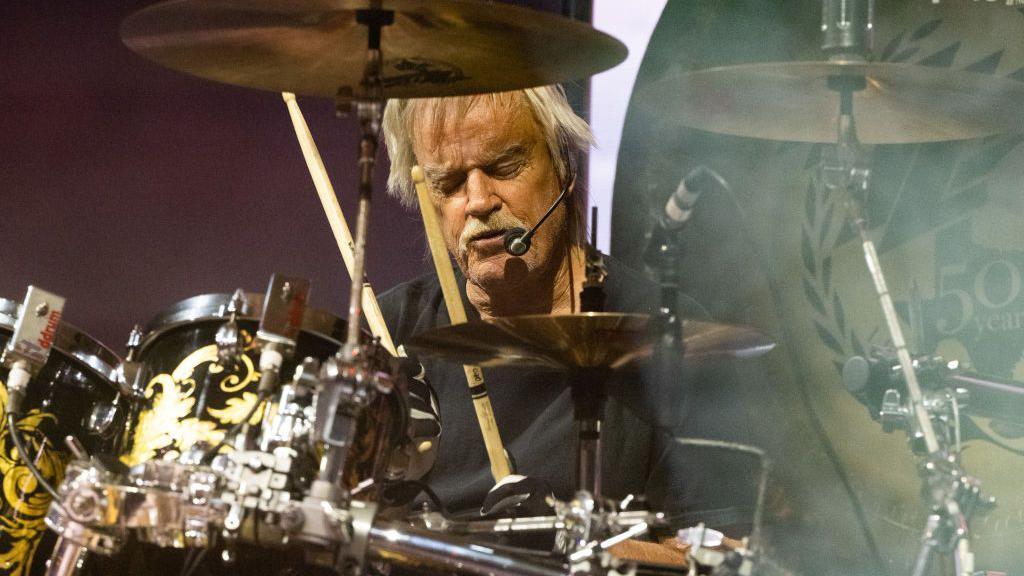
The rock and roll world is in mourning following the death of Frank Beard, the iconic, steady-handed rhythmic engine behind legendary blues-rock band ZZ Top. Beard passed away peacefully on Monday at the age of 77, surrounded by his loving family while in hospice care at his ranch in Richmond, Texas. His passing marks the end of an extraordinary era for a group that defined American hard rock for over half a century.
Known affectionately—and with a touch of cosmic irony—as "The Man With No Beard," Beard provided the foundational, swinging backbeat that anchored ZZ Top’s unmistakable sound. While his bandmates Billy Gibbons and the late Dusty Hill became globally iconic for their waist-length facial hair and matching sunglasses, Beard famously maintained a clean-shaven face (or wore a neat mustache), standing out visually while remaining entirely locked into the deep-pocket groove that drove the band’s multi-platinum success.
Beard’s death has prompted an immediate outpouring of grief from fellow musicians, industry executives, and millions of fans across the globe. In response to his passing, ZZ Top cancelled their immediate tour dates in Utah and Colorado. However, true to the relentless touring ethos that defined Beard’s six-decade career, the band announced intentions to honor his final wishes by returning to the stage later this week. The show, fittingly, will go on.
Detailed Chronology: From Texas Roots to Global Superstardom
Formation and Early Years (1969–1972)
The story of ZZ Top is inextricably linked to the rich blues traditions of Texas, and Frank Beard was there nearly from the very beginning. Formed in Houston in late 1969 by guitar virtuoso and vocalist Billy Gibbons, the initial lineup featured various local musicians before solidifying when Beard joined the fold following the release of the band’s debut single, "Salt Lick."
Recognizing the need for a powerhouse low-end player who shared their affinity for raw, unadulterated Texas blues, Beard brought in bassist and vocalist Dusty Hill, cementing the legendary power trio lineup of Gibbons, Hill, and Beard. This sacred trinity would remain intact for an astonishing 50 years until Hill’s death in 2021.
The Blues-Rock Ascent (1970s)
ZZ Top spent the early 1970s cutting their teeth on the relentless Southern touring circuit, building a reputation as a ferocious live act. Their early records—including ZZ Top’s First Album (1971), Rio Grande Mud (1972), and especially Tres Hombres (1973)—established them as royalty of the American boogie-rock scene.
Tres Hombres yielded the hypnotic, freight-train anthem "La Grange," a track propelled entirely by Beard’s infectious, shuffling drum pattern. As the band transitioned from sweaty road warriors to arena headliners throughout the mid-to-late ’70s, backed by massive productions like their 1976–1977 Worldwide Texas Tour (which famously featured live Texas longhorns, rattlesnakes, and buffalo on stage), Beard’s unshakeable rhythmic discipline served as the anchor amidst the theatrical chaos.
The MTV Era and Eliminator Phenomenon (1980s)
By the dawn of the 1980s, ZZ Top executed one of the most successful sonic evolutions in rock history. Integrating synthesizers and sleek electronic drum pads with their trademark gritty blues guitar riffs, the band struck gold with 1981’s El Loco.
However, it was 1983’s Eliminator that propelled them into the stratosphere of global pop culture. Driven by groundbreaking, humor-filled music videos featuring the iconic cherry-red 1933 Ford coupe (the "Eliminator" hot rod) and synchronized model dancers, the album became a commercial juggernaut.
Beard’s precise, mechanically tight drumming on tracks like "Gimme All Your Lovin’," "Sharp Dressed Man," and "Legs" bridged the gap between traditional classic rock and the emerging MTV generation. The band capitalized on this momentum with 1985’s Afterburner, proving that their synthesis of high-tech production and down-home Texas blues was no fluke.
Later Decades and Continuity (1990s–2021)
As decades passed, ZZ Top refused to rest on their laurels. They continued to release critically praised studio albums—such as Recycler (1990), Antenna (1994), and La Futura (2012)—and maintained a punishing international touring schedule.
In 2004, the band achieved ultimate validation when they were inducted into the Rock and Roll Hall of Fame by fellow guitar legend Keith Richards, who praised their unyielding dedication to the three-chord blues tradition.
When long-time bassist Dusty Hill passed away in July 2021, the band faced a profound crossroads. True to Hill’s dying wish—"Let the music play"—the group enlisted longtime guitar tech and bassist Elwood Francis to step into the fold. Frank Beard continued to provide the rhythmic bedrock for Francis and Gibbons, demonstrating an unwavering resilience on stage well into his seventies.
Supporting Context & Metrics: The Scale of Beard’s Legacy
To understand Frank Beard’s impact is to examine the monumental commercial and cultural footprint of ZZ Top. Over a career spanning more than 50 years, the band achieved milestones that very few classic rock acts can claim:
- Diamond Certification: Their 1983 masterpiece Eliminator went on to sell over 10 million copies in the United States alone, earning rare Diamond certification from the Recording Industry Association of America (RIAA) in 1996.
- Global Album Sales: Across 15 studio albums and four live records, ZZ Top has sold an estimated 50 million albums worldwide.
- Grammy Recognition: The band earned multiple Grammy Award nominations throughout their career, including nods for Eliminator and 1987’s Afterburner, as well as a 2021 nomination for Best Music Film for the acclaimed documentary That Little Ol’ Band From Texas.
- The Irony of a Name: Despite sharing a surname with musical history’s most famous facial-hair collective, Frank Beard was universally known as "The Man With No Beard," creating a running joke that spanned half a century of interviews and media appearances.
Official Statements and Tributes
The music community has responded to Beard’s passing with profound sorrow, remembering him not only as a master percussionist but as a warm, humble human being.
Bandmate Billy Gibbons released an emotionally charged statement reflecting on their decades together:
"Today, Elwood and I lost a great friend and collaborator, and the world lost one of the most naturally innovative drummers and a great and true son of Texas. His signature backbeat was key to keeping ZZ on top. The band of which he was part for six decades is going to keep on keeping on as he had wished."
Rock musicians, promoters, and fans flooded social media platforms with tributes. Longtime peers praised Beard for his ability to make complex time feels look effortless, relying on feel, pocket, and dynamics rather than flashy, over-the-top soloing. In the world of rock drumming, Beard was widely considered a master of restraint—knowing precisely when to hit hard, and just as importantly, when to lay back to let the groove breathe.
Future Outlook and Tour Adjustments
The immediate logistical fallout from Beard’s passing required swift adjustments to ZZ Top’s current concert itinerary. The band officially cancelled performances that had been scheduled in Salt Lake City, Utah (Monday) and Colorado Springs, Colorado (Wednesday).
However, true to the indomitable spirit that characterized Frank Beard’s life and career, the tour is set to resume over the weekend. ZZ Top plans to take the stage for two consecutive dates at Austin City Limits in Austin, Texas—a venue the band noted was among Beard’s absolute favorites, located in a city that served as a spiritual second home for the legendary drummer.
As Elwood Francis and Billy Gibbons return to the stage under the Texas lights, they will do so carrying the torch for a fallen brother. Frank Beard’s rhythmic heartbeat may have fallen silent, but the thunderous, blues-soaked echoes of his legendary backbeat will reverberate through the annals of rock history forever.