Executive Overview
To the modern observer, the European rabbit (Oryctolagus cuniculus) is a ubiquitous, if occasionally destructive, feature of the British countryside. Scampering across fields, nesting in hedgerows, and plaguing farmers with crop loss, they are deeply entrenched in the rural ecosystem. Yet, this familiarity belies a complex, turbulent history. Far from being a native species, the rabbit is one of Britain’s most successful and ecologically devastating invasive species—a status it has held for centuries.
The early trajectory of the rabbit in the British Isles is not merely a tale of ecological adaptation; it is a fascinating sociological mirror reflecting the profound transformations of medieval England. Moving from an ultra-exclusive luxury gifted almost exclusively by monarchs and Norman elites to a commonplace commodity following the devastating demographic collapse of the Black Death, the rabbit charted the rise of social mobility among the lower strata.
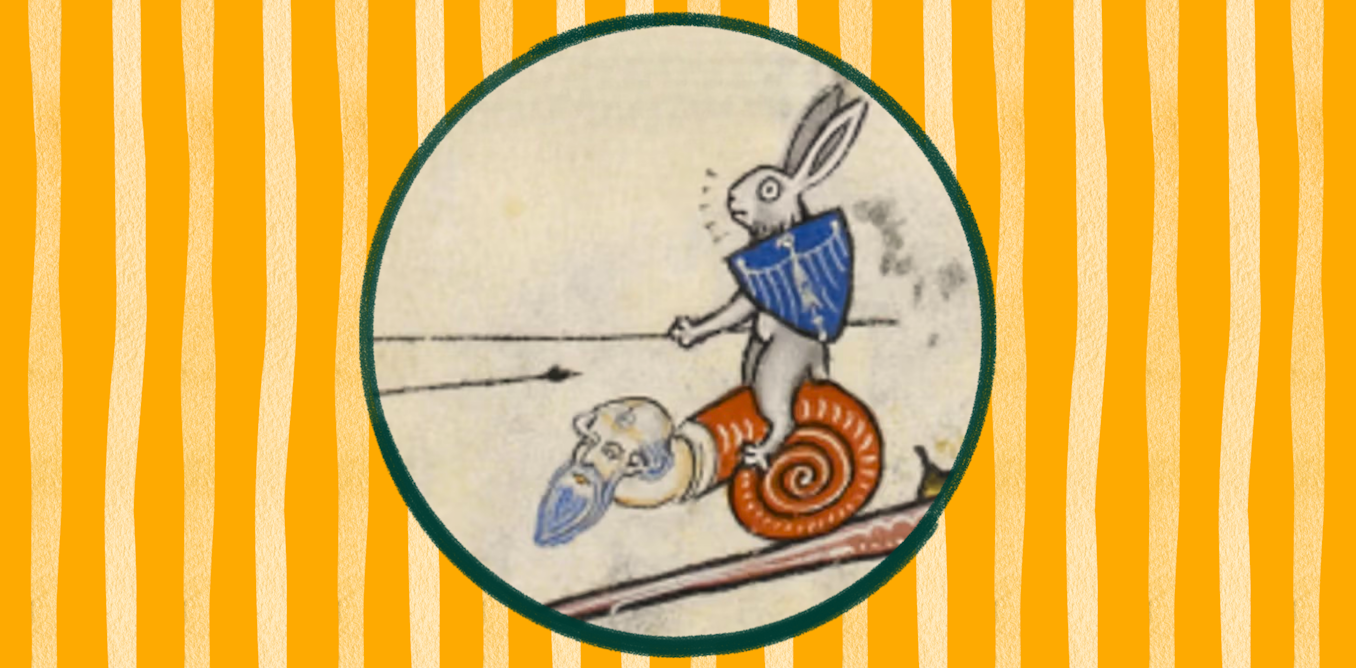
Furthermore, the cultural footprint left by these animals is surprisingly rich. Long before Monty Python introduced global audiences to the terrifying "Killer Rabbit of Caerbannog," medieval scribes and illuminators were utilizing rabbits in marginal illustrations to subvert social hierarchies, mocking chivalry, and expressing a dark, playful gallows humor. This investigation explores how a fragile, imported luxury item transformed into a widespread pest, sparked class warfare, and captured the satirical imagination of a changing world.
Detailed Chronology: From Roman Curio to Medieval Staple
The introduction and proliferation of the European rabbit in Britain did not happen overnight. Archaeological findings and historical records reveal a protracted, stop-and-start establishment across the centuries.
1. Antiquity and the Norman Footprint
While long assumed to have been introduced wholesale by the conquering Normans in the 11th century, archaeological science has occasionally complicated this neat narrative. Notably, the excavation of a single rabbit bone at Fishbourne Roman Palace in Sussex suggests that Roman occupiers may have attempted small-scale imports or kept captive specimens. However, these early Roman introductions failed to establish a self-sustaining wild population.
It was the Normans who truly paved the way for the species’ permanent residency. Documentary evidence of rabbits—frequently referred to historically as "coneys"—begins to accumulate steadily from the Norman period onward. One of the earliest official references emerges from the Scilly Isles in 1176. Landowner Richard de Wyka found himself in a financial dispute with the church after withholding tithes (a mandatory tenth of agricultural produce) on his rabbit warrens. De Wyka’s defense was simple: he genuinely believed that "tithes were not payable on things of this kind." This confusion highlights the novelty of the animal at the time; rabbits did not neatly fit into traditional medieval economic or agricultural categories.
2. Royal Monopolies of the Thirteenth Century
By the 1200s, rabbits had transitioned from a legal gray area into prized royal commodities. They were sufficiently scarce, valuable, and carefully managed to warrant the direct personal attention of the English crown.
In 1235, King Henry III gifted ten live rabbits from his private park at Guildford to Geoffrey Despenser, a prominent English landowner and Lord of Martley in Worcestershire. A few years later, royal records show the king dispatching trusted agents to capture 30 to 40 rabbits from the same Guildford warren, with strict instructions that they were only to be harvested if the colony was robust enough to withstand the depletion.
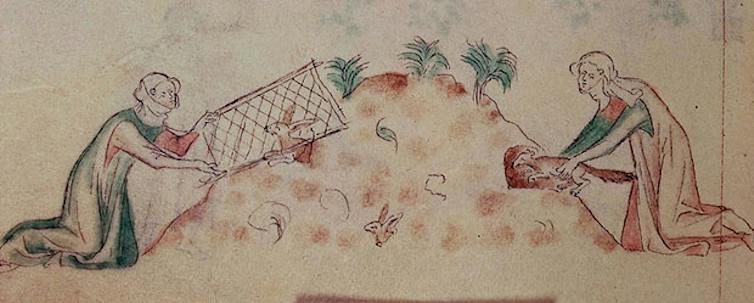
During this era, rabbits were valued primarily for two things: meat and fur. While Henry III frequently requisitioned massive supplies of venison, wild boar, fish, swans, peacocks, hens, eggs, and hares for his lavish court feasts, rabbits did not appear on his official Christmas feast requisition lists until 1240. They were considered an elite, highly expensive delicacy—costing four to five times the price of a standard chicken. So valuable were these animals that landowners constructed specialized warrens fortified with watchtowers and stone lodges, heavily guarded against poachers and predatory wildlife.
3. The Post-Black Death Social Revolution
The rigid aristocratic monopoly on rabbits was shattered in the mid-14th century by one of the greatest demographic catastrophes in human history: the Black Death (1346–1353). Sweeping across Europe, the plague decimated between one-third and two-thirds of the population.
This horrific loss of life inadvertently triggered a massive socio-economic shift. With labor suddenly in desperately short supply, surviving peasants and agricultural laborers gained unprecedented economic leverage. They could demand higher wages, and as vast tracts of agricultural land became freely available, overall living standards rose. For the first time, lower-class individuals could afford luxuries previously reserved for the nobility. Many aspiring commoners began adopting the dietary and sartorial habits of their social superiors.
Legislation introduced in 1363 attempted to halt this trend, complaining bitterly of "the excess of dress of people beyond their estate, to the very great destruction and impoverishment of the land." Yet, the tide could not be turned. Rabbits became increasingly common throughout the 14th and 15th centuries. Wealthy peasants began consuming rabbit meat, while aspiring craftsmen and tradespeople adopted rabbit fur for warmth and fashion.
While common grey rabbit fur was prized for insulation, specialized warrens began breeding rare silver-grey and black variants. Even royalty maintained a taste for these luxury furs; Henry VII notably ordered his bespoke night attire tailored using soft black rabbit fur.
4. Poaching, Regulation, and Rebellion
As rabbit populations swelled through deliberate breeding and natural expansion, the economic reality shifted. Manorial records from the late medieval period are filled with escalating complaints from farmers regarding crop destruction and land damage caused by the lords’ proliferating rabbit warrens.
Concurrently, the authorities grew deeply paranoid about the activities of rural workers. Following the Peasants’ Revolt of 1381, the English Parliament grew anxious that lower-class citizens hunting game—including rabbits—was becoming a cover for sedition. In January 1390, sweeping anti-poaching legislation was enacted. Parliament expressed a deep-seated fear that laborers and artisans, under the guise of sport, would "make plots and conspiracies of rebellion" against the Crown.
King Henry consented to strict regulations, extending bans not just to hunting deer, but prohibiting lower-class citizens from using "hounds and ferrets, hays, nets, hair-pipes, cords and all other devices to take or destroy beasts of the forest, hares or rabbits, or other sport of gentlefolk."
By 1555, the Swiss naturalist Conrad Gesner captured the extent of this population explosion, writing in his global survey of fauna that "there are few countries wherein coneys do not breed, but the most plenty of all is in England."
Supporting Context & Metrics: The Economics and Ecology of the Coney
To fully understand the medieval rabbit phenomenon, one must look at the hard metrics of its valuation, management, and ecological impact.
- Economic Disparity: In early 13th-century England, a standard chicken could be purchased for a modest sum, whereas a single rabbit routinely commanded a price four to five times higher, cementing its status as an elite luxury item.
- Mortality and Mobility: The Black Death eradicated an estimated 33% to 66% of the European population between 1346 and 1353, instantly shifting the labor supply curve and empowering surviving agricultural workers to command higher wages and elevate their living standards.
- Ecological Footprint: Today, invasive species cost the UK economy billions of pounds annually. The European rabbit, introduced centuries ago, remains a prime example of an imported species that transitioned from a controlled, high-value captive asset into an unmanageable ecological and agricultural pest.
- Legislative Backlash: Major pieces of social control legislation, such as the Sumptuary Laws of 1363 and the anti-poaching statutes of 1390, demonstrate how deeply intertwined rabbit ownership, consumption, and hunting were with issues of class stratification and political stability.
Official Perspectives and Historical Analysis
Historians and ecological researchers studying the medieval transition point out that the rabbit serves as an invaluable lens through which to view societal anxieties.
Dr. Alice-Mary Talbot, a leading scholar of medieval social history, notes:
"When we look at how animals like the rabbit were managed, protected, and eventually consumed, we are looking at the medieval obsession with order. The rabbit was heavily guarded because it symbolized aristocratic privilege. When the lower classes began eating its meat and wearing its fur, it represented a fundamental breach in the medieval worldview—a visual and economic blurring of estate lines that terrified the ruling class."
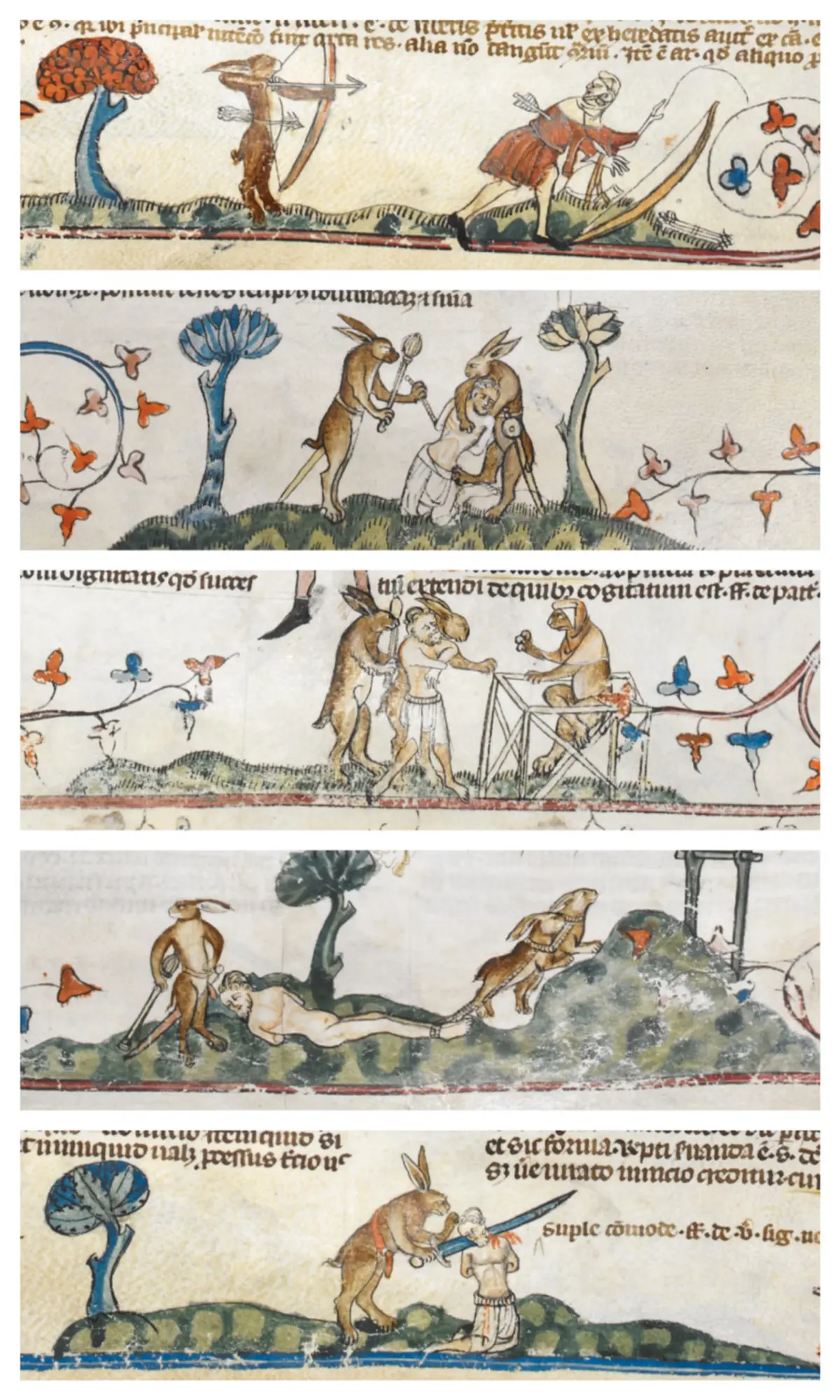
Furthermore, cultural historians emphasize that the marginal illustrations found in medieval manuscripts were not merely whimsical doodles, but sophisticated expressions of social critique. The famous Smithfield Decretals (dating from the 1340s), which depicts rabbits capturing, trying, and executing human hunters and their hounds, is a prime example of this phenomenon.
Art historian and medievalist Dr. Robert Harrison explains:
"The ‘world turned upside down’ trope was a safety valve for medieval society. By visualizing rabbits—the ultimate symbol of prey, weakness, and luxury—turning the tables to violently judge and execute their human masters, scribes and readers engaged in a shared, subversive fantasy. It is the direct medieval ancestor of modern satire; it allowed people living under rigid, oppressive hierarchies to laugh at the very structures that bound them."
Future Outlook: Legacy of the Medieval Coney
The legacy of the medieval rabbit endures across multiple disciplines today. Ecologically, modern conservationists and agricultural bodies continue to grapple with the long-term consequences of importing non-native species. Management strategies for controlling wild rabbit populations remain a persistent logistical challenge for British landowners, echoing the manorial complaints registered over six centuries ago.
Culturally, the rabbit’s journey from a royal gift to a peasant luxury, and finally to a creature of dark, satirical folklore, continues to inspire contemporary media. From the immortalized killer rabbit animations of Monty Python to ongoing archaeological research into medieval warrens and manuscript illuminations, the coney retains its unique ability to captivate our imagination.
As historians dig deeper into parish records, manorial accounts, and illuminated folios, the humble rabbit reminds us that the history of nature in Britain cannot be separated from the social, economic, and political ambitions of the people who shaped its landscape.