Executive Overview
High in the rugged, wind-scoured mountains of Trás-os-Montes, far from the sun-drenched tourist boulevards of Lisbon and the institutionalized nostalgia of urban fado, a quiet sonic revolution has been brewing. For generations, the extreme northeastern corner of Portugal felt culturally excised from the national narrative. Here, the geography is harsh, the dialects are distinct, and on the high plateaus surrounding Miranda do Douro, people speak an entirely separate recognized language: Mirandese. For decades, speaking with this regional cadence or vocalizing the ancient, pre-Roman Celtic traditions of the north carried a lingering social stigma—a generational inheritance shaped by centuries of isolation and the long shadow of twentieth-century authoritarianism.
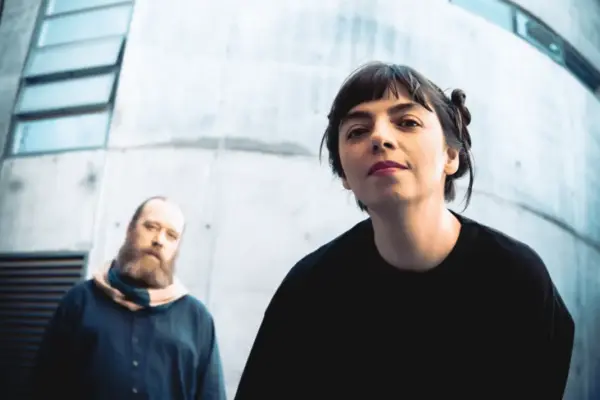
Enter Catarina Miranda, known to the global underground as emmy Curl. A multidisciplinary artist, producer, and singer-songwriter, Miranda has spent the past several years transforming her regional heritage into a striking, forward-looking manifesto. Through her acclaimed Pastoral album cycle—comprising 2024’s Pastoral (released via Cuca Monga) and this year’s Pastoral 2.0 (via her own Exemplar Discos label, co-produced alongside Andreas Sidenius)—she has bridged the seemingly impossible chasm between ancient pastoral folkways, jazz harmonies, and the pulse of club techno.
Her work stands at the vanguard of a broader artistic movement in Portugal. In the wake of pandemic-era introspection and decades of passive ingestion of Anglo-American commercial pop, a new wave of musicians is digging aggressively into local archives. Yet emmy Curl’s vision goes beyond mere historical preservation. Infused with "solarpunk" ideals—an aesthetic and philosophical framework envisioning a sustainable, decentralized future where advanced technology and untamed nature coexist in harmony—her music challenges the bleak, hyper-capitalist cyberpunk dystopias dominating modern media.
This profile examines emmy Curl’s artistic evolution, her recent high-profile showcase at WOMEX in Las Palmas de Gran Canaria, and how her radical synthesis of jazz, electronics, and ancestral Portuguese roots is redefining what contemporary Iberian folk music can achieve on the global stage.
Detailed Chronology: From Mountain YouTube Pioneer to Global Showcase
The Mountain Studio and Early Digital Liberation
Born in Vila Real into a family of amateur musicians, Catarina Miranda grew up immersed in creative exploration. Her father maintained a home studio, serving as an early incubator where Miranda learned the fundamentals of audio production. Long before modern bedroom-pop became an industry standard, a teenage Miranda was recording her own compositions and uploading them to YouTube.
By the age of 15, she was performing live; by 17, she had dropped her debut EP. Looking back, Miranda is frank about the geographical and technological realities that shaped her trajectory.
"I was living in the mountains, not in Lisbon, not in Porto," she reflects. "Without the internet, I wouldn’t be here."
Her early musical output navigated disparate worlds. She sang primarily in English while simultaneously engaging with cancioneiro—traditional Portuguese song forms heavily laced with the Celtic north’s DNA, distinct from the melancholy of fado. However, a comprehensive intellectual and artistic dive into these roots would not crystallize until she left her homeland.
The Nordic Revelation and the Genesis of Pastoral
The catalyst for her artistic transformation occurred while living in Denmark. Distance afforded Miranda a panoramic perspective on her national identity. While Portugal’s national cultural apparatus had long conditioned its citizens to view their country as diminutive compared to the economic powerhouses of core Europe, living abroad illuminated the distinct richness of Portugal’s regional tapestries.
It was during this period abroad that she committed to a long-held promise made to a close friend and future collaborator.
"I told him, one day I’m going to make a traditional album, and I’m going to invite you," she recalls.
That promise materialized as Pastoral, released in 2024. The record reimagined traditional northern and interior folk songs through a contemporary lens, layering synths and electronic beats beneath modal melodies. The gamble paid off: Pastoral swept the critical landscape, winning the prestigious Prémio José Afonso by a unanimous jury vote—an accolade established in 1988 to honor works of exceptional artistic merit within Portuguese music. The album propelled Miranda onto an extensive touring circuit spanning more than 70 concerts.
Pastoral 2.0 and the Mirandese Breakthrough
Building upon the momentum of her debut conceptual project, Miranda released Pastoral 2.0 through Exemplar Discos. This second installment dives deeper into her linguistic and cultural geography, deliberately embracing the accent of her upbringing.
For the first time in her recorded catalog, Miranda sings in Mirandese on a haunting shepherds’ ballad titled "Romance da Lhoba." The decision to shed residual self-consciousness was liberating.
"With this album I thought, you know what, fuck it," she states. "I’m going to sing the way I heard my grandparents. And it feels so good."
WOMEX 2024: Bridging the Local and the Global
In late October, this journey brought Miranda to the international stage at WOMEX (World Music Expo) in Las Palmas de Gran Canaria. Selected as one of the official showcase artists, she prepared a condensed 45-minute audiovisual presentation combining material from both Pastoral releases, synchronized with her own video art and visual design.
Meeting hours before her soundcheck under an unseasonably blistering Canary Islands sun, Miranda articulated the paradoxical nature of trade expos for independent creators. Navigating a marketplace where art is evaluated as a commercial product can be jarring, yet she approaches the ecosystem with pragmatic transparency.
"As a musician, it’s a bit overwhelming to see people here judging music as a product, when what we’re creating is art," she admits. "But we live in a world where it has to be that way if the music is going to be heard anywhere beyond our own room… We all know this is a business, and that transparency makes things feel more personal in the end."
Supporting Context & Metrics: Cultural Currents and the Solarpunk Ethos
The Solarpunk Manifesto
At the core of emmy Curl’s recent work is a coherent philosophical framework. Far from being a detached exercise in historical reenactment, her songs function as manifestos for an ecologically balanced future.
When a friend pointed out the thematic alignment of her music with solarpunk roughly two years ago, Miranda realized the label accurately described ideas she had been exploring since her early twenties. Positioned as an optimistic counter-narrative to the dystopian, corporate-controlled futures of cyberpunk, solarpunk envisions societies where human ingenuity, localized culture, and ecological regeneration work in tandem.
"People call it solarpunk," Miranda explains. "I’d been working on this theme for many years, but only about two years ago a friend told me, ‘You’re very solarpunk.’ I started discovering the genre and realised it’s what I’ve been doing since I was about 20."
She contrasts this with the prevailing cyberpunk reality:
"Where we all become cyborgs controlled by capitalism and the elites, which is more or less what’s happening. There will always be two worlds. One where this system is pushed to the extreme, and others where people use the system’s own tools to create and bring other perspectives."
Excavating the Celtic and Iberian Underground
To construct this alternative future, Miranda argues that Portugal must confront its erased histories. The narrative that Portuguese culture is monolithically Mediterranean and fado-centric erases the robust Celtic heritage shared across Atlantic Europe.
"The Celtic roots were all over Europe. Northern Europe was full of Celtic tribes, and so was the north of Portugal," she notes. "In the north we always felt that something was missing, that we had another culture nobody saw."
By re-engaging with these roots, contemporary artists are offering an antidote to the homogenization of global pop. While neighboring Galicia has spent decades aggressively cataloging, modernizing, and celebrating its Celtic-Iberian identity, Portugal is only now catching up.
Harmonic Deconstruction and Club Sensibilities
Musically, Miranda’s methodology involves taking rigid, modal folk structures and fracturing them through advanced harmonic education. Traditional folk songs are often tethered to repetitive basslines and static modal progressions. Miranda injects jazz and classical counterpoint into these frameworks, treating the source material as raw data for transformation.
Taking tracks like "Senhora do Almortão" (from Beira Baixa) or "Romance da Lhoba"—the latter built around a heavy percussion sample from the ensemble Retimbrar—she finds an organic bridge between traditional acoustic rhythms and electronic club culture.
"I like to rave, I like techno, I like jazz, many different styles," she says. "With northern music, especially the Celtic side, the strong beats remind me of techno."
This process of cultural excavation has had a profound internal effect.
"Art is also about self-discovery," Miranda reflects. "You find the ancestral singing you had forgotten, you get shivers on your skin, and you discover something new inside yourself… When I started doing it, I discovered a new voice inside me."
She traces the previous aversion to regional accents and vernacular dialects directly back to the psychological residue of Portugal’s Estado Novo dictatorship, which finally collapsed during the Carnation Revolution of 1974.
"It’s still in our blood, this fear of taking risks."
Official Statements & Quotes Index
To understand emmy Curl’s artistic mission, her own words provide the clearest roadmap across geography, philosophy, and sound:
- On Geographic Isolation and Digital Survival:
"I was living in the mountains, not in Lisbon, not in Porto. Without the internet, I wouldn’t be here."
- On Overcoming Regional Stigma:
"With this album I thought, you know what, fuck it. I’m going to sing the way I heard my grandparents. And it feels so good."
- On the Music Industry Paradox:
"Sometimes it’s a shit show, but it’s how we can promote our work and get our message to more people. I’m here to deliver the message from my source, from our source, and let it be."
- On Solarpunk vs. Cyberpunk:
"Some of the songs are like manifestos for a future where technology and nature come together in a sustainable way… cyberpunk is where we all become cyborgs controlled by capitalism and the elites."
- On Harmonic Innovation:
"Traditional music was very modal, always built on very specific pillars, with people singing on top of the same bass… It’s interesting to see how, over the same tune, we can change the chords and the harmonies and create new feelings."
- On Her Identity as an Artist:
"I’m a scientist of art. I like to experiment. I like to risk. I like to go beyond borders."
Future Outlook & Ecosystem: A Generation Reconnecting
emmy Curl is far from an isolated voice in the wilderness. A sweeping generational shift is underway across Portugal, accelerated by pandemic-era isolation and exhaustion with cookie-cutter cultural imports.
"When COVID hit, people went for what they knew, what was safe, what they could see," Miranda observes. "There was a general feeling of going back to the roots, to our parents’ houses, to our countries, because that’s where we felt safe… Empires come and go, and that’s okay. I’ve learned so many things. But as artists we got fed up. We’d reached a point where almost everything sounded the same."
This renaissance is championed by peers such as Retimbrar, Galandum Galundaina (who continue to champion Mirandese lyricism), Gaiteiros de Lisboa, and Ana Lua Caiano. Many of these artists converge at cultural hubs like the biennial Bons Sons festival in Cem Soldos.
Recognizing the fragility of physical infrastructure for independent artists—especially as cultural venues face mounting closures across Portugal—Miranda has taken grassroots action. She serves as a manager for Escola Normal, a cultural laboratory with operational bases in Funchal and Porto. The organization hosts artistic residencies and communal gatherings designed to break down industry silos, bringing musicians together around shared meals through open calls and direct invitations.
What Lies Ahead
Never one to rest creatively, Miranda’s hyperactive output shows no signs of slowing down. Alongside her ongoing touring schedule and visual art projects, she is currently writing a book. Furthermore, she has confirmed that a full-length album dedicated entirely to the Mirand&s (Mirandese) language is firmly in her future pipeline.
As she continues to field questions from bewildered journalists and industry delegates trying to categorize her genre-defying sound—tentatively offering descriptions like "traditional with fusion jazz and techno"—Miranda remains unbothered by whether listeners immediately understand her methodology. Her ultimate metric for success is disruption:
"I like to show something that makes you question, or makes you think. Maybe you don’t like it, maybe you love it, but at least it’s questioning you."