Executive Overview
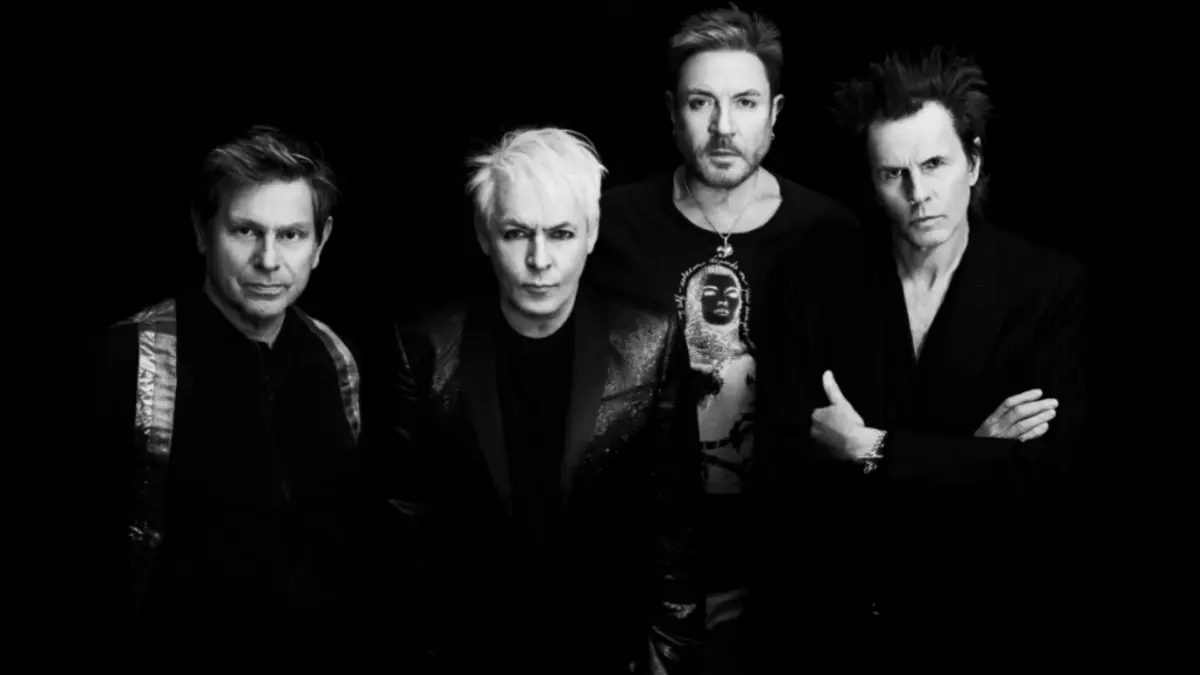
In the fast-paced, high-decibel world of stadium rock, few instruments exact as severe a physical toll as the drums. For more than four decades, Roger Taylor has provided the foundational pulse of Duran Duran—a band that helped define the New Romantic movement, conquered global charts, and soundtracked an entire generation. However, the physical reality of a lifetime spent behind the drum kit has finally caught up with him.
In a statement that has reverberated deeply across the global music community, Taylor announced his immediate departure from Duran Duran. The catalyst for this difficult decision is the rapid worsening of his recently diagnosed tinnitus—a debilitating auditory condition characterized by persistent ringing, buzzing, or hissing in the ears.
Taylor’s final performance with the legendary British band took place during a high-energy Halloween spectacular at The O2 in London, a fittingly theatrical finale for a group whose aesthetic has always merged sonic innovation with visual grandeur. For a drummer who was instrumental in shaping the crisp, infectious, dance-oriented rhythms of the 1980s, walking away from the stage was not a choice made lightly. Yet, confronted with the ultimatum of medical preservation over continued performance, Taylor chose his long-term health.
This departure closes a definitive chapter in the band’s storied history. Taylor’s tenure with Duran Duran spans two distinct eras: his initial run during the height of "Durandamania" from 1979 to 1985, and his triumphant return to the fold in 2001. As the band prepares to enter its next phase without one of its founding pillars, the music industry is left reflecting not only on Taylor’s immense contributions to popular music, but also on the hidden occupational hazards that countless legacy artists face as they navigate decades of live performance.
Detailed Chronology: The Rise, Retreat, and Return of a Rhythm Icon
To understand the magnitude of Roger Taylor’s departure, one must look back at the trajectory of a musician whose career is inextricably linked to the DNA of modern pop-rock.
1979–1985: The Genesis of a New Sound
Formed in Birmingham in 1978 by Nick Rhodes and John Taylor, Duran Duran found its definitive lineup when singer Simon Le Bon and drummer Roger Taylor joined in 1979. While other punk and post-punk bands of the era relied on abrasive, stripped-back drumming, Taylor brought a preternatural sense of groove, precision, and dance-floor sensibility. His beats on early masterpieces like Planet Earth, Girls on Film, and Rio were foundational to the nascent New Romantic movement, seamlessly fusing traditional rock instrumentation with the emerging textures of synthesizer-driven pop.
During the peak years of 1981 to 1985, Taylor was at the epicenter of a global phenomenon. Dubbed "Durandamania," the band’s cinematic music videos, shot in exotic locations on 35mm film, made them global superstars. Yet, the relentless cycle of touring, recording, and intense public scrutiny took an early psychological and physical toll. By 1985, following the monumental success of the James Bond theme A View to a Kill and the exhausting Live Aid performance, Taylor—alongside guitarist Andy Taylor—withdrew from the band, seeking refuge in a quiet, rural life away from the relentless spotlight.
2001–2026: The Glorious Reunion and Final Acts
For over a decade, Taylor remained largely out of the public eye, enjoying a well-deserved retirement from the commercial music machine. However, the pull of brotherhood and musical chemistry proved too strong to resist. In 2001, the classic five-piece lineup of Duran Duran reunited, sparking immense excitement among fans who thought they would never see the original members share a stage again.
Taylor’s return marked a mature, enduring second act. Far from being a nostalgia act, the reunited Duran Duran continued to push creative boundaries, releasing critically acclaimed albums such as Astronaut (2004) and Future Past (2021), while maintaining a rigorous global touring schedule.
The final chapters of Taylor’s active career were marked by some of the highest accolades the band has ever received. In recent years, Duran Duran secured a triumphant second headline show at London’s prestigious BST Hyde Park, completed a massively successful UK and European tour, and enjoyed the ultimate validation of their cultural impact with their long-overdue induction into the Rock & Roll Hall of Fame in 2022. Furthermore, Taylor’s final creative pursuits included returning to the recording studio alongside legendary producer Nile Rodgers—a full-circle moment that underscored the timelessness of the band’s groove-laden artistry.
The crescendo of this era arrived on Halloween night at The O2 in London. Delivering a powerhouse performance that masked the physical pain he was enduring, Taylor anchored the band through a set of timeless hits. It was, by all accounts, a masterclass in musicianship, serving as the unwitting swan song for one of rock’s most steady and tasteful timekeepers.
Supporting Context & Metrics: The Hidden Toll of Loud Music
Roger Taylor’s retirement due to tinnitus brings a critical, often-overlooked occupational hazard into the spotlight: noise-induced hearing loss and chronic auditory conditions among professional musicians.
Understanding Tinnitus
Tinnitus is not a disease in itself, but rather a symptom of an underlying issue, commonly damage to the microscopic endings of the hearing nerve in the inner ear. For musicians, decades of exposure to high sound pressure levels (SPLs)—often exceeding 100 to 110 decibels on stage, roughly equivalent to the sound of a chainsaw or a low-flying aircraft—create a hostile environment for the auditory system.
Drummers face a unique and particularly severe risk profile. Seated directly in front of cymbals and often surrounded by acoustic monitors and wedge speakers, drummers absorb direct, high-frequency concussive blasts with every strike. Over years and decades, the delicate hair cells in the cochlea become permanently damaged or destroyed. When these cells are injured, they can "leak" electrical impulses to the brain, manifesting as the phantom ringing, buzzing, or hissing characteristic of tinnitus.
The Broader Industry Crisis
Taylor is far from alone in his battle. The list of legendary musicians who have suffered from severe hearing damage, tinnitus, or hearing loss reads like a veritable "Who’s Who" of rock history:
- Pete Townshend (The Who): Widely considered one of the pioneers of high-volume rock guitar, Townshend suffers from severe hearing loss and tinnitus caused by decades of explosive stage volumes and an infamous 1967 television appearance where an amplified drum kit explosion damaged his ears.
- Phil Collins (Genesis): Forced into retirement from drumming due to nerve damage in his vertebrae and chronic hearing issues.
- Eric Clapton: Has openly discussed his struggles with tinnitus and hearing loss, urging younger musicians to protect their ears.
- Chris Martin (Coldplay): Diagnosed with tinnitus early in his career, prompting him to wear custom-molded musician’s earplugs at every performance.
While modern touring acts increasingly utilize in-ear monitors (IEMs) designed to protect hearing while delivering a pristine mix, legacy acts who came of age in the 1970s and 1980s routinely played in environments devoid of modern auditory safety protocols. For Taylor, the cumulative exposure of a 45-year career finally reached an irreversible tipping point, proving that even the most resilient bodies have finite limits.

Official Statements: Grace, Gratitude, and Brotherly Love
The transition of power and the departure of a founding member are frequently fraught with public friction in the rock world. However, the parting of ways between Roger Taylor and Duran Duran has been characterized by an overwhelming sense of mutual respect, emotional maturity, and deep-seated affection.
Roger Taylor’s Farewell Address
In an emotional public statement released to fans and media, Taylor articulated the profound gravity of his choice:
"This is one of the hardest decisions I’ve ever had to make. Playing drums in this band has been the joy of my life, and I’ll never be able to properly thank the fans for the love they’ve shown us over the years.
But the truth is that my tinnitus has been getting steadily worse, and I’ve reached the point where I must now listen to my body and my doctors.
Admitting his decision to step back has not been easy, but I’m going out on a real high. We’ve just returned from a hugely successful UK and European tour, which followed our second headline show at BST Hyde Park, our induction into the Rock & Roll Hall of Fame, and a return to the studio with Nile Rodgers.
I couldn’t have asked for a better final chapter, with so many special moments that I’ll treasure forever. I move on with enormous pride, and with nothing but love for Simon, Nick and John."
The Band’s Unified Response
Remaining members Simon Le Bon, Nick Rhodes, and John Taylor issued a joint statement that reinforced the unbreakable bond shared by the quartet, emphasizing that Taylor’s legacy within the organization is permanent:
"Roger is our brother. His drumming helped define the sound of Duran Duran from the very beginning, and having him back with us since 2001 has been incredibly important to us all.
We completely support his decision and wish him health and happiness. He will always be part of this family, while we continue exploring new and exciting projects with the band."
The tone of these statements reflects a brotherhood forged in the crucible of international stardom. Rather than ending in bitterness, Taylor’s chapter closes with grace, leaving behind a blueprint for how legacy bands can navigate health crises with dignity and mutual support.
Future Outlook: Duran Duran Without the Heartbeat
As the dust settles on Roger Taylor’s retirement announcement, the immediate and long-term future of Duran Duran enters a period of transition.
The Touring Horizon
For fans, the primary question centers on who will step behind the kit for upcoming live commitments. Duran Duran has built a reputation as a formidable touring entity, frequently selling out arenas worldwide. Finding a replacement who can replicate Taylor’s unique blend of acoustic swing, electronic precision, and understated sophistication will be no small feat. Session drummers and touring professionals will undoubtedly audition for the role, but filling Taylor’s drum throne requires more than technical proficiency—it requires an intrinsic understanding of the "Duran groove."
Creative Continuity
Despite the loss of their foundational percussionist, Le Bon, Rhodes, and John Taylor have made it clear that the band’s creative journey is far from over. Their recent studio sessions with Nile Rodgers indicate a continued desire to innovate and collaborate with top-tier producers. Whether this next era yields a brand-new studio album or specialized residency performances, the core songwriting trio remains committed to exploring new musical frontiers.
Roger Taylor’s Legacy
For Roger Taylor, the future looks like a well-earned, albeit necessary, retreat into quietude. While the absence of live performance will undoubtedly leave a void for a musician who has spent his life communing with audiences through rhythm, his health must take precedence.
Taylor leaves behind an enviable legacy. From the sun-drenched beaches of the Rio video to the hallowed halls of the Rock & Roll Hall of Fame, his drumming provided the heartbeat for an era of pop hedonism and artistic sophistication. As he steps away to heal his ears, the steady, driving pulse he gifted to Duran Duran—and to millions of fans around the world—will continue to echo, timeless and undiminished.