Executive Overview
In the ever-expanding universe of electronic music hardware, boundary-pushing gear rarely arrives via a collision of avant-garde composition and uncompromising engineering. Enter the Haloplane—a revolutionary compact micro-loop sampler and wavetable synthesizer born from an inspired collaboration between innovative instrument manufacturer KOMA Elektronik and experimental sound outfit Passepartout Duo.
Channeling the cinematic energy of magnetic manipulation, the Haloplane redefines how musicians interact with sound in physical space. Powered by an invisible electromagnetic sound field, the device bridges the gap between tactile performance art and digital production. Users do not merely twist knobs or press pads; instead, they hover, glide, and rest physical electromagnetic pickups across a sleek frame, physically sculpting audio textures in real time.
Designed for both the stage and the studio, the Haloplane functions as a standalone performance instrument, an untethered portable sketchpad, and an expressive peripheral capable of feeding dynamic, spatialized sounds straight into a Digital Audio Workstation (DAW). With its independent Wi-Fi network, built-in speaker, onboard microphone, line-in capabilities, and deeply integrated companion app, this pocket-sized powerhouse invites producers, sound designers, and live performers to step into a new dimension of physical audio processing.
As pre-orders launch under a unique tiered pricing system ahead of its anticipated early 2027 shipping window, the electronic music community is taking sharp notice. The Haloplane is not just another novelty instrument; it is a profound reimagining of how electromagnetic fields can be harnessed to create living, breathing electronic music.
Detailed Chronology: The Genesis and Evolution of Electromagnetic Sound Design
The journey toward the Haloplane did not happen overnight. It represents the culmination of years of sonic exploration, hardware refinement, and cross-disciplinary artistry. To fully understand the significance of the Haloplane, one must trace the evolutionary path of electromagnetic sound exploration within the modern electronic music landscape.
The Experimental Roots
For decades, sound artists and experimental musicians have toyed with the hidden electromagnetic landscapes humming inside everyday environments. From the buzzing of fluorescent lights to the high-frequency pulses of consumer electronics, the unseen world of electromagnetic interference (EMI) has long offered a treasure trove of raw audio material. However, capturing and utilizing these fields reliably in a musical context historically required cumbersome, improvised setups—often involving repurposed guitar pickups, induction coils, and miles of tangled wiring.
The KOMA Elektronik and Passepartout Duo Synergy
KOMA Elektronik, renowned for their daring analog designs and unique interface philosophies, recognized the untapped potential of making electromagnetic audio manipulation accessible, musical, and compact. Partnering with Passepartout Duo—an adventurous multidisciplinary music collective known for building their own instruments and crafting immersive live audiovisual experiences—proved to be the catalyst needed to bring the concept to life.
Together, the creators sought to build an instrument that removed the barrier to entry for electromagnetic sound generation while retaining the organic, chaotic beauty of the medium. The result of this developmental phase is the Haloplane: a purpose-built hardware ecosystem engineered from the ground up to make magnetic fields performable, repeatable, and deeply expressive.
The Hardware Unveiling and Pre-Order Rollout
Following a series of closed-door demonstrations and tantalizing teases across creator networks, KOMA Elektronik and Passepartout Duo officially lifted the veil on the Haloplane, accompanied by in-depth demonstrations showcasing its fluid workflows.

To manage manufacturing demand for such a specialized piece of hardware, the developers implemented a tiered pre-order pricing structure designed to reward early adopters. This rollout strategy highlights the boutique nature of the manufacturing process, ensuring that each unit meets stringent quality control standards before finding its way into the hands of forward-thinking sound architects worldwide.
Supporting Context & Metrics: Under the Hood of the Haloplane
At first glance, the Haloplane’s minimalist aesthetic belies a deeply sophisticated internal architecture. It is an instrument designed to challenge traditional paradigms of music-making, replacing static controls with spatial, kinetic interaction.
The Electromagnetic Engine and User Interface
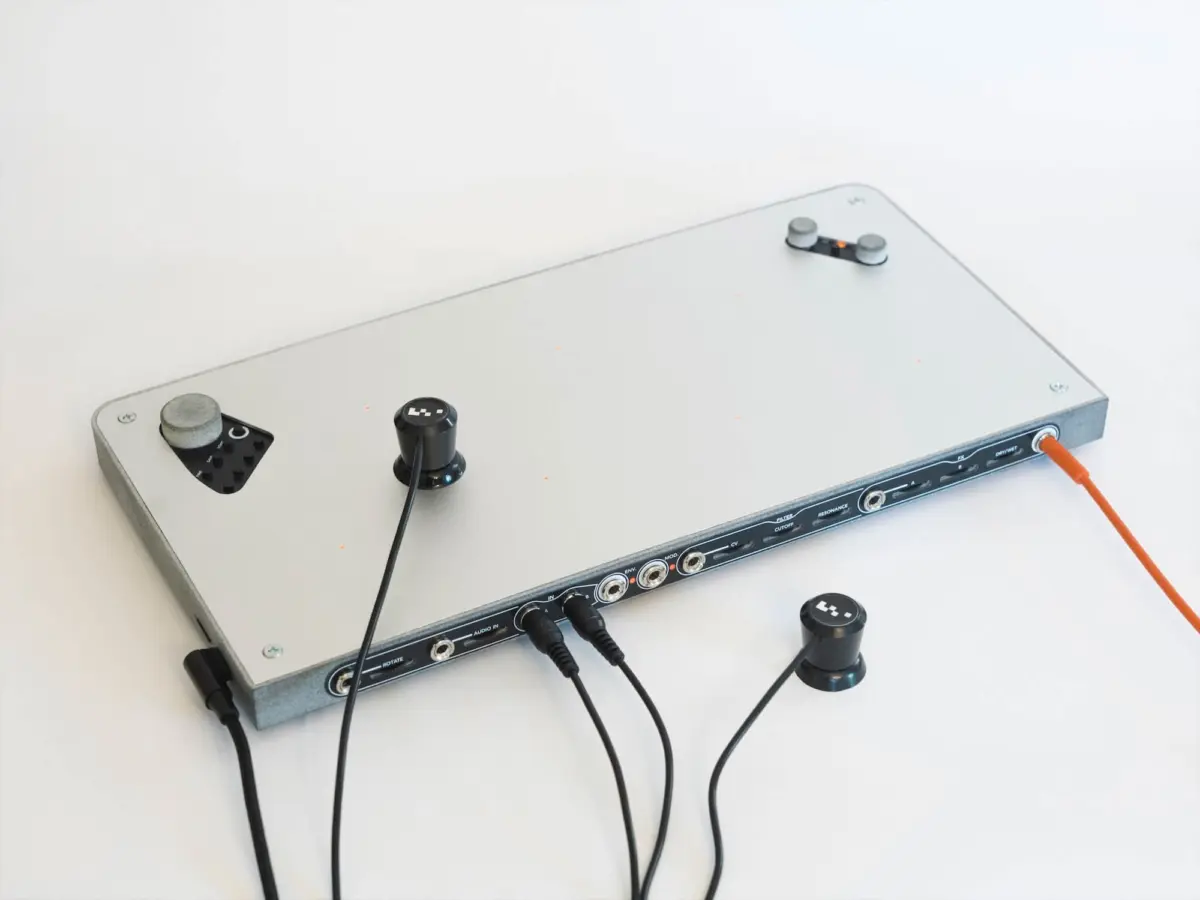
At the core of the Haloplane is a micro-loop sampler and wavetable synthesizer driven entirely by an active electromagnetic sound field. The user interface features seven distinct options for magnetic fields, which users can instantly access and manipulate using specialized electromagnetic pickups.
The physical workflow is elegantly intuitive:
- Capture: Ingest sound via the built-in microphone or the dedicated line-in port.
- Playback: Hear the audio instantly through the device’s integrated loudspeaker or route it externally.
- Manipulation: Move the two physical pickups around the frame of the device. Every subtle shift in position, angle, and distance alters the audio output in real time.
- Sequencing & Stability: Rest the pickups directly on the device’s surface to maintain a static, unchanging drone, or choreograph complex motion patterns to generate evolving, rhythmic sequences.
Connectivity and Software Integration
While the Haloplane thrives on tactile, hands-on performance, it is built to integrate seamlessly into modern production workflows:
- DAW Integration: Easily send processed electromagnetic sounds and manipulated samples directly into a Digital Audio Workstation for tracking and mixing.
- Companion App: For precision work, a dedicated companion app provides granular specifications, parameter visibility, and deep-dive controls over the sound engines.
- Standalone Capabilities: Equipped with its own local Wi-Fi network, the Haloplane allows users to configure, update, and interact with the device anywhere in the world without relying on external routers or internet connections.
The Doppeldisk Pickup Ecosystem
Expanding the sonic horizon of the base unit, the release of the Haloplane coincides with the introduction of the Doppeldisk pickup. This larger, specialized pickup is engineered to unlock fatter, richer sonic possibilities. Beyond its primary role with the Haloplane, the Doppeldisk doubles as a standalone electromagnetic sound source when hooked up to the audio outputs of various electronic devices, offering an extra layer of creative versatility for adventurous sound designers.
Pricing Structure and Availability Metrics
The Haloplane is currently available through an exclusive, tiered pre-order model designed to accommodate early supporters. The allocation metrics and pricing tiers are structured as follows:
- Tier 1: First 30 units available at €486
- Tier 2: Next 50 units available at €505
- Tier 3: Next 100 units available at €532
- Tier 4: Next 200 units available at €550
- The Doppeldisk Pickup: Available separately as a flat add-on for €65
Production units are currently slated to begin shipping in early 2027, establishing the Haloplane as one of the most anticipated boutique hardware releases on the horizon.
Official Statements and Industry Perspective
While manufacturers often rely on hyperbolic marketing jargon, the philosophy behind the Haloplane is rooted in genuine artistic exploration. Representatives from both KOMA Elektronik and Passepartout Duo have emphasized that the instrument was born out of a shared desire to make the invisible visible—or rather, to make the inaudible physically palpable.

"We wanted to build an instrument that forces the musician out of the static grid and back into physical space," noted a lead developer during the initial product unveiling. "When you are moving pickups through a magnetic field, your hands become the LFOs, the envelopes, and the filters. Every microscopic gesture matters."
Members of Passepartout Duo echoed this sentiment, highlighting how the Haloplane translates their multidisciplinary live performance ethos into a format that any electronic musician can adopt. By removing the boundary between controller and sound source, the instrument encourages a meditative, highly responsive relationship between artist and machine.
Industry analysts and early beta testers have drawn favorable comparisons to other tactile, circuit-bending instruments, yet consensus points out that the Haloplane occupies a class entirely of its own. By combining structured wavetable synthesis with chaotic, organic electromagnetic fields, it offers a hybrid workflow that appeals equally to ambient soundscapers, modular synthesizer enthusiasts, and avant-garde beatmakers.
Future Outlook: Where Electromagnetic Instruments Are Heading
The debut of the Haloplane marks a significant milestone in the evolution of electronic musical instruments. For decades, the industry has chased greater precision, cleaner digital audio, and increasingly complex menu-diving software interfaces. While those advancements have their place, instruments like the Haloplane signal a counter-movement: a resurgence in tactile, unpredictable, and deeply physical performance tools.
Redefining Live Performance
As electronic music performance continues to grapple with the stigma of "laptop DJing"—where visual engagement can sometimes stagnate behind a screen—hardware that requires dynamic physical choreography offers a compelling solution. Watching a performer manipulate the Haloplane’s magnetic field in real time transforms the act of sound design into a visible, mesmerizing spectacle. Audiences do not just hear the evolution of a wavetable sweep; they see the physical catalyst driving the change.
The Road to Early 2027 and Beyond
With pre-orders currently open via the official KOMA Elektronik & Passepartout Duo portal, the coming months will undoubtedly see early adopters pushing the Haloplane into uncharted territory. As community-driven patches, custom companion app workflows, and creative performance techniques emerge, the ecosystem surrounding the device is poised to expand rapidly.
Whether the Haloplane becomes a secret weapon in elite Hollywood scoring studios, a staple of underground ambient live sets, or an inspirational sketchbook for bedroom producers, one thing is certain: the boundary between the physical world and electronic sound has never felt more permeable. KOMA Elektronik and Passepartout Duo have not merely built a new synthesizer; they have handed artists the keys to an invisible kingdom of magnetic resonance.