Executive Overview
This autumn, the cultural landscape of the United Kingdom will turn its gaze toward five decades of dissent, grassroots activism, and subcultural liberation. From September 25 to December 12, Nottingham’s prestigious Bonnington Gallery will host Common Grounds – Counterculture & Confrontation Since 1976, the first major institutional retrospective dedicated to the extraordinary photographic archive of Alan Lodge, widely known by his moniker Tash.
Spanning an impressive fifty years of visual history, the exhibition captures the raw, unfiltered evolution of British counterculture. It charts a direct course from the early days of anti-fascist mobilization and the birth of the free festival movement in the late 1970s, through the violent crucible of the Thatcher era, all the way to the explosive, anti-establishment zenith of the 1990s free party and warehouse rave scene.
Far more than a simple collection of nostalgic vintage prints, Common Grounds offers an authoritative, immersive examination of civil liberties, public space, environmental consciousness, and the enduring friction between state authority and collective identity. Featuring over 100 striking photographs, moving image installations, personal archival ephemera, and never-before-seen correspondence between Lodge, law enforcement, and municipal officials, the exhibition promises to be one of the most culturally significant artistic events of the UK autumn calendar.
For decades, Lodge has functioned as both an insider and an archivist of Britain’s most fiercely guarded underground communities. By embedding himself within protest camps, travellers’ convoys, and illegal soundsystem gatherings, he captured history from the front lines. As contemporary debates surrounding the right to protest, public assembly, and the policing of cultural spaces grow increasingly urgent in the UK, Common Grounds arrives not merely as a retrospective of past rebellions, but as a vital mirror for the present.
Detailed Chronology: Fifty Years of Defiance
To fully grasp the magnitude of Alan Lodge’s archive is to trace the chronological fracture lines of modern British social history. The exhibition is structured to lead visitors through distinct eras of political and cultural confrontation, each defined by its own unique sonic and ideological landscapes.
1. The Genesis of Resistance (1976–1980s)
Lodge’s photographic journey began in the mid-1970s against a backdrop of economic turmoil, rising racial tensions, and the birth of punk rock. Armed with his camera, he turned his lens toward the emergent anti-fascist movements, notably documenting the confrontations led by the Anti-Nazi League (ANL) and Rock Against Racism (RAR). These early images established Lodge’s signature documentary style: intimate, uncompromising, and positioned squarely within the surging crowd rather than behind a press barrier.
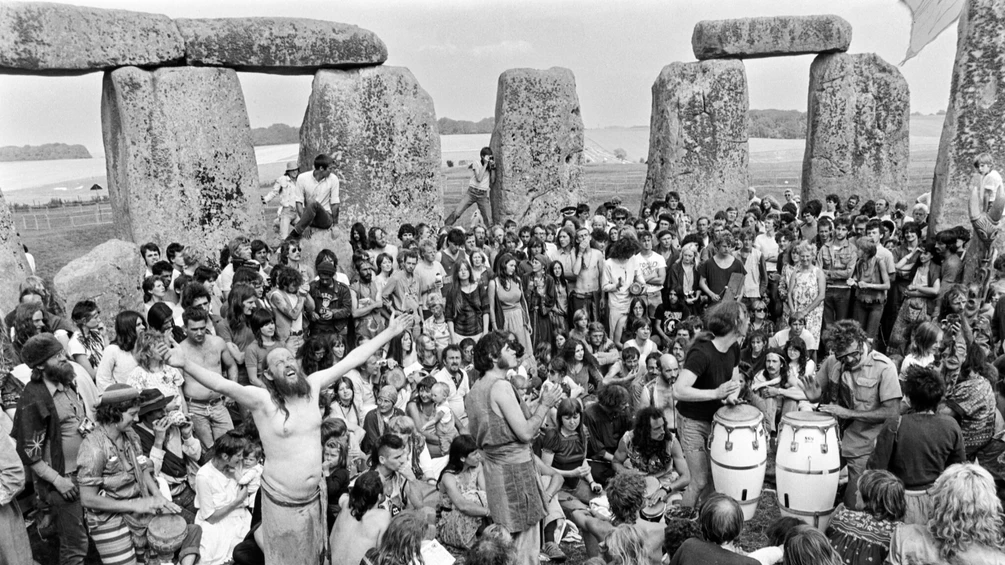
During this period, Lodge also began documenting the burgeoning free festival movement. Events such as the early iterations of the Stonehenge Free Festival captured a generation rejecting suburban consumerism in favor of alternative, communal ways of living. These gatherings served as the ideological petri dish for what would later become the UK’s travelling convoy and free party network.
2. The Crucible of Thatcherism and Direct Action (1980s–1990)
The 1toISOString80s under Prime Minister Margaret Thatcher represented an era of intense ideological polarization, industrial decline, and aggressive state intervention against traditional working-class power bases. Lodge was there to document the seismic shocks of the decade.
Among the defining events captured in the archive is the infamous Battle of the Beanfield on June 1, 1985. Lodge witnessed firsthand the brutal police operation that dismantled the Peace Convoy as they attempted to reach Stonehenge. His photographs from that day serve as a harrowing historical record of state-sanctioned violence against civilians, capturing shattered camper vans, bruised bodies, and the visceral shock of a counterculture violently suppressed.
Simultaneously, Lodge documented the burgeoning environmental and anti-road protests of the late 1980s and early 1990s. Long before eco-activism dominated nightly news bulletins, Lodge was knee-deep in the mud of tree-felling disputes and motorway resistance campaigns, documenting communities putting their bodies on the line to halt ecological destruction.
3. The Rave Evolution and the DiY Era (1990–Present)
In 1990, Lodge relocated to Nottingham, a move that would fundamentally alter the trajectory of his work and cement his legacy within electronic music history. It was in the East Midlands that Lodge fell into the orbit of the legendary DiY Sound System, one of the UK’s pioneering free party collectives. Blending the psychedelic ethos of the hippy convoy with the hypnotic, four-on-the-floor momentum of American house and techno, DiY revolutionized underground nightlife.
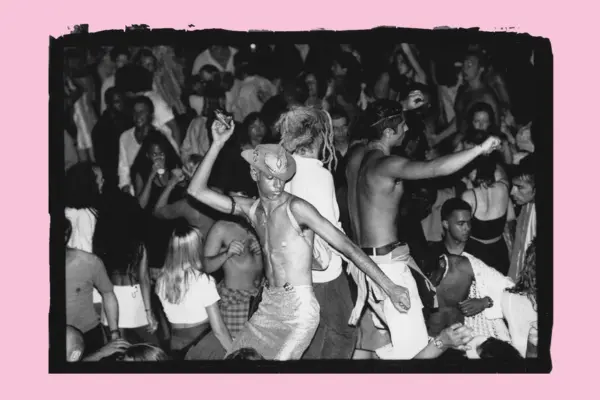
Lodge embedded himself within the DiY community, documenting legendary illegal parties across remote quarries, rural fields, and abandoned industrial sites. His camera captured the utopian ecstasy, DIY ingenuity, and sensory overload of a generation experiencing true liberation through dance music.
The apex of this movement—and arguably the most famous chapter of Lodge’s career—occurred over the May Bank Holiday weekend in 1992 at Castlemorton Common in Worcestershire. For nearly a week, an estimated 40,000 to 50,000 revellers converged on the Malvern Hills for an unlicenced festival organized by a coalition of sound systems, including DiY, Exodus, and Spiral Tribe. Lodge was on the ground, capturing the chaotic, joyful, and historic scale of an event that paralyzed the British establishment and triggered panic in Whitehall.
Supporting Context & Metrics: The Cultural and Political Impact of Common Grounds
The Castlemorton Watershed
To understand the cultural gravity of Common Grounds, one must understand the shockwaves generated by Castlemorton in 1992. The event was not merely a massive rave; it was a socio-political earthquake. For the British government and mainstream media, the sheer scale of the gathering—and the apparent inability of the police to shut it down swiftly—highlighted a terrifying regulatory vacuum.
The direct legislative consequence of Castlemorton was the introduction of the Criminal Justice and Public Order Act 1994. Section 63 of the Act specifically targeted "raves," granting police sweeping powers to stop gatherings defined by music "characterized by the emission of a succession of repetitive beats." Overnight, the state criminalized a youth movement, inadvertently accelerating the politicization of electronic music culture.
Lodge’s photographs from Castlemorton are not just documents of a party; they are visual evidence of a lifestyle pushed to the margins by legislative overreach. In a 2022 retrospective interview with DJMags, reflecting on the 30th anniversary of the event, Lodge noted how the festival brought together disparate strands of British counterculture—travellers, ravers, punks, and environmentalists—into a unified front against authoritarian control.
Archival Depth and Unseen Materials
Common Grounds – Counterculture & Confrontation Since 1976 moves beyond conventional photographic exhibitions by incorporating a multi-layered archival approach. Curators at Bonnington Gallery have worked closely with Lodge to comb through his personal storage, unearthing:
- Surveillance and Correspondence Files: Letters, legal notices, and internal memos exchanged between Lodge, local councils, and police forces, illustrating the low-level administrative warfare waged against countercultural chroniclers.
- Projections and Moving Images: Rare Super 8 and early digital video footage capturing the kinetic energy of sound systems rumbling through the night.
- Ephemera: Hand-drawn flyers, pirate radio schedules, and activist zines that provide the tactile context of a pre-internet underground.
This holistic presentation elevates the exhibition from a purely aesthetic showcase to an invaluable social history repository.
Official Statements and Curatorial Vision
The Bonnington Gallery has framed Common Grounds as an essential exploration of the tensions that define modern British society. In curatorial statements released ahead of the autumn opening, gallery representatives emphasized the enduring relevance of Lodge’s archive.
"Alan Lodge has spent half a century standing shoulder-to-shoulder with those who question authority, demand environmental justice, and fight for the right to assemble," notes the gallery’s exhibition brief. "At a time when the boundaries of civil liberty and public protest are being continually renegotiated in Parliament and on the streets, Lodge’s work serves as both a testament to our recent history and a call to examine how we navigate public space today."
Lodge himself, reflecting on the fifty-year span of his archive, has often spoken about photography not as a detached artistic pursuit, but as an act of solidarity. By refusing to work as an embedded press photographer chasing sensationalist headlines, Lodge earned the trust of communities that viewed mainstream media with deep suspicion. His lens portrays subjects not as spectacles or statistics, but as human beings engaged in the radical act of world-building.
Furthermore, Lodge’s recent contributions to modern documentary filmmaking—including his prominent feature in Aaron Trinder’s acclaimed 2025 documentary Free Party: A Folk History—have introduced his visual legacy to an entirely new generation of ravers, activists, and historians. Trinder’s film relied heavily on Lodge’s intimate visual diary to recreate the sensory and emotional reality of 1990s underground culture, further cementing Lodge’s status as the definitive historian of the movement.
Future Outlook: Legacy, Preservation, and Relevance
As Common Grounds – Counterculture & Confrontation Since 1976 prepares to open its doors at Bonnington Gallery on September 25, running through December 12, its implications extend far beyond the autumn exhibition season.
First and foremost, the exhibition marks a crucial milestone in the institutional recognition of countercultural history. For decades, the ephemera of rave culture, protest camps, and traveller sites were vulnerable to loss, police seizure, or physical degradation. By bringing Lodge’s massive archive into a formal gallery setting, institutions are finally validating the cultural weight of Britain’s post-war underground movements.
Secondly, the exhibition arrives at a critical juncture in British legislative history. With the ongoing tightening of restrictions on peaceful protest and public assembly in the UK, the themes explored in Common Grounds—dissent, civil liberty, and the right to congregate—are more fiercely contested today than at any point since the 1990s. Visitors walking through the gallery will find unsettling echoes of their own political climate in Lodge’s black-and-white prints of 1980s police lines and colour-saturated photographs of 1990s sound systems surrounded by riot shields.
For those eager to experience the exhibition, further details, opening times, and associated public programming can be found directly on the Bonington Gallery website.
Whether one is a veteran of the 1992 Castlemorton fields, a contemporary activist navigating modern protest laws, or a younger generation discovering the roots of modern electronic music culture, Common Grounds promises an unforgettable encounter with the unyielding spirit of British resistance. Alan Lodge’s camera has preserved the ghost of a wilder, more defiant Britain—one that continues to challenge, inspire, and remind us of the transformative power of collective joy and righteous defiance.