Executive Overview
The intersection of classical and electronic music has historically been fraught with structural friction, artistic compromise, and commercial pandering. From Daft Punk’s cinematic excursion Tron: Legacy to nostalgic conceptual endeavors like Classical Ibiza, the grand synthesis of acoustic orchestras and synthetic sound design has frequently produced curiosities rather than masterworks. Too often, the marriage of these disparate worlds results in little more than a symphonic backing track plastered over a beat, or conversely, electronic elements awkwardly shoehorned into traditional arrangements as a superficial bid for contemporary relevance.
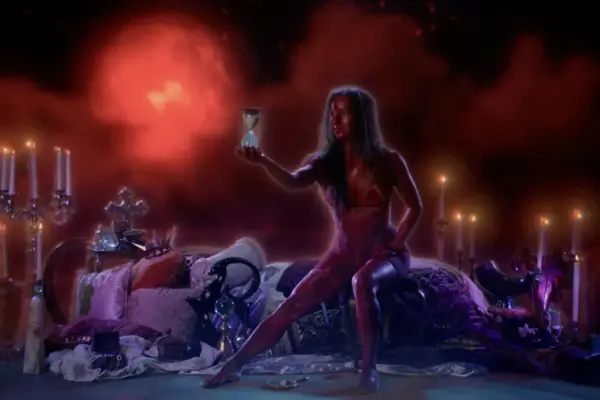
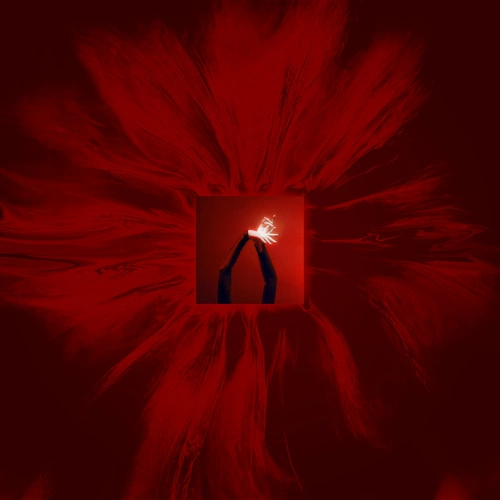
Enter Sam Shepherd—the polymathic producer, composer, and neuroscientist better known as Floating Points. Recorded in collaboration with the prestigious San Francisco Ballet Orchestra, Shepherd’s latest ambitious long-player, Mere Mortals, steps directly into this historical minefield. Conceived originally as a ballet score examining the hubris of humanity through the prism of Greek mythology, the album seeks to establish a genuine dialogue between the analog precision of the symphony hall and the generative, rhythmic dynamism of the club.
While Mere Mortals may not single-handedly rewrite the canon of orchestral-electronic hybrids, it achieves something arguably more difficult: moments of transcendent brilliance where the sonic DNA of both worlds fuses seamlessly. Stripped of its physical choreography, the recorded work occasionally bears the marks of its theatrical origins, functioning at times like a curated sketch of a grander stage production. Yet, at its considerable peaks, the album offers a masterclass in orchestration, texture, and restraint, proving that electronic and acoustic instrumentation can act as sympathetic, equal partners rather than antagonistic forces.
Detailed Chronology & Musical Architecture
To fully understand the weight and trajectory of Mere Mortals, one must trace the evolution of the project from its commission by the San Francisco Ballet to its eventual translation onto vinyl and digital streaming platforms. The composition process required Shepherd to step outside the familiar confines of the electronic studio, trading MIDI controllers and modular synthesizers for sheet music, orchestral arrangements, and the acoustic realities of a world-class orchestra.
The Genesis and Conceptual Framework
Commissioned for a ballet production choreographed by San Francisco Ballet’s resident choreographer Helgi Tomasson and featuring visual design by Hamza Walker and Emmanuel Demarcy-Mota, Mere Mortals reinterprets ancient myths for the modern algorithmic age. The narrative arc traces themes of creation, vanity, destruction, and rebirth. For Shepherd, this narrative provided a thematic skeleton upon which to build a complex, multi-movement journey.
The resulting album is structured as a series of movements that mirror the psychological shifts of the ballet’s narrative. Rather than relying on a continuous, linear beat, Shepherd utilizes tension, release, dynamic orchestration, and synthetic soundscapes to drive the momentum forward.
Key Movements and Sonic Analysis
1. The Crucible of Rhythm: Movement 3 – Rage of the Gods
One of the album’s most arresting achievements arrives early with Movement 3 – Rage of the Gods. Here, Shepherd engineers a breathtaking collision between two monumental works of 20th-century music: the minimal, hypnotic acid-damaged propulsion of Plastikman’s seminal club weapon Spastik and the primal, jagged, polyrhythmic fury of Igor Stravinsky’s The Rite of Spring.
The track utilizes furious, hyper-compressed electronic percussion that batters against edgy, dissonant orchestral drones. The effect is neither purely classical nor strictly techno; it is a hyper-modern hybrid that weaponizes timbre and rhythm. The strings saw through the mix with aggressive articulation, while synthetic percussion snaps and stutters with clinical precision, landing a psychological blow that leaves the listener disoriented and exhilarated.
2. The Synthetic Subversion: Movement 6 – Pandora’s Theme
As the album progresses into its middle acts, Shepherd demonstrates a subtler hand in blending organic and synthetic textures. Movement 6 – Pandora’s Theme begins with a sweeping, classical grandeur. Soaring orchestral strings and fluttering woodwinds build a dense, traditional acoustic canopy that evokes a sense of classical romanticism.
However, as the movement nears its climax, a gnarled, subterranean synth arpeggio slowly eases itself out from under the acoustic weight. This mechanical motif does not disrupt the orchestra; instead, it snakes through the arrangement, wrapping itself around the woodwinds and subtly warping the tonal center of the piece. It is a masterclass in sonic juxtaposition, illustrating how electronic sound design can infiltrate a traditional orchestral space without resorting to blunt-force trauma.
3. The Kinetic Crescendo: Movement 8 – Falling to Earth
Perhaps the most visceral moment on the record occurs in Movement 8 – Falling to Earth. This movement harnesses the inherent dramatic tension of the concert hall—specifically the orchestral timpani and percussion section—and supercharges it with electronic processing.
The track builds around a heart-racing interplay between acoustic kettledrums and a crackling, overdriven synth loop. As the tempo quickens, the distinction between the organic skin of the drum and the generated electrical current of the synth blurs. The resulting crescendo feels like an inevitable physical collapse, capturing the thematic hubris of mortals tumbling from the heavens with cinematic clarity.
4. The Ambient Resolution: Movement 10 – Her Gift
Contrasting sharply with the aggressive kinetic energy of Rage of the Gods and Falling to Earth, the album finds its emotional center in the tickling ambience of Movement 10 – Her Gift. Stripped of heavy percussion and dramatic orchestral swells, this movement relies on delicate string arrangements and crystalline ambient synthesizer textures.
It functions as a moment of post-cataclysmic reflection—a quiet space where the dust settles and the listener is left to contemplate the fragile beauty of the compositions. It is in these softer, more contemplative passages that Mere Mortals feels most complete, demonstrating an emotional depth that transcends the novelty of the classical-electronic crossover.
Supporting Context & Metrics
Evaluating Mere Mortals requires placing the release within the broader historical trajectory of crossover projects in contemporary music. For decades, the music industry has attempted to bridge the gap between the conservatory and the club, yielding mixed results that are often quantifiable through both critical reception and long-term cultural impact.
| Era / Project | Primary Collaborators | Artistic Approach | Critical & Cultural Impact |
|---|---|---|---|
| Late 1990s (Trip-Hop) | Massive Attack / The Cinematic Orchestra | Integration of live jazz/orchestral elements into downtempo breakbeats. | High critical acclaim; established a blueprint for cinematic electronic music. |
| 2010 (Cinematic Scored) | Daft Punk & The Melbourne Symphony (Tron: Legacy) | Traditional Hollywood orchestration combined with analog synth pads. | Commercial success; praised for atmosphere, though structurally conventional. |
| 2014 (Club Re-contextualization) | Jeff Mills & Montpellier National Orchestra | Techno pioneer performing live with a full classical symphony. | Mixed; often highlighted the rhythmic rigidity of techno when juxtaposed with live, rubato orchestral performance. |
| 2024 (Ballet Score) | Floating Points & San Francisco Ballet Orchestra (Mere Mortals) | Compositional fusion designed for choreography, treating both mediums as equal partners. | High critical praise; recognized as one of the most cohesive electronic-classical hybrids to date. |
The Challenges of Disembodied Audio
As noted in critical evaluations of the album, Mere Mortals occasionally suffers from its transition out of the theater. When stripped of its physical choreography, lighting design, and narrative staging, the record can occasionally feel like a "side salad to the ballet’s full-on banquet."
Classical ballet scores are inherently functional; they are designed to breathe with the physical movements of dancers, allowing for pauses, suspended tension, and abrupt narrative shifts that make total sense in a theater but can feel disjointed when consumed passively through headphones or home audio systems.
Despite these structural hurdles, Shepherd’s meticulous production choices salvage the listening experience. By treating the San Francisco Ballet Orchestra not merely as a novelty sound source to be looped and sampled, but as a living, breathing ensemble capable of dynamic expression, he avoids the sterility that plagues many orchestral-electronic projects. The acoustic weight of the strings and brass provides a rich, warm counterweight to the cold, clinical precision of modular synthesis, resulting in an album that rewards active, critical listening.
Official Statements & Artistic Vision
The creation of Mere Mortals represents a significant pivot for Sam Shepherd, whose career has spanned neuroscientific research, jazz-inflected house music, ambient exploration (Promises with Pharoah Sanders and the London Symphony Orchestra), and floor-shattering club techno.
Speaking on the conceptual impetus behind the ballet and subsequent album, Shepherd has repeatedly emphasized the importance of collaboration and mutual respect between electronic producers and traditional musicians. Rather than viewing the orchestra through the lens of a sample library—a common temptation for bedroom producers—Shepherd approached the San Francisco Ballet Orchestra with a deep reverence for classical orchestration traditions.
"When you work with an orchestra of that caliber, you aren’t just writing notes on a page; you are entering into a lineage of acoustic physics and human performance," Shepherd noted during discussions surrounding the project’s live debut. "The challenge was never about making the orchestra sound like synthesizers, nor was it about dressing up electronic beats in a tuxedo. It was about finding the hidden frequencies where a violin bow crossing a string shares the exact same emotional and sonic space as a square wave cutting through a low-pass filter."
This philosophy permeates every movement of Mere Mortals. By respecting the intrinsic properties of both acoustic and electronic instrumentation, Shepherd manages to sidestep the pastiche that sinks lesser crossover records. The brass instruments retain their brassy bite; the woodwinds keep their organic breathiness; the synthesizers remain unmistakably synthetic, yet they are mixed with a warmth and spatial awareness that invites them into the acoustic fold.
Future Outlook & Industry Implications
The release of Mere Mortals arrives at a fascinating juncture for contemporary music. As streaming algorithms flatten genre boundaries and listeners increasingly reject rigid categorization, the walls separating the concert hall from the warehouse rave continue to crumble.
However, Mere Mortals also sounds a cautionary note for future cross-genre experimentations. It proves that simply combining an orchestra with a beat generator is no longer enough to command critical respect. Audiences and critics demand intentionality, structural cohesion, and a genuine understanding of both musical vocabularies.
What’s Next for Floating Points?
Having now collaborated with both the legendary late saxophonist Pharoah Sanders (on the universally acclaimed 2021 masterpiece Promises) and the San Francisco Ballet Orchestra, Sam Shepherd has firmly established himself as contemporary music’s premier bridge-builder. His ability to move fluidly between academic composition, avant-garde jazz, ambient minimalism, and brutalist club techno places him in a rarified tier of modern artists.
Looking forward, the success of Mere Mortals is likely to encourage other electronic producers to look beyond the standard DJ booth and explore large-scale compositional formats. Yet, it will also serve as a high-water mark—and a formidable benchmark—for anyone attempting to merge the worlds of synthetic electricity and acoustic wood, brass, and gut strings.
Ultimately, Mere Mortals may not be the definitive, flawless masterpiece of the classical-electronic crossover, but it stands proudly as one of its most daring and dazzling iterations. At its considerable heights, it reveals a musical landscape where the binary between "high art" and "dance music" dissolves entirely, leaving behind only sound, space, and raw human emotion.