The global fashion and entertainment industries are mourning the loss of a titan who blurred the lines between haute couture and stage spectacle. Bob Mackie, celebrated globally as the "Rajah of Rhinestones" and the "Sultan of Sequins," passed away on Monday at the age of 87. A nine-time Emmy Award winner and three-time Academy Award nominee, Mackie spent over half a century defining visual pop culture, crafting the sartorial armor that transformed actors into icons and musicians into living works of art.
From his career-launching work on The Carol Burnett Show to legendary red-carpet appearances with Cher, and right up to contemporary tributes by modern pop royalty like Sabrina Carpenter, Mackie’s legacy is measured in meters of Swarovski crystals, pounds of hand-dyed feathers, and the fearless defiance of conventional style. His death marks the end of an era for maximalist design—a period when television, music, and fashion intersected through breathtaking, custom-built creations designed to captivate stadium crowds and television audiences alike.
Detailed Chronology: A Half-Century of Sparkle
Bob Mackie’s ascent to the pinnacle of design royalty was characterized by persistent craftsmanship, an unerring eye for theatricality, and a willingness to push censorship and taste boundaries on live television.

The Early Years and Breakout Success (1961–1970s)
Mackie’s professional journey began in earnest in 1961, navigating the rigorous behind-the-scenes world of Hollywood costume departments. However, his big break arrived when he stepped into the wardrobe room of The Carol Burnett Show. Working alongside Burnett, Mackie did not merely dress a comedian; he helped construct characters. His satirical, over-the-top, yet exquisitely tailored creations—most famously the "Went with the Wind!" curtain-rod dress parody of Gone with the Wind—cemented his reputation as a comedic and visual genius.
During this era, Mackie also began his historic partnership with Cher. Long before "naked dresses" became a red-carpet staple, Mackie was engineering them. His designs for Cher, both on The Sonny & Cher Comedy Hour and for high-profile public appearances, revolutionized how female pop stars presented themselves.
Defining Pop Culture Monuments (1970s–1990s)
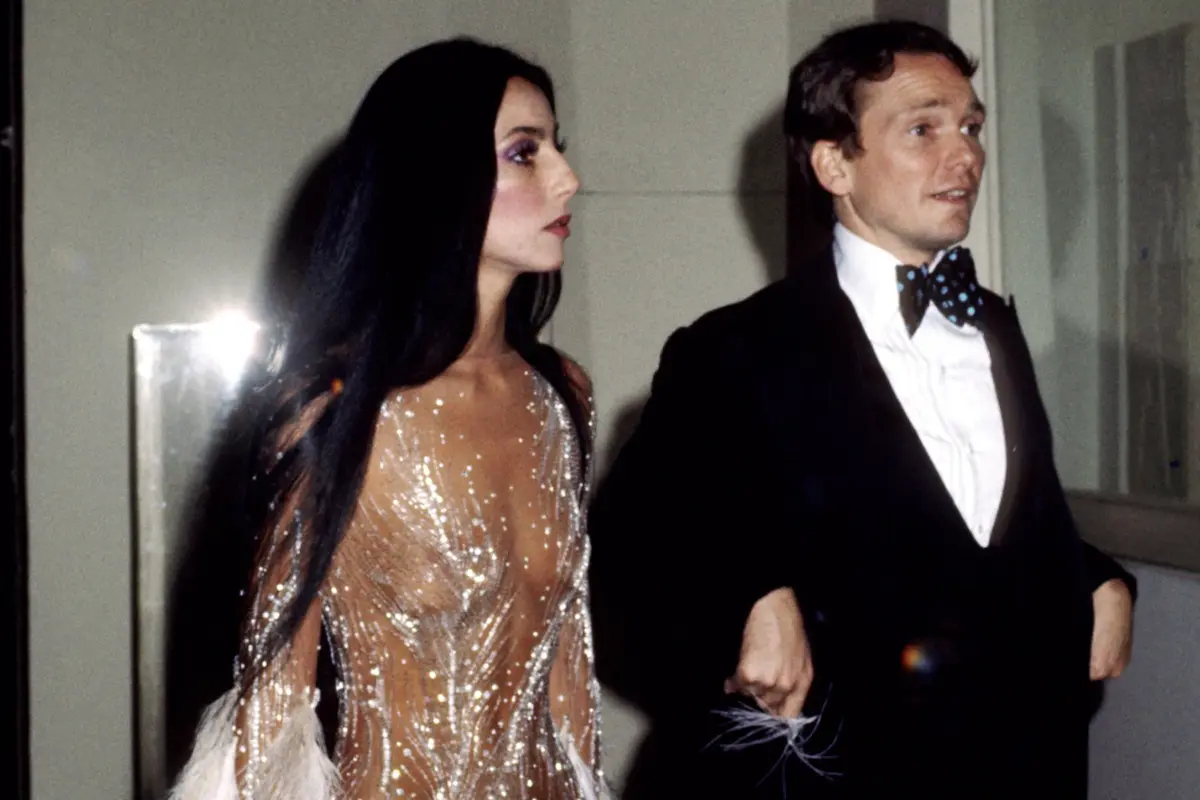
Mackie’s defining moment with Cher—and arguably in the history of modern pop fashion—occurred at the 1974 Met Gala. Donning a sheer, nude-illusion gown adorned with strategically placed rhinestones and capped with a dramatic, towering feathered headpiece, Cher and Mackie stunned the cultural establishment. The look was so ahead of its time that it birthed an entire modern vocabulary of red-carpet daring.

Throughout the decades that followed, Mackie’s atelier became the destination for the world’s biggest entertainers. He dressed Diana Ross, Tina Turner, Liza Minnelli, Bette Midler, and Madonna, tailoring every garment to survive the physical demands of high-energy stage performances while catching every beam of spotlight. His aesthetic championed the female form, embracing glitz, camp, and uncompromised glamour.
Modern Revival and Archival Reemergence (2020s)
Even as decades shifted toward minimalist streetwear and muted luxury, Mackie’s archival pieces remained coveted gold standards. The cultural resonance of his work came full circle at the 2025 MTV Video Music Awards, when pop star Sabrina Carpenter stepped onto the red carpet and subsequent afterparty wearing a meticulously preserved, three-set archival Mackie collection. The moment introduced Mackie’s singular mastery to a new generation of music fans, proving that true visionary design is timeless.
Supporting Context & Metrics: The Scale of Mackie’s Mastery
To understand Bob Mackie is to understand the mathematics of spectacle. His contributions to television, film, and live performance can be quantified through an extraordinary collection of accolades and sheer volume of output:

- Accolades: A rare nine-time Emmy Award winner, Mackie also earned three Academy Award nominations for Best Costume Design (Funny Lady, Pennies from Heaven, and Lady Sings the Blues).
- Longevity: A career spanning more than 60 active years in design, outlasting numerous micro-trends and fashion eras.
- Theatrical Volume: Across television variety shows, Broadway productions (such as The Act and Bring Back Birdie), and Las Vegas residencies (for performers like Cher and Diana Ross), Mackie designed tens of thousands of individual, often hand-stitched garments.
- The "Mackie Silhouette": Characterized by exposed midriffs, plunging necklines, heavy beadwork, floor-length capes, and structural headwear designed to elongate and dramatize the performer’s silhouette from the back row of a 20,000-seat arena.
Mackie’s influence extended beyond physical clothing; he legitimized costume design as an essential narrative tool in live musical performance. He understood that a pop star on stage is not just a singer, but a visual focal point for thousands of fans.
Official Statements and Industry Tributes
The global entertainment community responded to Mackie’s passing with an outpouring of grief, respect, and celebration of his vibrant life.
In a statement shared via Mackie’s official social media channels, his team and loved ones reflected on his lifelong passion:

"It is with a heavy heart that we share the news that Mr. Bob Mackie passed away today. He lived his 87 years to the fullest, fulfilling his dream of being a Fashion and Costume Designer, which is all he ever wanted to do. His genius and extraordinary designs will live on forever, continuing to bring beauty into this world."
Musicians, designers, and cultural figures took to platforms worldwide to express their devastation. Longtime collaborator and muse Cher, whose visual identity was largely co-authored by Mackie, led tributes honoring his friendship and creative fearlessness. Contemporary artists who have studied his archives—from pop icons to high-fashion designers—noted that modern red-carpet culture owes its very existence to Mackie’s early, audacious experiments with transparency, sparkle, and theatricality.
Future Outlook: Preserving the Legacy of the "Sultan of Sequins"
As the fashion and music worlds process the loss of Bob Mackie, attention immediately turns to the preservation of his monumental archives. Museums, academic institutions, and private collectors are anticipated to ramp up efforts to safeguard his surviving sketches, garments, and television costumes.

Mackie’s passing also prompts a philosophical question for contemporary pop culture: Can the era of true theatrical maximalism ever be replicated? In an age where digital styling and algorithmic fashion trends often favor fast, ephemeral digital cycles, Mackie’s commitment to heavy, hand-crafted, physical opulence stands as a monument to slow, deliberate craftsmanship.
His work will continue to influence generations of designers who dare to drape musicians in rhinestones, feathers, and dreams. Bob Mackie may have left the stage, but the light he captured in thousands of crystals will continue to refract across popular culture for decades to come.