Executive Overview
“Rouyn-Noranda? The end of the world!”
The clerk behind the counter at Beatnick Records in downtown Montreal offered this assessment as I handed over the cash for a vinyl copy of Joni Mitchell’s Wild Things Run Fast. (Later, that same clerk would transform into "Pat the Brat," taking command of the decks on the festival’s closing day to add a surreal, pulsing soundtrack to an already bewildering journey). In the unwritten laws of record store culture, the person behind the till is rarely wrong. Yet, this geographical warning only deepens the enigma of the Festival de Musique Émergente (FME).
For the past 24 years, curious revellers, adventurous music journalists, and industry insiders have willingly undertaken the arduous eight-hour trek due north from Montreal into the mineral-rich expanses of Abitibi-Témiscamingue. Rouyn-Noranda is not merely a backdrop for a weekend of gigs; it is an industrial crucible. Nestled on the western shores of Lake Osisko, a community of roughly 40,000 residents coexists—sometimes contentiously—with the towering smoke stacks and permanent economic footprint of its heavy mining sector.
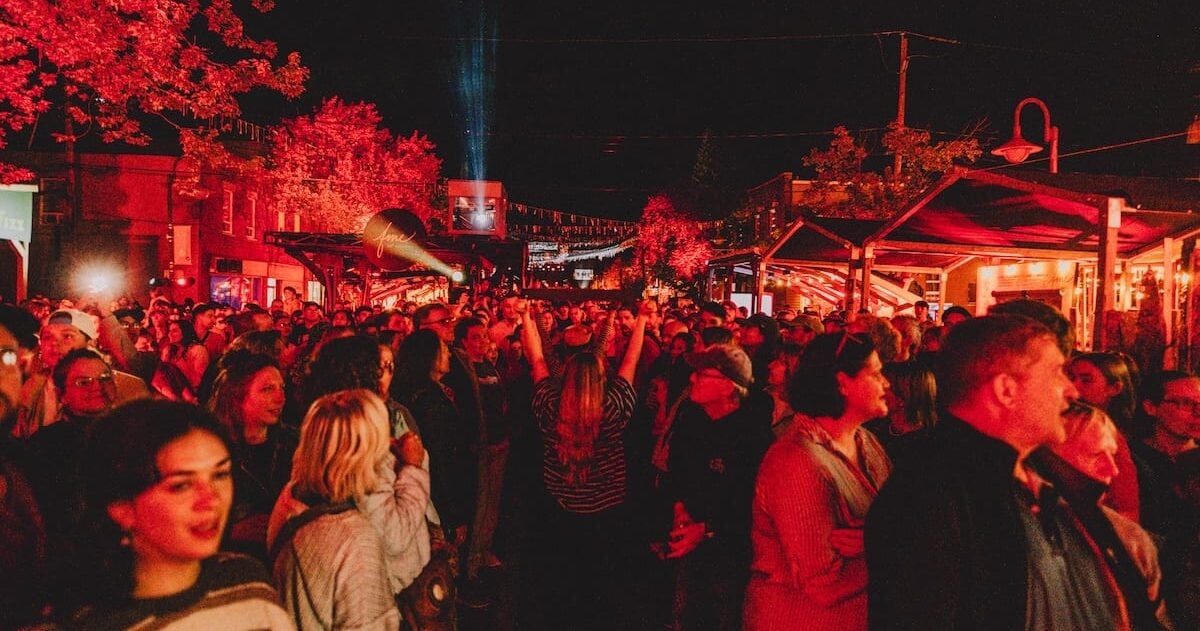
This juxtaposition creates the defining tension of FME. It is a festival staged in the shadow of industrial smokestacks, where late-night walks back to temporary lodgings involve brushing past the physical realities of resource extraction, contrasted against a thriving, fiercely independent artistic vanguard. Over four days, FME dismantles standard festival paradigms, offering everything from candlelit indie-folk in heritage churches to glitching electroclash in intimate, sweaty theatres, cementing its status as one of North America’s most singular, unmissable musical gatherings.
Detailed Chronology: A Four-Day Sonic Odyssey
Thursday: The Sanctuary and the Spark
The long journey north—a genuine time-warp for travellers coming from as far away as the UK—finds its immediate, grounding antidote in the wandering alternative-folk of Quebec local Arielle Soucy. Opening the festival weekend live from the Agora des Arts, a performance venue engineered within the sacred, towering walls of the former heritage church Notre-Dame-de-Protection, Soucy set an immediate, contemplative tone.
Framed against ancient church arches and illuminated by flickering candlelight, Soucy delivered a spellbinding exercise in raw vulnerability. Her set balanced fragile instrumentation with sweeping emotional depth, culminating in a breathtaking rendition of her closing track, "Pattern."
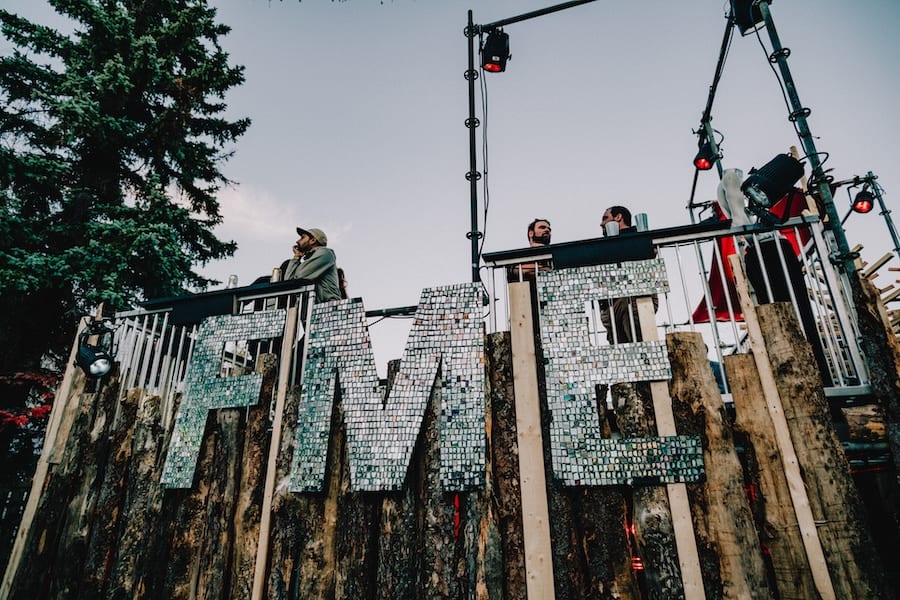
As night descended, the gravitational pull shifted toward the expansive Petit Théâtre du Vieux Noranda. Here, Montreal dance-punk outfit La Sécurité took to the stage, greeting a packed room of attendees who may have arrived out of casual curiosity, but left thoroughly converted. One of the defining characteristics of FME is the immediate, familial bond forged between artist and audience; every touring musician is received with the fierce local pride typically reserved for hometown heroes. La Sécurité’s razor-sharp hooks and driving rhythms turned the theatre into a pulsating incubator of movement, proving that the festival’s opening night sets a remarkably high bar.
Friday: Industrial Backdrops and Avant-Garde Soundscapes
If a Saturday morning at a standard European or British festival typically involves nursing a hangover over camping-stove noodles, FME offers a distinctly communal alternative. Mid-day saw festival-goers migrating to an afternoon barbecue hosted by esteemed Montreal record label Bonsound.
Against the backdrop of a sprawling swimming pool, the inventive, angular post-punk of Hélène Barbier and her band unfolded in tight, hypnotic precision. The music drifted effortlessly over the chatter of artists, international media, and industry professionals trading festival notes over hot dogs, perfectly encapsulating the relaxed, accessible camaraderie that underpins FME’s professional core.
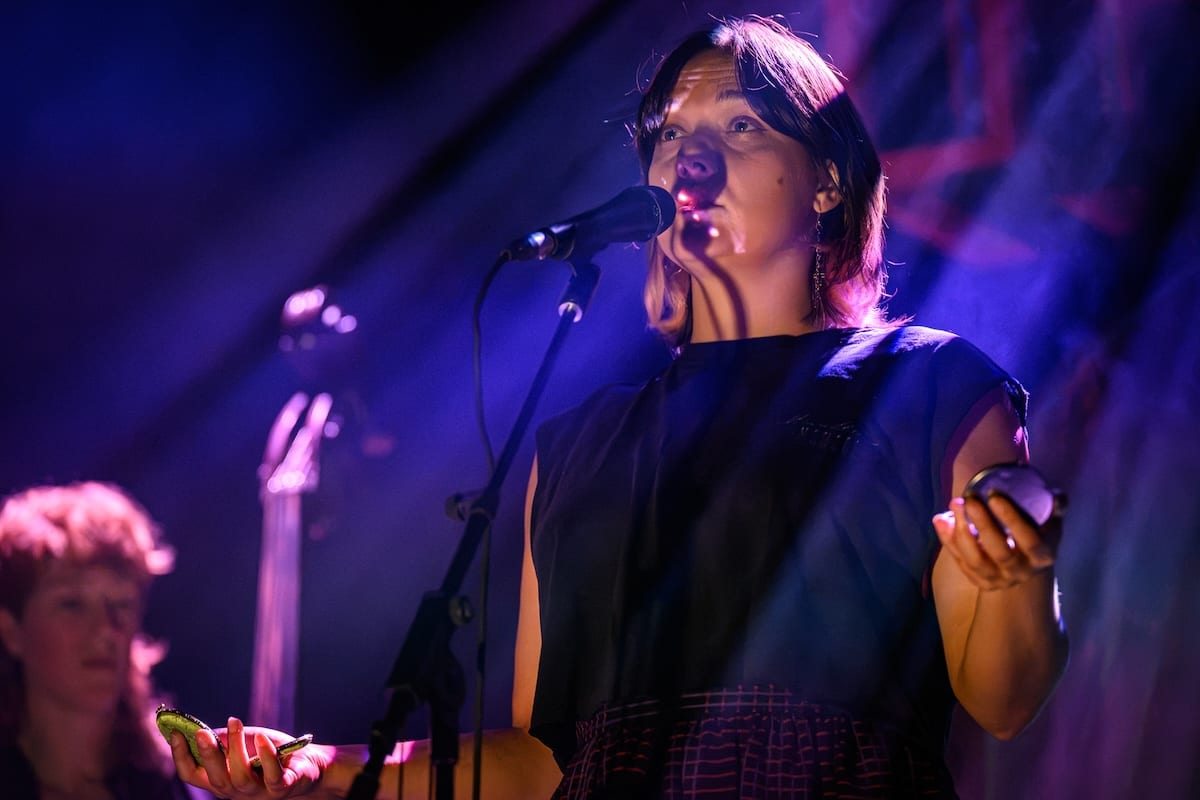
As evening approached, the festival’s programming fractured into an eclectic triple-header that traversed field recordings, narrative-driven folk, and esoteric electro-pop.
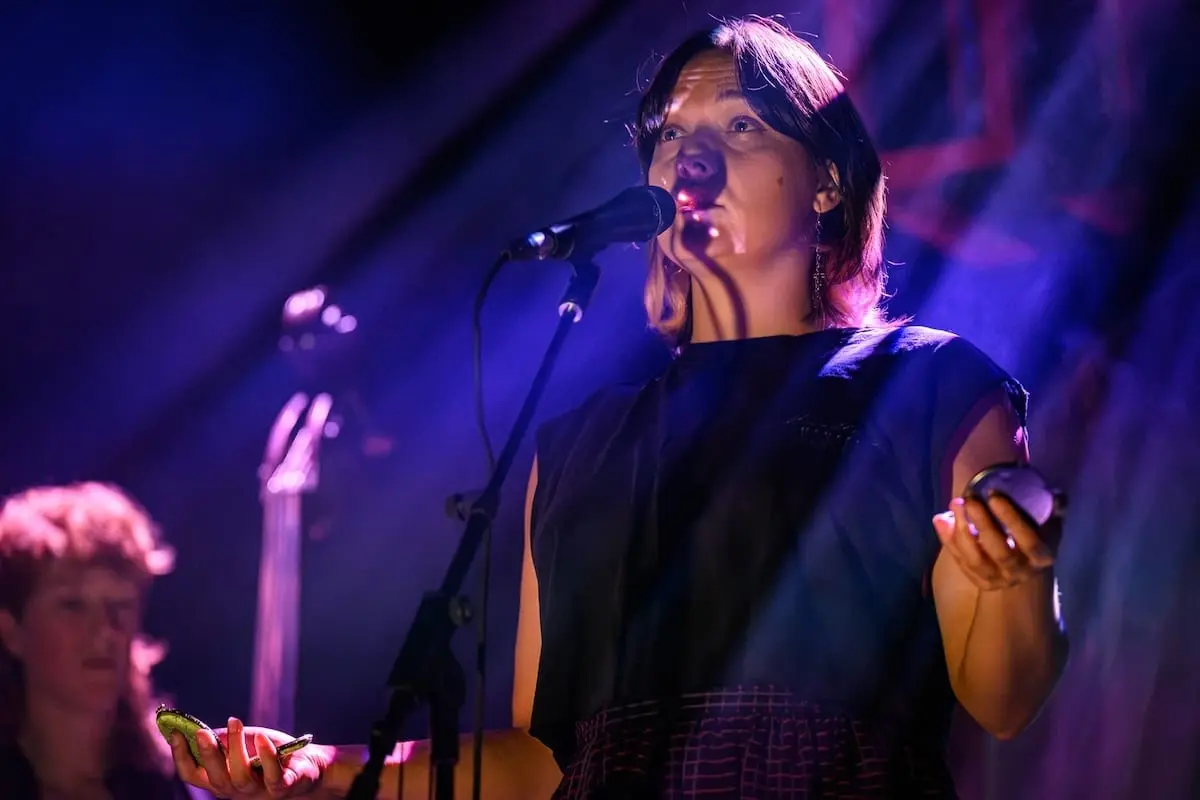
- Mykalle: Operating completely outside conventional musical parameters, Mykalle delivered a masterclass in neoclassical and vocal experimentation. Singing in a diverse lexicon that spanned Latin, Greek, Bulgarian, and English, she conjured the language of the cosmos. Tracks like "Ghost" showcased an artist channeling the dark, ethereal weight of Portishead’s Beth Gibbons, but substituting sleek trip-hop synthetics for the solemn, soaring architecture of Byzantine-era classical instrumentation.
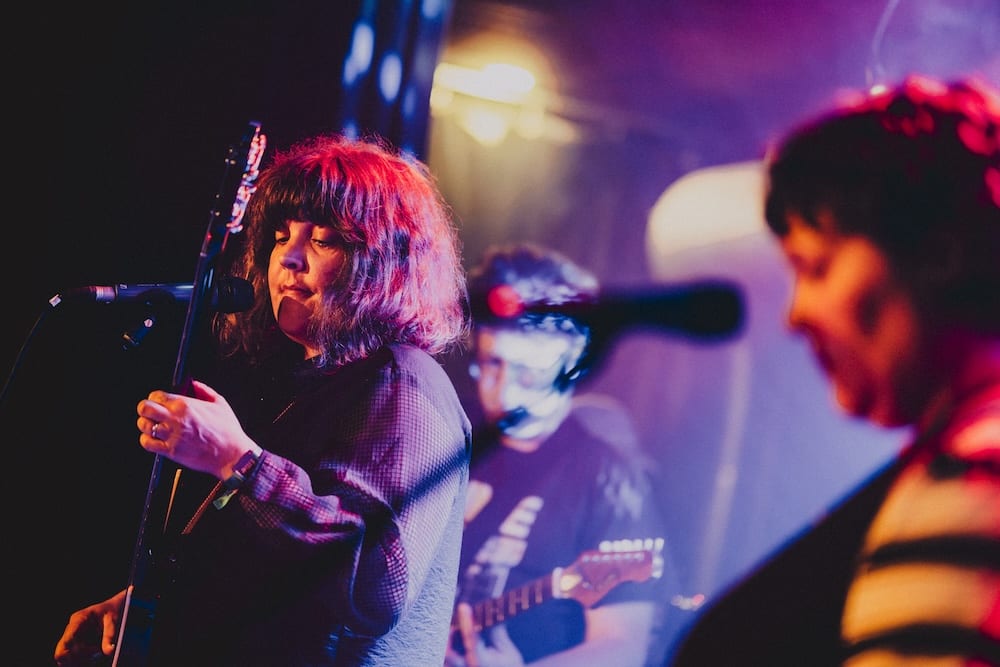
- Charlotte Cornfield: A beloved fixture of the Toronto indie scene since 2011, Cornfield represents the gold standard of "if you know, you know" songwriting. Performing at Le Paramount—a converted former cinema—Cornfield delivered a stripped-back, deeply immediate set. Armed simply with an acoustic guitar, a sensitive voice, and occasional detours to the piano, she wove hard-earned life lessons into universally resonant canvases. A clear highlight was an emotional audience request for "The Magnetic Fields" from her 2023 acclaimed album, Could Have Done Anything, cementing a palpable sense of shared emotional safety in the room.
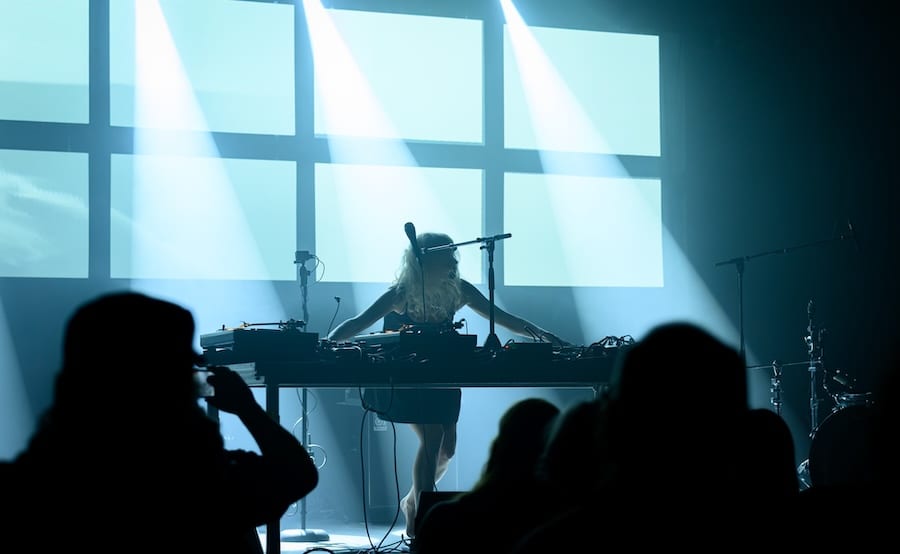
- Camilla Sparksss: Pushing the night into maximalist territory, Camilla Sparksss transformed the Petit Théâtre du Vieux Noranda into an audio-visual crucible. Slipping effortlessly between two turntables, Sparksss married lo-fi electronica, 1980s synth-pop, and industrial doom. Live, synchronized videography projected warped, hypnotic imagery onto the stage, creating a symbiotic relationship between sound and sight. When she dropped the glitching electroclash of "ICU RUN," the dancefloor dissolved into a sea of thrashing limbs, entirely submissive to her commanding stage presence.
Sunday: Island Hopping, Circus Arts, and the Grand Finale
By Sunday, expectations for a gentle, acoustic wind-down—perhaps anchored by the rustic Americana stylings of Spaghatt—were thoroughly upended. FME is not a festival that lets its guests coast quietly toward the finish line.
In an excursion reserved for select media and artists, a cohort of British and American reviewers were whisked away by boat to navigate the pristine shores of Lac Kanasuta, island-hopping and breaking bread with local residents who treat this mineral-scarred wilderness as an isolated paradise. For a writer whose domestic geography is limited to the flat expanses of Norfolk, England, floating across a Canadian lake surrounded by boreal forest provided an acute realization of just how far FME removes its participants from the mundane rhythms of everyday life.
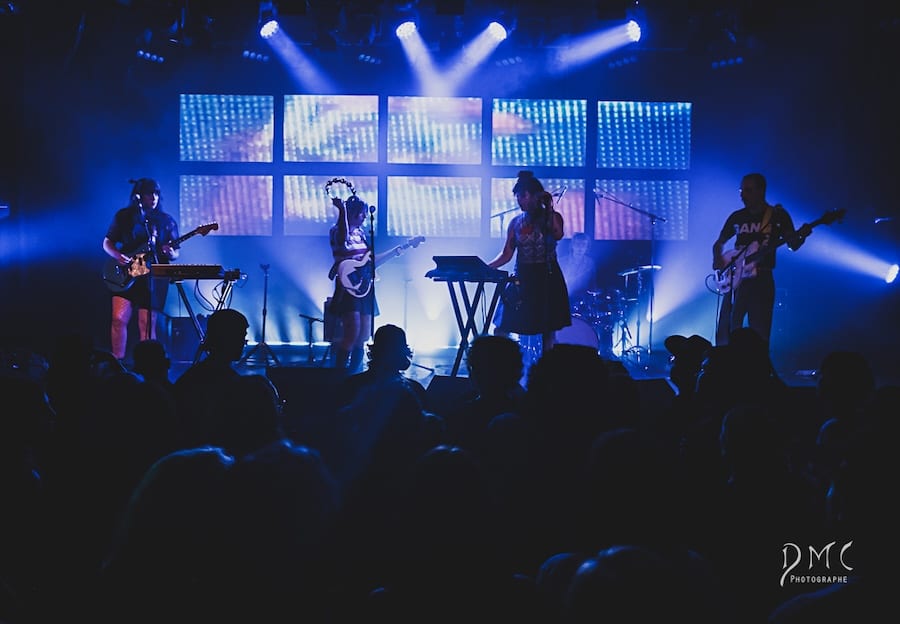
As night fell, Sunday’s festivities evolved into a decentralized celebration of the festival’s legacy. Eschewing a single headliner, the closing hours operated through a revolving door of DJs spinning wildly divergent genres, creating a euphoric, sensory-blurring crescendo.
Adding to the historical weight of the evening, Toronto indie-rock veterans The Sadies delivered a triumphant performance. As an older local patron astutely observed, "Ils sont notre version des Waterboys" ("They are our version of The Waterboys"). Having spent nearly three decades shaping the Canadian underground, their appearance coincided seamlessly with Rouyn-Noranda’s centennial celebrations. Complete with unexpected flourishes—including popcorn cannons and wandering circus performers—the final-day blowout ensured that FME’s 24th iteration bowed out with unbridled joy.
Supporting Context & Metrics: The Anatomy of FME
To understand FME is to understand a logistical marvel operating on the fringes of urban infrastructure.
- Geographical Isolation: Located roughly 600 kilometers northwest of Montreal, Rouyn-Noranda requires a dedicated 8-hour drive through the vast expanses of Quebec’s highway systems or a regional flight, making attendance an intentional act of dedication.
- Urban Integration: Unlike greenfield festivals that isolate crowds in temporary rural campsites, FME utilizes the actual urban fabric of Rouyn-Noranda. Venues range from heritage churches (Agora des Arts) and historic theatres (Petit Théâtre du Vieux Noranda) to alleyways, petrol station forecourts, local poutine joints, and parking lots.
- Economic Footprint: Operating for 24 consecutive years, the festival acts as a vital cultural bridge, importing international media and southern-urban industry professionals into a northern, blue-collar mining town, thereby stimulating local tourism and cementing Abitibi-Témiscamingue as a cultural hub.
Official Statements and Critical Reception
The unique ethos of FME has long drawn praise from cultural commentators and participating artists alike, who frequently emphasize the festival’s uncompromising curation and intimate community spirit.
"FME occupies a space entirely its own. You are standing in a town defined by heavy industry and monumental natural beauty, yet you are surrounded by the most forward-thinking, adventurous music on the continent. It forces artists and audiences out of their comfort zones, and the result is pure magic."
— Festival Organising Committee Dispatch
Industry delegates attending the Bonsound showcase similarly noted the event’s unmatched networking environment:

"There is no pretension here. When you’re eating hot dogs by a swimming pool while listening to Hélène Barbier dismantle post-punk norms, you realize why people make this journey year after year. The barriers between artist, label, and fan simply dissolve."
— Anonymous Music Supervisor and Delegate
Future Outlook
As Festival de Musique Émergente concludes its 24th annual edition, it stands as a testament to the power of localized, fiercely independent cultural programming. In an era where modern music festivals increasingly homogenize their lineups to appeal to global algorithmic tastes, FME remains defiantly eccentric, geographically defiant, and artistically fearless.
The enduring image of FME is not merely the stellar performances of Charlotte Cornfield, Camilla Sparksss, or Arielle Soucy, but the holistic environment: the surreal canopy of industrial smoke hanging over pristine lake waters, the sudden bursts of circus performance in a crowded bar, and the collective exhaustion turned euphoria shared by travellers from Norwich, London, New York, and Montreal alike.
While it may be some time before my travels lead me back to a locale quite as wonderfully remote as Rouyn-Noranda, the impression left by its unconventional venues, lakeside vistas, and block parties is indelible. FME exists entirely beyond the bounds of ordinary imagination—and long may it remain at the end of the world.