Executive Overview
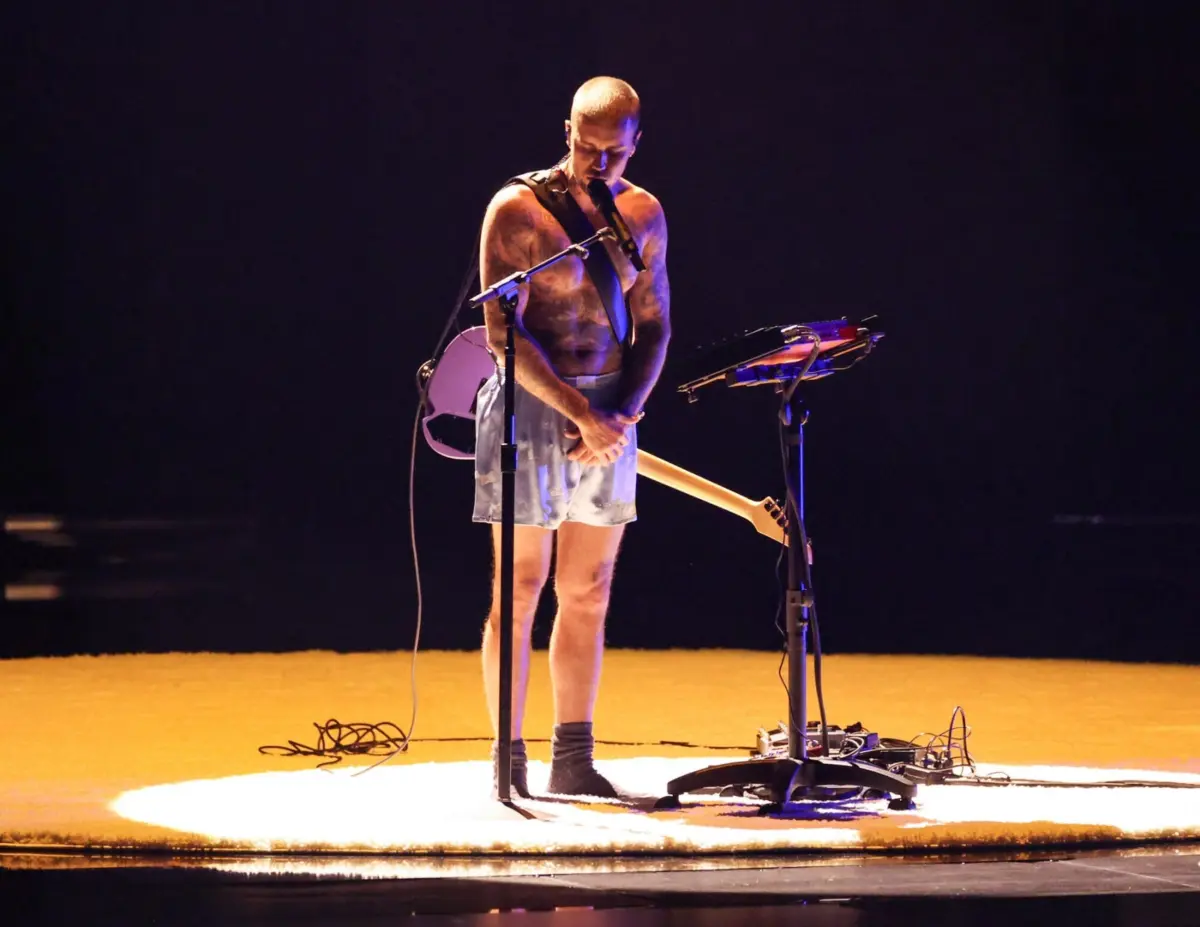
For legions of pop music fans globally, the prospect of experiencing a live Justin Bieber performance has transitioned from a routine tour schedule to a rare, unpredictable event. While the global pop icon has graced high-profile stages—ranging from major festival headlining sets to world-class sporting events—he has noticeably bypassed a traditional, extensive world tour in support of his recent musical eras, most notably his Swag album cycle. This absence of formal arena dates has left his devoted fanbase, known universally as "Beliebers," searching for alternative avenues to catch the superstar live.
That search took an unexpected and heartwarming turn on Tuesday afternoon, September 22, 2026. In a move that quickly mobilized local fans and set social media alight, Bieber, alongside a close-knit group of fellow musicians, set up a makeshift acoustic rig and percussion station in the heart of Los Angeles’s MacArthur Park. What began as a spontaneous daytime jam session quickly transformed into an intimate, unannounced mini-concert.
Far from a mere publicity stunt or a calculated pop-up show, the afternoon carried a deeper, community-focused purpose. According to insiders, Bieber’s primary reason for visiting the public park was philanthropic: distributing essential provisions, including bottled water and gift cards, to unhoused individuals living in the area. By seamlessly blending grassroots charitable work with an unscripted musical performance, Bieber offered a masterclass in organic connection, reminding the public of the raw, street-level charisma that catapulted him to superstardom over a decade and a half ago.
Detailed Chronology of the MacArthur Park Pop-Up
The afternoon of September 22 began quietly, with little indication that one of the most recognizable faces on the planet would soon be occupying a patch of grass in MacArthur Park. According to eyewitness accounts and a flurry of digital updates shared across TikTok, X (formerly Twitter), and Instagram, the transformation from a routine community outreach effort to a musical gathering happened organically.
The Arrival and Charitable Mission
Bieber arrived in the Los Angeles park accompanied by a small entourage. Rather than pulling up in a heavily guarded motorcade designed to distance him from the public, the 32-year-old artist integrated directly into the park’s environment. Sources close to the singer confirmed that the core mission of the excursion was mutual aid. Bieber spent a significant portion of the early afternoon engaging directly with the park’s unhoused population, distributing gift cards and fresh bottles of water to individuals in need.
This hands-on approach to philanthropy bypassed the corporate charity routes often favored by major celebrities. Instead, it reflected a personal, boots-on-the-ground philosophy that has increasingly characterized Bieber’s public appearances in recent years.
Unpacking the Instruments
As the distribution wound down, Bieber and a handful of accompanying musicians—equipped with acoustic guitars and portable percussion gear—decided to break the ice through sound. Bieber took a seat on and behind a cajón, a traditional box-shaped Peruvian percussion instrument played by slapping the front wooden face with the hands.
Without elaborate amplification or stage lighting, the group struck up the unmistakable rhythm of "Let Me Love You," Bieber’s massive 2016 collaboration with electronic music producer DJ Snake. The acoustic rendition immediately pierced through the ambient sounds of the park, causing passersby, parkgoers, and casual onlookers to stop in their tracks and pull out their smartphones.
The Setlist and Fan Interaction
Word of the impromptu performance spread rapidly across social media platforms within minutes, drawing a denser crowd of ecstatic Beliebers who rushed to the location. Capitalizing on the intimate atmosphere, Bieber transitioned from the cajón to the microphone, delivering stripped-down vocal performances of tracks from his recent Swag albums, including "Speed Demon," "All I Can Take," and "Yukon," alongside fan favorites like "Daisies."
The performance was notable not just for the music, but for the profound intimacy of the interactions. In widely shared video clips, Bieber can be seen making direct eye contact with fans, pausing between songs to converse with children, and sharing lighthearted moments. In one heartwarming interaction captured on TikTok, Bieber fist-bumped a young boy who had approached the makeshift stage. Another companion handed the child a tambourine, though the youngster remained adorably shy. Bieber also took a moment to single out a young birthday boy in the crowd, offering a warm, unscripted shoutout: "Happy birthday, buddy, have a good one."
The mini-set concluded as organically as it began, leaving a lasting impression on the small, fortunate gathering of fans who happened to be in the right place at the right time.
Supporting Context & Metrics: The Live Performance Drought
To fully understand the cultural significance of Bieber’s MacArthur Park jam session, one must examine the broader context of his live performance trajectory over the past several years. The pop superstar has occupied a paradoxical position in contemporary music: while his streaming numbers remain astronomical and his cultural footprint is omnipresent, his physical presence on traditional concert stages has been severely limited.

The Shadow of the Justice World Tour
The turning point in Bieber’s touring career came in 2022 and 2023 during his ambitious Justice World Tour. The massive global trek was met with critical acclaim but was ultimately plagued by severe health setbacks. Most notably, Bieber was diagnosed with Ramsay Hunt Syndrome, a rare neurological disorder caused by the varicella-zoster virus that led to partial facial paralysis.
Prioritizing his physical recovery and mental well-being, Bieber made the difficult decision to postpone and subsequently cancel the remaining dates of the Justice World Tour. For a global fanbase accustomed to multi-leg stadium tours, the cancellation marked a prolonged drought of traditional ticketed live experiences.
Strategic, High-Profile One-Offs
In the wake of his recovery, Bieber has selectively chosen high-impact, prestigious stages rather than embarking on grueling, months-long tour cycles. His live appearances over the past year have been calculated milestones rather than routine stops:
- The 68th Grammy Awards: A breathtaking televised performance at Los Angeles’s Crypto.com Arena on February 1, 2026, which solidified his vocal resilience and artistic maturity.
- Coachella Valley Music and Arts Festival: A celebrated guest set that resulted in massive streaming surges, proving his continued commercial dominance.
- FIFA World Cup Opening Ceremony (2026): Headlining the global sports stage, projecting his music to billions of viewers worldwide.
Despite these monumental performances, the absence of an arena tour in support of his dual Swag album releases left an unmet demand among grassroots fans. Consequently, impromptu daytime appearances like the MacArthur Park jam session function as modern-day folk happenings—spontaneous, unmarketed gifts to a fanbase starved of close-up concert access.
Official Statements and Industry Impact
While neither Bieber’s management team nor his publicist released a formal, pre-planned press release regarding the MacArthur Park appearance—inherent to the spontaneous nature of the event—industry analysts and music journalists have heavily scrutinized the cultural ripple effects of the pop-up.
Music industry analysts note that unannounced street-level performances represent a growing trend among legacy pop stars looking to strip away the hyper-commercialized veneer of modern arena tours. By returning to the physical roots of busking—performing on public concrete with acoustic instruments—artists like Bieber bridge the widening socioeconomic gap between skyrocketing ticket prices and everyday fans who cannot afford premium concert seats.
Furthermore, the integration of philanthropy with performance has drawn widespread praise from cultural commentators. Rather than utilizing charity as a distant, tax-writing corporate mechanism, Bieber’s choice to distribute water and gift cards directly to the unhoused population of downtown Los Angeles redefines what a celebrity pop-up can achieve. It shifts the power dynamic from "adoring fans watching an untouchable idol" to "community members sharing a public space through music and mutual aid."
Social media metrics from the event were immediate and overwhelming. Hashtags related to the pop-up trended globally on X and TikTok within hours, generating millions of organic impressions and driving renewed streaming interest toward his Swag catalog without a single dollar spent on traditional advertising.
Future Outlook: What’s Next for Beliebers?
As the dust settles on MacArthur Park, the overarching question among industry insiders and fans remains: Will Justin Bieber ever return to a traditional, full-scale world tour?
Current indicators suggest that the answer is nuanced. Bieber appears to have recalibrated his relationship with the music industry, favoring lifestyle integration, high-profile milestone events, and personal creative fulfillment over the grueling physical demands of a hundred-date arena itinerary. His recent personal milestones—such as celebrating his eighth wedding anniversary with his wife, Hailey Bieber, and attending close-knit industry weddings like those of Finneas and Claudia Sulewski in Montecito—point to an artist who deeply values his personal equilibrium.
For Beliebers, this means the era of predictable, multi-year ticket rollouts may be permanently behind them. However, as Tuesday afternoon proved, the trade-off is an exciting, high-stakes unpredictability. In lieu of stadium box offices and dynamic pricing algorithms, the future of experiencing Justin Bieber live may increasingly reside in the realm of the unexpected: a guitar case open on a sidewalk, a cajón beaten against the Los Angeles sun, and music delivered directly to the streets where people live.