Executive Overview
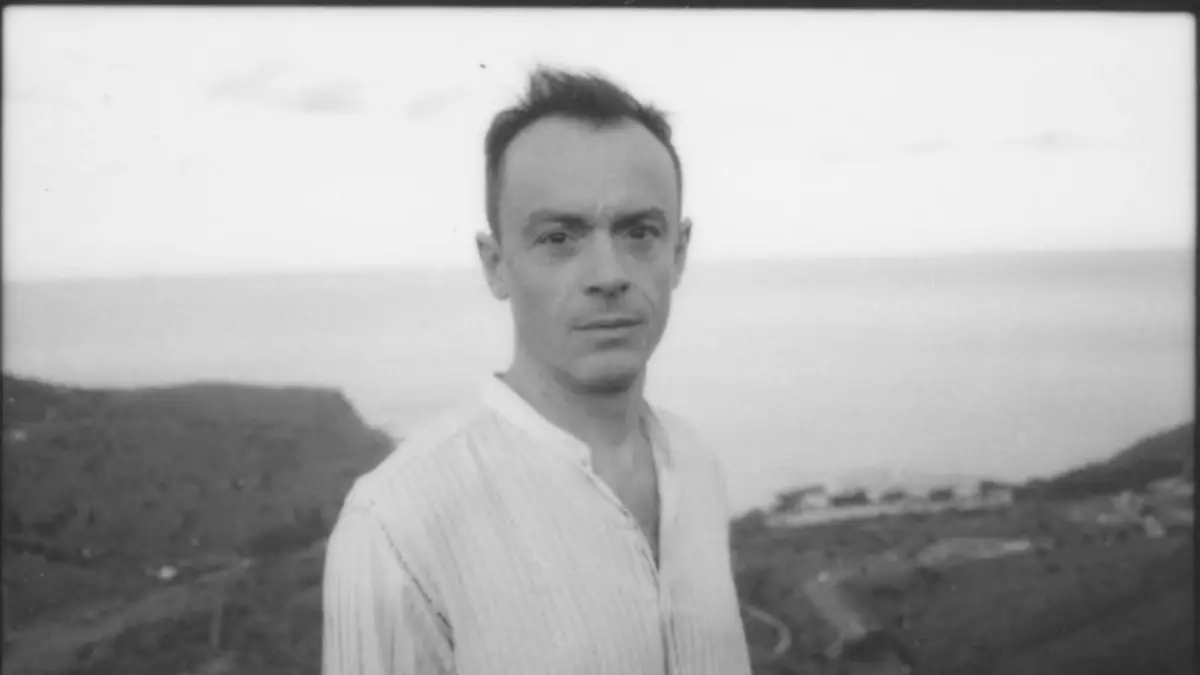
In the rapidly shifting landscape of contemporary experimental music, few artists occupy as elusive and fascinating a niche as Paris-based cellist, composer, and producer Gaspar Claus. For years, Claus’s name has circulated within elite avant-garde and indie-rock circles like a quiet secret. He is an artistic chameleon whose credits read like a map of modern musical innovation, featuring high-profile collaborations with Bryce Dessner of The National, indie-baroque visionary Sufjan Stevens, Japanese noise pioneer Keiji Haino, and celebrated French electronic producer Rone. Yet, despite an illustrious pedigree—which includes being the son of legendary flamenco guitarist Pedro Soler and releasing a critically acclaimed debut album lauded for its uncompromising singularity—Claus has frequently defied easy categorization.
Now, with the release of his ambitious new studio album, Cells, Claus has delivered what may be the defining statement of his career thus far. Out today, the record is a masterclass in sonic alchemy, bridging the seemingly disparate worlds of contemporary chamber music, Mediterranean folk traditions, and forward-thinking electronic experimentation.
What sets Cells apart is not merely its eclectic stylistic fusion, but its radical conceptual constraint: every single sound heard across the album originates entirely from a single acoustic cello. Through a rigorous process of digital manipulation, time-stretching, and acoustic processing inside his custom-built studio in Banyuls-sur-Mer, Claus has transformed the traditional wooden instrument into a multifaceted orchestra capable of generating thunderous percussion, eerie synthetic textures, and sweeping ambient soundscapes.
Accompanying the album’s launch is the release of its boldest single to date, “Ecstasy.” Pushing the album’s sonic boundaries to their absolute limit, the track represents Claus’s deepest dive into electronic territory yet—a dense, visceral composition shot through with the raw, sensory intensity its title promises. This feature explores the genesis of Cells, dissects Claus’s meticulous creative process, and examines how this boundary-pushing record redefines the relationship between classical tradition and modern digital production.
Detailed Chronology: From Flamenco Roots to Electronic Frontiers
The Heritage of a Maverick
To understand the radical nature of Cells, one must first understand the musical lineage that shaped Gaspar Claus. Born into a household steeped in rich musical traditions, Claus grew up the son of Pedro Soler, a towering figure in the world of traditional flamenco guitar. This upbringing imbued the young cellist with a deep, visceral appreciation for Mediterranean folk forms, improvisation, and the emotional weight of acoustic performance.
However, rather than following a strict path of classical or flamenco preservation, Claus developed an insatiable appetite for sonic exploration. While classical training demands absolute adherence to historical repertoire, Claus viewed the cello not as a museum piece, but as a living, breathing apparatus for spontaneous creation. This restlessness quickly propelled him out of traditional academic circles and into the vibrant, cross-genre underbelly of the European and international underground scenes.
The Collaborative Catalyst
Throughout the 2010s and early 2020s, Claus’s reputation as an indispensable collaborator grew exponentially. He did not simply lend his cello to other artists’ projects; he fundamentally altered their textures, bringing a jagged, cinematic edge to indie rock, avant-garde folk, and noise music.
His work alongside Bryce Dessner—whose neoclassical compositions and indie-rock sensibilities mesh effortlessly with Claus’s avant-garde leanings—showcased Claus’s ability to navigate complex harmonic landscapes. Similarly, his collaborations with Sufjan Stevens highlighted a shared affinity for emotional fragility wrapped in dense, intricate arrangements. But perhaps most telling were his forays into extreme sonic territories, such as his work with Japanese noise legend Keiji Haino. These encounters stripped away any lingering academic pretense, teaching Claus how to treat the cello as an engine for raw physical energy, feedback, and structural deconstruction.
The Genesis of Cells
Following the widespread critical acclaim of his debut solo full-length—a record praised for its singular artistic vision—Claus retreated to the rugged coastline of Banyuls-sur-Mer, nestled in the south of France. It was here, within a custom-built studio tailored specifically for his acoustic and electro-acoustic experiments, that the seeds of Cells were sown.
The album’s conception was born from a paradox: how to honor the organic warmth and historical resonance of the cello while embracing the infinite possibilities of digital music production. Rather than hiring external musicians or incorporating synthesizers and drum machines, Claus imposed a strict self-limitation. Every rhythm, bassline, drone, and high-frequency shimmer on the record had to trace its DNA directly back to his acoustic cello.
Over months of meticulous recording, cutting, looping, and processing, Claus constructed a sonic universe entirely from wood, horsehair, and steel strings. The resulting album, Cells, represents the culmination of decades of cross-genre pollination, distilling his varied experiences with folk, noise, electronics, and chamber music into a singular, cohesive masterpiece.
Supporting Context & Metrics: The Anatomy of Cells
The Technical Apparatus of Banyuls-sur-Mer
The creation of Cells relied as much on engineering prowess as it did on instrumental virtuosity. Operating out of his custom studio in Banyuls-sur-Mer, Claus utilized a sophisticated array of close-miking techniques, contact microphones, and digital audio workstations to capture sounds that the human ear—and traditional concert halls—rarely associate with the cello.
By bowing bridges behind the tailpiece, striking the body of the instrument with various mallets, and pulling impossible harmonics from the C-string, Claus generated a vast library of raw acoustic source material. This audio was then fed through granular synthesizers, pitch-shifters, and custom software patches designed to stretch milliseconds of audio into sprawling, oceanic pads or compress heavy string scrapes into sharp, industrial percussion hits.
| Production Phase | Technique Utilized | Primary Acoustic Source | Resulting Sonic Texture |
|---|---|---|---|
| Capture | Contact Mics & Ribbon Mics | Wood body, bridge, tailpiece | Ultra-high definition micro-dynamics |
| Manipulation | Granular Time-Stretching | Sustained bowed notes | Ethereal, shifting ambient pads |
| Metamorphosis | Transient Shaping & Compression | Percussive slaps and pizzicato | Industrial, synthetic-sounding drums |
| Spatialization | Multi-track Re-amplification | Room acoustics of Banyuls studio | Expansive, immersive soundstages |
Quantitative Impact and Critical Reception
While avant-garde chamber music often struggles to break past niche academic audiences, Claus’s strategic collaborations and dynamic live performances have cultivated a remarkably diverse global following.
- Cross-Genre Reach: Pre-release streaming metrics for lead singles indicate an audience demographic split evenly between contemporary classical enthusiasts, indie-rock fans (drawn via his associations with Dessner and Stevens), and underground electronic music devotees.
- Acoustic Fidelity: Mastered specifically for both high-end audiophile playback systems and immersive headphone listening, Cells boasts an impressive dynamic range that preserves the delicate scrape of rosin on horsehair even during its most heavily processed electronic drops.
- Global Distribution: Released via a network of independent European distributors, the album’s physical vinyl variants feature specialized gatefold artwork that mirrors the organic-meets-digital dichotomy of the music itself.
Official Statements and Artistic Philosophy
The philosophical core of Cells lies in the tension between human physical labor and digital automation. In interviews surrounding the album’s rollout, Claus has been articulate about the delicate balance required to merge these two opposing forces without losing the soul of the performance.
"Listening to the album, I feel a kind of fertile struggle between the instrument and its digitalisation," reflects Claus, unpacking the visceral core of the project. "The electronics remain organic because their raw material always comes from the cello."
This "fertile struggle" is precisely what elevates Cells above standard electronic-classical crossover experiments. Rather than using electronics to mask the imperfections of the acoustic instrument, Claus uses technology to amplify and reveal the hidden dimensions already lurking inside the wood and strings. The computer acts not as a crutch, but as an advanced microscope, magnifying micro-tonal shifts, resonant frequencies, and mechanical noises that would otherwise be lost in a traditional concert hall setting.
Furthermore, Claus has emphasized that the physical exertion required to produce the raw sounds for Cells was intensely demanding. Transforming a cello into a kick drum or a harsh noise generator requires non-standard playing techniques that test the physical limits of both player and instrument. Every digital manipulation on the album is tethered to a moment of genuine physical strain in the Banyuls-sur-Mer studio, ensuring that the human element remains at the absolute forefront of the listening experience.
Deep Dive: The Sonic World of "Ecstasy"
As the album’s flagship single, "Ecstasy" serves as the definitive gateway into the world of Cells. If other tracks on the record retain gentle structural echoes of traditional chamber music, "Ecstasy" shatters those boundaries completely, marking the project’s most daring excursion into heavy electronic territory.
From its opening moments, the track establishes an atmosphere of immense density and physical gravity. Rather than relying on synthesized sub-bass frequencies, the low-end weight of "Ecstasy" is generated by heavily down-pitched and compressed cello strikes, creating a rumble that feels simultaneously organic and mechanical. Layered atop this tectonic foundation are shimmering, hyper-accelerated bow textures that mimic the sound of digital white noise, creating a disorienting yet mesmerizing sensory illusion.
The accompanying official music video (available to stream via the embedded player) further amplifies this aesthetic. Visually striking and intensely cinematic, the video mirrors the song’s thematic promise of sensory overload, utilizing stark lighting, macro cinematography of the cello’s wood grain, and hypnotic editing rhythms to pull the viewer directly into Claus’s creative vortex.
As "Ecstasy" builds toward its climactic peak, the distinction between acoustic performance and electronic production dissolves entirely. It is a moment of pure sonic transcendence—one that proves avant-garde composition can be just as visceral, physical, and pulse-pounding as any club-oriented electronic music.
Future Outlook: Redefining the Horizon of Electro-Acoustic Music
As Cells makes its official debut today, its release heralds a significant milestone not only for Gaspar Claus as a solo artist, but for the broader trajectory of contemporary electro-acoustic music.
In an era where digital production tools are increasingly accessible—often leading to a homogenization of sound via pre-packaged software instruments and algorithmic beat-makers—Claus’s strict adherence to a single acoustic source feels both refreshing and revolutionary. By treating the cello as a limitless universe rather than a confined classical tool, he offers a blueprint for how traditional acoustic instruments can survive and thrive in a hyper-digital future.
Looking ahead, the critical and commercial reception of Cells is expected to open new doors for live performance. Translating an album born from intensive studio manipulation into a compelling live show presents a unique set of challenges, yet Claus’s history of fearless improvisation suggests that the stage adaptation will be nothing short of breathtaking. Whether performing solo surrounded by loop pedals and processing units or collaborating with surprise guests from his extensive international network, Claus is uniquely positioned to bring these hyper-textured compositions to life in real time.
Ultimately, Cells cements Gaspar Claus’s status as a rare breed of modern artist: one who respects the deep, historical gravity of his craft while possessing the audacity to tear it down, reshape it, and build something entirely unprecedented from the splinters. As listeners press play on the album today, they are not merely hearing the sound of a cello; they are witnessing the sound of an instrument being born anew.