Executive Overview
In an era where contemporary electronic music often relies on software presets and standardized loops, a sonic revolution is quietly rumbling out of West Africa, forged from clay, discarded plastic, and centuries-old spiritual traditions. Nana Benz du Togo, a groundbreaking five-piece band hailing from Lomé, Togo, represents one of the most compelling intersections of heritage and modernity in contemporary world music. Described by critics as pioneers of "digital voodoo," the group weaves ancient Vodun rhythms, feminist philosophy, and ecological activism into a mesmerizing, bass-heavy trance.
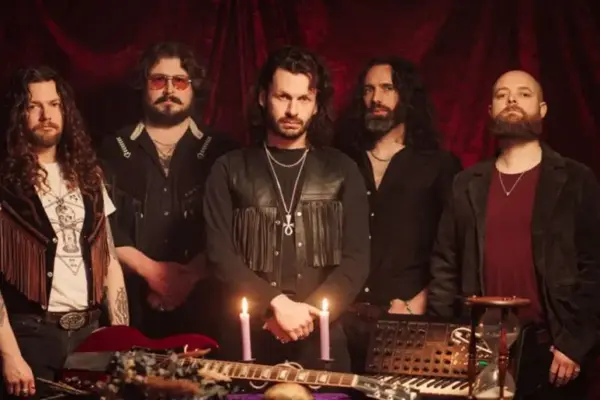
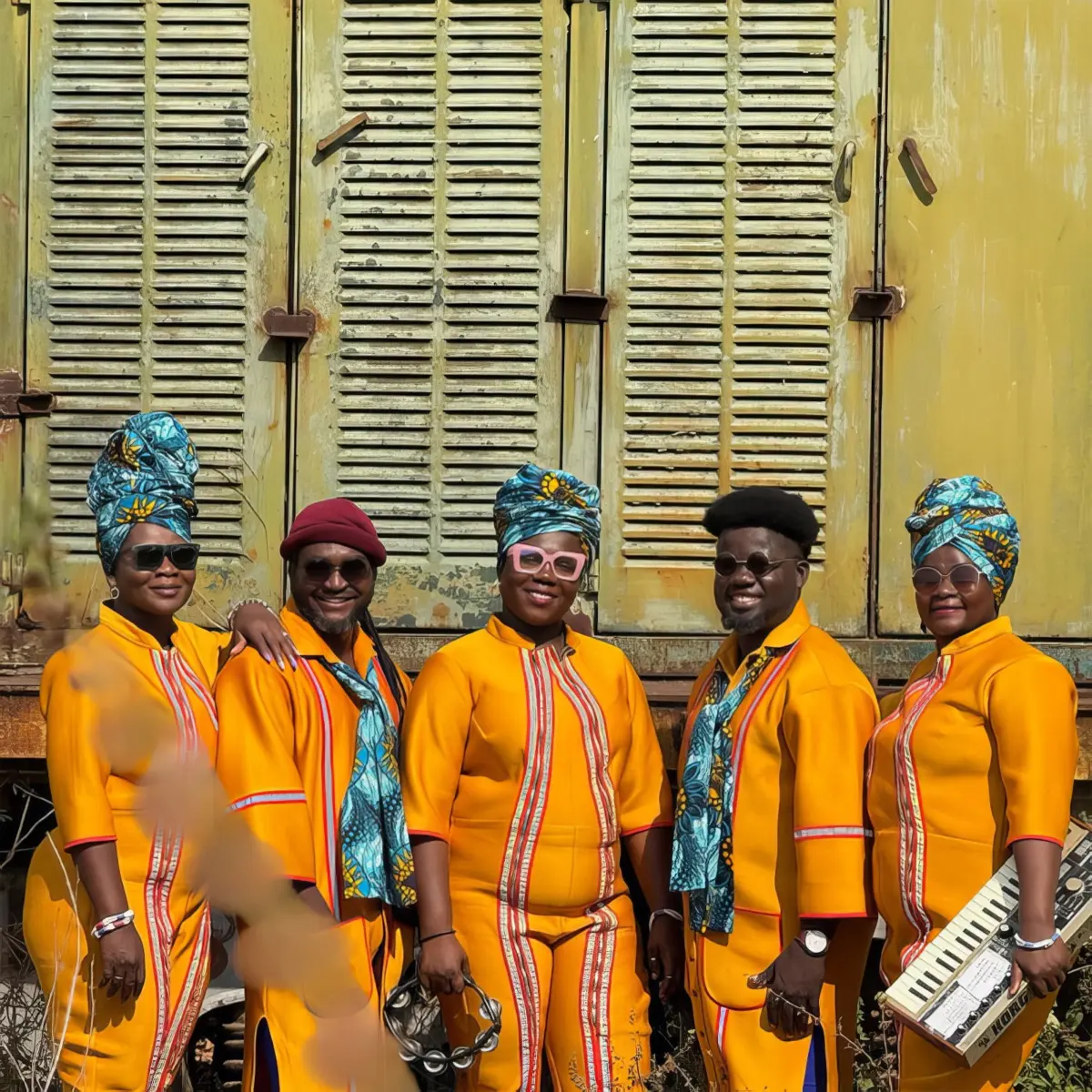
The band’s genesis is as organic as their materials: born out of a 2019 workshop led by Peter Solo of Vaudou Game, Nana Benz du Togo unites percussionist and instrument-builder Toto Tchilatchi, bass visionary David Kasanku, and vocal powerhouses Lady Apoc, Parus Kekeli, and Izealedu. Together, they deploy handmade instruments—such as a drum kit constructed from ceremonial pots that once held potions for Vodun temple elders, and a custom bass built from a PVC drainpipe (gazé tuyau)—alongside a vintage Korg keyboard to create hypnotic, polyrhythmic soundscapes.
Following their acclaimed European debut at Transmusicales de Rennes in 2022 and their subsequent 2023 album AGO, the band released their sophomore LP, Sè Nam, in June 2025 via OTODI studio in Lomé. With its contemporary production values and expansive groove spaces, Sè Nam—whose title translates to "understand me" in Mina—solidifies their reputation as a vital global force. As they prepare to bring their ritualistic dancefloor ceremony to the Plaza Stage at WOMEX in Las Palmas de Gran Canaria, Nana Benz du Togo stands as proof that ancient traditions do not merely survive in the modern world; they mutate, adapt, and pulse with a futuristic vitality.
Detailed Chronology: From Temple Pots to Global Stages
The Clay and the Sanctuary: Origins in Lomé
The story of Nana Benz du Togo begins long before the band’s formation, embedded within the domestic and spiritual architecture of Lomé. In a traditional house in the Togolese capital, a woman meticulously maintained a set of ceremonial clay pots used to prepare ritual potions for the elder priestesses of local Vodun temples. Vodun—the rich, cosmological West African religion practiced by the Ewe and Fon peoples across Togo and Benin for centuries, and the ancestral root of Haitian Vodou and Louisiana Voodoo—is inextricably bound to the forces of nature. Its spirits are summoned through drumming, incantation, and relentless singing.
Among those who grew up immersed in this environment was a young Toto Tchilatchi. He lived with the unshakable belief that the decades of perpetual singing, drumming, and spiritual devotion had saturated the porous clay of the pots, trapping the acoustic energy within. Years later, Tchilatchi took possession of these sacred vessels and repurposed them, transforming them into the foundational drum kit of Nana Benz du Togo. Half of the band’s physical stage presence is anchored in these very pots—vessels that bridge domestic ritual and modern performance art.
The Catalyst: Peter Solo and the 2019 Workshop
For years, the individual artists who would eventually comprise Nana Benz du Togo operated in distinct musical spheres, navigating the complex generational ambivalence toward Vodun that characterizes many young West Africans. Taught by society to view their indigenous religion with a degree of shame or suspicion, they initially distanced themselves from it.
The turning point arrived in 2019, when Peter Solo, visionary leader of the transnational Afro-funk powerhouse Vaudou Game, travelled to Lomé to host a collaborative music workshop. Solo gathered local musicians, instrumentalists, and artists with the explicit intention of exploring how traditional Togolese scales and rhythms could interface with contemporary instrumentation.
Out of this crucible of experimentation, Nana Benz du Togo was born, with Solo stepping into the role of producer—a position he has maintained across their discography. The band chose their name as an homage to the legendary Nana Benz, the formidable wax-print market women of Lomé’s central market who amassed immense economic power and political independence, drove Mercedes-Benz automobiles, and commanded the confidence of the nation’s elite. The band members cite these women as enduring symbols of the courage, force, and autonomy required to thrive within historical and contemporary patriarchal societies.
Refining the Craft: From Shadows to European Breakthroughs
Before stepping onto an international stage, the quintet spent years refining their craft in the shadows of Lomé, shedding their inhibitions and casting off the societal shame attached to Vodun. By returning to their indigenous spiritual roots, they paradoxically found their modern voices, abandoning the superficial constraints of standard musical genres to create from an authentic core.
The breakthrough to international touring came in December 2022, when the band made their explosive European debut at the prestigious Transmusicales de Rennes festival in France. The reception was immediate and electrifying, proving that European audiences were hungry for the deep, hypnotic grooves of digital voodoo. Capitalizing on this momentum, they entered OTODI studio in Lomé to record their debut album, AGO, which was released to widespread critical acclaim in 2023.
Sè Nam and the Evolution of the Sound
Refusing to rest on their laurels, the band returned to OTODI studio in December 2024 to record their second full-length album, Sè Nam. Released in June 2025, the 11-track record showcases a more contemporary production style, carving out deeper pockets for rhythm, sub-bass, and trance-inducing polyrhythms. Sung in Mina, French, and English, the album explores the cosmological scales of Dan (the sacred snake) and Mami Wata (the water deity), interweaving pressing contemporary dialogues around environmental stewardship and gender equality.
In October 2025, this journey culminates on the Atlantic stage of WOMEX in Las Palmas de Gran Canaria, where Nana Benz du Togo brings the sonic weight of Sè Nam to an international delegation of music professionals.
Supporting Context & Metrics
The Anatomy of the Sound: Upcycled Innovation
What distinguishes Nana Benz du Togo in a crowded global music market is not merely their conceptual framework, but their radical approach to instrumentation. The band’s sonic architecture rests on two primary pillars:
- The Ceremonial Drum Kit (Toto Tchilatchi): Built from the repurposed clay pots of Vodun priestesses, Tchilatchi’s kit melds historical reverence with percussive utility, producing earthy, resonant tones that software samplers simply cannot replicate.
- The Gazé Tuyau (David Kasanku): Originally a traditional bass player, Kasanku spent four years engineering a custom bass instrument constructed from PVC drainpipes. Once integrated beneath Tchilatchi’s clay pots, this handmade contraption generates a subterranean sub-bass that locks seamlessly into complex, driving polyrhythms.
This percussive foundation is supported by a vintage Korg keyboard, which provides warm analog pads and electronic counter-melodies, all serving as the bedrock for the soaring, interlocking vocal harmonies of Lady Apoc, Parus Kekeli, and Izealedu.
The Philosophy of "Digital Vodou"
To understand Nana Benz du Togo, one must dismantle Western misconceptions of Vodun as a cinematic caricature. As the band articulates, Vodun is an intricate philosophy of nature, rhythm, trance, and human connection.
- The Ecology-Feminism Nexus: The band operates on an explicit ideological axis: “Whoever does not respect women does not respect nature.” Their lyrics treat environmental degradation and gender oppression as two symptoms of the same systemic exploitation. Drawing on the resilience of African women and the ecological reverence embedded in Vodun cosmology, they argue that protecting the earth and empowering women are fundamentally inseparable tasks.
- Repetitive Energy and Trance: Rejecting the label of "traditionalists," the band views their work as inherently futuristic. By fusing ancestral percussion with electronic sub-bass and repetitive structures, they engineer a state of secular, communal trance designed to disarm the ego and unite the dancefloor.
Official Statements & Direct Insights
In an exclusive interview conducted for the Musical Road to WOMEX series, the members of Nana Benz du Togo offered profound insights into their artistic philosophy, their methodology, and their expectations for their upcoming showcase in Las Palmas de Gran Canaria.
On the Definition of Digital Vodou
"For us, Digital Vodou is not about taking something old and trying to make it modern. It is about showing that Vodun is already alive and has always had the power to evolve. Vodun is about rhythm, trance, nature and connection. And the dancefloor can be a place for that too. People come together, move together, let go. We bring traditional rhythms, songs, percussion and the handmade instruments we create into electronic music, bass and contemporary sounds. For us, it is a meeting between something very old and something that is still being born. That is what makes it feel both ancestral and futuristic."
On Recovering Voice through Heritage
"It gave us our voice back. Like many people from our generation, we grew up with mixed feelings about Vodun. There were things we were taught to be ashamed of, so at some point we moved away from it. Coming back to it changed the way we saw ourselves. We realised that Vodun is not only a spiritual tradition. It is also a way of understanding our relationship with the earth, with women, with our ancestors and with each other. And musically, it opened a whole world for us: rhythms, melodies, stories, symbols. Things that were already inside us. We stopped trying to fit into a musical category. We started creating from who we really are."
On Upcycling and Ideological Integrity
"For us, everything is connected. The recycled instruments are not just something you see on stage. They are part of our sound and part of the way we think. We take things that people throw away and give them another life. In a way, we do the same with our stories and traditions. We take things that have been misunderstood or pushed aside and bring them back into the present. Our feminism comes from the strength and resilience of African women. And our connection to ecology comes from Vodun itself. We often say, ‘Whoever does not respect women does not respect nature.’ For us, that says a lot about who Nana Benz du Togo is."
On the Volcanic Landscape of Gran Canaria and Atlantic Exchanges
"When you see a volcanic landscape, you are reminded that the earth is alive. It is powerful, it changes, it moves. For us, nature is not something outside of us. In Vodun, it is a living presence. The ocean, the wind, the stone, the fire inside the earth, these are not just things around us. They are forces. So being on an island shaped by the ocean and volcanoes feels very familiar to our way of thinking. It reminds us that we are part of something much bigger than ourselves. We are curious about the connections between the different traditions. Islands are special places. Cultures arrive there, meet, change and survive. We want to hear the timple, meet local musicians and discover what traces of African and Atlantic exchanges can still be heard in Canarian music."
On Performing for Industry Delegates at WOMEX
"Not really. Of course, we know that WOMEX is important and that there will be a lot of professionals in the room. But once we are on stage, we have to be ourselves. Whether there are one hundred people, a thousand people or music professionals watching us, we want the same thing: for people to feel the music in their bodies. We want them to forget for a moment who they are supposed to be and simply become part of the rhythm. That is when the magic happens."
Future Outlook: The Horizon Beyond Sè Nam
As Nana Benz du Togo looks beyond the release of Sè Nam and their high-profile showcase on the Plaza Stage in Las Palmas de Gran Canaria, the trajectory of the project points toward an even deeper synthesis of pan-African and Atlantic sonic genealogies.
- Cross-Atlantic Collaborations: The band has expressed a strong desire to partner with artists across the African continent, the Caribbean, and Latin America. By actively tracing the historical, rhythmic, and spiritual threads that crossed the Atlantic during the era of the slave trade—transforming West African Vodun into Haitian Vodou, Cuban Santería, and Brazilian Candomblé—Nana Benz du Togo aims to build a contemporary musical network that mirrors these historic diasporic pathways.
- Pushing Acoustic-Electronic Boundaries: Studio sessions following Sè Nam will focus on expanding the dialogue between raw ritual percussion, self-constructed upcycled machinery (such as the gazé tuyau and clay drum sets), and cutting-edge electronic music production. Their objective is to refine a sound that defies categorization while remaining fiercely anchored in Togolese identity.
- Global Festival Circuits: Armed with a reputation as an unstoppable live force, the band is poised to take their secular ceremonies to major festival stages worldwide, proving that underground sub-bass and ancient polyrhythms are mutually reinforcing forces capable of uniting diverse global audiences.
A Personal Invitation from the Band
For those attending WOMEX or encountering their music for the first time, Nana Benz du Togo offers a singular, imperative invitation:
"Come with your body before your expectations. Come to dance, listen, feel and maybe remember something older than all of us. We are bringing rhythms from Togo, women’s voices, handmade instruments and the energy of Digital Vodou. Don’t just come and watch us. Come and experience it with us. If you join us, we will create the ceremony together."
On October 23, when Nana Benz du Togo takes the Plaza Stage in Las Palmas, the delegation of music professionals won’t just be listening to a showcase; they will be stepping into an ancient, evolving lineage—one where discarded pipes and sacred clay pots converge to reawaken the earth, honour the resilience of women, and command the global dancefloor.