Executive Overview
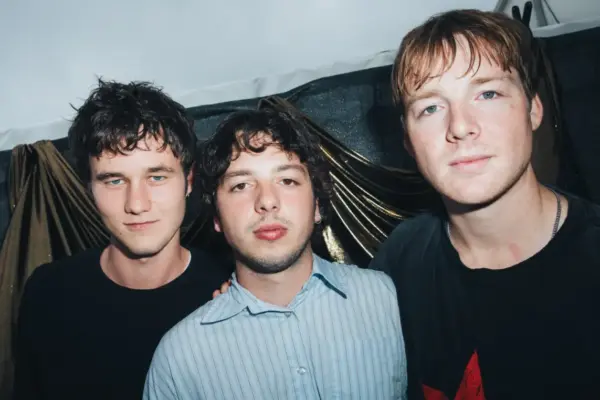
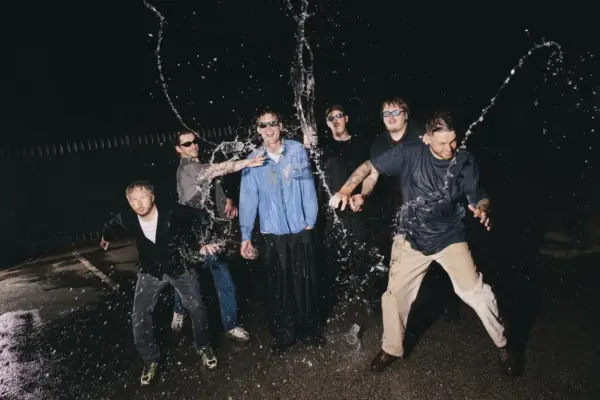
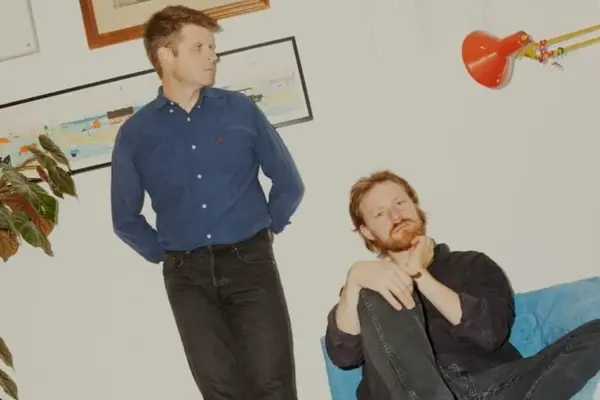
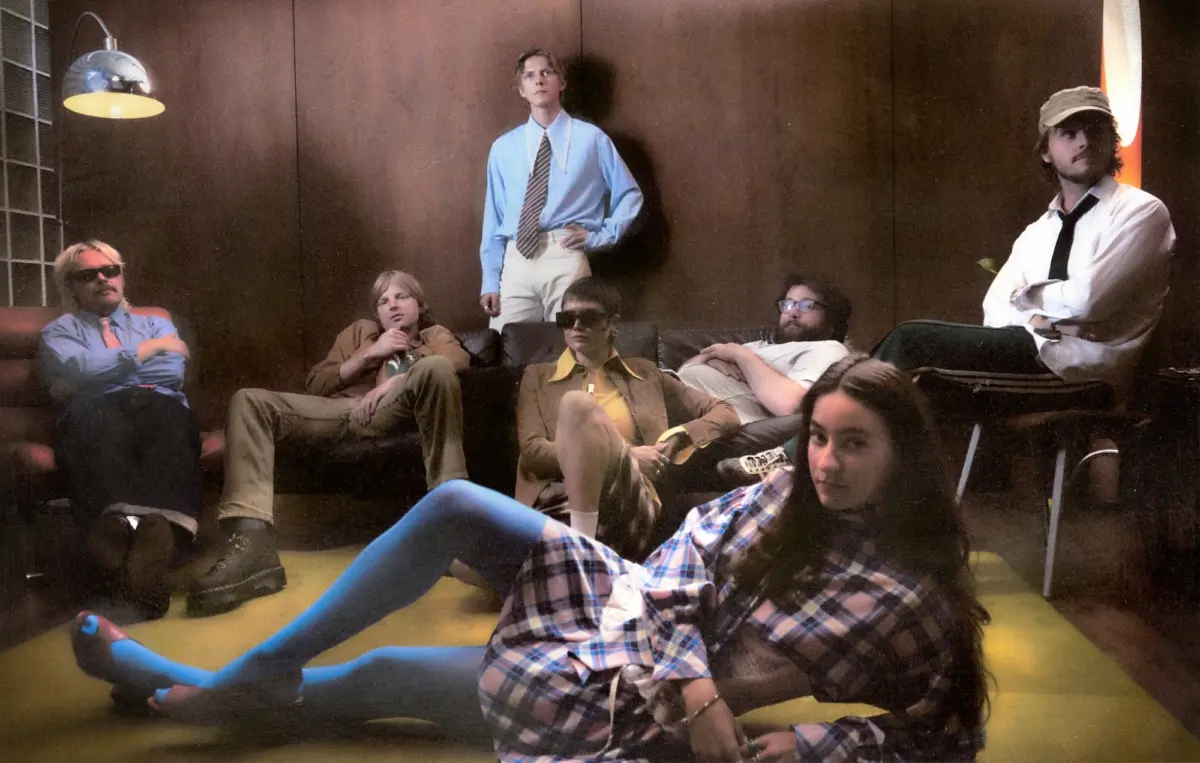
In an era when indie rock frequently veers toward cynical detachment or minimalist production, The Slow Country has emerged as one of the British music scene’s most earnest and expansive prospects. Formed in Manchester and currently divided between the North and London, the seven-piece alt-folk collective has quietly spent years constructing a signature sound that bridges cinematic scale with unpretentious emotional honesty.
Born from the simultaneous breakdown of long-term relationships involving key members, the band has transformed personal grief into a celebratory, crowd-captivating live experience. Combining standard rock instrumentation with accordion, violin, and multi-part vocal harmonies, The Slow Country operates on a philosophy of sonic maximalism—creating textured, joy-filled arrangements that reference early Arcade Fire, the loose twang of The Nude Party, and the lyricism of Big Thief.
Having signed with independent label Heist Or Hit and forged a studio partnership with acclaimed producer Bill Ryder-Jones, the septet has transitioned from underground word-of-mouth favorites to sleeper hits at major festivals such as Green Man and Truck Festival. This report details the band’s development, logistical mechanics, artistic philosophy, and future trajectory as they prepare for their debut album.
Detailed Chronology & Origins
[Undergraduate Era]          [The Catalyst]              [Formation & Gestation]       [Breakthrough Era]
Joe Darley & Charlie Smith   Simultaneous breakups       Expand to 7-piece septet;     Release 'Walking Song' (2024);
form punk band               spark earnest songwriting   2-year hiatus on releases to  Work with Bill Ryder-Jones;
'Paris Syndrome'.            in Manchester.              refine live sound architecture. Festival sleeper hits & tours.
1. The Genesis of "Breakup Season"
The foundation of The Slow Country traces back to an undergraduate punk project titled Paris Syndrome, formed by co-frontmen Joe Darley (vocals, guitar) and Charlie Smith (vocals, guitar). While the short-lived punk project rarely ventured past practice spaces, it cemented a creative bond between Darley and Smith.
Years later, a shared personal crisis provided the catalyst for a new direction. Both musicians experienced the end of long-term romantic relationships within the same window—a period Darley lightheartedly refers to as "breakup season." Channeling grief into acoustic composition, the duo abandoned punk aggression in favor of earnest, folk-oriented songwriting.
2. Assembling the Septet
Recognizing the need for a rich arrangement to support their evolving material, Darley and Smith began assembling an ensemble from their inner circle:
- Finnbar Simmonds was brought in on bass guitar.
- Ben Court joined to handle drums and backing vocals.
- Gina Edwards was recruited to provide keyboard, accordion, and vocal harmonies.
- James Darley (brother of Joe) joined on secondary guitar.
The final element of the lineup occurred by chance at The Talleyrand, an independent venue in the South Manchester neighborhood of Levenshulme. The band was performing a support set where the audience comprised primarily of the headlining act and a local musician named Miren Summers. Recognizing Summers’ musical versatility, the band recruited her as their full-time violinist, completing the seven-piece arrangement.
3. The Two-Year Gestation Period
Unlike contemporaries who quickly upload early demos to streaming platforms, The Slow Country adopted a deliberate strategy: holding back all official releases for two full years following their formation.
Early live performances were marked by stylistic swings—ranging from heavy, riff-laden experiments like "This Is Going To Hurt" and "Toadzilla" to sparse acoustic ballads sung by Smith. This period allowed the septet to systematically distill their identity. By 2024, they had arrived at a unified sonic manifesto focused on maximal texture and melodic immersion, formally launching their discography with the single "Walking Song."
Supporting Context & Musical Metrics
Sonic Architecture & Influences
The Slow Country’s sound relies on a multi-layered arrangement style that avoids clutter while utilizing seven distinct voices and instruments.
| Instrument / Role | Primary Member(s) | Artistic Function in the Mix |
|---|---|---|
| Lead Vocals / Guitar | Joe Darley, Charlie Smith | Dual-narrator structure; rhythmic foundation and narrative contrast |
| Violin | Miren Summers | Lead melodic hooks; folk texture and cinematic builds |
| Accordion / Keys / Vocals | Gina Edwards | Mid-range harmonic fill; organic European folk timbre |
| Bass Guitar | Finnbar Simmonds | Low-end stability anchoring complex melodic shifts |
| Drums / Vocals | Ben Court | Dynamic rhythm drive; supportive multi-part vocal blending |
| Guitar | James Darley | Textural atmosphere, counter-melodies, and tonal weight |
This setup creates a musical style reminiscent of mid-2000s Canadian indie-rock collectives, combined with the acoustic-led intimacy of contemporary British folk.
                  ┌──────────────────────────────┐
                  │   Core Acoustic Framework    │
                  │   (Darley & Smith Guitars)   │
                  └──────────────┬───────────────┘
                                 │
         ┌───────────────────────┴───────────────────────┐
         ▼                                               ▼
┌──────────────────────────────┐               ┌──────────────────────────────┐
│     Orchestral Textures      │               │       Rhythm & Harmonic      │
│  (Summers Violin / Edwards   │               │   (Simmonds Bass / Court     │
│       Keys & Accordion)      │               │     Drums / J. Darley)       │
└──────────────────────────────┘               └──────────────────────────────┘
Logistical Realities of an Independent Septet
Operating a seven-piece band in the contemporary economic climate presents distinct financial and structural challenges:
- Geographical Split: The members are divided between Manchester and London, preventing frequent weekly rehearsals.
- Rehearsal Dynamics: The band conducts bi-weekly, eight-hour marathon rehearsals. These sessions often start with dynamic friction before reaching a collaborative flow state around the sixth hour.
- Remote Songwriting: Song ideas, chord progressions, and lyrical fragments are passed digitally between sessions, functioning as a decentralized creative process.
- Economic Pressures: Maintaining a septet involves significant overhead for touring, equipment transport, and rehearsal spaces. The band currently operates at a financial net loss, reinvesting live revenues back into production and logistical costs under independent label Heist Or Hit.
Production Alignment with Bill Ryder-Jones
A turning point in the band’s development has been their studio partnership with producer and songwriter Bill Ryder-Jones (formerly of The Coral). Working out of his recording facilities, Ryder-Jones has produced key releases including:
- "Firing Line"
- "In The Mud"
- "Through Your Teeth"
Ryder-Jones’ production style prioritizes performance energy and emotional resonance over digital perfectionism, giving the septet’s studio recordings a natural, live-room warmth.
Official Statements & Direct Commentary
Rejection of Indie Stoicism
Speaking from London, co-frontman Joe Darley and bassist Finnbar Simmonds emphasized their deliberate decision to reject the aloof onstage personas common in post-punk and indie scenes.

"We’re really sick of bands who think they’re too cool for school—bands who are on stage just rolling their eyes, pouting a little bit, just being stoic. I really, really love just reflecting how much fun it is to be on stage, because it is such a joy and a pleasure."
— Joe Darley, Lead Vocals / Guitar
Simmonds reinforced that this expressive energy serves a functional purpose for audiences:
"My favourite thing is people saying that it’s the most wholesome thing they’ve seen as a live band, and watching us all just have fun and laugh on stage is really healing for them. It’s something I really love to lean into."
— Finnbar Simmonds, Bass
   Traditional Indie Demeanor            The Slow Country Ethos
┌──────────────────────────────┐      ┌──────────────────────────────┐
│  • Stoic / Aloof Stage Presence│  vs  │  • High-Energy Catharsis     │
│  • Minimalist Instrumentations│      │  • Maximalist 7-Piece Mix    │
│  • Detached Lyrical Themes   │      │  • Vulnerable, Earnest Lyrics│
└──────────────────────────────┘      └──────────────────────────────┘
Thematic Analysis of Key Releases
The band’s lyrical content explores anxiety, romantic recovery, and the tension between memory and presence:
1. "Through Your Teeth"
The band’s current lead single serves as an exploration of suppressed emotion breaking through self-imposed silence.
- Lyrical Focus: "Came out of your heart, straight into your veins / Up through your lungs and into your brain / Over your tongue, straight through your teeth / Does it matter to you? You know it matters to me."
- Arrangement Dynamics: Begins with understated vocal phrasing before the full ensemble builds intensity, resolving in a dynamic vocal climax ("You know it matters!").
- Darley on the track’s concept: "The way it comes from within, it brews up and explodes out of you. It continues to build on the frustration of not communicating properly into a big outcry."
2. "Right There Inside"
Focuses on mindful presence, warning against romanticizing past experiences at the expense of current reality.
3. "Amy Stew"
A breakup narrative centered on the subtle, everyday moments that trigger memory:
- Key Excerpt: "Oh, I missed you / In the traffic to another boring day."
Future Outlook & Strategic Horizon
Live Performance Trajectory
Following sleeper-hit sets at summer festivals—most notably Green Man and Truck Festival—The Slow Country has transitioned into a steady touring cycle. Their current schedule includes:
- Support Runs: Supporting Liverpool indie group Swim Deep.
- Co-Headlining / Autumn Dates: Scheduled November tour dates supporting London folk outfit Gently Tender.
These live appearances serve as the band’s primary driver for audience acquisition, using word-of-mouth reaction to build their fanbase.
[Festival Appearances]        [Autumn Support Tours]        [Studio Production]           [Target Milestone]
Green Man / Truck Fest        Swim Deep / Gently Tender     Continued sessions with       Debut LP Release;
(Audience Acquisition) ───►   (National Reach)       ───►   Bill Ryder-Jones       ───►   Headline Touring Cycle
Album Gestation
With several singles released through Heist Or Hit, the septet is actively compiling material for their debut full-length album.
Simmonds noted that the transition to a long-form record allows the band to build broader conceptual themes across their songwriting. Early experimental tracks, such as the heavy fan-favorite "Toadzilla", have been officially retired to maintain a cohesive artistic direction.
Supported by Bill Ryder-Jones’ production and a clear creative vision, The Slow Country continues to stand out in the UK music landscape—turning personal grief into a communal, maximalist celebration.