Executive Overview
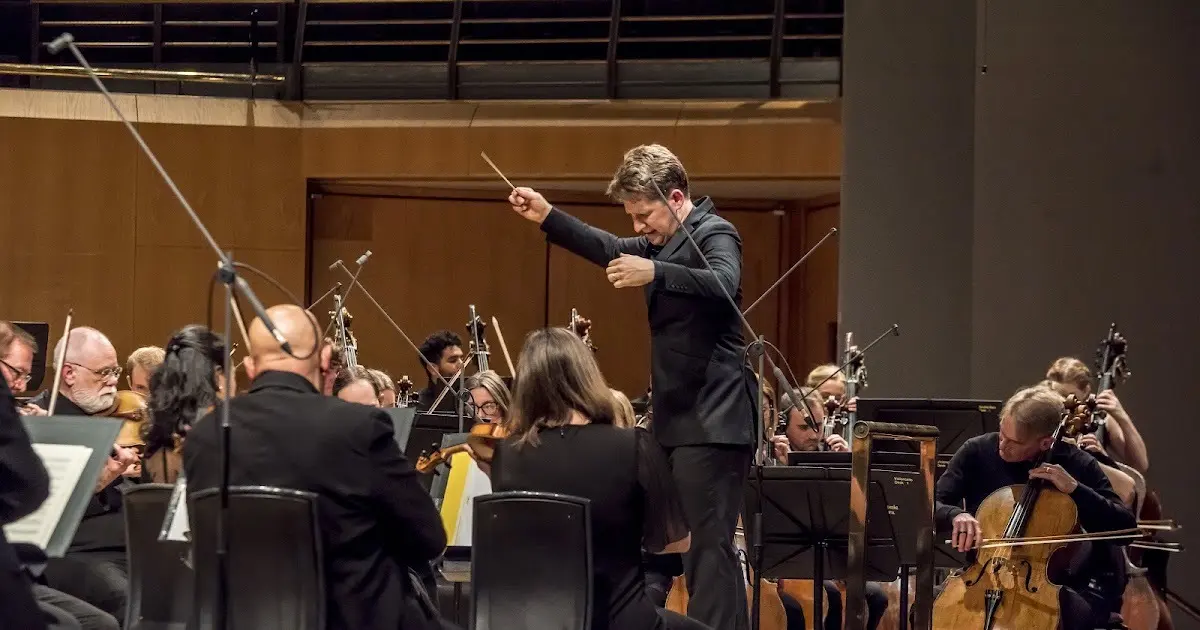
The orchestral landscape of the United Kingdom is undergoing a significant generational shift. Hot on the heels of John Storgårds—whose tenure as chief conductor of the BBC Philharmonic runs until September 2028, and who recently launched his inaugural season as music director of Canada’s National Arts Centre Orchestra—comes a major announcement regarding the future leadership of one of the BBC’s premier performing ensembles. American conductor Joshua Weilerstein has been officially named the next Chief Conductor of the BBC Philharmonic.
This strategic appointment signals a bold, forward-looking chapter for the Manchester-based orchestra. Weilerstein, recognized internationally for his dynamic interpretations, imaginative programming, and deep commitment to audience engagement both inside and outside the concert hall, is uniquely positioned to steer the ensemble into the late 2020s and beyond.
Weilerstein’s appointment arrives at a fascinating juncture in European classical music. As symphony orchestras globally grapple with the challenges of post-pandemic audience development, digital integration, and the pressing need to make classical repertoire more accessible, the choice of Weilerstein underscores the BBC Philharmonic’s dedication to vibrant storytelling, adventurous curation, and artistic excellence.
Currently serving as the music director of the Orchestre National de Lille and preparing to conclude his successful tenure as chief conductor of the Aalborg Symphony Orchestra at the close of the 2027/28 season, Weilerstein brings a wealth of international experience, an illustrious pedigree, and a proven track record of artistic innovation to the BBC Philharmonic podium.
Detailed Chronology: Building a Musical Partnership
The appointment of Joshua Weilerstein as chief conductor is not the result of a sudden executive decision, but rather the culmination of a carefully nurtured, organic artistic relationship built across several seasons of intensive collaboration.
Early Foundations and Shared Repertoire
While Weilerstein has built an enviable global profile guest-conducting major orchestras across North America and Europe, his connection with the BBC Philharmonic blossomed through a series of high-profile performances in Manchester and on the national stage at the BBC Proms. Orchestral musicians often speak of a chemistry that transcends the mechanical execution of notes; from their earliest rehearsals together, Weilerstein and the players of the BBC Philharmonic demonstrated an immediate, intuitive rapport.
The 2025 BBC Proms Breakthrough
A critical milestone in cementing this relationship occurred during the 2025 BBC Proms season. Weilerstein led the BBC Philharmonic in a boldly curated program that showcased his hallmark stylistic versatility. The concert juxtaposed the jazzy Americana of clarinet concertos by Aaron Copland and Artie Shaw with the muscular, cinematic scope of Sergei Rachmaninov’s Symphonic Dances.
Crucially, the program also featured the Second Symphony by French composer Elsa Barraine—a work originally premiered by the BBC Symphony Orchestra back in 1938. By championing neglected twentieth-century masterworks alongside beloved staples, Weilerstein demonstrated to both critics and BBC Radio 3 listeners that he possessed the curatorial courage and historical curiosity demanded of a modern chief conductor.
The April 2026 Manchester Residency
The momentum continued into April 2026, when Weilerstein took to the podium in Manchester for another critically acclaimed program. This concert further stretched the stylistic boundaries of the ensemble. It featured Duke Ellington’s evocative jazz-orchestral masterpiece Harlem, paired with the dazzling technical demands of Soviet-Russian composer Nikolai Kapustin’s Fourth Piano Concerto, performed alongside pianist Frank Dupree. The program was anchored by Antonín Dvořák’s perennial favorite, the New World Symphony.
Reviewers and audience members alike noted the infectious energy Weilerstein brought to the performance, seamlessly bridging the gap between classical tradition and twentieth-century jazz-infused modernism. This performance proved to be the decisive audition, cementing the mutual admiration between the conductor and the orchestra that has now culminated in his appointment.
Supporting Context & Metrics: Pedigree, Education, and Digital Pioneering
To fully understand Joshua Weilerstein’s artistic DNA, one must look at his background, education, and his contributions to classical music advocacy outside the traditional concert hall.
Musical Heritage and Training
Born in 1987 into a deeply musical family, Weilerstein was immersed in the classical tradition from infancy. His father, Donald Weilerstein, was the founding first violinist of the legendary Cleveland Quartet, instilling in young Joshua a profound appreciation for chamber music phrasing, listening, and collaborative artistry.
Weilerstein pursued formal training at the prestigious New England Conservatory of Music in Boston, where he studied both violin and conducting. Recognizing early on that his primary calling lay on the podium, he sought mentorship from master conductors, studying closely with figures such as Hugh Wolff.

The Malko Competition Triumph
Weilerstein’s international breakthrough arrived in 2009 when he competed in the prestigious Malko Competition for Young Conductors in Copenhagen. Delivering poise, technical command, and interpretive maturity well beyond his years, Weilerstein captured both the First Prize and the Audience Prize. In doing so, he made history by becoming the youngest first-prize winner in the competition’s storied annals, instantly launching a global career that has seen him guest-conduct the New York Philharmonic, the Los Angeles Philharmonic, the Orchestre de Paris, and the Deutsches Symphonie-Orchester Berlin, among many others.
Sticky Notes: Demystifying Classical Music
In addition to his prowess on the podium, Weilerstein is recognized globally as an educational innovator and digital pioneer. In 2017, he launched Sticky Notes, a classical music podcast designed to break down barriers between complex orchestral masterworks and general audiences.
With millions of downloads worldwide, Sticky Notes has earned praise for its engaging, jargon-free breakdowns of symphonic repertoire, concertos, and opera. By talking listeners through the emotional, historical, and structural components of masterworks by Beethoven, Mahler, Stravinsky, and beyond, Weilerstein has proven himself to be a passionate evangelist for the art form. This digital fluency and educational mindset align perfectly with the BBC’s core public service remit, promising exciting avenues for audience outreach and digital broadcasting during his tenure.
Official Statements and Industry Perspective
The announcement of Weilerstein’s appointment has generated considerable excitement across the British classical music sector.
Industry analysts have praised the BBC Philharmonic for securing a conductor who bridges the gap between traditional orchestral excellence and twenty-first-century cultural relevance. While formal press releases from the BBC and Weilerstein’s management outline the administrative timeline—including the transition of his current obligations in Lille and Aalborg—colleagues within the orchestral community have been quick to voice their enthusiasm.
"Joshua represents a rare breed of modern conductor," noted one prominent European orchestra manager. "He possesses absolute technical command, a deep respect for historical performance practice, and an infectious enthusiasm that electrifies both the orchestra and the hall. The BBC Philharmonic has made a visionary choice."
The appointment also highlights the fluid, global nature of modern orchestral leadership. As John Storgårds prepares to focus heavily on his new role in Canada while maintaining his connection to Manchester through September 2028, Weilerstein’s gradual integration ensures a seamless transition of artistic vision. The overlap allows for a period of collaborative continuity, ensuring that the BBC Philharmonic remains at the cutting edge of broadcasting, recording, and live performance.
Future Outlook: What Lies Ahead for the BBC Philharmonic
As the classical music world looks toward the late 2020s and early 2030s, the partnership between Joshua Weilerstein and the BBC Philharmonic opens up a wealth of tantalizing possibilities.
1. Expanded Repertoire and Curatorial Boldness
Given Weilerstein’s track record—typified by his juxtaposition of Elsa Barraine, Duke Ellington, and Nikolai Kapustin—audiences can expect ambitious, cross-genre programming. The BBC Philharmonic has historically championed British music alongside international masterworks; Weilerstein’s global perspective is expected to introduce fresh American, European, and contemporary voices to the orchestra’s annual season in Manchester and its regular broadcasts on BBC Radio 3.
2. Enhanced Digital and Educational Initiatives
With Weilerstein’s extensive background in podcasting and music advocacy through Sticky Notes, the BBC Philharmonic is uniquely equipped to expand its digital footprint. Expect innovative pre-concert talks, digitally enhanced broadcast formats, and targeted educational initiatives designed to cultivate the next generation of orchestral music lovers across Greater Manchester and the wider United Kingdom.
3. International Touring and Recording
Under Weilerstein’s leadership, the orchestra is poised to strengthen its international profile. Plans are already underway to leverage Weilerstein’s extensive contacts in North America and continental Europe—bolstered by his ongoing work with the Orchestre National de Lille—to secure high-profile international touring engagements and landmark recording projects.
Conclusion
The appointment of Joshua Weilerstein as chief conductor marks the dawn of an exhilarating new chapter for the BBC Philharmonic. By uniting a world-class ensemble known for its stylistic versatility with a visionary, digitally fluent, and passionately communicative maestro, the orchestra has secured an artistic leader capable of navigating the complexities of the modern musical landscape. As Manchester prepares to welcome Weilerstein to the permanent podium, classical music enthusiasts can look forward to an era defined by artistic daring, intellectual curiosity, and unforgettable live performances.