Executive Overview
As an avid tennis player, I never imagined that a sudden sports injury would lead me to discover a completely different obsession. Forced to take an extended break from the familiar greens and hardcourts of tennis, I recently picked up a padel racket for the first time. I assumed that years of technical training, muscle memory, and court awareness would grant me an immediate head start. After all, how fundamentally different could two racket sports truly be?
To my profound surprise, the answer was a resounding "very."
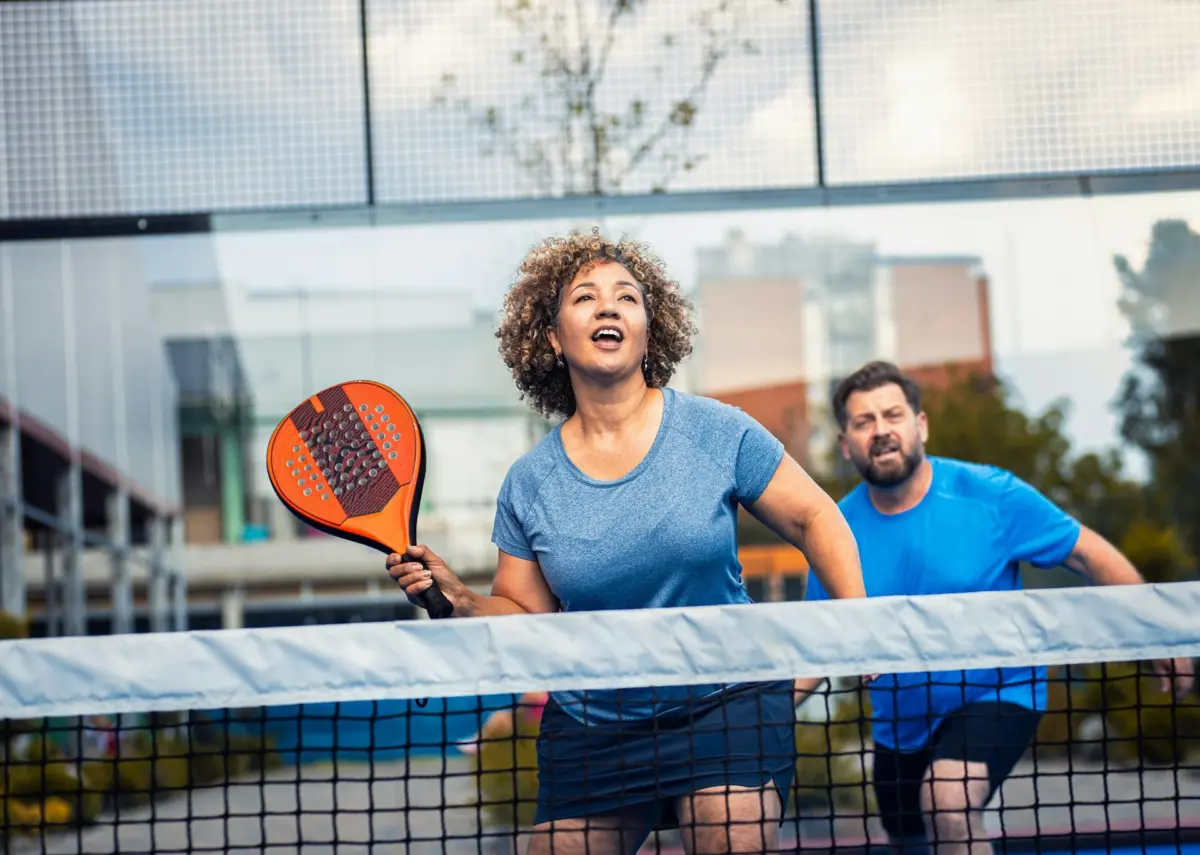
Padel—an enclosed-court racket sport combining elements of squash and tennis—is currently experiencing explosive global growth, cementing its status as the fastest-growing racket sport worldwide. While tennis and padel share clear technical lineages, they demand vastly different cognitive frameworks. I soon discovered that my deeply ingrained tennis instincts were actually holding me back. Hitting harder was rarely the solution; attacking prematurely left me dangerously exposed; and patience, spatial positioning, and precise anticipation proved far more valuable than raw power.
This on-court epiphany sparked a deeper line of inquiry. As a researcher in strategic management—whose academic focus centers on how people and organizations navigate uncertainty, allocate limited resources, and make decisions to secure competitive advantages—I began to recognize these exact corporate and structural challenges playing out across the glass walls and artificial turf of the padel court.
What if the secret to elevating one’s padel game lies not merely in perfecting physical swing mechanics, but in cultivating a strategic mindset? By merging the academic rigor of strategic management theory with athletic execution, players can fundamentally transform how they approach competition. This article explores four actionable ways to think like a strategist, leverage resource orchestration, sharpen attention, challenge assumptions, and employ backward reasoning to level up your padel game.
Detailed Chronology: From Mexican Innovation to Global Phenomenon
To fully appreciate the tactical nuances of padel, one must understand its evolutionary trajectory. The sport’s journey offers a fascinating study in market disruption and organic growth.
The Origins in Acapulco (Late 1960s)
Padel was born in Acapulco, Mexico, in 1969. Conceived by Enrique Corcuera, the sport was initially designed as a space-saving modification to tennis. Corcuera enclosed his residential tennis court with walls of varying heights to prevent balls from flying into neighboring properties and to stop dense vegetation from intruding. Crucially, he incorporated the surrounding walls directly into the rules of play—borrowing concepts from squash—allowing players to hit the ball after it rebounded off the barriers.
The Iberian Peninsula Explosion
While conceived in Mexico, padel found its spiritual and commercial home in Spain and Latin America. During the late 1970s and 1980s, the sport was introduced to Spain (specifically Marbella) by friends of Corcuera, most notably Alfonso of Hohenlohe-Langenburg. It rapidly captured the imagination of the Spanish elite, eventually cascading down into public sports clubs and municipal facilities. For decades, Spain remained the epicenter of the sport, producing the vast majority of the world’s elite professional players and boasting millions of casual practitioners.
The Contemporary Global Boom
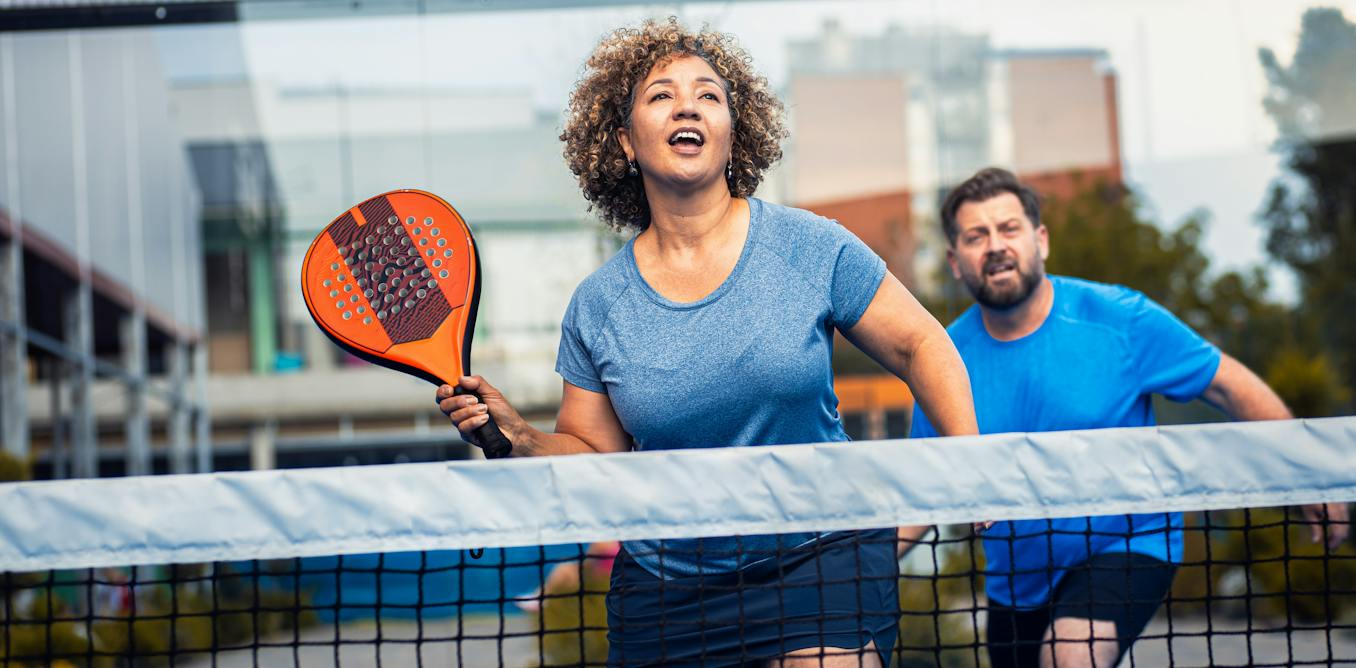
Over the past decade, padel has transitioned from a regional obsession to a global phenomenon. Driven by strategic investments in infrastructure, celebrity endorsements (from athletes like Lionel Messi and Zinedine Zidane), and the sport’s innate accessibility, padel has disrupted the genteel world of lawn tennis. Unlike tennis, which often features a steep learning curve and high physical demands, padel’s smaller court size (roughly 25% smaller than a tennis court), under-compression balls, and solid, stringless bats make it instantly playable for beginners while retaining extraordinary tactical depth for advanced competitors. Today, industry analyses confirm it as the fastest-growing racket sport on the planet, with new courts opening at an exponential rate across Europe, the Middle East, North America, and Asia.
Supporting Context & Metrics: The Intersection of Management Theory and Athletics
My transition from the lecture hall to the court revealed that competitive environments, whether in a multinational boardroom or an enclosed glass padel cage, share identical systemic pressures: resource constraints, asymmetric information, high-velocity decision-making, and the need for strategic agility.
Resource Orchestration Theory on the Court
In strategic management, resource orchestration theory—a framework popularized by organizational theorists—emphasizes that a manager’s success depends not simply on the static resources they possess, but on how effectively they structure, bundle, and leverage those resources to create value.
On the padel court, this translates directly to doubles dynamics. Too often, players view a match through an individualistic lens ("How well can I hit the ball?"). A strategic player acts as a resource orchestrator. If your partner possesses an exceptional volley or a devastating smash, your primary strategic objective is to create operational opportunities for them to deploy those strengths. Before stepping onto the court, partners must audit their individual capabilities, discuss tactical synergies, and design a cooperative framework. Furthermore, what initially appears to be a resource constraint—such as a slower partner or a weak backhand—can be actively converted into an advantage through disciplined court positioning and tactical shielding.
Cognitive Focus and Cumulative Insight
Another vital cross-pollination between strategy and padel is the training of attention. In high-stakes business environments, cognitive bandwidth is a finite resource. Leaders who fail to filter out market noise make poor tactical decisions.
Similarly, great padel players train their attention rather than merely drilling their swing mechanics. During a match, cognitive overload is common. By intentionally narrowing your attentional focus to one specific variable per game—such as meticulously observing your opponent’s footwork patterns or analyzing the tactical deployment of their bandeja (a specialized defensive overhead shot)—you build a repository of empirical data. Over several games, these observations accumulate into strategic insight, allowing you to anticipate your opponents’ moves rather than constantly reacting in a state of cognitive panic.
Official Statements & Expert Perspectives
Industry leaders, professional coaches, and organizational scholars increasingly note the blurring lines between high-level cognitive strategy and athletic performance.
Dr. Elena Vance, a prominent researcher in strategic decision-making and organizational behavior, notes:
"The cognitive processes required to navigate hyper-competitive market uncertainty are structurally indistinguishable from those required to dominate a tactical sport like padel. In both domains, actors who rely solely on brute force or reactive maneuvers inevitably fail against disciplined strategists who manipulate environment, tempo, and positioning."
Professional padel coaches frequently echo this sentiment, emphasizing that the game is won above the shoulders rather than in the wrists. While physical conditioning and technical proficiency are baseline prerequisites to enter competitive play, the differential between intermediate players and elite competitors lies almost entirely in cognitive execution—specifically, shot selection, structural patience, and anticipatory intelligence.
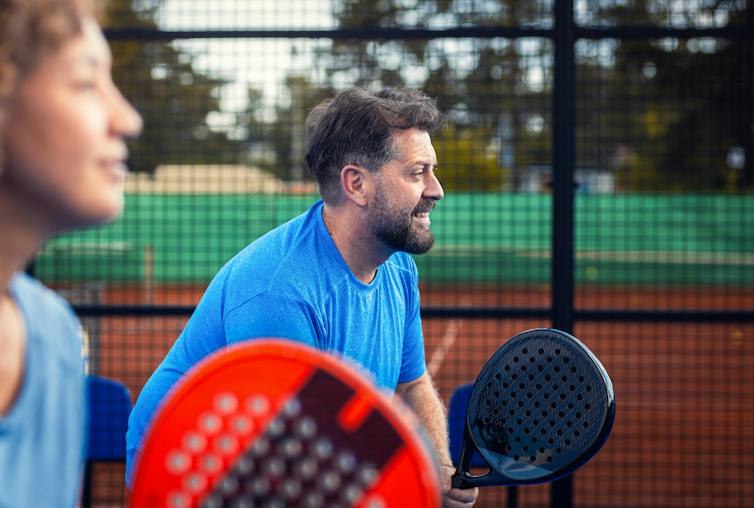
Coaching clinics worldwide are shifting their pedagogical models away from repetitive stroke drills toward situational game-based learning. By teaching players to read tactical setups, manipulate opponent court geography, and alter the spatial dynamics of the enclosure, coaches are effectively training athletes to think like corporate strategists navigating a competitive landscape.
Future Outlook: The Evolution of Tactical Racket Sports
As padel continues its exponential global expansion, the profile of the average player is evolving rapidly. We are moving away from an era where former tennis players could dominate purely on the back of superior athletic strokes and raw power. The future belongs to the "tactical orchestrator."
1. The Death of Reactive Play
The modern padel landscape demands an abandonment of purely reactive play. As court surfaces, racket technology, and player athleticism continue to professionalize, waiting to see where an opponent hits the ball is no longer a viable strategy. Future training methodologies will increasingly incorporate decision-making simulations, cognitive load testing, and advanced spatial awareness training borrowed from organizational strategy and military tactical planning.
2. Backward Reasoning as the Industry Standard
The adoption of backward reasoning—a core principle of game theory and strategic management—will become standard coaching currency. Players will no longer ask, "Where should I hit this ball right now?" Instead, they will systematically deconstruct points from the desired end-state backward: "What court position do I need to occupy two shots from now, and what precise tactical intervention can I execute today to compel my opponents into granting me that space?"
By visualizing a scenario where opponents dominate the net, a strategic player resists the urge to force an ill-advised, low-percentage winner. Instead, they execute a soft, high-trajectory lob or a calculated drop shot designed to rob the opponents of their net advantage, forcing a structural retreat and establishing a favorable position to control the rally on the subsequent turn.
3. Cross-Disciplinary Learning
Ultimately, the cross-pollination between academic disciplines like strategic management and practical athletic pursuits highlights a profound truth: excellence is universal. Whether you are reallocating capital assets in a volatile market or orchestrating defensive formations inside a glass-walled padel court, the fundamental mechanisms for achieving a competitive advantage remain identical.
To become a better player in padel, tennis, or any complex racket sport, the smartest way to win a point is consistently to out-think, rather than merely out-play, your opponent. The next time you step onto the court, remember that your strategic mindset is a trainable skill—one that, when cultivated with discipline and foresight, will permanently elevate your game.