Executive Overview
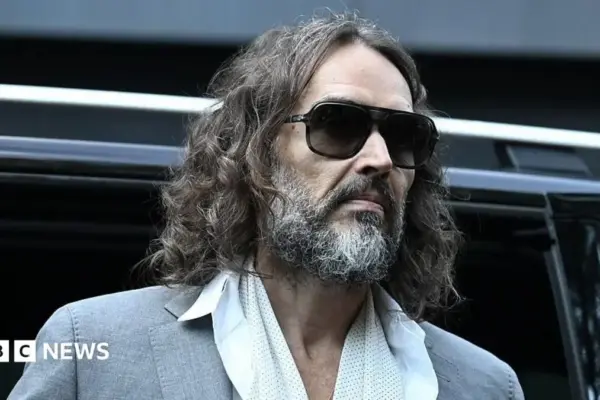
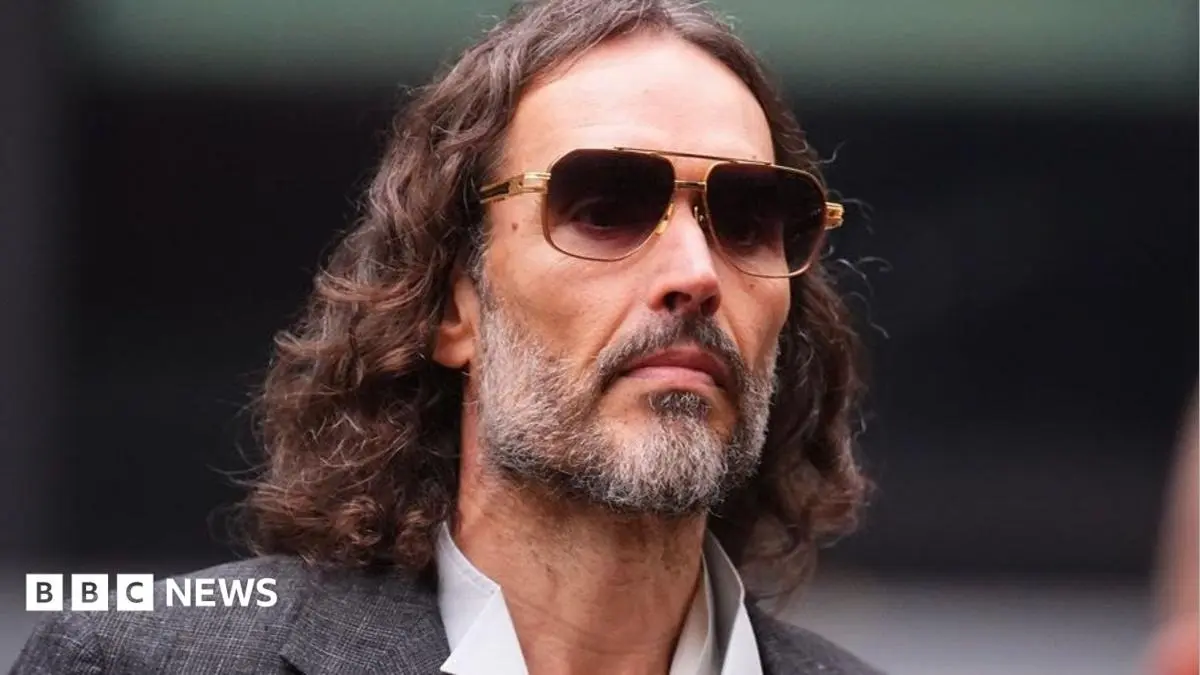
The Metropolitan Police have signaled a profound shift in accountability within the British entertainment industry following the landmark conviction of entertainer and comedian Russell Brand. On Thursday, a jury at Southwark Crown Court found the 51-year-old guilty of one count of rape and three counts of sexual assault, stemming from a pattern of abuse perpetrated against women during the height of his fame between 1999 and 2009. Brand was acquitted of two additional rape charges and one count of attempted indecent assault, but he now faces what presiding judge Mr Justice Bennathan warned will be a "significant custodial term" when he is formally sentenced on Monday.
In the wake of the verdicts, Metropolitan Police Commissioner Sir Mark Rowley stated publicly that he "wouldn’t be surprised" if additional victims stepped forward with allegations against Brand. Sir Mark revealed that the force is actively pursuing two separate, ongoing rape investigations into the comedian, for which Brand has already been interviewed under caution.
The fallout from the trial has extended far beyond the courtroom, triggering intense political scrutiny regarding Brand’s historical associations with prominent figures in the Labour Party, placing senior television executives under professional jeopardy, and reigniting a national debate over the prevalence of rape myths within British judicial proceedings. As Brand spends the weekend remanded in custody, the case stands as a watershed moment for how institutions handle the intersection of celebrity, power, and sexual offending.
Detailed Chronology of the Trial and Legal Proceedings
The legal reckoning for Russell Brand followed a protracted investigation that culminated in a high-stakes criminal trial at London’s Southwark Crown Court. Brand faced allegations brought by six women whose testimonies collectively mapped a decade of predatory behavior between 1999 and 2009—a period during which Brand ascended from an alternative stand-up comic to one of the most recognizable and ubiquitous figures in British media, commanding high-profile roles across television, radio, and film.
During the proceedings, prosecutors detailed how Brand systematically leveraged his immense fame, cultural cachet, and professional dominance to coerce women into sexual activity. The trial exposed a stark power dynamic wherein victims felt isolated, disbelieved, or professionally vulnerable if they resisted.
The defense strategy deployed during the trial drew sharp criticism from law enforcement leaders. Legal representatives for Brand argued to the jury that none of the complainants had, in the defense’s phrasing, "resisted, screamed or even tried to leave." This line of argumentation relied heavily on outdated stereotypes regarding how victims of sexual violence are expected to respond during an assault.
Prior to the commencement of the trial, Brand’s legal team made desperate attempts to have the entire criminal case dismissed. During a pre-trial hearing in October, his lawyers argued that extensive media coverage—specifically surrounding a high-profile investigative documentary broadcast by Channel 4—had so thoroughly polluted the public sphere that a fair trial was impossible. Mr Justice Bennathan rejected these motions, allowing the judicial process to proceed.
Following the jury’s verdicts on Thursday, Brand was immediately denied bail. He was remanded in custody to spend the weekend awaiting his sentencing hearing on Monday.
Simultaneously, the conclusion of the criminal trial brought public attention to separate, ongoing legal jeopardy. The Metropolitan Police confirmed that Brand is facing additional allegations of rape made by two other women. While these complaints did not form part of the criminal trial—and include allegations from a woman who was 16 years old at the time and featured in the Channel 4 documentary—police confirmed that Brand has already been questioned under caution. The Met’s wider investigation into these supplementary claims remains open and active.
Supporting Context & Metrics: The Enabler Ecosystem and Corporate Fallout
The conviction of Russell Brand has cast a harsh light on the corporate and personal networks that surrounded the comedian during his years of unchecked behavior. Central to this scrutiny is Jack Bayles, currently serving as the head of comedy for the prominent television production company Various Artists Ltd (VAL).
At the time of one of the sexual assaults in 2009—committed while Brand was working on a Channel 4 project—Bayles was a member of Brand’s immediate entourage. According to testimony presented during the trial, a female production assistant was pressured by Brand’s staff, including Bayles, to administer a massage to the comedian under the threat that Brand would refuse to continue working otherwise. Shortly after complying, the victim was sexually assaulted by Brand.
The victim’s manager testified that the woman had immediately reported the incident, describing how Bayles and another staff member laughed while the assault took place. In the wake of the guilty verdicts, Various Artists Ltd issued a swift statement announcing that Bayles had been asked to "step back from the company whilst we consider the verdict and events surrounding the trial." VAL’s statement emphasized that corporate leadership’s primary thoughts were with Brand’s victims. Prior to his suspension, Bayles’s commissioning portfolio included critically acclaimed and commercially successful television series such as Derry Girls, This Way Up, Back, and Hullraisers.
In a public statement addressing his association with the events of 2009, Bayles expressed remorse while claiming a lack of direct memory regarding the assault itself.
"I am appalled and sickened by Brand’s actions and have co-operated fully and voluntarily with the investigation," Bayles stated. "However, I do not remember the incident that took place 17 years ago in 2009. But I acknowledge that I clearly missed something at the time and did not see nor recognise that it caused distress. For that I am sincerely sorry."
Bayles characterized the working environment surrounding Brand during the late 2000s as "a frantic, pressured and toxic working environment," describing the comedian as "chaotic, dismissive and manipulated the people around him." Bayles maintained that he severed professional ties with Brand in 2010 and had no contact with him since, insisting that no formal complaints had been raised to him or senior management during his tenure with the entertainer.
Official Statements and Institutional Accountability
The cultural and political shockwaves generated by the trial prompted statements from the highest levels of British law enforcement and government, addressing both the mechanics of the prosecution and historical political miscalculations.
Sir Mark Rowley Condemns "Victim Blaming"
Metropolitan Police Commissioner Sir Mark Rowley used his appearance on BBC Radio 4’s Today programme to address systemic issues highlighted by the trial. Reflecting on the defense’s tactics regarding the complainants’ lack of physical resistance, Sir Mark stated that what he heard reported from Southwark Crown Court came "very close to victim blaming."
Sir Mark threw his unequivocal weight behind proposals from the Victims’ Commissioner calling for a statutory legal duty within the Courts and Tribunals and Bill. Such a measure would compel judges to explicitly direct juries on rape myths and misconceptions in every single rape trial.
"I would strongly support such a decision," Sir Mark said. "It shouldn’t be possible for inaccurate statements to be made to a jury to suggest that because a rape victim didn’t behave in one way that somehow undermines their case."
Praising the resilience of the women who testified, Sir Mark emphasized that sexual offending is fundamentally about the abuse of power rather than the status of the perpetrator.
"That’s a real challenge for anyone having gone through something so ghastly and you have to admire them," he said. "Whilst Brand’s case may look different because it’s about celebrity, the majority of sex offending is about people abusing power… We will do everything we can to bring to justice the powerful person who is responsible for probably the most ghastly moment in your life."
Political Repercussions: Prime Minister Andy Burnham and Labour’s Past Association
The conviction also forced political figures to confront their historical interactions with Brand, who had spent years cultivating a persona as a radical anti-establishment populist. Prime Minister Andy Burnham addressed the Labour Party’s past attempts to court Brand’s cultural influence in the years preceding the police investigation.
In the run-up to the 2015 general election, then-Labour leader Ed Miliband famously sat down for an interview with Brand—a move that Miliband has since stated he deeply regrets. Similarly, in 2014, Andy Burnham—then serving as shadow health secretary—publicly defended Brand on social media amidst media scrutiny regarding the comedian’s housing arrangements and tax affairs. At the time, Burnham posted that it was "depressing to see media mission to discredit someone who stops playing their game," urging Brand to "keep going."
Speaking to the BBC following Brand’s conviction, Prime Minister Burnham condemned the comedian’s actions unequivocally.
"His crimes are horrific," Burnham said. "All I can say is I had no idea of the full extent of what he was doing or what he went on to do. It’s not always the case that people know everything about people in public life."
Future Outlook
As Russell Brand prepares to return to Southwark Crown Court on Monday to face sentencing, the legal and social ramifications of the case are far from concluded. The immediate future will see the formal imposition of what legal experts anticipate to be a substantial custodial sentence, sending a definitive message regarding the accountability of public figures convicted of sexual violence.
Concurrently, the Metropolitan Police’s ongoing investigations into the separate rape allegations—including those detailed in preliminary legal documents involving a minor at the time—indicate that Brand’s legal jeopardy will persist long after Monday’s sentencing. Detectives continue to assess whether additional complainants will come forward, encouraged by the successful prosecution and the public backing of police leadership.
For British institutions, media organizations, and political parties, the trial serves as a permanent inflection point. It has exposed the systemic blind spots that historically allowed influential men to operate with impunity behind shields of celebrity and charm. Moving forward, the intense public and legislative focus on eradicating rape myths from courtrooms, combined with heightened scrutiny of workplace enablers like Jack Bayles, signals a fundamental recalibration in how allegations of sexual abuse against powerful individuals are investigated, prosecuted, and judged by society.