Executive Overview
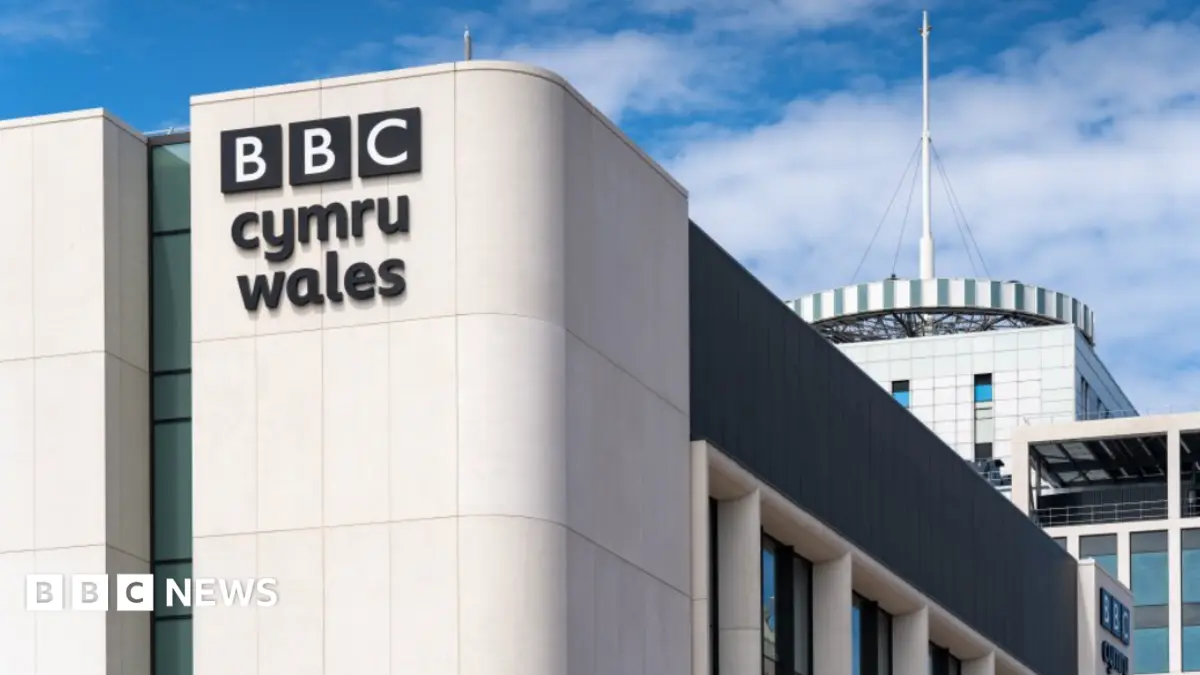
A high-stakes constitutional and cultural standoff has erupted between the Welsh Government and the leadership of the British Broadcasting Corporation (BBC). At the heart of the dispute is a package of swingeing financial cuts announced by BBC Wales in September, which includes the loss of 58 jobs and a reduction of 20 hours of annual television programming. These measures form part of a broader, UK-wide strategy by the broadcaster to plug a staggering £500m deficit.
In a sharply worded joint letter addressed to BBC Director-General Matt Brittin, First Minister Rhun ap Iorwerth and Welsh Government Culture Minister Heledd Fychan have issued a grave warning. They claim that if the proposed cuts proceed as planned, they will cause an "irreversible deterioration" in the quality, breadth, and reliability of the BBC’s coverage of Wales. Furthermore, the Welsh leaders have cautioned that the scale of the retrenchment threatens to breach the public service obligations mandated to the corporation under its foundational Royal Charter.
The intervention marks a dramatic escalation in tensions over the future of public service broadcasting in the Celtic nations. It also brings long-standing anxieties regarding regional representation, linguistic protection, and financial sustainability into sharp national focus. Copies of the letter have also been dispatched to UK Culture Secretary Lisa Nandy and Rhuanedd Richards, who took up her post as the new Director, BBC Nations, on Tuesday.
While Mr. Brittin has pushed back against the allegations—insisting that the corporation remains deeply committed to its statutory obligations in Wales—the political friction is palpable. With a crucial face-to-face meeting scheduled between the First Minister, the Culture Minister, and the BBC Director-General on November 18, the outcome of this dispute could redefine the relationship between the UK’s national broadcaster and the devolved administrations for years to come.
Detailed Chronology of the Dispute
September: The Cuts Unveiled
The crisis began in earnest in September when BBC Wales formally announced its intention to shed 58 jobs across various departments and slash 20 hours of television programming per year. Management framed the redundancy program and output reductions as an unavoidable contribution to a wider UK-wide savings drive designed to trim £500m from the broadcaster’s operational costs amid rising inflation, a frozen license fee, and shifting audience habits.
The announcement immediately sent shockwaves through the Welsh media landscape, trade unions, and the Senedd (Welsh Parliament). Critics argued that regional broadcasters, already operating on lean budgets compared to their London-centric counterparts, could ill afford further resource stripping without compromising their core democratic and cultural duties.
October to November: The Inter-Governmental Escalation
Recognizing the existential threat posed to Welsh-language and English-language public service media, First Minister Rhun ap Iorwerth—himself a former BBC journalist—and Culture Minister Heledd Fychan prepared a formal challenge to the corporation’s hierarchy.
The resulting joint letter was finalized and dispatched at the end of October. In addition to being sent directly to Director-General Matt Brittin, the missive was copied to UK Culture Secretary Lisa Nandy, underscoring the Welsh Government’s desire to draw Westminster into the regulatory debate. It also served as an immediate "welcome" of sorts to Rhuanedd Richards upon her appointment as Director, BBC Nations.
November 2: The Director-General’s Rebuttal
On November 2, Matt Brittin fired back with a formal written response designed to soothe mounting political anxieties. Brittin defended the corporation’s record, asserting that Wales occupies a central pillar in the BBC’s mission statement as a universal public service broadcaster.
Referencing the broadcaster’s submission to the government’s Charter Review green paper, Brittin stressed that the BBC must continue to amplify the democratic, cultural, and linguistic realities of every UK nation. However, his assurances did little to alleviate specific concerns regarding the tangible impact of the labor and programming cuts on regional radio and television output.
Upcoming Milestones: November 18 Summit
The next critical juncture in this standoff is slated for November 18. On this date, Matt Brittin is scheduled to sit down face-to-face with Rhun ap Iorwerth and Heledd Fychan. The closed-door meeting is expected to be contentious, with the Welsh ministers pressing for structural guarantees that core services—particularly BBC Radio Cymru and BBC Radio Wales—will be shielded from the worst excesses of the austerity program.
Supporting Context & Metrics: The Anatomy of the Cuts
To fully comprehend the gravity of the Welsh Government’s warning, one must examine the specific mechanics of the cuts and the fragile ecosystem of Welsh media they threaten to destabilize.
The Numbers Behind the Crisis
- £500 Million: The total cost-saving target mandated across the wider BBC network.
- 58 Posts: The number of jobs slated for elimination within BBC Wales under the restructuring plan.
- 20 Hours: The reduction in annual television programming commissioned and produced in Wales.
- 10 Years: The standard duration of the BBC’s Royal Charter, which dictates its core legal objectives and governance framework.
The Radio Landscape: Radio Cymru and Radio Wales Under Threat
A major point of contention highlighted in the First Minister’s letter concerns the disproportionate impact the cuts will inflict on audio services, specifically BBC Radio Cymru and BBC Radio Wales.
BBC Radio Cymru holds a unique and irreplaceable position in the Principality. It stands as the sole radio news and current affairs service operating exclusively through the medium of Welsh. The Welsh Government argues that trimming Radio Cymru’s budget does not merely reduce "plurality"—it removes services entirely where no commercial alternative exists. Because the BBC carries a singular statutory responsibility to safeguard, support, and promote the Welsh language, any retrenchment in this area strikes at the heart of its cultural charter.
Similarly, BBC Radio Wales faces acute reductions in its feature programming quotas. Government officials warn that these cutbacks will inevitably compromise the breadth and depth of the station’s output, depriving English-speaking audiences in Wales of tailored cultural, musical, and journalistic content that reflects their specific lived experiences.
+-----------------------------------------------------------------+
|                       BBC WALES SAVINGS MATRIX                  |
+----------------------------------+------------------------------+
| Metric                           | Impact / Target              |
+----------------------------------+------------------------------+
| UK-Wide Cost Reduction Target    | £500,000,000                 |
| BBC Wales Job Losses             | 58 Positions                 |
| Annual TV Programming Cut        | 20 Hours                     |
| Vulnerable Welsh-Language Outlet | BBC Radio Cymru              |
| Vulnerable English-Language Outlet| BBC Radio Wales             |
+----------------------------------+------------------------------+
Official Statements and Competing Perspectives
The war of words between Cathays Park and Broadcasting House reveals a fundamental philosophical clash over the interpretation of public service obligations in an era of financial austerity.
The Welsh Government Perspective: A Threat to Devolution and Culture
In their joint correspondence, Rhun ap Iorwerth and Heledd Fychan did not mince words regarding the broader societal fallout of the BBC’s plans:
"It is important that we convey our concerns that if the proposed changes are implemented, they will lead to an irreversible deterioration in the way in which the BBC serves the people of Wales."
They emphasized that a robust media ecosystem is intrinsically linked to the administrative goals of the Senedd:
"These cuts will have major implications for the delivery of the cultural and economic objectives for which the Welsh government is responsible, especially given our desire as a government to work towards strengthening public service media platforms in Wales."
Crucially, while the Welsh ministers acknowledged the reality of an evolving digital landscape, changing audience consumption habits, and the necessity for "fundamental reform" of how the BBC is funded, they drew a hard line at operational autonomy undermining statutory duties:
"Decisions about which services to fund are for you to make as an independent broadcaster; however, we are concerned that these changes are so significant that they risk fundamentally altering the strategic character and delivery of some of the BBC’s services in Wales. We are also concerned that the proposals risk creating a position where the BBC could potentially be in breach of the public purposes to which it has committed to uphold in the Royal Charter."
The BBC Response: Reaffirming Commitment to the Nations
Defending the corporation’s trajectory, Director-General Matt Brittin maintained that Wales remains foundational to the BBC’s identity as a national institution:
"The BBC takes its obligations to Wales extremely seriously. Wales is central to the BBC’s mission as a public service broadcaster and to our role as a UK-wide institution."
Addressing the specific concerns surrounding minority-language broadcasting, Brittin sought to reassure Welsh-speakers that their interests remain protected at the highest levels of corporate strategy:
"Welsh-language services are not peripheral to the BBC’s public purposes; they are a core part of how we serve audiences in Wales. We fully recognise the unique role the BBC plays in supporting and promoting the Welsh language and we remain committed to ensuring that Welsh-speaking audiences continue to be well served through our services and partnerships."
Future Outlook: Regulatory Scrutiny and the Road Ahead
As the November 18 summit approaches, the dispute transcends a simple budgeting disagreement; it serves as a stress-test for the governance model underpinning the UK’s public media.
The Legal and Charter Implications
The invocation of the Royal Charter by the Welsh Government is a serious legal maneuver. The Charter functions as a constitutional compact between the Crown and the BBC, establishing its public purposes—such as providing impartial news, reflecting the cultural diversity of the UK nations, and supporting minority languages. If a devolved government formally establishes that a regional branch has degraded its service delivery to the point of breaching these charter commitments, it opens the door to formal regulatory interventions by Ofcom, the media watchdog.
Key Figures and Their Influence
- Rhun ap Iorwerth: The First Minister brings intimate, insider knowledge of the institution to the negotiations. Having worked as a BBC journalist prior to his election as a Senedd Member in 2013, ap Iorwerth understands the internal pressures facing newsrooms, making his critique particularly authoritative.
- Rhuanedd Richards: Appointed as Director, BBC Nations on Tuesday, Richards steps into the role amidst a baptism of fire. A former chief executive of Plaid Cymru, Richards’ deep familiarity with Welsh civic life and political sensitivities will make her a pivotal mediator between London executives and Welsh stakeholders.
- Lisa Nandy: As UK Culture Secretary, Nandy holds ultimate oversight regarding the broader funding settlement and Charter parameters. Her office is being closely watched to see whether Westminster will intervene to protect regional broadcasting quotas or defer entirely to BBC editorial independence.
Conclusion
The collision between financial necessity and cultural preservation at the BBC highlights the deepening structural strains facing public service broadcasting in the 21st century. Whether Matt Brittin’s upcoming meeting with Welsh ministers yields compromises—such as ring-fencing funds for BBC Radio Cymru or scaling back English-language regional redundancies—remains to be seen. What is certain, however, is that the debate over how the BBC serves the nations of the United Kingdom has reached a critical inflection point, with the future of Welsh cultural identity hanging in the balance.