Executive Overview
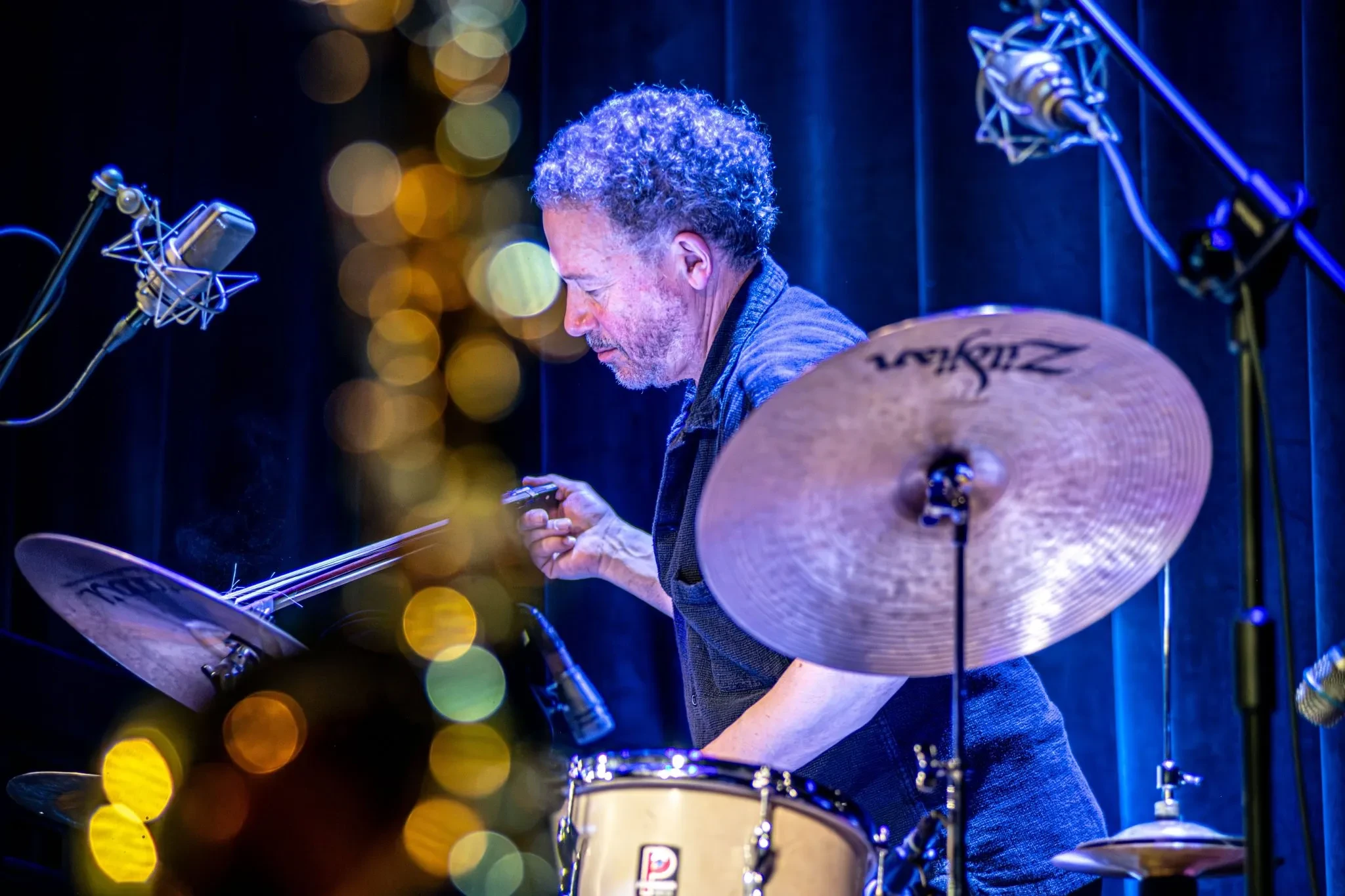
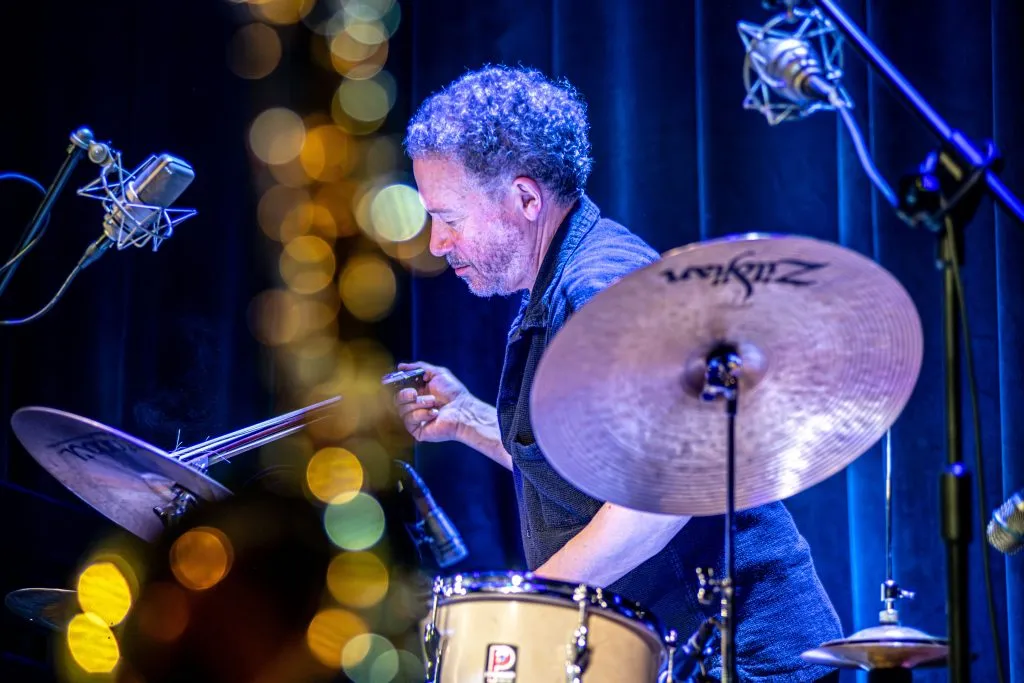
For over four decades, British-Belizean drummer Mark Sanders has occupied a singular, vital space at the bleeding edge of global avant-garde music. Born in Beckenham, Kent, in 1960, Sanders has methodically cultivated a reputation as one of the most inventive, sensitive, and technically accomplished practitioners of free jazz and free improvisation in modern music history. With a staggering discography encompassing more than 200 recordings, his rhythmic signature has driven groundbreaking sessions with many of the most formidable architects of British and international creative music.
From the formative days of London’s post-punk explosion and the fiery jazz revival of the 1980s to cross-continental collaborations and sacred music festivals curated by spiritual leaders, Sanders’ trajectory reflects the restless evolution of improvised music itself. Speaking from his home in Birmingham, the veteran percussionist remains as creatively voracious as he was when he first picked up sticks inspired by the thunderous roar of Keith Moon and the sophisticated cadence of modern jazz. This retrospective explores the life, lineage, and lasting legacy of a musician who treats the drum kit not merely as a timekeeping device, but as an infinite canvas for spontaneous composition.
Detailed Chronology: From Beckenham Beats to Global Improv
1. Genesis: The Record Collections of Beckenham
Sanders’ musical awakening was nurtured in an environment rich with contrasting auditory stimuli. His uncle’s carefully curated rock record collection offered a young Sanders his first transformative exposure to popular music, while his father introduced him to the sophisticated swing and harmonic complexity of traditional jazz.
"He was listening to good rock music. I fell in love with it all," Sanders recalls. "I loved Keith Moon. The Who was it for me, but I really enjoyed the jazz my dad was listening to as well." This duality—the explosive, theatrical abandon of rock and the cerebral, communicative interplay of jazz—laid the psychological groundwork for a musician who would later bridge structural rigidity and absolute freedom.
2. The Stockwell Crucible and the London Underground
As a teenager in the late 1970s, Sanders sought formal instruction under Warrington-based musician Nobby Clark. These lessons served as an entry point into a vibrant countercultural ecosystem.
"They took place in this house full of musicians in Stockwell in London," Sanders explains. "When Nobby moved out, he let me move in. One mate was the drummer with Lene Lovich. There was Ted Emmett who played trumpet with Teardrop Explodes."
Directly upstairs lived Paul Rogers, a pioneering double bassist who worked extensively with British jazz royalty like Stan Tracy and Evan Parker. Immersed in this hothouse of creative energy, Sanders absorbed the radical ethos of the era. He became a fixture at iconic underground venues, absorbing everything from punk rock at the Roundhouse and performances by The Jam to Motorhead supporting The Damned. "That was amazing," he reflects, noting how these diverse sonic shocks shaped his elastic approach to rhythm.
3. The Workingmen’s Clubs and the Melody Maker Era
Before cementing his place in the avant-garde, Sanders paid his dues in the trenches of commercial entertainment. Alongside a bass-playing friend, he hit the road as part of a disco covers band, enduring grueling schedules across northern workingmen’s clubs and playing three sets of ABBA covers a night. International touring followed, including stints performing at American Air Force bases in Germany. Sanders describes the period succinctly: "It was a good education."
Returning to London, Sanders found himself galvanized by the gritty, alternative post-punk sounds of groups like The Slits and The Raincoats. Seeking kindred spirits, he placed an advertisement in the legendary music weekly Melody Maker.
The ad caught the attention of bassist Simon Rose, prompting the formation of Animal Answer. The group secured a small record deal with Bonaparte Records and even claimed second place at the Woolwich Tramshed Battle of the Bands, signaling Sanders’ readiness to step into the capital’s avant-garde spotlight.
4. Mentorship, Brixton Classes, and Near-Misses with PiL
At age 20, Sanders deepened his technical foundation by enrolling in council-run evening jazz classes in Brixton, led by trumpeter Brian Tueson. Through his connection with upstairs neighbor Paul Rogers, Sanders’ network expanded exponentially to include reggae session heavyweights like Tony Uta (of Linton Kwesi Johnson’s band) and saxophonist Michael "Bami" Rose (of Cymande and Aswad). "I was learning with great players," he notes.
In 1978, Sanders made a bold bid to join the legendary post-punk outfit Public Image Ltd. (PiL), auditioning for the drummer’s chair. The position ultimately went to Jim Walker, a Berklee College of Music alumnus. "It was between me and Jim Walker, who got the job… He was fantastic. I was just starting out," Sanders recalls with characteristic humility. Decades later, however, the PiL connection came full circle when Sanders forged a long-running, fruitful collaborative relationship with the band’s former bassist, Jah Wobble.
5. Entering the Realm of Free Improvisation
Sanders’ transition into the rarefied world of free improvisation accelerated when he began attending afternoon classes led by renowned violinist Philipp Wachsmann. There, he crossed paths with electronic musician and violinist Phil Durrant.
The encounter sparked a crucial partnership: "He was playing electronics and violin. He suggested we run a regular gig as a duo, with a special guest each week."
Legendary saxophonist Evan Parker was among those guest performers. The impact was instantaneous. "He called me the next day for a gig. Then [saxophonist] Elton Dean called me and I joined his band. It was instant."
6. The 1980s Jazz Boom and International Breakthroughs
As one of the few young jazz drummers operating within London’s avant-garde circles during the late 1970s and early 1980s, Sanders found himself in high demand. To make ends meet, he balanced restaurant and bar gigs with cutting-edge performances alongside Evan Parker and composer Barry Guy.
This groundwork positioned him perfectly for the UK jazz boom of the 1980s—a genre resurgence fueled heavily by Black British artists centered in London. During this period, Sanders worked extensively with free jazz stalwarts such as Jon Lloyd, Paul Rogers, and John Edwards.
7. The 1990s: Feast, Famine, and European Expansion
The 1990s brought both hardship and triumph. Sanders maintained a rigorous recording schedule alongside Evan Parker, Elton Dean, composers Tim Richards and Simon H Fell, and pianist Veryan Weston. In 1996, he recorded with acclaimed British improviser Steve Beresford on the albums Fish Of The Week and Cue Sheet, in addition to contributing to a session for art-pop icon David Sylvian.
Despite his creative output, financial stability remained elusive for much of the decade. "You have this sort of feast and famine, especially playing improvised music," Sanders admits. "In the mid-90s, I was able to come off the dole. I started touring more high-profile gigs. I started working in Europe. I was getting calls from France and Germany. When EasyJet and Ryanair started, it was easier."
8. The Millennium and Beyond: Jah Wobble, Global Collaborations, and Over 200 Records
The year 2000 marked the beginning of Sanders’ decade-long partnership with Jah Wobble. Introduced via specialist in Asian wind instruments Clive Bell, Sanders joined Wobble’s Deep Space group for the album Beach Fervour Spare. Over the next ten years, Sanders appeared on 10 albums with the bassist.
"He [Bell] brought Wobble around to my place, we had a play, and that was it," Sanders remembers. "I learned a lot from Wobble. He was great for long, improvised grooves, each lasting about half an hour."
Concurrently, Sanders’ resume expanded to include collaborations with experimental composer John Wall, electronic duo Spring Heel Jack, the London Improvisers Orchestra, trumpeter Wadada Leo Smith, and Art Ensemble of Chicago saxophonist Roscoe Mitchell. More recent additions to his discography feature work with bassist-composer Neil Charles, saxophonist Larry Stabbins, and John Butcher. Today, Sanders’ recorded legacy spans well over 200 albums.
Supporting Context & Metrics
To understand the sheer scope of Mark Sanders’ contribution to contemporary music, it helps to examine his career through quantitative milestones and geographic achievements:
- Discographic Footprint: Credited on over 200 commercial recordings, placing him among the most prolific improvising percussionists of his generation.
- Span of Activity: A professional career spanning more than 40 years, evolving from late-1970s post-punk and disco cover bands to ultra-modern electro-acoustic free improvisation.
- Core Collaborators: Has shared the stage and studio with foundational figures of modern music, including Evan Parker, Jah Wobble, Wadada Leo Smith, Roscoe Mitchell, Barry Guy, Steve Beresford, and John Butcher.
- Geographic Reach: Has toured extensively across the United Kingdom, Europe, the United States, Lebanon, Brazil, and Japan.
Official Statements & Reflections
Reflecting on his career highlights, Sanders points to moments where music intersected with profound cultural and spiritual significance. Foremost among these is his journey to Hiroshima, Japan, alongside Jah Wobble, to perform at a sacred music festival curated by the Dalai Lama.
"It was Wobble’s band and a group of Laotian musicians [as featured on the album, Molam Dub, 2000]. It was a wonderful band, and an amazing experience."
Another cornerstone of his career is his ongoing work with saxophonist John Butcher.
"John Butcher is a big part of my career. I’d wanted to play with him for so long. He had this project called Tarab Cuts with improvising and soloing. We went to Brazil, the USA and to Beirut, which was a wonderful experience."
Sanders also treasures moments spent alongside avant-garde icons:
"Lots of great gigs with Evan [Parker], playing with people like Harold Budd. Playing with [trumpeter] Wadada Leo Smith was always a joy and doing Glastonbury with [saxophonist] John Tchicai as a duo."
Future Outlook
Despite an illustrious history that places him firmly in the pantheon of British jazz innovators, Mark Sanders exhibits no signs of slowing down or resting on his laurels. For Sanders, the exploratory spirit of free improvisation is not a destination, but a lifelong daily discipline.
"I’m always practising," he asserts, noting his uncompromising daily routine. "I was up at six this morning to avoid the heat. I love working on possible new directions. I’ve tried sticking to one area, but I really just love being versatile."
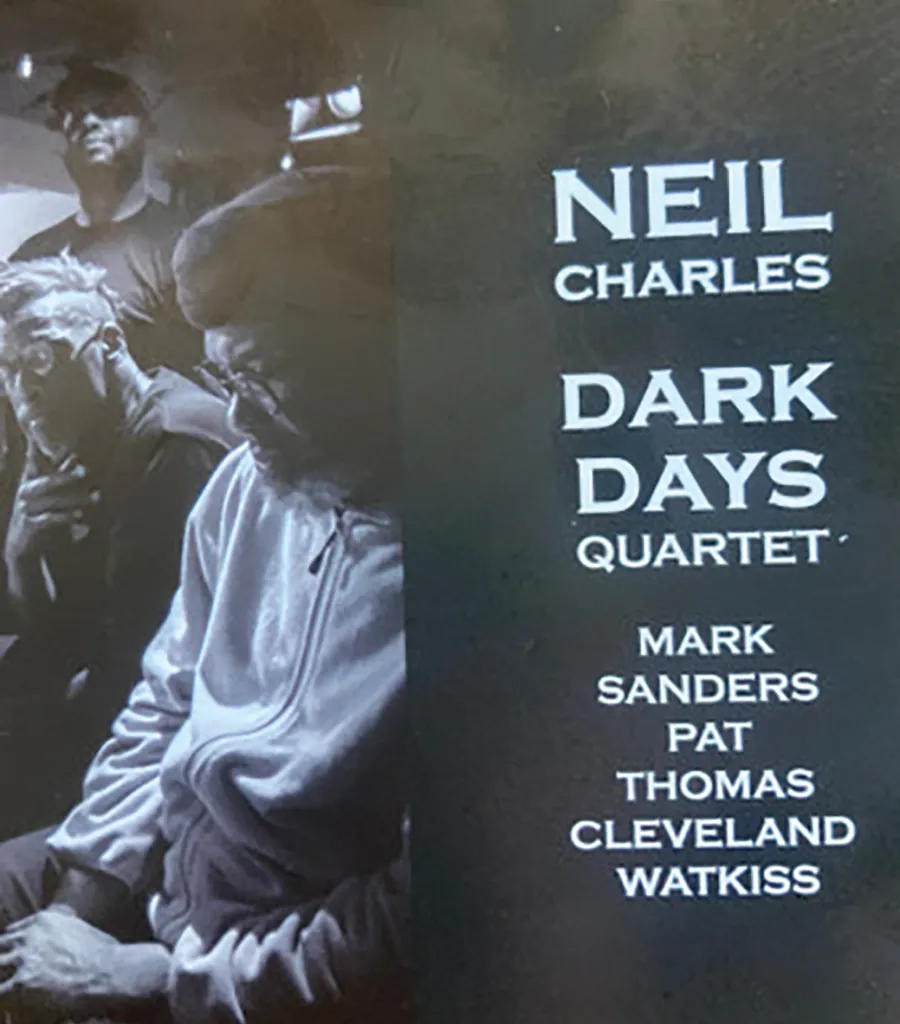
As contemporary improvised music continues to find new audiences—championed by modern releases like Neil Charles, Cleveland Watkiss, and Pat Thomas’s Dark Days on Jazz Now Records—Mark Sanders remains an indispensable pillar of the movement. Whether navigating the complexities of electro-acoustic soundscapes or holding down hypnotic, thirty-minute bass-heavy grooves, Sanders approaches every rhythm as an uncharted territory waiting to be discovered anew.