Executive Overview
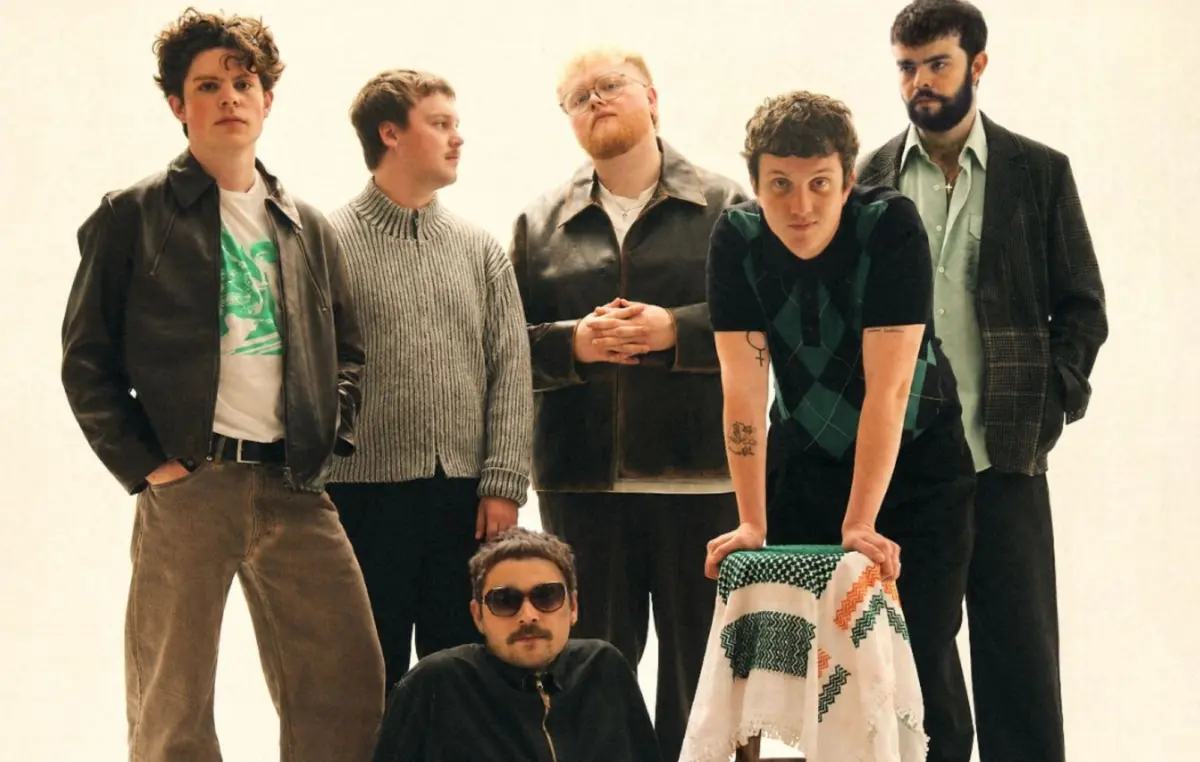
In an era defined by the global resurgence of radical, genre-defying Irish music, Dublin-based six-piece Madra Salach have formally announced their highly anticipated debut studio album, Gorta. Scheduled for release on January 15 via Island Records, the LP marks a pivotal milestone for the group, following the critical underground acclaim of their debut EP, It’s A Hell Of An Age.
Accompanied by the immediate release of its lead single, "Ribbon Factory," Gorta—taking its name from the Irish word for "hunger"—promises to expand upon the band’s signature blend of traditional Irish folk instrumentation and dark, experimental gothic soundscapes. Recorded in New York under the helm of acclaimed producer Loren Humphrey (noted for his work with Westside Cowboy and Cameron Winter), the forthcoming 11-track record probes deep into themes of ancestral inheritance, psychological displacement, and modern existential longing.
+-----------------------------------------------------------------------+
|                         ALBUM SPECIFICATIONS                          |
+---------------------+-------------------------------------------------+
| Artist              | Madra Salach                                    |
| Title               | Gorta ("Hunger")                                |
| Release Date        | January 15                                      |
| Label               | Island Records                                  |
| Lead Single         | "Ribbon Factory"                                |
| Lead Producer       | Loren Humphrey (New York Sessions)              |
| Key Personnel       | Paul Banks (Frontman/Primary Songwriter)        |
| Visual Design       | Oscar Torrans (featuring medieval Blemmyes)     |
+---------------------+-------------------------------------------------+
Madra Salach’s rise represents a fascinating case study in contemporary music culture: the rapid ascension of a group that initially sought only a quiet corner within Dublin’s niche folk revival, only to find themselves propelled to major-label status and critical acclaim across international festival circuits. By embedding raw personal narratives inside centuries-old musical frameworks, frontman Paul Banks and his bandmates are helping redefine the sound of modern Irish identity.
Detailed Chronology: The Journey to Gorta
The trajectory of Madra Salach from local subterranean venues to an international recording contract reflects a disciplined, performance-tested approach to band development. The timeline below illustrates key milestones in the group’s evolution leading up to the unveiling of Gorta.
   [ Early 2024 ] -------------------> Release of debut EP: "It's A Hell Of An Age"
                                       Establishes raw, traditional-leaning folk footprint.

   [ Early 2025 ] -------------------> Writing & live debut of "Ribbon Factory"
                                       Band begins shifting toward heavier, gothic textures.

   [ Spring 2026 ] ------------------> Breakout performances at The Great Escape
                                       Named in Top 10 shows by NME; major label interest peaks.

   [ Mid-to-Late 2026 ] -------------> New York sessions with producer Loren Humphrey
                                       Recording of "Gorta" finalized; signed to Island Records.

   [ Late 2026 ] --------------------> Official announcement of "Gorta" & release of single
                                       Pre-orders open; global distribution strategy launched.

   [ January 15 ] -------------------> Scheduled worldwide release of "Gorta" LP
Phase I: Foundations and It’s A Hell Of An Age
Madra Salach first emerged from the dense ecosystem of Dublin’s acoustic session circuit. Their debut EP, It’s A Hell Of An Age, established their core sonic palette: rich multi-instrumental arrangements anchored by traditional Irish cadences, underpinned by a brooding lyrical sensibility. The release earned the group a fervent local following, positioning them alongside contemporary revivalists while hinting at an underlying aggression that set them apart from conventional folk purists.
Phase II: The Crucible of the Live Circuit (2025)
In early 2025, the band composed "Ribbon Factory," a song that would fundamentally alter their creative trajectory. Rather than rushing into the studio, Madra Salach opted to road-test the track extensively across Ireland and the UK throughout 2025. This period of continuous touring allowed the six-piece to refine their stage dynamics, transforming their performances into high-energy communal events and laying the groundwork for their debut full-length album.
Phase III: Festival Breakthrough and International Acclaim
By the time Madra Salach performed at The Great Escape industry showcase, their live reputation had reached a tipping point. Critics and talent scouts noted their ability to combine traditional folk dexterity with post-punk intensity. Inducted into event coverage as one of the festival’s top 10 standout acts, the band was lauded for delivering an "impassioned, snarling take on traditional Irish folk" that functioned as a "communal emotional exorcism." This industry visibility catalyzed their signing with Island Records.
Phase IV: The New York Sessions & Unveiling
To capture their evolving sound, the group relocated to New York to collaborate with producer Loren Humphrey. The cross-Atlantic transition stripped the band of familiar environmental comfort zones, resulting in a tighter, more atmospheric studio recording. The culmination of these sessions is Gorta, heralded by the official release of "Ribbon Factory" and the opening of global pre-orders.
Supporting Context, Sonic Profile & Visual Symbolism
The Modern Irish Music Renaissance
Madra Salach’s emergence occurs within a broader cultural zeitgeist. Over the past decade, Irish traditional music has undergone an uncompromising reinterpretation. Bands across post-punk, experimental folk, and avant-garde traditional genres have abandoned romanticized nostalgia in favor of confronting historical trauma, modern socio-economic pressures, and spatial displacement.
+-----------------------------------------------------------------------+
|                    THE MODERN IRISH SOUND SPECTRUM                    |
+-------------------+---------------------------------------------------+
| Traditional Folk  | Acoustic, preservation-focused, historical        |
| Purism            | repertoire.                                       |
+-------------------+---------------------------------------------------+
| Contemporary      | Politically charged, urban narratives, heavy      |
| Post-Punk         | guitar-driven instrumentation.                    |
+-------------------+---------------------------------------------------+
| Madra Salach's    | Fusion of traditional acoustic structures with    |
| Gothic Hybrid     | gothic dread, industrial motifs, and visceral,    |
|                   | performance-driven dynamics.                      |
+-------------------+---------------------------------------------------+
Where traditional folk often leans on acoustic simplicity, Madra Salach introduces gothic dread and industrial motifs. "Ribbon Factory" exemplifies this approach: the track utilizes driving rhythm sections and ominous instrumental textures to evoke the bleakness of early industrial labor and internalized emotional toll.
Production Dynamics: The Loren Humphrey Collaboration
Recording Gorta in New York alongside Loren Humphrey represented a deliberate artistic risk. Humphrey, known for his work with Westside Cowboy and Cameron Winter, brought an analog warmth and spatial precision to the Dublin six-piece’s arrangements.
By tracking much of the material with a emphasis on live performance energy, Humphrey preserved the chaotic, cathartic edge that characterized the band’s live shows. The production highlights the contrast between traditional Irish acoustic instruments—such as fiddle, tin whistle, and acoustic guitar—and heavier, distorted low-end frequencies that ground the record’s gothic atmosphere.
Visual Iconography: The Blemmyes
The visual identity of Gorta is anchored by cover artwork designed by renowned visual artist Oscar Torrans. The cover features a stark depiction of a Blemmyes—a mythical headless creature from ancient and medieval folklore whose facial features are embedded directly upon its chest.
       Visual Symbolism: The Medieval Blemmyes

             (   (   )   )
            (             )
           (   [ O ] [ O ] )  <--- Eyes on the Chest:
            (     ---     )       Visceral, heart-level perception;
             (   ___/   )        severance from cerebral logic.
               |       |
               |       |      <--- Headless Torso:
              /                  Displacement, lost heritage,
             /                   and survivalist identity.
This artistic choice operates on multiple thematic levels:
- Severance from Reason: The absence of a head symbolizes a reliance on visceral, chest-level emotion over detached intellectualism.
- Historical Displacement: In medieval maps, Blemmyes represented foreign, mysterious figures living on the edges of the known world—a metaphor for the historical marginalization and emigration patterns woven into Irish heritage.
- The Concept of Hunger: By placing the mouth on the torso, near the stomach, the artwork directly reinforces the album’s central concept of Gorta—an appetite that is physical, instinctual, and impossible to hide.
Official Statements & Critical Analysis
The Lyrical Philosophy of Paul Banks
In discussing the thematic foundation of Gorta, frontman and primary lyricist Paul Banks emphasizes an intimate, character-driven songwriting method rather than sweeping political manifestos.
"I usually write from personal experience. I try not to go too big-picture. I can tap into the emotions that way."
— Paul Banks, Frontman
This micro-focused approach allows Banks to explore broader socio-cultural realities through individual stories. By focusing on specific human interactions, personal regrets, and localized environments, the broader themes of historical legacy emerge organically.
               +----------------------------------+
               |     LYRICAL & THEMATIC AXIS      |
               +----------------------------------+
                                |
        +-----------------------+-----------------------+
        |                                               |
        v                                               v
[ Personal Experience ]                     [ Macro Cultural Trauma ]
  - Micro-level storytelling                  - Generational inheritance
  - Emotionally direct lyrics                 - Modern Irish identity
  - Individual longing & loss                 - Historical weight of "Gorta"
Banks elaborates on how the concept of Gorta ("hunger") mirrors the contemporary Irish experience:
"The ideas of longing and yearning, all the kinds of hunger, they slot into where we are as 21st century Irish people. The more I’ve thought and written about Irishness, the more I’ve seen how strange a history and a position and a culture we have."
— Paul Banks
The Evolution of "Ribbon Factory"
The release of "Ribbon Factory" as the album’s lead single reflects a song that served as the primary catalyst for the band’s aesthetic shift. Written in early 2025, the track became a central fixture of their live set before being committed to tape in New York.
"We wrote this one in early 2025, and have been gigging it ever since. It’s a song that totally influenced where we’re going as a band and we can’t overstate how rewarding it feels to finally share a studio version of it with you."
— Madra Salach (Official Band Statement)
Navigating Unintended Commercial Success
One of the most striking aspects of Madra Salach’s narrative is the gap between their initial ambitions and their current trajectory. Speaking candidly during an interview at The Great Escape, Banks admitted his surprise at the band’s rapid commercial growth:
"The fact that it’s having this much commercial success is blowing my mind, because my hopes for this project were to find our own little pocket in the niche folk revival so we could play small rooms in Dublin."
— Paul Banks
This subversion of expectations highlights a growing appetite among listeners for uncompromising, subculturally rooted music. Rather than smoothing down their sound for mainstream radio, Madra Salach’s rising popularity suggests that audiences are increasingly seeking out raw, authentic expressions of regional identity and emotional catharsis.
Banks further highlighted how their stage presence directly informed the recording of Gorta:
"We haven’t had a chance to really cement a new body of work yet, but the new songs we’re writing are such live songs that are so structured around a performance with energy."
— Paul Banks
Future Outlook & Strategic Trajectory
The announcement of Gorta marks the beginning of a crucial transition period for Madra Salach. Moving from independent underground darlings to a major-label roster under Island Records presents both strategic opportunities and artistic responsibilities.
+-----------------------------------------------------------------------+
|                    FUTURE STRATEGIC MILESTONES                        |
+-------------------+---------------------------------------------------+
| Pre-Release Era   | Global rollout of single "Ribbon Factory";        |
| (Q4 2026)         | promotional vinyl pressings; international press  |
|                   | campaigns.                                        |
+-------------------+---------------------------------------------------+
| Album Launch      | Worldwide digital & physical release on           |
| (January 15)      | January 15; flagship launch shows in Dublin and   |
|                   | London.                                           |
+-------------------+---------------------------------------------------+
| International     | Full-scale UK, European, and North American tours |
| Tour (Spring 2027)| testing studio material in headline venues.       |
+-------------------+---------------------------------------------------+
Industry Expectations & Album Impact
Music industry analysts and critics anticipate that Gorta will serve as a bellwether for the ongoing viability of the modern folk renaissance. The key to the album’s reception will lie in its ability to translate the band’s ferocious live presence—frequently described by critics as a "communal emotional exorcism"—into a cohesive, 11-track studio narrative.
If lead single "Ribbon Factory" is any indication, producer Loren Humphrey has successfully captured the tension between acoustic traditionalism and heavy, gothic instrumentation. By maintaining this sonic balance, Madra Salach is well-positioned to bridge the gap between traditional folk audiences, indie-rock enthusiasts, and heavy music listeners.
Long-Term Legacy
As January 15 approaches, Madra Salach stands at the forefront of a new generation of Irish artists who refuse to treat their cultural heritage as a museum piece. Instead, through Gorta, the Dublin six-piece uses the past as a lens to dissect the present—transforming historical hunger, generational trauma, and personal yearning into a powerful, contemporary musical statement.