Executive Overview
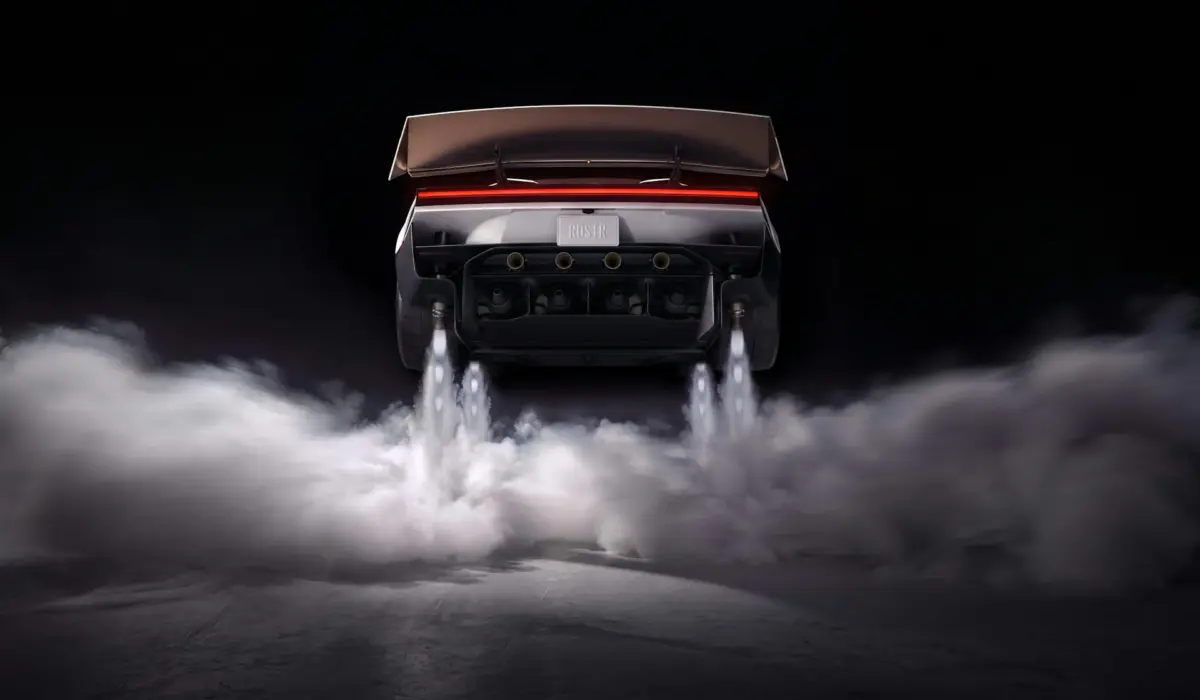
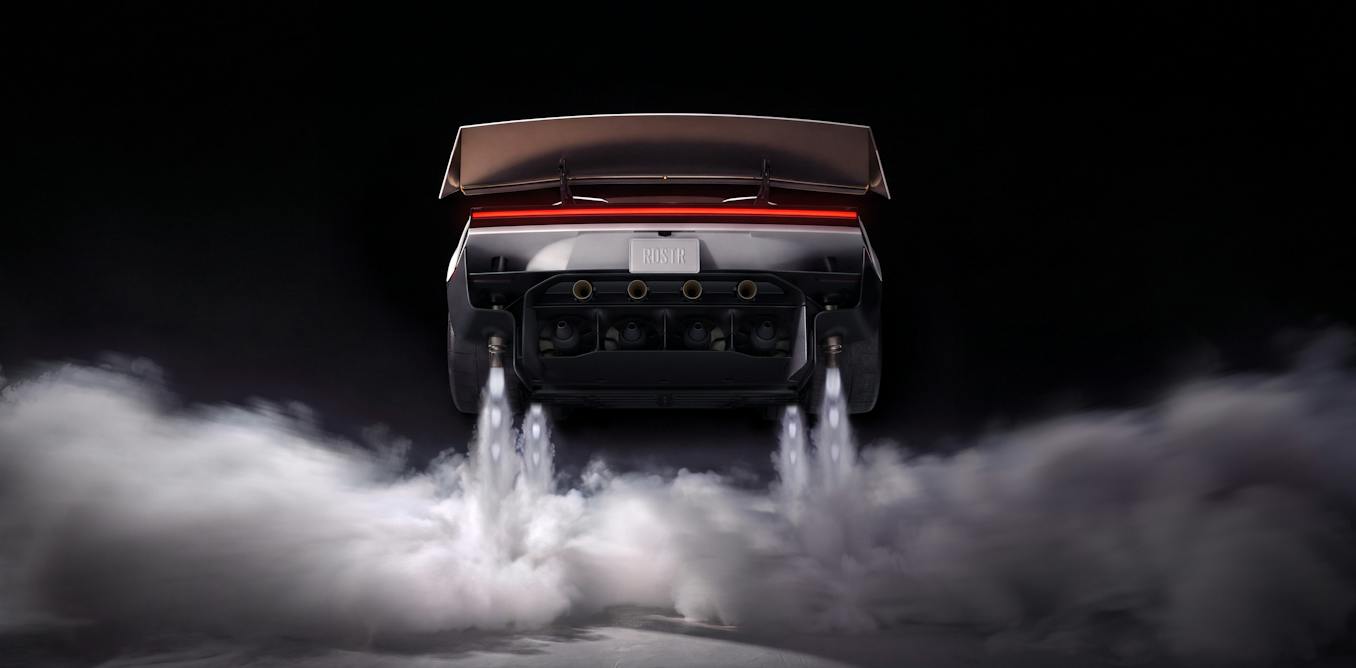
When Elon Musk pulled the curtain back on Tesla’s latest Roadster, the cultural oxygen of the internet was immediately consumed by the visceral, childhood-evoking spectacle of the demonstration. Skimming across a looping, futuristic track, climbing, banking, and descending, the vehicle seemed to pluck a tired trope directly from the pages of mid-20th-century science fiction and drop it squarely into physical reality. To the casual observer on social media, it was a breathtaking glimpse into tomorrow—or, conversely, another piece of elaborate tech-billionaire theater designed to generate hype.
Yet beneath the immediate visceral thrill of a flying car lay a far more profound, unsettling cultural milestone. According to reports surrounding the event, Musk explicitly noted that the live audience was intentionally assembled so that skeptics could not dismiss the footage as a product of artificial intelligence. In a single, off-hand rationale, Musk diagnosed the defining paranoia of our current era: seeing is no longer believing.
As a researcher specializing in performance and public communication, the most telling aspect of the Tesla reveal was not the engineering feat itself, but the psychological necessity of the crowd. For decades, humanity has leaned on visual media as a reliable proxy for truth. From Walter Benjamin’s seminal theories on mechanical reproduction to the advent of television and the internet, the photograph and the video have served as society’s empirical groundings.
Today, synthetic media, deepfakes, and generative AI have shattered that foundational trust. Because generative algorithms can fabricate photorealistic spectacles out of thin air—without ever requiring an originating event in the physical world—the digital image has lost its evidential authority. In this environment, physical crowds do not merely watch spectacles; they are drafted to serve as analog anchors in a digital storm, providing a desperate form of distributed corroboration.
Detailed Chronology: From Mechanical Reproduction to Synthetic Illusion
To understand how society arrived at this crisis of visual verification, it is necessary to trace the historical erosion of physical presence in human communication.
The Era of the Original and the Copy
For centuries, human culture tied authenticity directly to what the cultural critic Walter Benjamin famously termed an object’s "presence in time and space." A painting, a sculpture, or a live performance possessed an aura derived from its singular existence.
The invention of photography—and subsequently film and television—fundamentally rewired this dynamic. Technologies of reproduction allowed human beings to witness distant geographies and historic moments without leaving their homes. Over time, society developed an implicit social contract with the camera lens: we agreed that a recorded image carried substantial evidential weight. While photographic trickery has existed since the Victorian era, moving images largely retained a baseline presumption of truth. The camera recorded physical objects bouncing light onto a sensor or film stock; an originating event had to occur for the image to exist.
The Digital Fracture and the Rise of AI
The democratization of digital editing, followed rapidly by the explosion of generative artificial intelligence, broke this contractual bond between the image and physical reality.
Today, algorithms can synthesize hyper-realistic text, audio, images, video, and 3D assets in milliseconds. A video of a world leader saying something inflammatory no longer requires that leader to have ever uttered those words. A photograph of a catastrophic disaster no longer requires a weather event or a structural collapse.
Crucially, synthetic media does not rely on deception in the traditional sense; it bypasses the physical world entirely. It requires no camera facing an object, no lighting crew, and no physical staging. Consequently, our collective visual diet has become untethered from objective reality, precipitating a cultural vertigo where digital media can no longer prove its own authenticity.
The Tesla Demonstration as a Case Study
It is against this historical backdrop that Tesla’s Roadster unveiling must be analyzed. By bringing a crowd together in a physical space, the event relied on an archaic mechanism to solve a modern technological crisis.
The audience did not gather simply to cheer; they gathered to witness. By recording the event on hundreds of individual, disparate smartphones and broadcasting those perspectives to the world, the crowd functioned as a distributed network of human sensors. They provided what official, high-production-value corporate streams alone could no longer guarantee: friction with physical reality.
Supporting Context & Metrics: The Mechanics of Modern Deception
The anxiety surrounding synthetic media is not merely philosophical; it is empirically measurable across digital ecosystems, psychological research, and public communication studies.
The Scale of Synthetic Media Adoption
- The Deepfake Surge: According to cybersecurity and threat-intelligence tracking, the volume of online deepfakes—particularly malicious audio and video impersonations used in financial fraud and political disinformation—has grown exponentially over the past five years.
- Erosion of Public Trust: Data from media literacy organizations indicate that a growing majority of internet users across democratic nations now anticipate encountering manipulated media on a daily basis. This widespread skepticism has birthed a secondary phenomenon known as the "liar’s dividend," wherein bad actors can dismiss genuine, damaging recordings as "deepfakes" simply because the cultural climate makes such claims plausible.
- The Psychology of Witnessing: Cognitive experiments in public communication demonstrate that human brains are hardwired to attribute higher credibility to multisensory physical environments. The sight, sound, and collective energy of a live crowd act as heuristic shortcuts for truth-seeking—even though, historically, crowds have frequently been manipulated.
The Illusionist’s Precedent: Why Crowds Are Not Infallible
While physical crowds offer a buffer against AI-generated fabrication, human witnesses are historically flawed verification engines. A live audience does not automatically convert spectacle into objective truth; rather, it often authenticates an experience rather than a reality.
A classic historical parallel is found in the master illusionist David Copperfield. In April 1983, Copperfield executed one of the most famous televised illusions in history: making the Statue of Liberty appear to vanish before a live audience of spectators and roughly 50 million television viewers.
The live audience was an essential structural component of the illusion. The people physically present could look at one another, gasp, and later truthfully swear that they had seen the massive monument disappear. Yet the Statue of Liberty had not moved an inch. The audience had not authenticated an objective reality; they had been masterfully incorporated into a performance.
This reveals a vital caveat for the post-AI age: human witnesses can be deceived, manipulated, or swept up in collective misdirection just as easily as cameras can. A hundred smartphone recordings of an elaborate magic trick remain recordings of an illusion, regardless of how many human eyes were pointed at the stage.
Official Statements and Academic Perspectives
The intersection of artificial intelligence, performance art, and public communication has prompted deep introspection among media theorists, legal scholars, and technologists.
Dr. Alistair Vance, a researcher in public communication and performance studies, has long explored the crisis of institutional voices through the concept of the "unapproved orator." In modern sociotechnical systems, public communication rarely reaches an end-user in a raw, unmediated form. Instead, messages travel through dense layers of speechwriting, PR filtration, algorithmic amplification, platform governance, and AI-driven summarization.
"The core difficulty of our current communicative landscape is no longer simply determining whether a specific statement is true or false," Vance notes in recent academic work. "The crisis lies in establishing whose voice we are actually encountering and who ultimately stands behind the representation. Synthetic media accelerates this crisis by allowing representations to circulate freely while systematically scrubbing away human origin and legal accountability."
When Tesla executives orchestrated the Roadster reveal, they implicitly acknowledged this exact framework. By positioning thousands of human bodies around the test track, they were attempting to anchor the event’s provenance.
Legal and corporate communications experts suggest that as generative AI saturation peaks, organizations will increasingly rely on "proof-of-human" infrastructure. This involves shifting the burden of trust away from the media file itself and toward cryptographically verifiable chains of custody, trusted institutional witnesses, and live physical attestations.
Future Outlook: The Return to the Analog
As society navigates the uncharted waters of the generative AI revolution, the fundamental nature of trust is undergoing a radical realignment.
The Shift from "Is It Real?" to "Who Stands Behind It?"
For the past century, the guiding question of visual media has been, "Does this look real?" Viewers evaluated pixels, lighting, and shadow consistency to determine authenticity.
That question is rapidly becoming obsolete. Because AI can generate hyper-realistic imagery that defies visual interrogation, the inquiry must shift from internal aesthetics to external provenance. The critical questions of the future will be:
- Where did this media object originate?
- Who is publicly prepared to account for it?
- What human chain of custody binds this representation to the physical world?
The Paradoxical Value of Physical Presence
Paradoxically, in an era defined by hyper-advanced cloud computing, immersive virtual realities, and synthetic video, the ultimate guarantor of truth may turn out to be the most low-tech institution in human history: people gathering together in a shared space.
A human witness cannot completely solve the problem of deception; people are prone to bias, misinterpretation, and outright fabrication. However, a human witness possesses an attribute that an algorithm or a deepfake file lacks: accountability. A human witness can be questioned, cross-examined, and located within a specific spacetime coordinate to state simply, "I was there. I saw it happen with my own eyes."
In a digital landscape increasingly haunted by ghost images and synthetic phantoms, humanity may find itself borrowing the physical presence of others to anchor its sense of reality. For all the dazzling promises of rockets, autonomous robots, and flying cars, the technological future may ultimately depend upon something wonderfully, stubbornly archaic: standing shoulder-to-shoulder in the physical world, looking at the same horizon, and daring to believe what we share together.