Executive Overview
In a devastating blow to the electronic music technology sector, ROLI—the pioneering company renowned for its touch-sensitive, expressive instruments such as the Seaboard, the Seaboard Block M, and the Airwave controller—has officially collapsed into administration. The unfolding crisis, which came to light following customer notifications and investigative reports, marks a catastrophic low point for a brand that once revolutionized how musicians interact with digital sound.
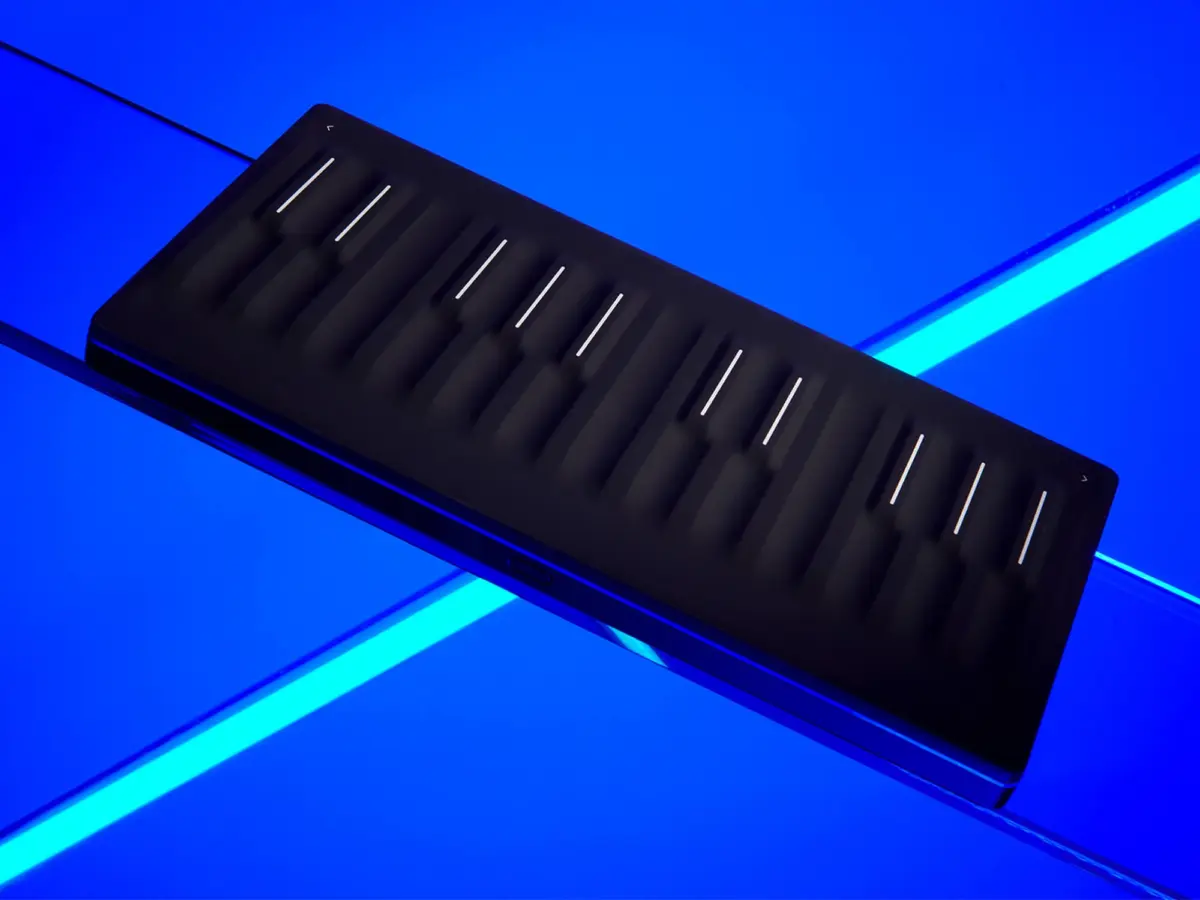
Founded on the promise of hyper-expressive, tactile control, ROLI captivated the global music community with instruments that discarded traditional piano keys in favor of soft, continuous silicone surfaces. However, years of financial turbulence, pandemic-era strains, shifting executive leadership, and mounting supply chain pressures have finally caught up with the British innovator.
As confirmed by insolvency documents, Damian Webb and Joe Barry of RSM UK Restructuring Advisory LLP were appointed as joint administrators of Luminary Roli Limited on October 20. Yet, customers across the globe were left in the dark for weeks, learning of the collapse only via automated emails or investigative journalism published in early November.
The immediate fallout is severe. Customers who invested hundreds or thousands of dollars into hardware pre-orders now find themselves facing unfulfilled shipments, unresponsive customer support channels, and a complete absence of refund pathways. Adding insult to injury, ROLI’s official website has been pulled offline, rendering its digital storefront inert, while its primary community hubs—including the company’s official Discord server—have vanished.
Beyond the immediate financial damage to consumers, ROLI’s collapse triggers a chilling existential threat to the hardware ecosystem itself. Because ROLI’s instruments rely heavily on companion software, proprietary drivers, and regular firmware updates to function within modern digital audio workstations (DAWs), users are now confronting the very real prospect of their expensive gear becoming obsolete "bricks." In response, the ROLI user community has mobilized online, attempting to organize open-source workarounds and reverse-engineering efforts to save their gear.
This article explores the anatomy of ROLI’s collapse, tracing its historical rise, financial missteps, leadership shakeups, customer grievances, and the uncertain future facing its ground-breaking technology.
Detailed Chronology: The Fall of a Music Tech Icon
To understand how ROLI arrived at its current state of insolvency, it is necessary to examine the cascading series of events that unfolded over the past several years, culminating in the administration filings of late 2020 and late 2025.
The Early Promise and First Collapse (2009–2021)
Established in 2009 by former jazz pianist and designer Roland Lamb, ROLI quickly captured the imagination of the music industry. Lamb conceptualized the Seaboard, an instrument that replaced traditional mechanical keys with a continuous, undulating soft keyboard. This design allowed performers to bend pitches, add vibrato, and modulate timbre through intuitive physical gestures—techniques previously restricted to string or wind instruments.
This innovation birthed MIDI Polyphonic Expression (MPE), a major leap forward for digital music standards that was eventually adopted by the MIDI Association at large. ROLI enjoyed widespread critical acclaim, securing high-profile celebrity endorsements from industry heavyweights like Pharrell Williams and Dream Theater keyboardist Jordan Rudess. The brand’s cultural footprint even extended to Hollywood, with its instruments appearing on screen in the Academy Award-winning film La La Land.
However, rapid hardware expansion proved financially punishing. High manufacturing costs, complex supply chains, and ambitious lifestyle-tech pivots strained the company’s balance sheets. When the COVID-19 pandemic struck in 2020, it exacerbated these underlying vulnerabilities. Despite receiving financial aid from the UK government intended to support struggling enterprises, ROLI entered administration for the first time in 2021, eventually restructuring under new terms to keep its operations afloat.
The 2025 Downward Spiral and Leadership Ousting
The post-restructuring era was rocky. While ROLI attempted to recapture market momentum with new product iterations like the Seaboard Block M and the sensor-based Airwave controller, internal fractures began to show.
Earlier in 2025, reports surfaced regarding the ousting of CEO and founder Roland Lamb. Following his departure from the company he built, a new corporate entity bearing his name—Instrumental Intelligence—was quietly registered in the United Kingdom, signaling profound internal disagreements or strategic realignments behind closed doors.
By October 2025, the situation had deteriorated beyond recovery. Rumors rippled across the music technology sector that ROLI had initiated sweeping staff redundancies, effectively skeletonizing its workforce. When industry publication MusicTech reached out to the company for comment regarding these layoffs, ROLI offered absolute silence, failing to address the mounting concerns.
The October Administration and November Disclosures
Behind the scenes, corporate death panels were already at work. On October 20, 2025, Damian Webb and Joe Barry of RSM UK Restructuring Advisory LLP were officially appointed as joint administrators of Luminary Roli Limited.
Despite this critical legal development, customers attempting to buy products or track pending shipments received no immediate, proactive notification from the company. It was not until November 2—nearly two weeks after the administration was legally sealed—that automated emails began trickling out to customer support inquirers, confirming the appointment of the insolvency practitioners. Simultaneously, investigations by outlets like Wired brought the full scale of the corporate collapse into public view.
Supporting Context & Metrics: The Human and Economic Toll
The collapse of a hardware manufacturer is never just a corporate statistic; it ripples outward to affect thousands of everyday consumers, professional producers, and software developers. The human cost of ROLI’s insolvency is currently playing out in real-time across digital forums and customer support queues.
Unfulfilled Orders and Trapped Capital
On community platforms such as Reddit (specifically the r/ROLI subreddit), a chorus of stranded buyers has emerged, detailing thousands of dollars in financial losses. Customers report waiting months—in some cases, since October 2025—for hardware that will now never arrive.

- "I still haven’t received mine and customer support isn’t responding either," wrote one frustrated customer who ordered a ROLI piano system.
- "My Airwave never came in," echoed another user, whose sentiment was mirrored by dozens of peers sharing identical stories of silence from the company.
With ROLI’s web store abruptly taken offline and its official Discord community shuttered, buyers have been left with zero official channels to request refunds or secure customer service assistance. For individuals who invested anywhere from several hundred to over a thousand dollars into pre-orders, recovering those funds through traditional consumer protection routes (such as credit card chargebacks or section 75 claims) has become a race against the clock.
The Software Dependency Dilemma
Perhaps the most anxiety-inducing aspect of ROLI’s collapse for existing owners is the software-dependent nature of modern electronic instruments. Unlike vintage analog synthesizers that operate entirely through physical circuitry, ROLI’s Seaboards and controllers are deeply intertwined with software ecosystems.
Instruments like the Seaboard Block and the Airwave rely on companion applications, custom dashboards, and regular firmware updates to interface properly with modern Digital Audio Workstations (DAWs) running on macOS and Windows. Furthermore, ROLI’s proprietary sound engines and preset libraries are tied to authorization managers and cloud-based account systems.
As server infrastructure degrades and software maintenance halts, users fear that a routine operating system update from Apple or Microsoft could permanently break compatibility with their ROLI hardware. In essence, an instrument worth thousands of dollars risks being transformed into an unusable plastic paperweight.
Grassroots Resistance: Open-Source Solutions and "Vibe-Coding"
Faced with abandonment by the corporate entity, the ROLI user community has begun organizing self-reliance initiatives. Discussions on Reddit and independent forums have pivoted toward reverse engineering, community-led driver development, and what some tech-savvy users describe as "vibe-coding."
A user-generated Discord server has been swiftly established to coordinate free, open-source workarounds for firmware and configuration software. These grassroots efforts aim to build independent software bridges, ensuring that existing hardware can continue communicating via standard MPE protocols without needing proprietary manufacturer support. While inspiring, these community-led patches are inherently precarious, relying on the goodwill and free time of volunteer software engineers rather than dedicated corporate backing.
Official Statements and Corporate Fallout
The opacity surrounding ROLI’s final weeks has drawn sharp criticism from consumer advocates and industry observers alike. The transition from a functioning business to an insolvent administration was marked by a distinct lack of transparency.
When MusicTech initially attempted to verify rumors of internal redundancies in late 2025, ROLI stonewalled inquiries, issuing no statement to calm market fears. Following the eventual confirmation of administration, subsequent media outreach was met not with a press release or a statement from executive leadership, but with an automated email response pointing directly to the insolvency firm.
The automated reply confirmed:
"Damian Webb and Joe Barry of RSM UK Restructuring Advisory LLP [were] appointed as joint administrators of Luminary Roli Limited."
This cold, bureaucratic handoff underscored the abrupt termination of ROLI’s operational life. To date, neither founder Roland Lamb nor the newly registered Instrumental Intelligence entity has issued a comprehensive public statement explaining the exact financial mechanics that led to the second administration in four years, nor what paths—if any—might exist for salvaging customer warranties, ongoing software access, or pending hardware deliveries.
Future Outlook: What’s Next for MPE and ROLI’s Legacy?
As the dust settles on ROLI’s administration, the broader music technology landscape is forced to reckon with the company’s complicated legacy.
The Survival of MPE
While the corporate entity of ROLI may be disintegrating, its most enduring contribution to music technology—MIDI Polyphonic Expression (MPE)—remains safe. MPE has transcended its creator. Today, MPE is a globally recognized standard integrated directly into the official MIDI specifications maintained by the MIDI Association. Major hardware manufacturers such as Akai, Moog, ASM, and Arturia, alongside software developers like Ableton and Bitwig, have fully embraced MPE.
Consequently, even if ROLI hardware eventually fades into obsolescence due to a lack of software support, the expressive, multi-dimensional playing style popularized by the Seaboard is here to stay. Musicians will continue bending notes and modulating timbre by touch, building upon the foundational concepts that ROLI championed over a decade ago.
Lessons for the Boutique Hardware Industry
ROLI’s trajectory serves as a cautionary tale for the boutique music technology sector. Balancing the immense capital expenditures required for physical hardware R&D with the fickle demands of the consumer electronics market is a perilous tightrope walk. Companies that rely heavily on proprietary software ecosystems face an additional burden: when the hardware company fails, the software lifeline snaps, threatening to alienate the very consumer base that sustained it.
Final Verdict for Consumers
For current ROLI owners, the immediate future is fraught with uncertainty. Hardware already in hand remains functional for now, though users are strongly advised to back up current software installers, drivers, and presets locally before web assets vanish entirely. For those with unfulfilled pre-orders, the path to recovering funds remains murky, dependent largely on individual payment provider policies and the rulings of the RSM UK insolvency administrators.
ROLI once promised a future where digital instruments were as expressive, organic, and fluid as the human hand itself. While that vision ultimately outgrew the company’s financial foundations, the echoes of its innovation will continue to resonate through the instruments and standards it leaves behind.