Executive Overview
In the sprawling, interconnected landscape of contemporary world music, few genres carry the historical weight, spiritual urgency, and rhythmic intensity of maloya. Rooted deeply in the harrowing histories of African and Malagasy people who were forcibly displaced and enslaved upon the sugar plantations of Réunion Island, maloya is much more than an auditory experience—it is a cultural lifeline, a form of communal catharsis, and an ancestral pulse. In November 2025, the boundary-pushing Réunionese ensemble Saodaj expanded this sacred tradition with the release of their sophomore studio album, Lodèr la Vi, via the esteemed label Buda Musique.
Yet, beneath the critical acclaim and the hypnotic interplay of traditional percussion and alternative rock textures lies a profound human narrative of sorrow, resilience, and immortalized friendship. The album’s poignant title track—and the emotional core of the entire project—serves as a musical requiem for Adrien Laxénaire, one of the foundational musicians and early instrumentalists of Saodaj, who passed away in February 2024.
Rather than succumbing entirely to the crushing weight of grief, the remaining members of Saodaj—principally co-founders and vocalists Marie Lanfroy and Jonathan Itéma—channeled their collective mourning into an artistic masterpiece. Sung entirely in Réunion Creole, “Lodèr la Vi” (“The Scent of Life”) captures the final, fragile moments of human existence. It envisions a man looking back from the very edge of mortality, thanking the vessel of his body for carrying him this far, accepting the finality of his twilight, and paradoxically commanding that same failing body to keep dancing.
Accompanied by a striking visual narrative directed by Erika Souriguere, the release of Lodèr la Vi marks a watershed moment for Saodaj. It bridges the gap between the localized, ancestral traditions of the French Indian Ocean department and a globalized audience hungry for authentic, deeply emotional storytelling. This comprehensive report explores the genesis of the album, the mechanics of its unique sonic architecture, the cultural significance of maloya in the modern era, and the lasting legacy of a musician whose spirit remains suspended high in the air, dancing on a slackline.
Detailed Chronology
The Genesis of a Collective: From 2011 to the Roots of Saodaj
To understand the emotional devastation and subsequent creative triumph encapsulated within Lodèr la Vi, one must retrace the origins of Saodaj. The band was officially conceptualized and formed at the tail end of 2011 by Marie Lanfroy, a native of Réunion Island whose artistic vision sought to honor the island’s indigenous sounds while fearlessly pushing them into contemporary dialogues.
From its earliest iterations, Saodaj positioned itself not merely as a musical group, but as an evolving cultural collective. They embraced the acoustic and rhythmic frameworks of maloya, a genre that was historically banned by French authorities until the early 1980s due to its association with anti-colonial resistance and political subversion. Among the earliest musicians to answer Lanfroy’s call was Adrien Laxénaire, a multi-faceted instrumentalist whose creative contributions helped shape the foundational identity of the ensemble.
Over the ensuing decade, Saodaj cultivated a dedicated following through meticulous musicianship, poetic lyricism, and electrifying live performances. They carefully balanced the preservation of Réunionese heritage with modern alternative sensibilities, eventually releasing their debut material and establishing themselves as global ambassadors of Indian Ocean music. However, the organic, tightly knit ecosystem of the band suffered an irreparable blow in February 2024 with the untimely passing of Laxénaire.
The Crucible of Loss: February 2024
The death of Adrien Laxénaire in early 2024 plunged the members of Saodaj into an acute state of mourning. In tight-knit musical communities like the one cultivated on Réunion Island, bandmates are often extensions of one’s own family. The sudden absence of Laxénaire—a creator who had breathed life into the early stages of the project—threatened to silence the collective entirely.
Instead of retreating into indefinite hiatus, the band chose to confront their grief directly through their medium of choice. Marie Lanfroy and Jonathan Itéma locked themselves into a creative partnership, channeling the raw stages of grief—denial, bargaining, anger, and eventual acceptance—into songcraft. The result of this intense emotional processing was “Lodèr la Vi,” a composition that transcends traditional songwriting to become an act of communal mourning and spiritual invocation.
Recording and Sonic Architecture: The Making of the Album
With the emotional anchor of the title track established, the band set about constructing the full-length album Lodèr la Vi. Every percussion element across the record was meticulously arranged and written by Jonathan Itéma, who formalized his deep understanding of Réunionese music through formal studies at the prestigious Saint-Pierre conservatoire.
Itéma, joined by fellow percussionists Frederick Cipriano and Zélito Deliron, anchored the rhythm section in the traditional three-beat maloya groove. This groove is driven by a trinity of indigenous instruments:
- The Kayamb: A flat, raft-like rattle constructed from cane stems and packed densely with hard seeds, providing a shimmering, shakers-like high end.
- The Roulèr: A large, deep-pitched barrel drum played with hands, serving as the heartbeat and rhythmic foundation of the ensemble.
- The Sati-pikèr: A metallic percussion instrument that locks in a sharp, interlocking counter-rhythm, driving the momentum forward.
While these organic, historical elements anchored the album in Réunionese soil, Saodaj refused to remain constrained by purism. Layered deftly over the traditional acoustic percussion are the evocative, weeping tones of Mélanie Badal’s cello and the gritty, atmospheric distortion of Blaise Cadenet’s electric guitar. This collision between ancestral acoustic roots and alternative rock textures gave Lodèr la Vi a cinematic, sprawling quality, capable of resonating equally in a rural village square in Saint-Denis or a moody European concert hall.
The Climax: November 2025 Release and Visuals
Following months of mixing, mastering, and strategic planning, Buda Musique officially released Lodèr la Vi in November 2025. The album arrived as Saodaj’s second major long-player, solidifying their international footprint.
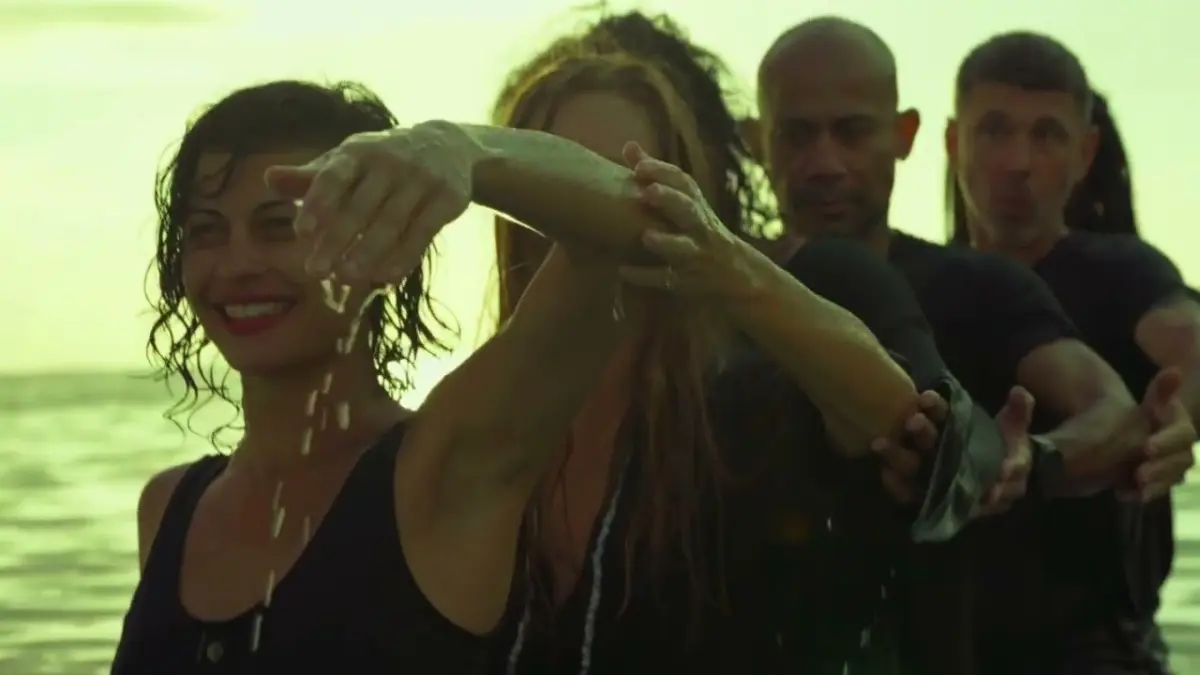
Simultaneously, the title track was immortalized via an official music video directed by Erika Souriguere. Building upon the visual momentum established by earlier acclaimed clips such as “Domin” and “Adyé Véli,” Souriguere’s video for “Lodèr la Vi” visually translates the haunting themes of transition, memory, and ethereal departure. The video serves as a moving companion piece to the audio, capturing the desolate beauty of the island landscapes and the visceral human emotions tied to saying goodbye.
Supporting Context & Metrics
The Sociological and Musical Weight of Maloya
To fully grasp the cultural importance of Saodaj’s work, one must examine the socio-political trajectory of maloya. Originating in the clandestine nocturnal gatherings (service kabaré) of enslaved plantation workers, maloya was historically a vehicle for storytelling, ancestral veneration, and subtle resistance against colonial oppression. Characterized by its hypnotic call-and-response vocal delivery and intricate polyrhythms, the genre was long marginalized by the French administration, which viewed its hypnotic intensity with suspicion.
It was not until the cultural renaissance of the late 20th century—spearheaded by iconic figures such as Firmin Viry and Granmoun Lélé—that maloya stepped out of the shadows and onto mainstream stages. Today, maloya holds UNESCO Intangible Cultural Heritage status, recognizing its profound value to global human history.
Saodaj represents a vital modern evolution of this lineage. By fusing traditional maloya instrumentation with the melancholic introspection of European art music (via Badal’s cello) and the rebellious distortion of alternative rock (via Cadenet’s guitar), the band demonstrates that tradition is not a static museum artifact, but a living, breathing, adaptive organism.
Album Metrics and Distribution Frameworks
- Artist: Saodaj
- Album Lodèr la Vi
- Release Date: November 2025
- Label: Buda Musique (renowned for housing world music masterpieces and archival recordings)
- Key Personnel:
- Marie Lanfroy: Co-founder, Vocals, Lyricist
- Jonathan Itéma: Co-founder, Vocals, Percussion Arrangements, Roulèr
- Adrien Laxénaire: Founding Musician (In Memoriam)
- Frederick Cipriano: Percussion (Kayamb / Sati-pikèr)
- Zélito Deliron: Percussion (Kayamb / Sati-pikèr)
- Mélanie Badal: Cello
- Blaise Cadenet: Electric Guitar
- Visual Direction: Erika Souriguere
- Associated Singles/Videos: “Domin,” “Adyé Véli,” and “Lodèr la Vi”
Official Statements & Lyrical Analysis
Dissecting the Poetry of “Lodèr la Vi”
The linguistic and emotional core of “Lodèr la Vi” lies in its masterful deployment of Réunion Creole, a language born from the blending of French, Malagasy, and various African and Asian tongues. Co-written by Marie Lanfroy and Jonathan Itéma, the lyrics unfold from the perspective of an individual standing at the threshold of life and death.
In the opening stanzas, the protagonist addresses his own physical form. Knowing that his time is drawing to a close, he offers a gesture of profound gratitude to the body that carried him through decades of joy, labor, and experience. He accepts that "tomorrow stops here," acknowledging the absolute frontier of his earthly journey. Yet, in a breathtaking subversion of traditional death-bed mourning, he commands that very same failing body to defy its limits:
“Dans aou mon kor / Sant aou mon lam”
(Dance within me, my body / Feel within me, my soul)
This juxtaposition of physical decay and spiritual ecstasy is the emotional engine of the song. The protagonist admits a deeply human regret—that he had hoped to live long enough to watch his hair turn grey, to experience the full, unhurried arc of aging.
The Chorus and the Final Farewell
As the song swells toward its emotional peak, the backing voices of Lanfroy and Itéma break through like a steadying anchor in a rising storm. They act as a collective chorus of guardians, repeating a rhythmic, urgent mantra:
“Souf, souf, souf”
(Breathe, breathe, breathe)
This refrain is designed to pull the listener—and the memory of Adrien Laxénaire—back toward the sensory richness of existence. It invokes the "scent of life" (lodèr la vi), urging him to take in one final, deep inhalation of the world he is leaving behind, and to hold onto that essence as he crosses over.
The song reaches its poignant denouement in the final line. Eschewing formal titles or solemn elegies, the band addresses their fallen brother with intimate familiarity. They call him simply by his nickname, Adri, and cast his memory upward into the sky—leaving him balanced, weightless and eternal, high upon a slackline suspended in the open air.
Future Outlook
The Global Resonance of Saodaj’s Artistry
As Lodèr la Vi circulates globally via Buda Musique and digital streaming platforms, Saodaj is cementing its reputation as one of the most innovative and emotionally fearless acts operating within the international music sphere. The album proves that regional music, when executed with absolute artistic integrity and emotional honesty, possesses universal resonance. Audiences across Europe, the Americas, and Asia—many of whom may not understand a single word of Réunion Creole—are nonetheless brought to tears by the palpable grief, warmth, and cathartic release encoded in the music.
Upcoming Touring Cycles and Cultural Advocacy
Looking ahead, Saodaj is preparing to take Lodèr la Vi onto the international stage, bringing their electrifying blend of traditional maloya percussion and alternative rock distortion to live audiences worldwide. Their performances are anticipated not merely as concerts, but as communal rituals of remembrance and celebration—spaces where the spirit of Adrien Laxénaire will undoubtedly be felt dancing in the room.
Furthermore, the band continues to serve as vital cultural advocates for Réunion Island. By keeping the Creole language vibrant, honoring the historical struggles of their ancestors, and continuously pushing the sonic boundaries of maloya, Saodaj ensures that the heartbeat of the Indian Ocean will continue to reverberate across generations.
In the final analysis, Lodèr la Vi is far more than a sophomore album release. It is a monument to friendship, a masterclass in cross-genre musical arrangement, and a timeless reminder that while human lives are fragile and finite, art possesses the miraculous capacity to hold our loved ones suspended in the air—breathing, dancing, and living forever.