Executive Overview
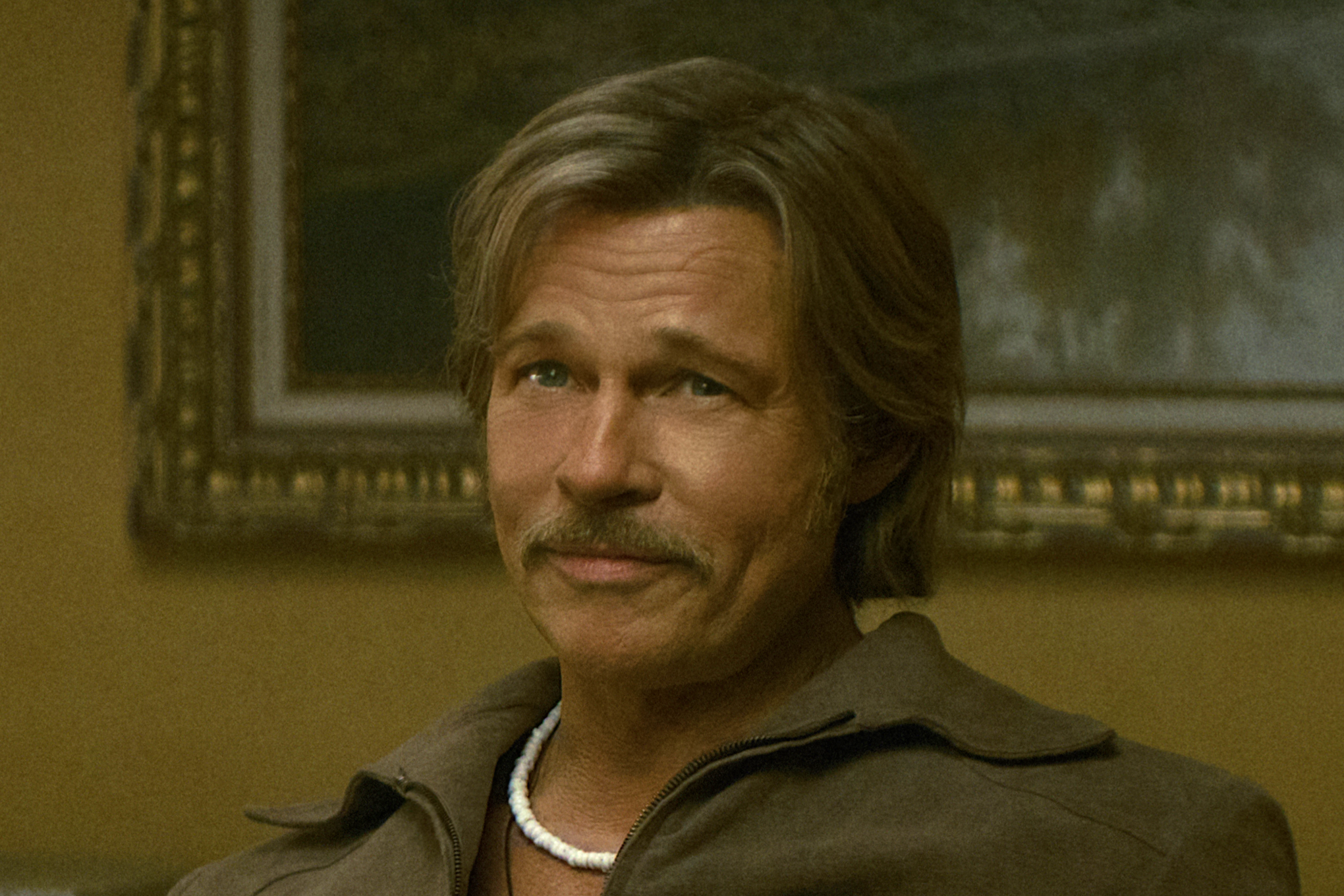
The cinematic landscape is rarely witness to a hand-off as prestigious, unexpected, or culturally resonant as the one governing Netflix’s upcoming The Further Mis-Adventures of Cliff Booth. For years, writer-director Quentin Tarantino has maintained a rigid, unyielding career philosophy: he plans to retire from feature-film directing after completing his tenth movie. True to this self-imposed boundary, when the creative gears began turning for a sequel to his 2019 critical and commercial darling, Once Upon a Time… in Hollywood, Tarantino found himself at a crossroads. He had written the script, and the character of the stoic, sun-bleached Hollywood stuntman Cliff Booth—which earned Brad Pitt a Best Supporting Actor Academy Award—was primed for another cinematic chapter.
Yet, bound by his strict retirement roadmap, Tarantino opted out of occupying the director’s chair. This decision left the auteur grappling with a deep sense of professional guilt, primarily driven by the prospect of disappointing his longtime collaborator and friend, Brad Pitt.
Enter David Fincher. In a development that has sent shockwaves through Hollywood, Fincher stepped in to helm the Netflix project after Pitt, initially dejected by Tarantino’s refusal to direct, brought the script to him. For Tarantino, the realization that a filmmaker of Fincher’s tier—a master craftsman with whom Pitt shares a storied history (Se7en, Fight Club, The Curious Case of Benjamin Button)—was willing to dedicate over a year and a half of his life to bringing his words to the screen felt nothing short of miraculous.
Now, with an IMAX release slated for November 25 followed by a December 23 streaming debut on Netflix, The Further Mis-Adventures of Cliff Booth stands as a unique hybrid: a universe born from Tarantino’s pen, brought to life through Fincher’s distinct directorial lens, and anchored by Pitt’s enduring, iconic performance. This comprehensive report explores the genesis of the project, the emotional mechanics of the directorial hand-off, the logistical hurdles facing its theatrical distribution, and what this landmark collaboration signals for the twilight of Tarantino’s legendary career.
Detailed Chronology: From 1969 to 1977 and Beyond
To fully understand the gravity of The Further Mis-Adventures of Cliff Booth, one must trace the timeline from the sun-drenched, perilous streets of 1969 Los Angeles to the gritty, evolving landscape of late-1970s Hollywood.
The 2019 Foundation
In the summer of 2019, Sony Pictures released Once Upon a Time… in Hollywood. Set against the backdrop of the fading golden age of Hollywood and the looming shadow of the Manson family murders, the film chronicled the professional decline of aging television western star Rick Dalton (Leonardo DiCaprio) and his loyal, unflappable stunt double and general factotums, Cliff Booth (Brad Pitt). The film was a masterclass in revisionist history, culminating in a violent, darkly comedic confrontation at Dalton’s Cielo Drive home.
Pitt’s performance as Cliff Booth—a World War II veteran, rumored wife-killer, and unapologetic purveyor of cool confidence—captivated audiences and critics alike, culminating in his long-awaited Academy Award for Best Supporting Actor.
The Retirement Rule and the Script
Following the success of the film, Tarantino doubled down on his long-standing promise to the industry: he would write and direct precisely ten feature films before hanging up his megaphone forever. As he began mapping out his final theatrical project, the prospect of writing a sequel or spin-off to Once Upon a Time… in Hollywood naturally arose. Tarantino penned a script centered exclusively on Booth, relocating the character eight years down the timeline to 1977.
However, honoring his ten-film limit meant Tarantino could not direct the project himself. This logistical and personal reality weighed heavily on the writer. Having spent decades forging deep bonds with his actors, the thought of handing over his meticulously crafted universe felt like an abandonment of sorts, particularly toward the leading man who had embodied Booth with such effortless charisma.
Pitt, Fincher, and the "Venn Diagram"
Unwilling to let the character fade away without a fight, Brad Pitt sought out alternative avenues. Knowing that Tarantino had cleared the conceptual runway, Pitt approached acclaimed filmmaker David Fincher. The two share an illustrious, decades-long collaborative history, having previously defined generations of cinema with Se7en (1995), Fight Club (1999), and The Curious Case of Benjamin Button (2008).

Pitt expressed his acute disappointment to Fincher regarding Tarantino’s decision not to direct. Seizing the opportunity, Fincher requested permission to read the script. When Tarantino received word that Fincher was interested, his disbelief was palpable—describing his reaction as being capable of being "knocked over with a feather."
With Tarantino’s blessing, Fincher dove into the material. According to Fincher, reading the script revealed a fascinating "Venn diagram" representing the stylistic intersections of what Pitt, Tarantino, and Fincher himself wanted to explore within the cinematic universe. The pieces fell rapidly into place, securing Netflix as the financial and distribution powerhouse behind the venture.
Supporting Context & Metrics
The production and subsequent rollout of The Further Mis-Adventures of Cliff Booth are embedded within a shifting economic and cultural paradigm for the film industry. The project is not merely a creative hand-off; it is a high-stakes battleground for theatrical windows, streaming dominance, and cross-media storytelling.
Shifting Eras: The World of 1977 Hollywood
While the original film was drenched in the fading counterculture and vibrant pop-art aesthetics of 1969, the sequel thrusts Cliff Booth into 1977—a markedly different era. The New Hollywood wave of auteur-driven cinema was in full swing, the studio system was undergoing radical corporate restructuring, and the cinematic landscape was bracing for the blockbuster revolution sparked by films like Star Wars. Within this environment, Booth is no longer just dodging Manson-esque cultists; he is operating as a Hollywood "fixer," navigating the seedy, complex underbelly of an industry in transition.
The Theatrical Window Battleground
True to Netflix’s traditional distribution models, The Further Mis-Adventures of Cliff Booth is slated for a hybrid release strategy designed to satisfy both awards-season eligibility requirements and global streaming metrics. The film is scheduled to hit IMAX screens on November 25, followed by its global streaming premiere on Netflix on December 23—a meager four-week theatrical window.
This condensed timeframe has triggered fierce pushback from major traditional exhibition chains. Both Cinemark and Regal have formally declined to screen the movie, citing the short theatrical window as a threat to their traditional business models. Despite these prominent omissions, Netflix remains confident that the combination of IMAX exclusivity, the star power of Brad Pitt, and the pedigree of David Fincher will drive substantial box-office receipts during the Thanksgiving holiday corridor, before capturing millions of household views over the Christmas holidays.
Transmedia Expansion: The Novelization
In a strategic move mirroring his approach to the original film, Tarantino is expanding the narrative universe beyond the screen. Alongside the Netflix release, HarperCollins will publish a companion novelization penned by Tarantino himself, titled The Adventures of Cliff Booth. This multi-platform approach allows Tarantino to retain creative ownership over the literary depth of the character while letting Fincher and Pitt interpret the visual and visceral dimensions on film.
Official Statements & Industry Perspectives
The behind-the-scenes dynamics of this collaboration have yielded remarkably candid remarks from the key architects involved. Speaking exclusively to Empire, Quentin Tarantino laid bare his initial emotional turbulence regarding the project.
"Brad was the one I felt I was really letting down when I didn’t do it," Tarantino, 63, admitted. "I felt bad about that, and the fact he took it to his guy and his guy responded to it… That was fantastic."
Reflecting on the moment he learned of Fincher’s potential involvement, Tarantino’s characteristic enthusiasm shone through:
"You could have knocked me over with a feather. I was like, ‘Really? You think he’d be interested?’ F***ing yeah: show it to him!"
He added further praise for Fincher’s commitment:
"The fact that a director of David’s calibre would spend a year-and-a-half of his life doing my material was, I thought, wonderful. It said a lot about what was on the page."
David Fincher, known for his meticulous, cerebral approach to filmmaking, noted that the script offered a unique creative intersection. According to Fincher, the text functioned as a "Venn diagram" of the collective artistic desires shared by Pitt, Tarantino, and himself—melding Tarantino’s sharp ear for dialogue and pulp sensibilities with Fincher’s precision framing and dark atmospheric tension.
Future Outlook: The Twilight of an Auteur and the Legacy of Cliff Booth
As the entertainment world prepares for the late-November premiere of The Further Mis-Adventures of Cliff Booth, the film serves multiple symbolic functions. For Quentin Tarantino, it represents a graceful navigation of his self-imposed retirement clause. By allowing another master filmmaker to play in his sandbox, Tarantino proves that his cinematic universes can outlive his own tenure behind the camera, provided the stewardship is entrusted to someone of matching caliber.
For Brad Pitt, the project cements his status as one of the definitive movie stars of his generation, capable of transitioning effortlessly between blockbuster spectacle, auteur-driven dramas, and character-driven streaming events. Reprising Cliff Booth allows Pitt to inhabit a role that won him global acclaim, but under a darker, more analytical microscope courtesy of Fincher.
For David Fincher and Netflix, the film is a major prestige play. It demonstrates Netflix’s continued ability to attract elite cinematic talent, even as traditional theatrical exhibitors push back against compressed release windows.
Ultimately, The Further Mis-Adventures of Cliff Booth is a testament to the power of collaboration in modern Hollywood. What began as a moment of creative anxiety for Quentin Tarantino—worried about letting down his leading man—has blossomed into one of the most anticipated cinematic events of the decade. As 1977 Los Angeles comes alive through Fincher’s lens and Pitt’s swagger, audiences are poised to discover that while Tarantino may be stepping away from the director’s chair, the worlds he built are only just beginning to expand.