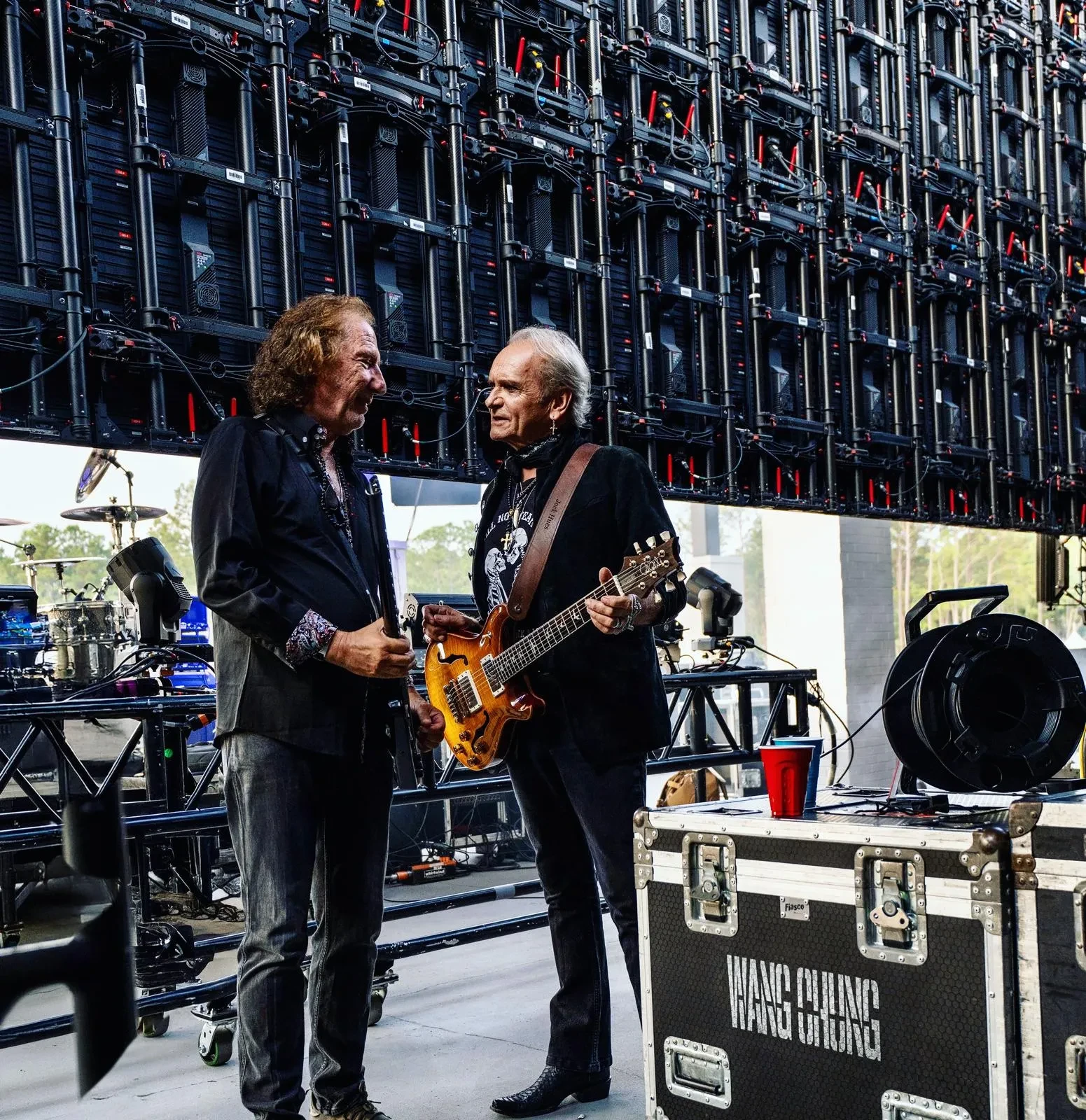
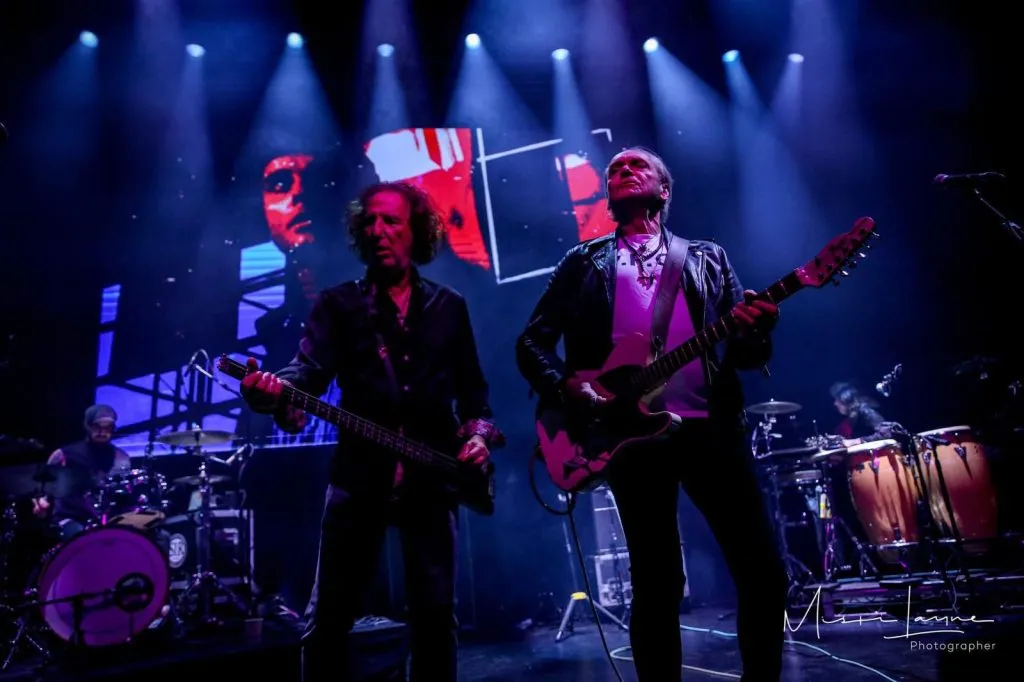
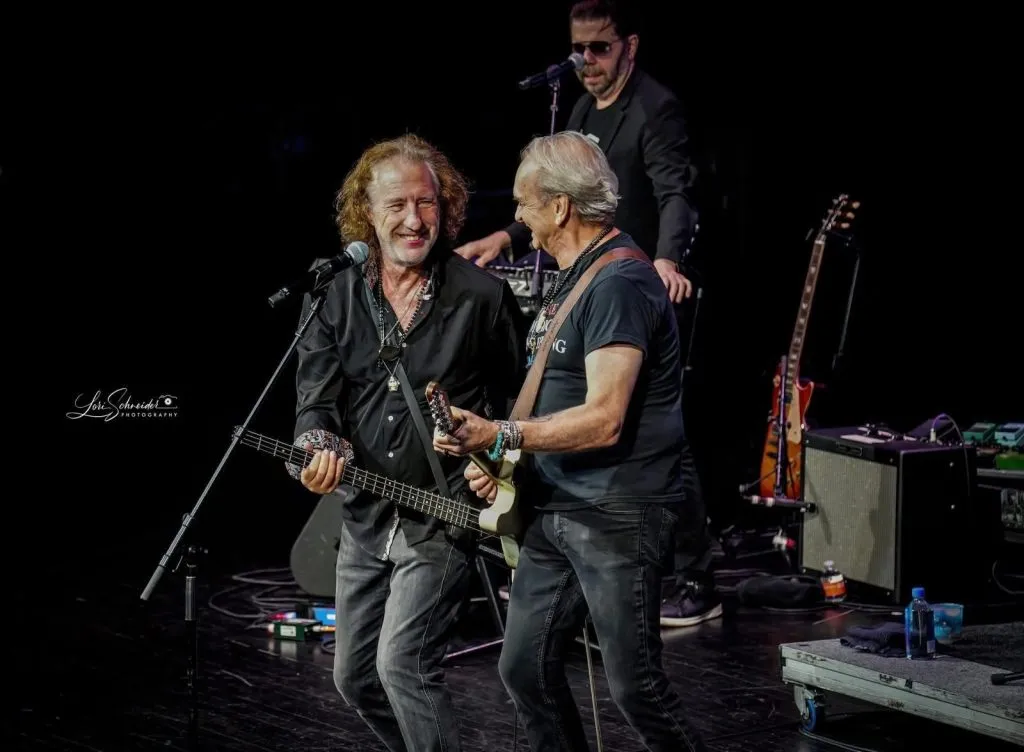
For a generation defined by the neon-lit, synthesizer-heavy soundscapes of the 1980s, few names evoke the era quite like Wang Chung. Formed in London in 1980, the new wave outfit achieved rare international success, scoring enduring transatlantic hits such as "Dance Hall Days" and the ubiquitously catchy "Everybody Have Fun Tonight"—a track that permanently embedded the phrase "Everybody Wang Chung tonight" into the global pop-culture lexicon. Yet, beneath the glossy sheen of their MTV-era commercial triumphs lies a far more complex and compelling musical journey.
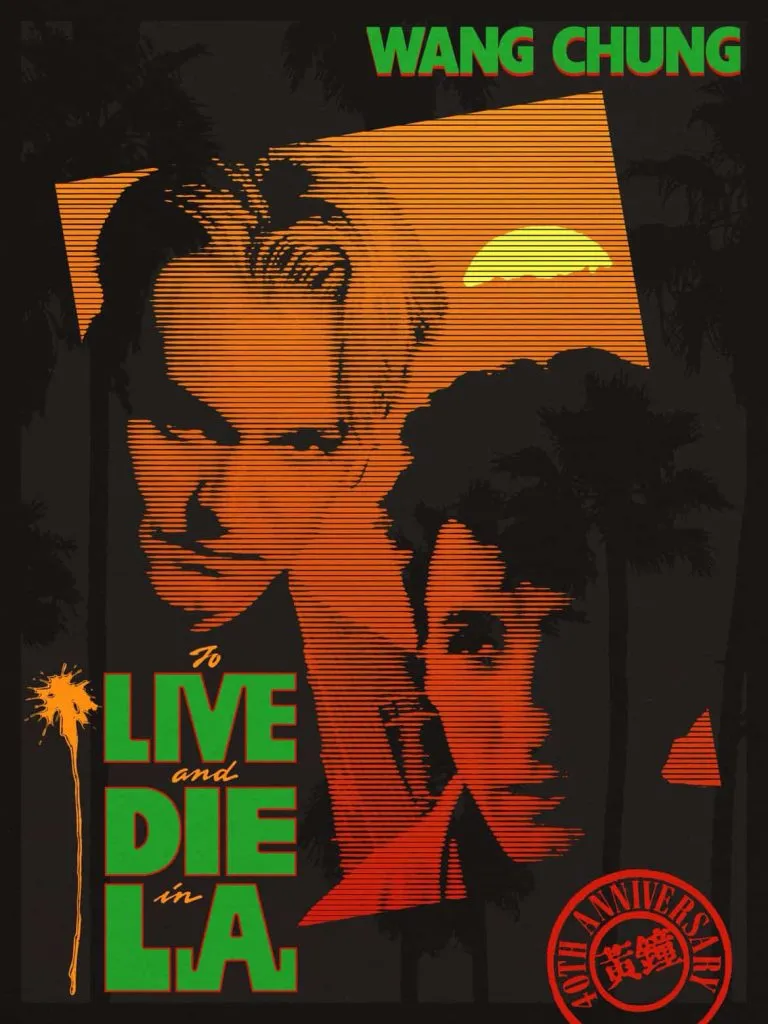
Now, as the band marks the 40th anniversary of their cinematic masterwork—an expanded reissue of their score for William Friedkin’s gritty 1985 thriller To Live And Die In L.A.—founding member Jack Hues has opened up about the group’s trajectory. Speaking from his home in Austin, Texas, Hues reflects on a career shaped by an unlikely collision of forces: the intricate, aspirational arrangements of progressive rock, the raw, catalytic energy of 1977 punk, and the heavy-handed pressures of major-label pop machinery.
This comprehensive retrospective explores Wang Chung’s evolution from avant-garde London collectives to American chart-toppers, detailing the triumphs, the creative compromises, and the enduring legacy of a band whose mastermind never quite abandoned his unrequited progressive rock dreams.
Detailed Chronology: From Gillingham to Global Stardom
Roots in Jazz, The Beatles, and Prog Ambitions
The foundation of Jack Hues’ musical identity was laid long before the formation of Wang Chung. Born Jack Hues in Gillingham, Kent, in 1954, his earliest exposure to music came through his father, a professional saxophone player. While young Hues developed an early appreciation for his father’s jazz collection, his true "great awakening" arrived with the cultural tidal wave of The Beatles.
Enamored, Hues picked up the guitar and applied himself with rigorous academic dedication. By age 18, he had achieved significant proficiency on the instrument, prompting him to pursue formal training. He earned a music degree at Goldsmiths, University of London, before continuing his education at the prestigious Royal College of Music.
Despite his formal training, Hues maintains a pragmatic view of musical pedagogy: "Music’s a strange thing, in that you can’t be taught it in a way, but you can be inspired by all sorts of different influences." Chief among these early inspirations was the complex, cerebral world of progressive rock. Bands like King Crimson and Genesis captivated Hues with their virtuosic musicianship and grand conceptual ambitions. "That stuff was very aspirational," Hues recalls, "because what those guys play is tricky."
The Punk Catalyst and Early Project Incubators
This academic prog-rock mindset was violently disrupted in 1977 by the explosion of punk rock in London. The raw, anti-establishment fury of the Sex Pistols provided an unexpected reset button for Hues, dragging him back into the orbit of immediate, visceral rock music.
Seeking like-minded collaborators, Hues responded to a "musicians wanted" advertisement placed in the legendary music weekly Melody Maker by guitarist Nick Feldman. The partnership proved immediately fruitful. Feldman brought in drummer Paul Hammond, who had previously worked with progressive rock outfit Atomic Rooster.
This nucleus—augmented by bassist Bud Merrick—initially formed a short-lived outfit called The Intellektuals. Though the group lasted less than a year, meeting Feldman served as the vital catalyst that restored Hues’ drive to write original material. The pair quickly pivoted into a new project dubbed 57 Men, collaborating with a revolving door of musicians that included future Heaven 17 vocalist Glenn Gregory, bassist Leigh Gorman (later of Adam & The Ants), and drummer Darren Costin.
The Birth of Huang Chung and the Arista Era
When 57 Men dissolved, the core trio of Hues, Feldman, and Costin decided to strip things down and rebrand. In 1980, they settled on the name Huang Chung, derived from Huang Zhong, the foundational pitch of the traditional Chinese 12-tone musical system.
The newly christened band quickly caught the attention of the independent label Rewind Records, securing a two-single deal. They released two jagged, rhythmically propulsive punk-pop tracks: "Isn’t It About Time We Were On Television?" and "Stand Still." Around this time, saxophonist Dave Burnand joined the lineup, expanding their sonic palette.
The early underground hustle paid off when the influential BBC Radio 1 broadcaster John Peel played "Isn’t It About Time We Were On Television?". Reflecting on the broadcast, Hues notes with a laugh: "We got a bit of play on John Peel for ‘Isn’t It About Time…’, even though he didn’t like it. That was the lift-off point, from there to a deal with Arista."
Arista Records signed the band, leading to the 1982 release of their self-titled debut album. To helm the project, the label enlisted producer Rhett Davies, renowned for his work with Roxy Music. The resulting LP was an intriguing, abstract brand of new wave, but it failed to connect commercially. Hues admits that artistic friction played a major role in the album’s underperformance:
"Things got a bit confused. We got Roger Béchirian [Elvis Costello, The Undertones] to try and create a single, because basically I was making a prog record, and that clearly wasn’t what you should have been doing in 1981. The overall results were a bit diffuse, and I think that’s what left the record company feeling, ‘how do we do this?’"
The American Breakthrough and "Dance Hall Days"
Undeterred, the band began work on a follow-up record, releasing an early incarnation of "Dance Hall Days" produced by Tim Friese-Greene (famous for his work with Talk Talk). During this transitional phase, David Massey—a friend of Feldman’s who would later become a high-ranking executive at Universal Music Group—stepped in to guide their career trajectory. Massey delivered a blunt assessment: "You need to be in America."
With Massey representing them, the band underwent a crucial identity shift. They dropped the traditional spelling of their name in favor of the more phonetically accessible Wang Chung, and Dave Burnand opted to depart. Armed with a fresh US deal at Geffen Records, Wang Chung released their sophomore LP, Points On The Curve, in 1983.
The album proved to be a commercial breakthrough, climbing to No. 30 on the US Billboard 200. A newly recorded, razor-sharp version of "Dance Hall Days" peaked at No. 16 on the Billboard Hot 100 and reached No. 21 on the UK Singles Chart. Overnight, the underground London act was thrust into global stardom. Hues remembers the era fondly: "We did a gig with Elton John at Wembley and toured the US with The Cars. It was an incredible experience."
William Friedkin and To Live And Die In L.A.
At the height of their newfound pop visibility, Wang Chung received an unexpected phone call from one of Hollywood’s most uncompromising and intense filmmakers. Director William Friedkin, legendary for cinematic milestones like The French Connection and The Exorcist, was assembling a gritty neo-noir action film set in Southern California: To Live And Die In L.A.
Friedkin reached out to Hues directly. "He said our track, ‘Wait’, was exactly the atmosphere he wanted," Hues explains. In a rare twist of artistic synergy, the band composed and recorded the soundtrack without ever seeing footage of the movie. Instead, Friedkin took their atmospheric, synthesizer-driven compositions and actively edited the film’s tense sequences around the music. Released in 1985, the soundtrack has since attained legendary status among cinephiles and synth-pop collectors alike, celebrated for marrying cutting-edge Fairlight CMI textures with driving rock instrumentation.
The Peak of Pop: Mosaic and "Everybody Have Fun Tonight"
Buoyed by their cinematic success, Wang Chung returned to the traditional studio environment in 1986 to record their fourth studio album, Mosaic. To ensure commercial viability, Geffen Records paired the band with producer Peter Wolf, a hitmaker known for crafting blockbuster radio anthems for Starship ("We Built This City") and Heart.
Hues is refreshingly candid about Wolf’s explicit mandate: "So that was his job, just to squeeze a No. 1 record out of us, and that was ‘Everybody Have Fun Tonight’."
The strategy worked. Driven by an infectious rhythm, a pioneering vocoder-infused hook, and a striking, surreal music video directed by Godley & Creme, "Everybody Have Fun Tonight" surged to No. 2 on the Billboard Hot 100. The track’s iconic refrain instantly penetrated global pop culture. Yet, Hues admits he felt a sense of artistic whiplash:
"At the time, I thought, this is polarizing, really, from what we’ve done before, but it established Wang Chung as a force in America."
Commercial Decline and the 1990 Hiatus
Following the dizzying heights of Mosaic, the band attempted to course-correct back toward their complex musical roots with their fifth LP, The Warmer Side Of Cool (1989). However, the record failed to resonate with the public, caught in a shifting cultural tide.
By 1990, the band mutually decided to call it a day. Hues summarizes the abrupt end of the era:
"I was still trying to make a prog album and there was a sort of sea change in the music. Guns N’ Roses and Nirvana had signed to Geffen. The whole approach that we’d grown up with, which was this hybrid of funk and rock and prog, was no longer the thing."
Following the split, Nick Feldman transitioned into a successful career in A&R, while Jack Hues focused on record production and academic projects.
Supporting Context & Metrics
To fully understand Wang Chung’s impact during their 1980s peak, it is helpful to examine their chart performance, cultural footprint, and key milestones:
Transatlantic Chart Peak:Points On The Curve (1983) broke into the US Billboard 200 top 40, peaking at No. 30.
Hot 100 Success: "Dance Hall Days" reached No. 16 on the US Billboard Hot 100; "Everybody Have Fun Tonight" peaked at No. 2.
Cultural Omnipresence: The phrase "Everybody Wang Chung tonight" transitioned from a lyric into a recognized verb and slang term in American lexicon, referenced across television shows, films, and literature throughout the late 20th century.
High-Profile Collaborations: Wang Chung shared stages and toured with music royalty, including supporting Elton John at Wembley Stadium and undertaking a major US arena tour with The Cars.
Cinematic Legacy: Their work on William Friedkin’s To Live And Die In L.A. remains a benchmark for electronic film scoring, successfully bridging the gap between underground synth-experimentation and Hollywood action cinema.
Official Statements & Reflections
Reflecting on his decades-long career from his current base in Austin, Texas, Jack Hues maintains a philosophical perspective on his artistic legacy. He acknowledges that his career path was never the result of a calculated master plan:
"We played the Hollywood Bowl last year for the first time. We’ve had lots of songs in movies, so people came to us through all sorts of different ways. I never had a plan, but I think I have a sound. I have an approach that’s pretty unique, and my voice is pretty unique, for better or worse, you know."
Hues also points out that despite the massive pop hits that defined their commercial peak, his foundational love for complex, progressive arrangements never truly faded—even if the market demanded otherwise during the height of the MTV era.
Future Outlook and Ongoing Legacy
Though Wang Chung officially disbanded in 1990, their story did not end there. In 1997, Hues and Feldman briefly reunited to record a new track, "Space Junk," for a career-spanning Greatest Hits compilation. That spark reignited their creative partnership, leading to 21st-century studio albums including Tazer Up! (2012) and the orchestrally reimagined Orchesography (2019).
Today, Wang Chung remains an active, vibrant touring entity, performing for nostalgic fans and discovery-driven younger generations alike. Their recent performance at the historic Hollywood Bowl stands as proof of their enduring appeal.
Moreover, the ongoing archival rediscovery of their catalog—highlighted by the comprehensive 40th-anniversary expanded edition of the To Live And Die In L.A. soundtrack, released via Interscope—ensures that Wang Chung will be remembered for far more than just a catchy 80s pop slogan. Beneath the gloss of their chart-topping singles lies a sophisticated, adventurous band of musicians who successfully navigated the volatile waters of the music industry while staying true to their idiosyncratic artistic vision.