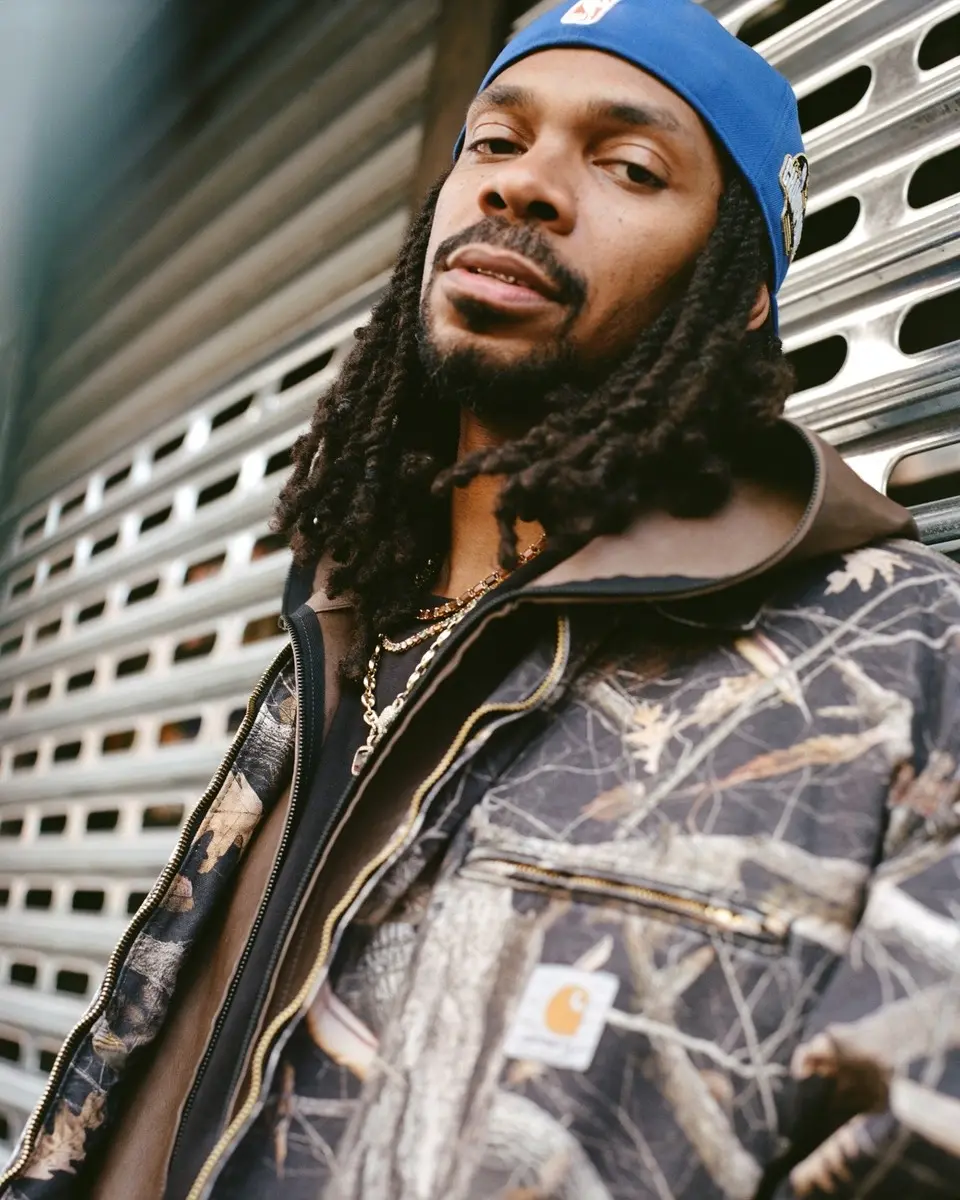
Executive Overview
Erick Elliott—better known across the global hip-hop landscape as Erick the Architect—has never been an artist content with standing still. As the sonic backbone, founding member, and primary producer of the legendary Brooklyn trio Flatbush ZOMBiES, Elliott helped sculpt the dark, visceral, and psychedelic East Coast renaissance of the 2010s. Yet, in an industry where collective success often traps artists in a nostalgic holding pattern, Elliott has steadily engineered a masterclass in solo reinvention.
His latest artistic evolution culminates in his highly anticipated upcoming solo project, AFTERBURNER. A record designed explicitly for movement rather than insular headphone listening, AFTERBURNER represents a major pivot in Elliott’s discography. It builds upon a relentless release schedule that includes high-profile global collaborations (Jungle, Jamiroquai, James Blake), tech-sector music composition for Apple’s WWDC26 keynote, and a deep-seated cultural exchange linking his native New York with the vibrant London music scene.
In this expansive, long-form conversation, Elliott pulls back the curtain on the creative mechanics behind his explosive single “YERR”—which unites Harlem’s Fergie Baby and Staten Island’s Ghostface Killah—while addressing the critical tenets of artistic ownership, industry longevity, and refusing to compromise authenticity in an increasingly algorithmic music ecosystem.
Detailed Chronology: From Flatbush Foundations to Global Propulsion
The Flatbush ZOMBiES Era and the Evolution of the Canvas
To understand Erick the Architect’s current solo trajectory, one must first examine his foundational years with Flatbush ZOMBiES. Alongside members Meechy Darko and Zombie Juice, Elliott served as the primary architect of their gritty, mind-altering soundscapes. However, group production requires a distinct psychological and technical balancing act.
"As Flatbush Zombies, the lift as a producer required me to create a canvas for all of us to fit on, while a solo project is a bit more selfish in the process—that’s about the only difference. There’s no room for selfishness in a group."
This shift from group harmony to solo self-expression has allowed Elliott to stretch his sonic palette across broader horizons, incorporating elements of soul, dub, psych-rock, and electronic production without needing to consult a committee. The studio became a laboratory for uninhibited personal exploration.
Building AFTERBURNER: The Mechanics of Propulsion
The thematic and sonic foundation of AFTERBURNER emerged organically early in the writing process. Rejecting the inward-looking, static nature of his previous solo output, Elliott sought to engineer a project defined by forward velocity and dynamic rhythm.
- "‘AFTERBURNER’ became the title shortly after recording the first few records for this album," Elliott explains. "I feel like the name is significantly different from my previous projects, and so is the music. I feel like a lot of my music was best heard in headphones, and I wanted to make something I intended to be listened to on the move. Much of what has moved me emotionally in the last year or so musically are things that give me nostalgia and movement."
Far from dwelling on beginnings, the concept of the afterburner is pure propulsion—the raw mechanical force required to keep moving forward when putting one foot in front of the other feels like an insurmountable task.
Anatomy of a Cross-Borough Anthem: “YERR”
The rollout for AFTERBURNER reached a fever pitch with the release of the single “YERR,” a track that serves as a masterclass in subverting contemporary hip-hop expectations. Opening with a looped, casual street greeting (“Yerr, what’s up? We good? OK”), the track immediately grounds the listener in the brisk, high-stakes atmosphere of New York City.
"To me, nothing is more New York than to greet someone by saying yerr, followed up by asking if they are good or not. New York is such a fast-paced city, sometimes we feel like that’s all we need to know about someone in the moment. You good?"
Midway through, the beat undergoes a drastic, visceral transformation—snapping from a woozy, modern club-ready rhythm into a slowed, nostalgic East Coast cadence. Crucially, this beat switch occurred entirely in the production phase before any guest verses were secured. Recognizing the distinct dual attitudes of the instrumental, Elliott curated an unexpected powerhouse combination: Harlem’s Fergie Baby and Staten Island veteran Ghostface Killah.
- "I know what both of these MCs are capable of… and I always think from the mindset of a listener. What would I be most excited about? I think a lot of today’s hip-hop is full of predictability, and I wanted someone to say that this song didn’t make sense because of their expectation."
Supporting Context & Metrics: Tech, Global Collaborations, and Transatlantic Bridges
The Silicon Valley Cross-Pollination: Apple’s WWDC26 Keynote
Elliott’s creative footprint extends far beyond traditional streaming platforms and underground cassette tapes. His compositional dexterity was put on a global stage when he crafted custom music—titled “Appreciation”—for Apple’s WWDC26 keynote event in Cupertino.
Rather than treating corporate scoring as a creative compromise, Elliott approached the brief with his signature artistic rigor:
"I honestly approached this particular project the same as any other project I’ve worked on. Once I understand my goal and my audience, I get to work. The hardest thing about working with a big company is holding onto your integrity while also keeping the people you are collaborating with happy."
For Elliott, the placement served as a full-circle moment of personal manifestation. Referencing a lyric from his COVID-lockdown track “Skinny Ramen”—where he rapped, “They don’t like my output or my Outlook, I’m an Apple guy anyway”—Elliott remarked on the poetic justice of cementing his status as both a proud son of the "Big Apple" and a recognized partner of the tech giant by 2026.
Transatlantic Synergy: New York and London Ties
A defining characteristic of Elliott’s recent career trajectory is his deep integration into the United Kingdom’s vibrant music ecosystem. Having collaborated with luminaries such as Jungle (on the infectious “Candle Flame”), Jamiroquai, Col3trane, and JGrrey, Elliott views London as a spiritual sister city to New York.
- "London is one of my favourite cities in the world to visit and to perform in. I’ve been a fan of the UK music scene before I ever went there… There are a lot of parallels between New York and London in terms of the energy and culture—it’s probably the most integrated city culturally besides New York!"
Drawing a humorous yet perceptive parallel between the two metropolises, Elliott notes how shared meteorological challenges shape creative output: "I feel like London and New York even have similar weather: all of my favourite artists make these songs while captive at home because of bad weather, waiting to go back outside when the weather is nice again."
Official Statements & Industry Insights
On Production Philosophy and Collaborative Alchemy
Whether participating in high-profile writing camps alongside legends like Busta Rhymes, James Blake, and George Clinton, or laying down tracks in his solo studio, Elliott maintains a strict ethical boundary regarding the art of production. He refuses to act as a mere echo chamber for established artists.
"What I don’t want is to give an artist a record I feel like they could’ve made themselves. What’s the point of doing that? They don’t need me to make a song they’ve already made, they need me to bring light to something they’ve ever done before."
This ethos allows him to seamlessly assimilate into sessions with diverse musical icons, adapting his technical toolkit while maintaining a distinct, recognizable sonic signature.
On Ownership, Longevity, and the GRAMMY House NYC Discourse
Speaking candidly on the pressing systemic issues facing contemporary musicians—topics highlighted during his recent work with GRAMMY House NYC for the Black Music Collective—Elliott breaks down the foundational pillars required for an enduring career:
- "Ownership is power. Longevity is accomplished by making music that is true to you and not falling victim to fitting in with whatever else is out there. All of my idols practiced a healthy balance of both of these things in order to last the test of time."
Future Outlook
As Erick the Architect prepares to unleash AFTERBURNER upon the world, his trajectory offers a blueprint for modern independent artistry. By refusing to be boxed into the nostalgic parameters of his early career, he continues to bridge geographical divides (from Brooklyn to London), cross-pollinate industries (from underground hip-hop to Apple keynotes), and challenge the predictable formulas dominating modern streaming algorithms.
Ultimately, Elliott measures his success not by temporary chart metrics or industry concessions, but by internal preservation:
"I am grateful to be able to make an impact in the industry while still being myself in 2026 and so forth. I’ve never had to change myself to have to be accepted by anyone, and I don’t plan to. Success to me is continuing to tell this story and being able to look into the mirror and still see Erick Elliott."
With AFTERBURNER poised to accelerate his solo career into uncharted territories, the architectural blueprint he is drawing promises to reshape the landscape of modern East Coast music for years to come.