Executive Overview
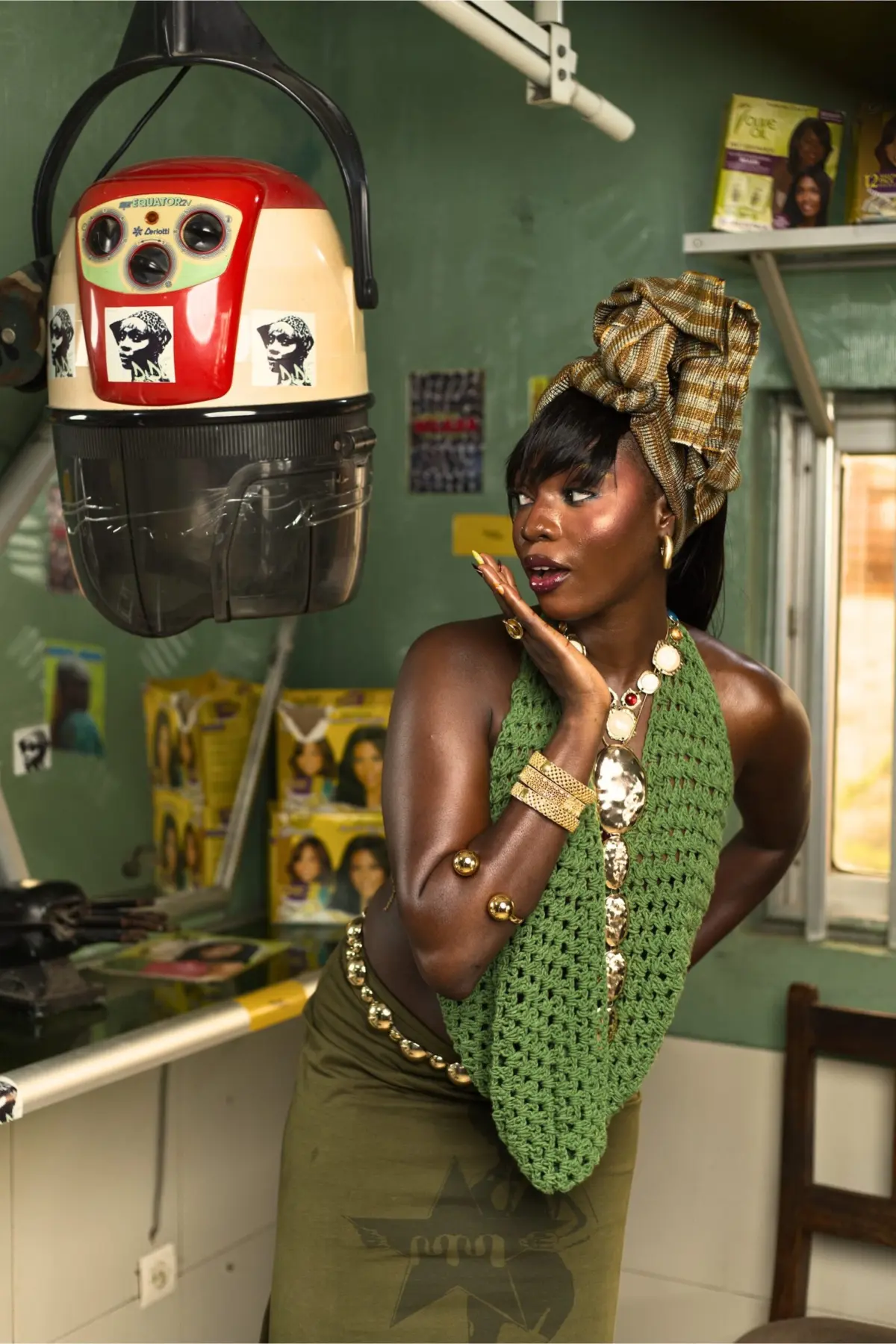
In an era where West African music continues its aggressive expansion across the global cultural landscape, Lagos-born singer and songwriter Solana—born Busola Ogunlana—has emerged as one of the region’s most iconoclastic and transformative voices. Anchored by a bold aesthetic characterized by neon hair, intricate locs, and clashing traditional textiles, Solana’s outward appearance reflects a deeply avant-garde artistic vision. Yet beneath this vivid exterior lies an artist whose quiet introspection and solitary lifestyle stand in sharp contrast to the explosive energy of her music.
Solana has spearheaded a distinct sub-genre termed YoruPop—an electrifying synthesis that marries the linguistic contours and percussive history of Yoruba culture with 1980s synth-pop, rock-infused production, and contemporary electronic rhythms. Her breakthrough single, "Okunkun," released without a conventional record label rollout, captured immediate global attention. The track garnered vocal support from international industry juggernauts including SZA, Little Simz, Diplo, and Tyla, transforming a song once sidelined by corporate hesitation into an anthem of creative independence.
Partnering with acclaimed hitmaker Killertunes and backed by the London-based label Since ’93, Solana is preparing to solidify her cultural footprint with her major EP, Girl From The West, scheduled for global release on November 13. This report provides an exhaustive analysis of Solana’s career evolution, detailing her musical development, the psychological costs of industry gatekeeping, the technical architecture of her signature sound, and her trajectory within the global music ecosystem.
Detailed Chronology: From Incubator Development to Viral Autonomy
+-----------------------------------------------------------------------------------+
|                               CAREER TIMELINE                                    |
+-----------------------------------------------------------------------------------+
| 2020           | Inducted into Mr Eazi's emPawa Africa program; debuts "Far Away" |
| 2021           | Releases follow-up singles "Badder" and "On My Way" (ft. Victony)|
| 2023           | Pens "Okunkun"; faces industry resistance and enters hiatus      |
| Early June     | Teases "Okunkun" independently on social media; goes viral        |
| Mid-Late 2026  | Drops "Okunkun", "Dide", and "O Rí Mi"; announces Since '93 deal  |
| Nov 13, 2026   | Official release date for debut EP 'Girl From The West'          |
+-----------------------------------------------------------------------------------+
2020: The emPawa Incubator and Institutional Support
Solana’s structured entry into the professional music ecosystem began in 2020 when she was selected for Mr Eazi’s emPawa Africa initiative. Designed to nurture independent African talent through capital investment, production support, and career mentorship, emPawa provided Solana with crucial early infrastructure. This incubator model allowed her to experiment creatively without the immediate commercial pressures associated with traditional major-label deals.
Her debut single, "Far Away," released in collaboration with emPawa alumnus Joeboy, introduced her vocal talent to West African audiences. Built upon warm Afrobeats syncopation and melodic hooks, the track established her capacity to navigate mainstream African pop structures.
2021: Genre Exploration and Early Collaborations
Following her debut, Solana released "Badder" in 2021, a self-assured track that leaned heavily into subtle Afrobeats bounce and contemporary R&B phrasing. Shortly thereafter, she teamed up with Nigerian artist Victony for "On My Way," a record that showcased smooth vocal exchanges and showcased her adaptability across different rhythmic templates.
Despite these critical successes, Solana resisted the urge to churn out standardized music, choosing instead to step back and refine a sound that felt more aligned with her eclectic personal tastes.
2023: Creative Bottlenecks and Personal Isolation
The cornerstone of Solana’s current artistic era, "Okunkun," was written in 2023. However, rather than serving as an immediate follow-up to her early singles, the track became a source of significant institutional friction. Industry executives and traditional gatekeepers expressed skepticism over the song’s radical genre hybridity, questioning whether a track blending traditional Yoruba drums with 1980s synth-pop and rock dynamics could find a stable audience in a market dominated by conventional Afrobeats and Amapiano.
This resistance induced a prolonged period of severe anxiety and creative withdrawal. Sidelined by corporate doubt, Solana stepped away from public life, isolating herself in her Lagos residence. During this period, she sought refuge in solitary pastimes—playing video games such as Fortnite, crocheting, jewelry making, and working through coloring books—while quietly questioning her artistic trajectory.
The Shift: Reclaiming Creative Control
After months of retreat, Solana underwent a profound psychological shift, resolving to break free from external gatekeeping and honor her artistic intuition. She reclaimed ownership over her output, choosing to release her music directly to the public on her own terms.
In early June, Solana posted a short snippet of "Okunkun" across her personal social media platforms with no prior promotional campaign. The response was instantaneous and overwhelming. The video circulated rapidly, driving high engagement numbers and drawing co-signs from major artists across North America, Europe, and Africa.
2026: The "YoruPop" Wave and Girl From The West
Capitalizing on this momentum, Solana systematically unveiled a suite of singles leading into late 2026:
- "Okunkun": The genre-defying breakthrough single that established her global profile.
- "Dide": A high-energy follow-up driven by punchy syncopated beats and driving percussion.
- "O Rí Mi": A darkly romantic, emotionally layered track accompanied by a cinematic music video highlighting Lagos street culture.
This run of releases cemented her partnership with the record label Since ’93, setting the stage for her EP, Girl From The West.
Supporting Context & Metrics: The Architecture of YoruPop
                +---------------------------------------+
                |          THE YORUPOP MATRIX           |
                +---------------------------------------+
                                    |
         +--------------------------+--------------------------+
         |                                                     |
  [ TRADITIONAL FOUNDATIONS ]                          [ MODERN & GLOBAL SOUNDS ]
  - Fuji Rhythms & Tonal Phrasing                       - 1980s Synth-Pop Sonics
  - Yoruba Talking Drums & Percussion                   - Rock-Infused Guitar Riffs
  - West African Market Visuals                         - Modern Electronic Production
         |                                                     |
         +--------------------------+--------------------------+
                                    |
                        +-----------------------+
                        |  SOLANA'S ARTISTRY    |
                        +-----------------------+
Defining YoruPop
While critics and fans have labeled Solana as the primary pioneer of "YoruPop," she views the genre tag as merely one facet of her broader artistic identity. YoruPop stands at the intersection of traditional Yoruba cultural heritage and western pop/electronic sub-genres.
Unlike traditional Afrobeats, which often relies on standardized drum patterns and loop-based arrangements, YoruPop incorporates:
- Complex Percussive Stacking: The integration of traditional Yoruba talking drums and fuji-influenced percussion alongside mechanical, four-on-the-floor synth-pop basslines.
- Dynamic Genre Shifting: Sudden transitions into driving, rock-infused guitar riffs and retro synth pads reminiscent of 1980s new wave.
- Linguistic Tonality: Utilizing the Yoruba language not merely for narrative storytelling, but as a dynamic rhythm instrument.
The Dynamics of Yoruba Tonality
A crucial element of Solana’s songwriting lies in her use of Yoruba, a contoured, tonal language where changes in pitch alter the literal and emotional meaning of words.
+----------------------------------------------------------------------------------+
|                           LINGUISTIC DYNAMICS IN YORUPOP                         |
+----------------------------------------------------------------------------------+
| Linguistic Feature   | Application in Solana's Songwriting                       |
+----------------------+-----------------------------------------------------------+
| Pitch & Cadence      | Words act as melodic and percussive accents within tracks.|
| Tonal Shift          | Contextual meaning shifts based on vocal inflection.     |
| Cultural Resonance   | Offers dual interpretations for native speakers vs. global|
|                      | listeners who experience the vocal as purely melodic.     |
+----------------------+-----------------------------------------------------------+
Because Yoruba natively operates with inherent musicality, Solana uses her vocal delivery to double as percussive instrumentation. This linguistic framework creates a dual listening experience: non-Yoruba speakers are drawn in by the driving textures and vocal melodies, while native speakers access deeper layers of cultural narrative, double entendres, and emotional nuance.
Creative Synergy: The Killertunes Partnership
Solana’s soundscape is crafted in close collaboration with elite producer Killertunes. Known for his ability to bridge local West African styles with international pop sensibilities, Killertunes serves as the primary sonic architect behind Solana’s releases.
Their studio sessions are defined by open-ended experimentation. By combining Killertunes’ technical mastery with Solana’s genre-fluid instincts, the duo routinely tests unconventional arrangements—stacking distorted guitars over traditional West African percussion and vintage electronic synths.
Visual Aesthetic and Cultural Authenticity
Solana’s visual identity balances high-concept street fashion with everyday West African life:
- Hairstyle & Wardrobe: Signature multi-textured mullet featuring soft yellow roots, orange strands, block fringes, silky-straight locs, and underlying orange braids, paired with pattern-clashing West African prints.
- Cinematic Settings: Music videos and visualizers are shot directly on location across Lagos—within bustling local markets, residential streets, and coastal beaches.
- Visual-Auditory Contrast: Bright, high-energy neon visuals frame introspective lyrics, mirroring the tension between her internal sanctuary and her public profile.
Official Statements and Direct Insights
Throughout her rise, Solana has maintained a clear perspective on her art, her psychological recovery from industry pressure, and her cultural heritage.

On Personal Identity and Introversion
Reflecting on the stark contrast between her vibrant music and her quiet lifestyle, Solana emphasizes that music serves as her primary medium for human connection:
"I don’t like talking. I’d rather write or sing. I feel like music is the way that I express my emotions."
She adds that her quiet lifestyle—spent gaming, crocheting, and coloring—is essential for sustaining her creative energy:
"For me, music is a safe space. I can just forget every other damn thing and be in that world. I can be whoever I want to be. I want my music to do that for anybody listening, ’cause that’s what music has done for me."
On Overcoming Industry Resistance and Reclaiming Free Will
Describing the severe mental toll brought on by the institutional pushback against "Okunkun" in 2023, Solana candidly addresses the isolation that nearly derailed her career:
"I put myself in a cage. I withdrew from my friends, from everybody. I was always gaming, just staying indoors, keeping to myself."
The breakthrough came when she decided to bypass corporate gatekeepers and trust her own artistic compass:
"Suddenly I was like, ‘Bro, you can do whatever you want. Where’s your free will? Did you sell it?’ I realised that life is beautiful and I’ve got value… I finally thought, ‘This is me. Take me as you want to. If you don’t like it, it’s all right.’ I had already made up my mind."
Regarding the broader message of "Okunkun" and her upcoming project, she offers advice to fellow creatives facing similar barriers:
"It’s about expressing yourself, and telling people who have been caged in for so long that there’s a whole world out there. Just look forward. If you fall, get up again."
On Cultural Heritage and Musical Hybridity
Solana takes pride in grounding her international sound in Yoruba roots, viewing her heritage as a gateway rather than a boundary:
"I’m a Yoruba girl. I would really love people to come into my world. African culture is beautiful, and we’re so, so cool."
Addressing the nuances of writing in her native tongue for a global audience, she notes:
"As a songwriter, I’m very intentional about what I’m saying… In Yoruba, a particular word can have different meanings depending on the emotion you are putting to it. It’s a really deep language. You’ll still enjoy the music either way ’cause the sound is beautiful, but if you understand what I’m saying, I think it will give you a whole different experience."
On accepting the "YoruPop" label without allowing it to limit her scope:
"YoruPop is just another part of me. It draws out just one part of my world, ’cause I’m made up of a whole lot… Freedom of expression. For everybody that listens to my music, I would love them to get lost in it."
Future Outlook: ‘Girl From The West’ and the Global Horizon
+----------------------------------------------------------------------------------+
|                         INDUSTRY IMPACT & FUTURE PATHWAY                         |
+----------------------------------------------------------------------------------+
| Market Expansion   | Strategic rollout via Since '93 targeting European and       |
|                    | North American crossover markets.                           |
| Sound Evolution    | Further fusion of fuji, trap, R&B, and dancehall elements.    |
| Cultural Paradigm  | Proving alternative African genres can thrive globally      |
|                    | without conforming to standard Afrobeats templates.         |
+----------------------------------------------------------------------------------+
The Launch of Girl From The West
The release of Solana’s EP Girl From The West on November 13 via Since ’93 marks a pivotal milestone in her career. Supported by international distribution and marketing infrastructure, the project serves as a definitive portfolio of her YoruPop sound.
The EP synthesizes her early fuji influences—inherited from her mother’s records of King Sunny Adé, Ebenezer Obey, and Lagbaja—with global pop paradigms drawn from icons like Rihanna and Nicki Minaj.
Broader Industry Implications
Solana’s breakthrough carries substantial implications for the broader African music landscape:
- Decentralization of Creative Control: The success of "Okunkun" demonstrates that artists no longer need to yield to traditional A&R directives to achieve international traction. Direct-to-fan teasers and social media engagement can bypass industry gatekeeping.
- Diversification of African Exports: As global audiences seek fresh sounds, Solana’s YoruPop provides a blueprint for West African artists to venture beyond standard Afrobeats formulas, introducing sub-genres that embrace electronic, rock, and synth-pop influences.
- Elevating Native Languages globally: By placing untranslated Yoruba lyrics at the center of high-energy pop records, Solana proves that regional linguistic authenticities can thrive on global charts without sacrificing their cultural depth.
Long-Term Trajectory
As Solana steps onto the global stage with Girl From The West, her trajectory signals a shift toward greater artistic autonomy in alternative African pop. Grounded in self-determination, rich Yoruba heritage, and an unyielding commitment to creative freedom, Solana stands positioned not merely as a temporary internet phenomenon, but as a foundational architect of West Africa’s modern musical landscape.