Executive Overview
Cannibalism remains one of the most deeply ingrained and universal taboos in human history. Across cultures and epochs, the consumption of human flesh evokes a visceral reaction of disgust, moral revulsion, and horror. Yet, historical and archaeological records demonstrate that anthropophagy has occurred under specific conditions of extreme duress, including warfare, religious rituals, and catastrophic scarcity—such as the infamous 17th-century starvation events at Jamestown, Virginia.
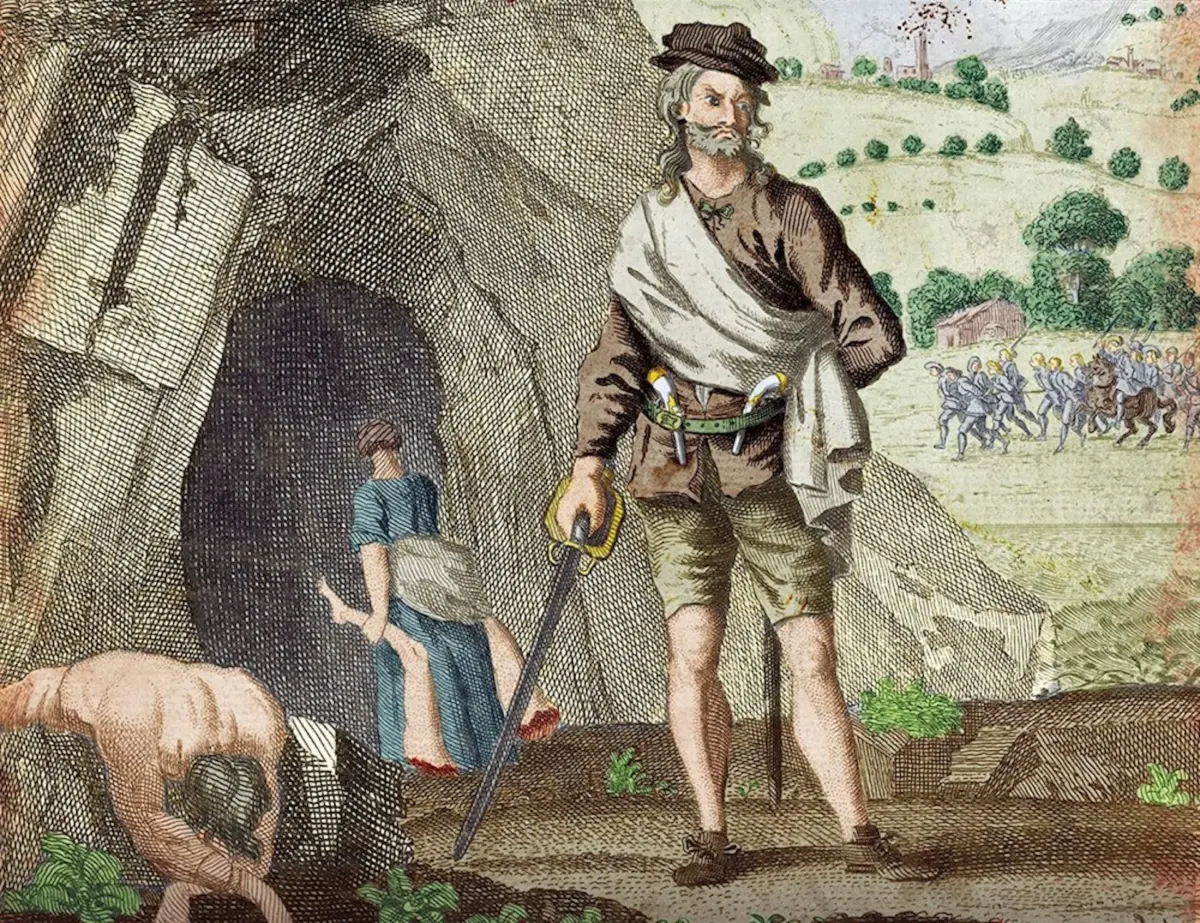
However, when extreme scarcity is combined with human storytelling, the boundary between historical fact and monstrous myth often blurs. Scotland, in particular, possesses a rich, macabre folklore of cannibal figures. While the 16th-century legend of Sawney Bean—who allegedly lived in a cave with his family on the Ayrshire coast and consumed thousands of travelers—is widely known, historical analysis reveals it to be an 18th-century anti-Scottish caricature with little basis in fact.
Centuries before Bean entered the popular imagination, Scottish chroniclers recorded the chilling tale of Christie Cleek, a purported cannibal operating in Perth during the severe famines of the 1330s. Tracking the evolution of Cleek’s legend from a brief, medieval chronicle entry to an elaborate 19th-century cautionary tale offers profound insights into how societies use horror to process trauma, societal breakdown, and the darkest recesses of human desperation. This investigative report examines the origins of these legends, the historical reality of medieval Scottish famines, and what these chilling narratives reveal about the human psyche.
Detailed Chronology: The Evolution of the Christie Cleek Legend
To understand how a folk legend transforms over centuries, historians must trace the paper trail left by chroniclers, balladeers, and 19th-century romantics. The legend of Christie Cleek did not emerge fully formed; it grew incrementally, absorbing the anxieties and cultural shifts of each successive era.
1. The 14th Century: The Historical Crucible (1339)
The backdrop for the Christie Cleek legend is grounded in genuine medieval hardship. The late 1330s in Scotland were marked by brutal warfare, economic collapse, and severe agricultural failure. Chroniclers of the period noted that desperate populations were forced to consume grass, domestic pets, and anything else that could stave off starvation. It was within this climate of apocalyptic hunger that the figure of Christie Cleek allegedly arose in Perth, purportedly utilizing traps and a metal hook (cleek) to snare women and children.
2. The Early 15th Century: The First Written Record
Remarkably, no contemporary records from 1339 mention Cleek by name. The earliest surviving written reference appears decades later, penned by early 15th-century chronicler Andrew of Wyntoun. In Wyntoun’s account, Cleek is described merely as a low-born rustic who captured women and children and consumed them. While Wyntoun’s source material may have drawn from lost chronicles of the era, the account remains brief and devoid of elaborate embellishments.
3. The Late 15th Century: Escalation and Justice
As the decades progressed, subsequent chroniclers added narrative color to the legend. Walter Bower, writing later in the 15th century, introduced a companion into the narrative—a "fierce woman" who aided Cleek in his gruesome activities, though their marital status remained ambiguous. Bower’s account also introduced a sense of cosmic justice, recording that Cleek and his partner were eventually captured, handed over to local authorities, and subjected to an "ignominious death."
4. The 19th Century: Sanitization and Romantic Embellishment
By the Victorian era, the legend underwent a dramatic transformation. Wilson’s Book of Border Tales recast Cleek not as a feral rustic, but as the leader of a band of hunters who, having depleted the local wildlife during a famine, turned first to eating a woman who had died of starvation, then drawing lots to consume another, before actively hunting humans. Other 19th-century accounts elevated him further up the social ladder, portraying him as a prosperous Dumfries merchant. During this period, the tale became a literal domestic weapon; mothers invoked the name of Christie Cleek to silence misbehaving children.
Supporting Context & Metrics: Famine, Folklore, and the Psychology of Taboo
The persistence of cannibal legends in medieval Europe is not an isolated phenomenon. Throughout periods of climatic distress—such as the Great Famine of 1315–1317—reports of extreme survival strategies proliferated across the continent.
Historical Famine Metrics in Medieval Scotland
- Agricultural Collapse: The 1330s saw consecutive years of failed crops driven by erratic weather patterns and exacerbated by the devastation of the Second War of Scottish Independence.
- Alternative Sustenance: Contemporary records indicate that populations routinely consumed horses, dogs, cats, hides, and tree bark.
- The Threshold of Taboo: While archaeological evidence confirms that humans will resort to cannibalism under absolute siege or starvation conditions (as documented via cut marks on bones at Jamestown), chroniclers often weaponized the threat of cannibalism to symbolize social anomie and divine retribution.
The Anatomy of a Smear: Sawney Bean vs. Christie Cleek
| Metric/Feature | Christie Cleek | Sawney Bean |
|---|---|---|
| Purported Era | 1339 (14th Century) | 16th Century |
| First Written Record | Early 15th Century (Andrew of Wyntoun) | 18th Century (English publications) |
| Verifiable Missing Persons | None (lost contemporary sources suspected) | None (total absence of historical disappearance records) |
| Primary Cultural Function | Medieval chronicle of divine/societal collapse | 18th-century anti-Scottish political satire/xenophobia |
| Evolution Trajectory | Grew from rustic criminal to gang leader | Standardized into an entrenched cave-dwelling monster myth |
Official Statements and Expert Analyses
Historians, folklorists, and anthropologists have long studied how societies construct narratives around the unthinkable. Because physical evidence of medieval serial cannibals like Cleek or Bean is non-existent, modern researchers rely on textual criticism and socio-historical context.
Dr. Eleanor Vance, a medieval historian specializing in Scottish chronicles, notes the fluidity of historical truth in early texts:
"When we read Andrew of Wyntoun or Walter Bower, we are not reading modern journalism. We are reading a complex blend of eyewitness memory, oral tradition, and moral theology. Chroniclers used extreme figures like Christie Cleek to make sense of incomprehensible suffering. Famine wasn’t just a meteorological failure to them; it was a moral trial that tested the very boundaries of humanity."
Cultural anthropologist Dr. Marcus Thorne emphasizes the psychological mechanisms underlying these myths:
"Cannibalism stories serve a dual purpose in human psychology. On one hand, they act as the ultimate cautionary tale—a boundary marker showing what lies beyond the pale of civilized society. On the other hand, they betray a deep-seated anxiety about human nature. During times of systemic collapse, societies ask themselves: ‘At what point does civilization strip away, and what lies underneath?’ The myth of the everyday man turning into a monster is an exploration of that latent fear."
Regarding the fabrication of Sawney Bean, literary historians have long pointed out the geopolitical undertones. Written during a period of heightened Anglo-Scottish political tension, the Bean legend served as a xenophobic trope designed to paint Highlanders and Scots as bloodthirsty primitives—a pattern where folklore becomes propaganda.
Future Outlook: The Enduring Legacy of the Macabre
As historical methodologies advance, the study of folklore and cannibalism continues to evolve. Modern historians no longer look at tales like those of Christie Cleek or Sawney Bean simply to ask, "Did this specific individual exist?"—a question that usually leads to a historical dead end. Instead, researchers utilize digital humanities, big-data text analysis of medieval manuscripts, and environmental archaeology to understand the ecology of fear.
Key Research Directions for the Future:
- Climatological Integration: Pairing tree-ring data and ice-core samples from the 1330s with historical chronicles to map the exact geographic corridors of severe famine in Scotland, shedding light on where societal stress was highest.
- Folklore Genealogies: Tracing how local oral traditions metamorphosed into printed broadsides and Victorian penny dreadfuls, illuminating the commercialization of horror.
- The Psychology of Scarcity: Examining modern sociological studies on resource scarcity to draw parallels between medieval panic responses and contemporary behavioral reactions to systemic crises.
Ultimately, whether Christie Cleek was a real butcher driven mad by hunger, a composite character invented by medieval monks, or a phantom conjured by oral tradition matters less than what the story represents. These enduring tales prove that while the physical act of cannibalism is vanishingly rare outside of extreme historical crises, our fascination with the abyss of human hunger remains eternal.